
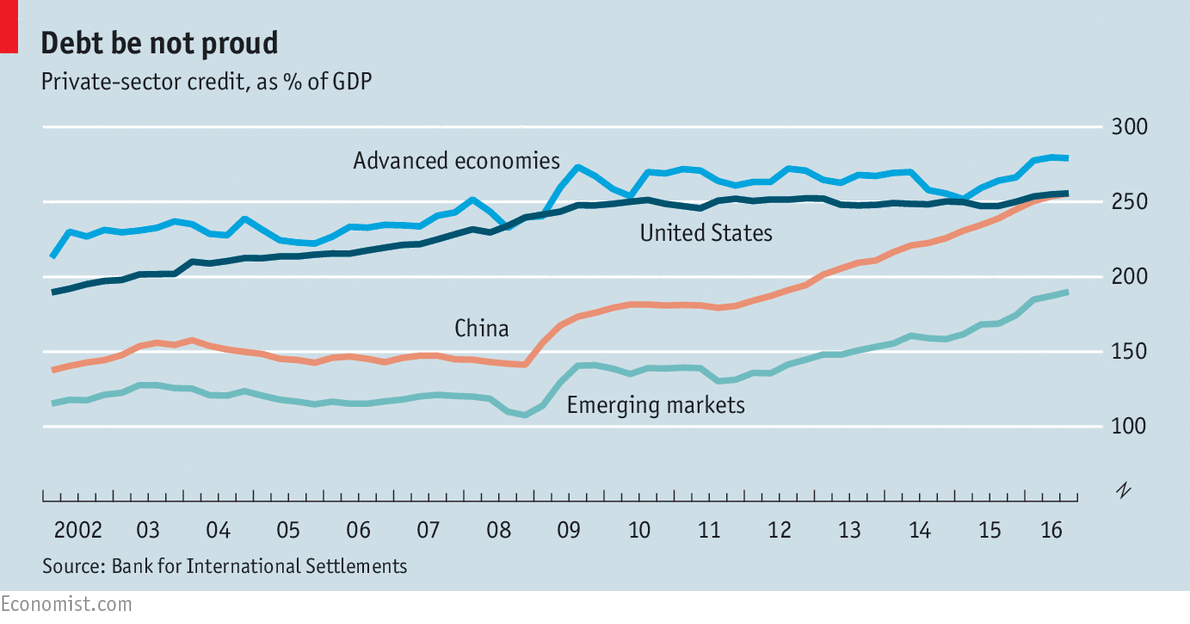
IN PERIODS of economic stress all sorts of theories are entertained about the nature of the problem. When better times return, some theories fade from memory. Others linger, however. During the economic mess of the past decade, economists frightened themselves with tales of “secular stagnation”: a nasty condition that dooms its victims to chronically weak growth. Now that the economic outlook is brightening a bit—deflation has been dispatched, and for most advanced economies 2017 is forecast to bring a third consecutive year of economic growth—it is tempting to laugh off the idea of secular stagnation as a bit of crisis-induced hysteria. Tempting, but also premature.
In a time of secular stagnation, the normal relationship between saving and investment goes haywire. People save some portion of their income each year. Because one person’s spending is another’s income, such saving can drain away demand and lead to recession, unless the funds set aside by savers are reinjected into the economy through lending to those looking to invest: as when banks lend savers’ deposits to businesses, for example. Central banks help manage this…Continue reading