
Noticias
Los reguladores americanos multan a JP Morgan con 264 millones por sobornar a políticos chinos
El banco contrató a hijos de influyentes políticos del país para obtener negocios en el gigante asiático. Leer
Airlines are finally explaining what “last class” means. It isn’t pretty
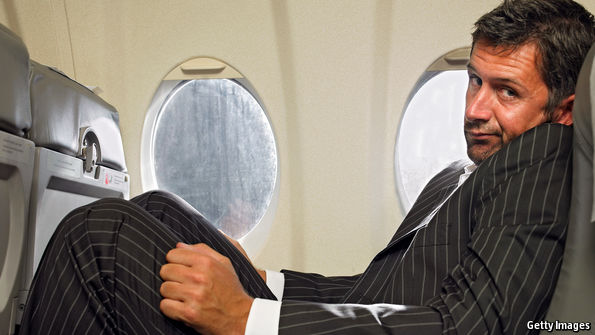
OVER the past couple of years America’s three biggest carriers, Delta, United and American, have each unveiled a fare class below economy. The new designation, known as “basic economy” to the airlines and derided as “last class” by their customers, is an attempt to compete with the low fares on profitable no-frills carriers such as Spirit and Frontier.
From the airlines’ initial announcements, it seemed that the sacrifices passengers would have to make in order to secure last-class fares would be modest. The most notable was the inability to select seats when booking a flight. For families travelling together that might be unpalatable, since they would run the risk of being split up. For solo travellers it would mean more chance of a middle seat—not ideal, but worth the lower cost for many flyers.
That changed this week when United, on a call with investors, dropped a bombshell: flyers in basic economy would be barred from using the overhead bins. Instead, they will be allowed only a small carry-on bag that can fit under the seat in…Continue reading
Barcelona ve indicios de delito en el fraude de FCC con la basura
El Ayuntamiento abre a raíz de las informaciones de EL PAÍS un expediente que podría acabar con una sanción, la rescisión del contrato o la inhabilitación de la empresa
Amp my ride

“THE car is the ultimate mobile device,” said Jeff Williams, an executive at Apple, last year. It was taken as another sign that the maker of iGadgets would be deepening its interest in the automotive sector (among other projects, it is developing an in-house smart car that is codenamed Project Titan). Now Samsung Electronics, its big rival in the smartphone world, is following. On November 14th the South Korean company said it would pay $8bn for Harman, a firm based in Stamford, Connecticut, that makes internet-connected audio, information and security systems for cars. The deal is Samsung’s largest ever, and the first big transaction for its vice-chairman and heir apparent, Lee Jae-yong, grandson of the firm’s founder.
Though it is best known for its sound systems, Harman is one of the world’s largest supplier of smart parts for “connected cars” that help owners to drive by linking to the internet and to chip-enabled devices. It made $7bn in revenue in the year to September, two-thirds or so of it from the car sector, and has over three times that in new orders. Its products are the first step towards autonomous vehicles. Over 30m…Continue reading
Clash of the Tatas

COMPANY bosses who get the sack react in different ways: some quietly leave, others graciously wish their successor luck, most try to nurse hurt pride as best they can. Not Cyrus Mistry, who on October 24th was ousted as chairman of the Tata Group, India’s biggest conglomerate. Bemused and angered at having his predecessor, Ratan Tata, suddenly seize back control, he has refused to go. The schism at the heart of Tata has drawn attention to what made it possible in the first place: an overly complex structure trying to oversee too many businesses, deficient corporate governance and a penchant for opacity. Whether these problems are addressed, and how, will shape the group and its reputation for decades to come.
Tata’s reasons for sacking Mr Mistry are unclear. He is from a family that has had a nearly 20% shareholding in the group for decades (most of the other shares are controlled by charities that are chaired by Mr Tata). Allies say that after four years in the job, Mr Mistry had got to grips with the inner workings of the company. He was ready to start changing it.
His critics, on the other hand, never believed that any executive…Continue reading
Vein hope

DONALD TRUMP’S grandfather, Fred, got his start in the hotel industry at the turn of the 20th century supplying rooms, food, booze and female company to prospectors flocking to north-western Canada in the so-called Klondike gold rush. It may be part of this legacy that gave America’s president-elect his taste for golden fixtures and fittings. But it may also make miners a bit wary of Mr Trump. After all, their pockets have been “mined” by a Trump once before.
So the world’s biggest mining companies are downbeat about the rally in commodities prices that accompanied Mr Trump’s election victory, which briefly pushed up prices of copper at their fastest rate in five years and sent iron-ore prices to two-year highs close to $80 a tonne. On November 15th Rio Tinto, one of the world’s biggest mining companies, told 440 workers at an iron-ore mine in Western Australia to take two weeks off at Christmas, not as a celebration, but as a precautionary measure to reduce supply. It expects conditions to get much tougher in 2017. Its main rival, BHP Billiton, is also nonplussed. It predicts economic uncertainty, political instability and a…Continue reading
Polluting the outlook
 So they hope
IT WAS on November 16th that the International Energy Agency (IEA), an organisation that represents oil- and gas-consuming countries, announced its prediction that over the next quarter of a century renewable energy, such as wind and solar, and natural gas will hugely eclipse the traditional role that coal and oil have played in satisfying the world’s growing demand for energy (see chart). That is the base case for what it says is a powerful shift in the global energy landscape towards cleaner fuels.

The trouble is that after the projections were calculated, Donald Trump, who is both a climate sceptic and a fossil-fuel fan, was elected as America’s next president. As Fatih Birol, the IEA’s executive director, pointed out this week, no one knows what his energy policies will be. Yet he will run the world’s biggest producer and consumer of oil and natural gas.
Many…Continue reading
That Eighties show
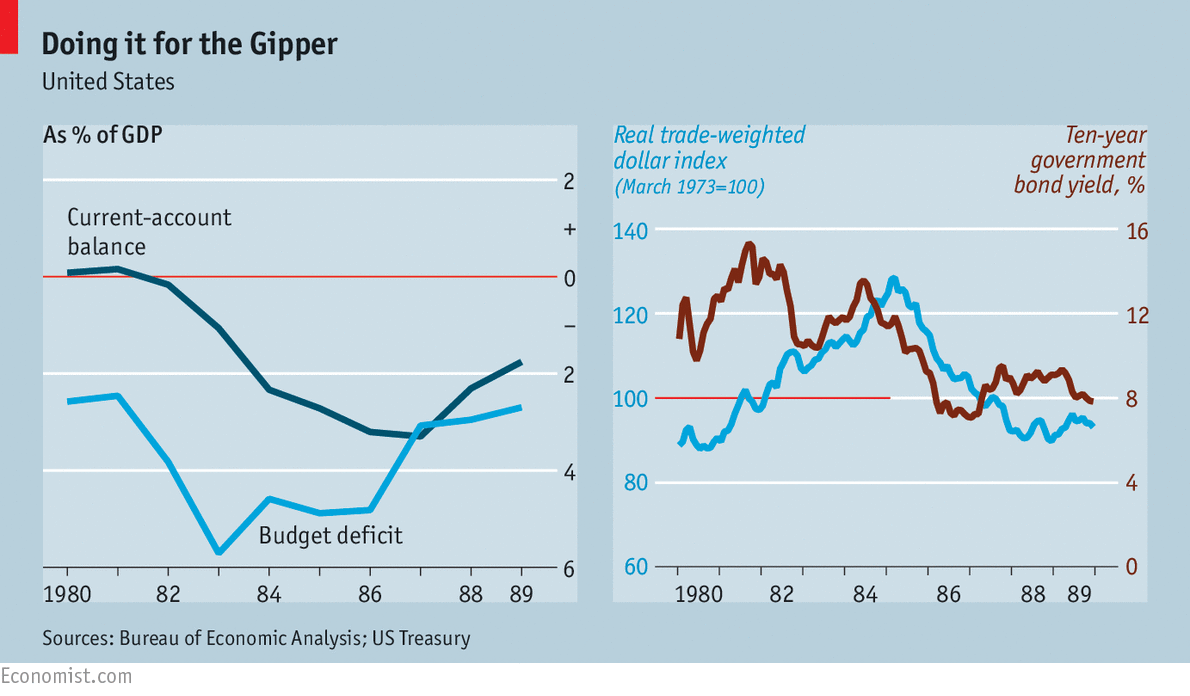
FOR the moment, the policy priorities of the Trump administration-in-waiting are a basket of unknowables. Plans to scrap Obamacare or re-deregulate America’s financial sector, though dear to Republican hearts, are easier to champion on the campaign stump than to implement. A step away from globalism—Donald Trump’s most consistent campaign theme—could make for an awkward opening gambit given pockets of Republican resistance to overt protectionism. Tax cuts and infrastructure spending, on the other hand, look like an easy and unifying win for the new administration. And indeed, market moves since Mr Trump’s victory seem to imply an expectation of a Ronald Reaganesque turn in American fiscal policy; government-bond yields have risen, seemingly in expectation of bigger deficits, faster growth and higher inflation. Yet any resemblance that Mr Trump’s plans may bear to Reaganomics is as much a cause for concern as for optimism.
The president-elect’s tax proposals are easily the boldest since Reagan’s. Mr Trump’s plan would slash the highest marginal income-tax rates, cut rates of tax on corporate income and on capital…Continue reading
Just spend

ON NOVEMBER 11th, Alibaba, a Chinese e-commerce giant, posted nearly $18bn in sales for the day. This broke last year’s record for Singles’ Day, an anti-Valentine’s Day that has become a love affair with spending. The popularity of the company’s virtual credit-card, Huabei (roughly translating as “Just spend”), may have helped. Consumers who spend less than 1,000 yuan ($146) online a month spend 50% more once they get one, according to Ant Financial Services, an Alibaba affiliate. To older generations, taught to save, borrowing is shameful. But financial habits are changing: Chinese consumers are being encouraged to develop credit histories.
Last year, the government awarded eight companies consumer credit-rating licences. Their pilot programmes are an attempt to flesh out thin financial records and get people thinking about their credit scores. This is new for most Chinese, who do not use credit cards and have never had credit scores. As of 2014, the People’s Bank of China maintained credit histories for around 350m citizens—less than one-third of the adult population. In America 89% of adults have credit scores. Without a credit history,…Continue reading