
Finanzas
A market-related twist to the Dortmund bombing
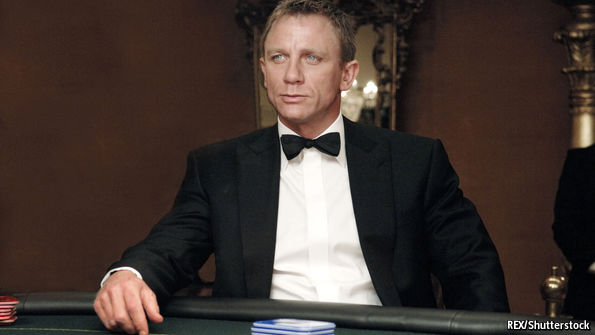
WHEN three explosive devices hit a bus carrying the Borussia Dortmund football team on April 11th, it was immediately assumed that it was another Islamist attack. Notes were found at the scene of the crime alleging that Islam was the motivation, with the author claiming a link to the terrorist group Islamic State. But prosecutors in Germany allege a completely different rationale. They say that the suspect, a 28-year-old man, had borrowed money and taken out put options, which would benefit from a decline in Borussia Dortmund shares (which fell 3% on the day after the attack).
As yet, the suspect has not been convicted. But if true, the story would seem to come straight out of Hollywood. In the film “Casino Royale”, James Bond (as played by Daniel Craig) foils a plot to blow up an airliner owned by the fictional firm Skyfleet, after villain Hugo le Chiffre had sold the company’s shares short (ie, bet on their price to fall). In “The Fear index”, a Robert Harris novel, a hedge fund’s trading programme shorts an airline’s stock just before a fatal crash. It was rumoured, after the September 11…Continue reading
Is Tom Stuker the world’s most frequent flyer?

“AFTER entering a competition a lucky punter wins first prize: a week’s holiday in Skegness. Second prize is two weeks there.”
For some reason this most ancient of British jokes came to Gulliver’s mind when he read about Tom Stuker in the International Business Times. Mr Stuker, it is claimed, is the world’s most frequent flyer. He is about to clock up his 18-millionth mile on United Airlines. And as the Boarding Area blog points out, 18m miles with United means just that:
United calculates million miler status based on your “butt in seat” revenue miles flown on United. That’s right, we’re not talking about 10 million award miles, or even 10 million miles taking into account elite bonuses for flying first or business class.
Mr Stuker is president of a firm that trains sales staff at car dealerships around the world. He has flown to Australia over 300 times for business and pleasure; he travels to Hawaii “three…Continue reading
El envío de remesas en el mundo se reduce por segundo año consecutivo
América Latina es la única región que recibe más dinero por la mejora económica en Estados Unidos y la fortaleza del dólar
Orange lanzará también en España el banco móvil que estrena en Francia
La operadora de telefonía irrumpe en el sector financiero y promete cuentas, tarjetas y otros servicios gratuitos
Emirates cuts services to America as Donald Trump’s actions bite

WHEN American officials announced last month that laptops and tablets would be banned from aeroplane cabins on flights from certain Muslim countries, many questioned the administration’s motive. Was it a proportionate response to specific intelligence about a terrorist threat? Or had the government taken the opportunity to clobber swanky foreign operators that compete with the country’s own woeful airlines?
If the latter view is too cynical, we can at least say that, for America’s carriers, it has been a serendipitous byproduct. On April 19th, Emirates announced that it is cutting its services to the United States by 20%. The United Arab Emirates (UAE), the airline’s home, was one of ten Muslim countries covered by the laptop ban. By happy coincidence, no American carriers served airports that were affected.
The restrictions on electronic devices are a particular problem for Emirates and the other Middle Eastern “superconnectors”, Etihad, also of the UAE, and Qatar Airways. Direct traffic between America and these airlines’ hubs is modest: most passengers use them to connect to or from other…Continue reading
Another debate about net neutrality in America

THE details around network neutrality, the principle that internet-service providers (ISPs) must treat all sorts of web traffic equally, can be mind-numbingly abstruse. But they fuel passion, nonetheless. After Tom Wheeler, a former chairman of America’s Federal Communications Commission (FCC), proposed unpopular net-neutrality rules in late 2014, for instance, protesters blocked his driveway, forcing him to walk to work. Their action was meant to illustrate the threat of big ISPs erecting toll-booths and other choke-points that would relegate less well-off consumers to digital slow lanes.
Now it is the turn of Ajit Pai (pictured), Mr Wheeler’s successor, to stir the hornets’ nest. In the coming days Mr Pai is expected to unveil a proposal for new rules on net neutrality. His plan is anticipated to be a testament both to his deregulatory agenda and to the big ISPs’ lobbying power. It would essentially take the FCC out of the equation when it comes to policing the smooth running of the internet.
Because of the protests in 2014 and because of a court decision that year suggesting that the FCC needed the jurisdiction to be able to mandate net-neutrality…Continue reading
Japanese fast-food chains feel a squeeze
 Three-star service
SHIMMERING spreads of raw fish sashimi, succulent beef from massaged cows, and, for a decade, the capital with the most Michelin-starred restaurants: few nations rival Japan for fine dining. Its fast-food scene has also thrived for centuries. From the 1700s bowls of cold soba noodles, made from buckwheat, were cycled to wealthy clients on towering trays. Sushi began to glide past customers in 1958, when the first conveyor belt was installed. In 1970 its first homegrown hamburger chain opened, a year before McDonald’s entered the market.
Fast-food chains continued to be a rare bright spot for Japan during its two-decade-long economic slump. Since 2008 the size of the market has increased from $35bn to $45bn (those figures include convenience stores, or konbini); that of restaurants has declined every year in that period. But fast food is now being squeezed: by a combination of higher wages and still-tepid consumption, and by foreign rivals winning over more Japanese stomachs.
Tomoaki Ikeda, president of Yudetaro, a soba chain in the greater Tokyo…Continue reading
AkzoNobel, under siege, makes unrealistic promises about growth

THE future for AkzoNobel is dazzling—if you believe Ton Büchner, its chief executive. The boss of the Dutch paint-and-coatings firm reported a solid set of quarterly earnings on April 19th, then promised a new era of rapid growth and investments. Shareholders are to get lavish dividends this year. The firm will break up its ungainly conglomerate structure. A speciality-chemicals part of the business will be sold or listed separately next year.
Mr Büchner has no choice but to talk things up, if he is to justify rebuffing two recent takeover offers from a similar-sized American rival, PPG. Its latest bid, of €22.5bn ($24bn) in cash and shares, represented a 40% premium over Akzo’s market value before the first bid. An activist fund, Elliott Management, which has a 3% stake in Akzo, is pushing other shareholders to demand discussion of the bid.
Akzo’s promises were welcome. But like a newly opened tin of paint, they made some heads spin. After years of eking out smallish gains mostly through cost-cutting, the firm is suddenly to boom. Akzo had previously forecast that returns on sales would be 11% by 2018, already well over its average of less than 9%…Continue reading
How Donald Trump affects America’s tourist business

TRUMP Tower, in midtown Manhattan, has become a modern-day Mount Vernon. Tourists have long visited George Washington’s homestead. Now they venture through Trump Tower’s brass doors to ogle the decor—“it’s so gold,” said a German teenager standing near the lobby’s waterfall on a recent afternoon—or buy souvenirs. The Choi family, visiting from South Korea, wandered the marble expanse with their new “Make America Great” hats (three for $50).
The question for America’s hoteliers and airlines is whether such visitors are just anomalies. A strong dollar is one reason for foreigners to avoid visiting America. Donald Trump may prove another, suggests a growing collection of data. Yet measuring the precise impact of Mr Trump’s presidency on travel is difficult. In addition to the currency effect, many trips currently being taken to America were booked before his election. Marriott, a big hotel company, reported an overall increase, compared with a year earlier, in foreign bookings in America in February.
But Arne Sorenson, Marriott’s boss, has voiced concern about a potential slump in tourism. In February, ForwardKeys, a travel-data…Continue reading
Why the decline in the number of listed American firms matters

LAST month Schumpeter attended an event at the New York Stock Exchange held in honour of Brian Chesky, the co-founder of Airbnb, a room-sharing website that private investors value at $31bn. Glittering tables were laid out not far from where George Washington was inaugurated in 1789. The well-heeled members of the Economic Club of New York watched as Thomas Farley, the NYSE’s president, hailed Airbnb as an exemplar of American enterprise. Mr Chesky recounted his journey from sleeping on couches in San Francisco to being a billionaire. His mum, a former social worker, looked on. Only one thing was missing. When Mr Chesky was asked if he would list Airbnb on the NYSE, he hesitated. He said there was no pressing need.
Airbnb is not alone. A big trend in American business is the collapse in the number of listed companies. There were 7,322 in 1996; today there are 3,671. It is important not to confuse this with a shrinking of the stockmarket: the value of listed firms has risen from 105% of GDP in 1996 to 136% now. But a smaller number of older, bigger firms dominate bourses. The average listed firm has a lifespan of 18 years, up from 12 years two decades ago, and is worth four times…Continue reading