
Finanzas
Manuel Jove se alía con BBVA para volver a construir viviendas en España
El empresario gallego, uno de los pocos que supo ver la burbuja a tiempo, cree que es un buen momento para la inversión inmobiliaria
España anuncia un ajuste inferior a los 5.500 millones prometidos
El ministro de Economía, Luis de Guindos, cree que España cumplirá el objetivo de déficit de este año «holgadamente»
El regulador exige más capital al BBVA, Popular y Sabadell por el riesgo asumido
El Santander, único banco español con peligro sistémico mundial, será el que más eleve el capital
Moody’s rebaja un escalón la calificación crediticia a Telefónica
La agencia justifica la rebaja de la nota porque cree que la operadora no reducirá suficientemente la deuda tras revisar su estrategia
Unos ‘hackers’ roban el dinero de 20.000 cuentas de Tesco Bank
El banco británico suspende las transacciones ‘online’ tras sufrir un ataque informático con el robo masivo de fondos
How strong are the institutions of liberal societies?
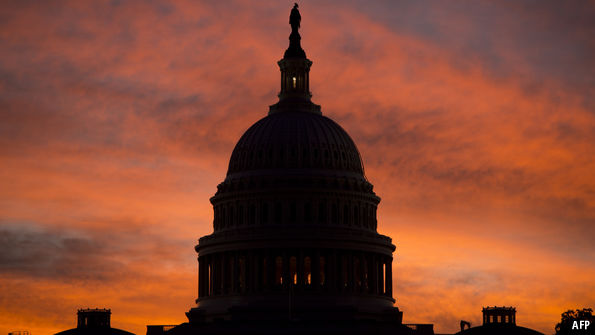
LIBERAL democracies, while not exactly on the brink of a descent into fascism, are facing a period of crisis. Tomorrow, when Americans go to the polls, one of the major-party candidates will be a man whose campaign has dispensed with the notion that its talking points should bear any resemblance to truth, and who has routinely promised to take measures in office which would violate the spirit or letter of the law and constitution. In Britain, meanwhile, parts of the public reacted with fury when a British court carried out its constitutional role as it saw fit, suggesting its judgment concerning the role of Parliament in invoking Article 50 was a betrayal of the people. These developments seem to presage something far worse—maybe, some worry, the end of functional democracy and its replacement by fascism. In the Financial Times today, Mark Mazower finds parallels in Germany before the Nazis…Continue reading
Guindos: “España cumplirá el objetivo de déficit de este año holgadamente”
El ministro de Economía cree que el ritmo de avance del PIB superará las previsiones del Gobierno tanto este año como en 2017
Ryanair wants to control even more of Europe’s aviation market

IT HAS been a turbulent year for airlines in Europe. A slowdown in the growth of demand for air travel across the continent has hit both passenger volumes and fare levels. Last month, Europe’s two biggest low-cost carriers, Ryanair of Ireland and easyJet of Britain, slashed their profit forecasts following the post-referendum fall in the pound. Average fares in Europe could drop by as much as 15% year-on-year this winter as airlines try to keep planes full.
Yet earlier today, Ryanair’s results for the six months ending September took investors and analysts by surprise, and in a good way. In spite of fares falling by a tenth, post-tax profits increased 7% to €1.17bn ($1.29bn) compared with the same period last year. Revenues, too, were up slightly. Although the airline has been hit by Brexit, it says it will respond by shifting capacity growth next year from Britain to countries such as Germany, Italy and Poland.
Although this is all good news for travellers wanting to fly around Europe at the lowest possible cost, traditional full-service outfits should be worried by Ryanair’s ebullient mood. Ryanair has traditionally focused on…Continue reading
BBVA revisa al alza su previsión de crecimiento al 3,3% en 2016
La entidad pronostica una desaceleración en los próximos meses, aunque menor de lo esperado
BBVA revisa al alza su previsión de crecimiento hasta el 3,3% en 2016
La entidad pronostica una desaceleración en los próximos meses, aunque menor de lo esperado