
Tag: Free exchange
How to interpret a market plunge
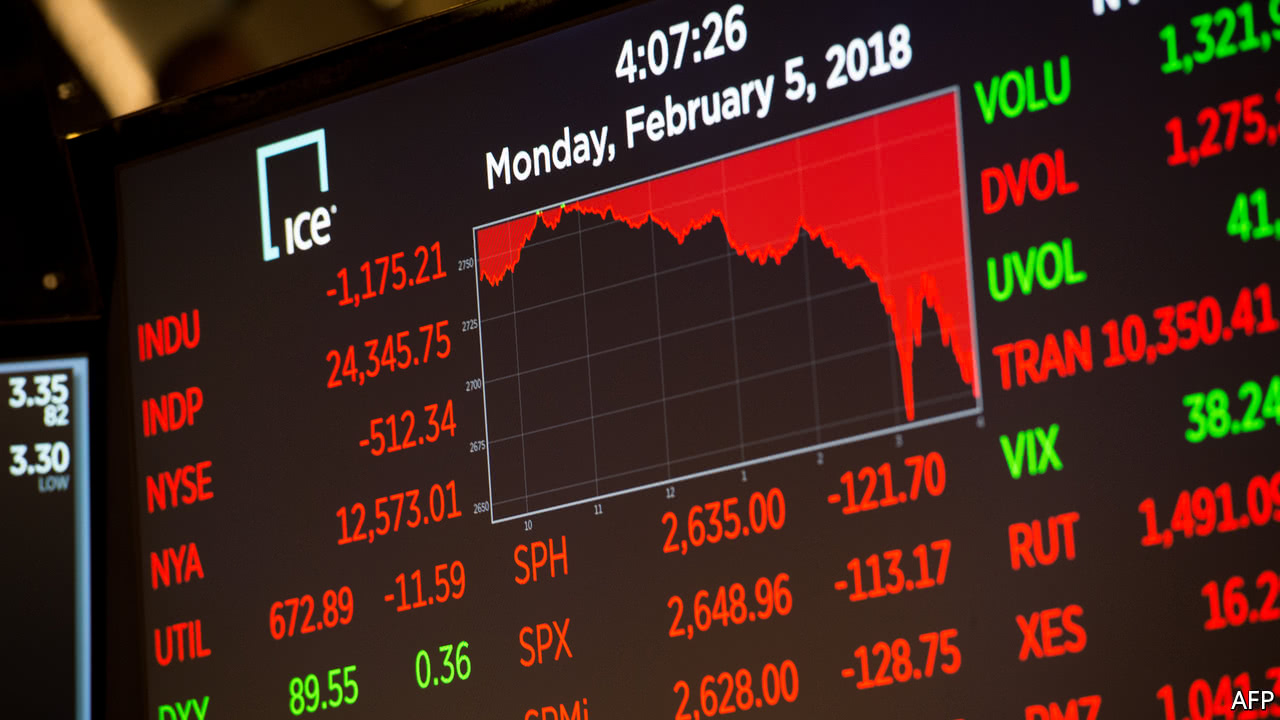
FOR much of the past two years, market watchers have had little to write about, apart from the passing of one stock-index milestone after another. The events of the past week, however, have shaken the financial world awake. A recent, upward zag in bond yields seemed to signal the arrival of a new theme in market movements. Stock prices confirmed it, and then some. Over the past week, American stocks have dropped about 7%, punctuated by a breathtaking, record-setting plunge on Monday. The Dow Jones stock index recorded its largest ever one-day drop, of more than 1,000 points. In percentage terms the decline, of more than 4%, was the biggest since 2011.
The swoon set tongues to wagging, about its cause and likely effect. There can be no knowing about the former. Markets may have worried that rising wages would crimp profits or trigger a faster pace of growth-squelching interest-rate increases, but a butterfly flapping its wings in Indonesia might just as well be to blame. There is little more certainty regarding the latter. Commentators have…Continue reading
Richard Thaler’s work demonstrates why economics is hard
RICHARD THALER has won the Nobel prize in economic sciences this year for his contributions to behavioural economics. It’s a well-deserved prize and a clarifying one, as far as economics is concerned. For a very long time, economists hoped to treat individuals a bit like particles in physics, whose activity can be described by a few well-understood rules, which allow researchers to model and understand complex interactions between particles. The rules, they reckoned, were things like perfect information, forward-looking reasoning and rationality. Of course economists understood that individuals didn’t always behave according to those rules, but the idea was that, in aggregate, the rules would allow for a pretty good approximation of reality.
Then came the behavioural economists, who made it their task to find ways in which human activity systematically diverges from models using those basic assumptions. For many of them, the goal was probably to come…Continue reading
The Nobel in economics rewards a pioneer of “nudges”
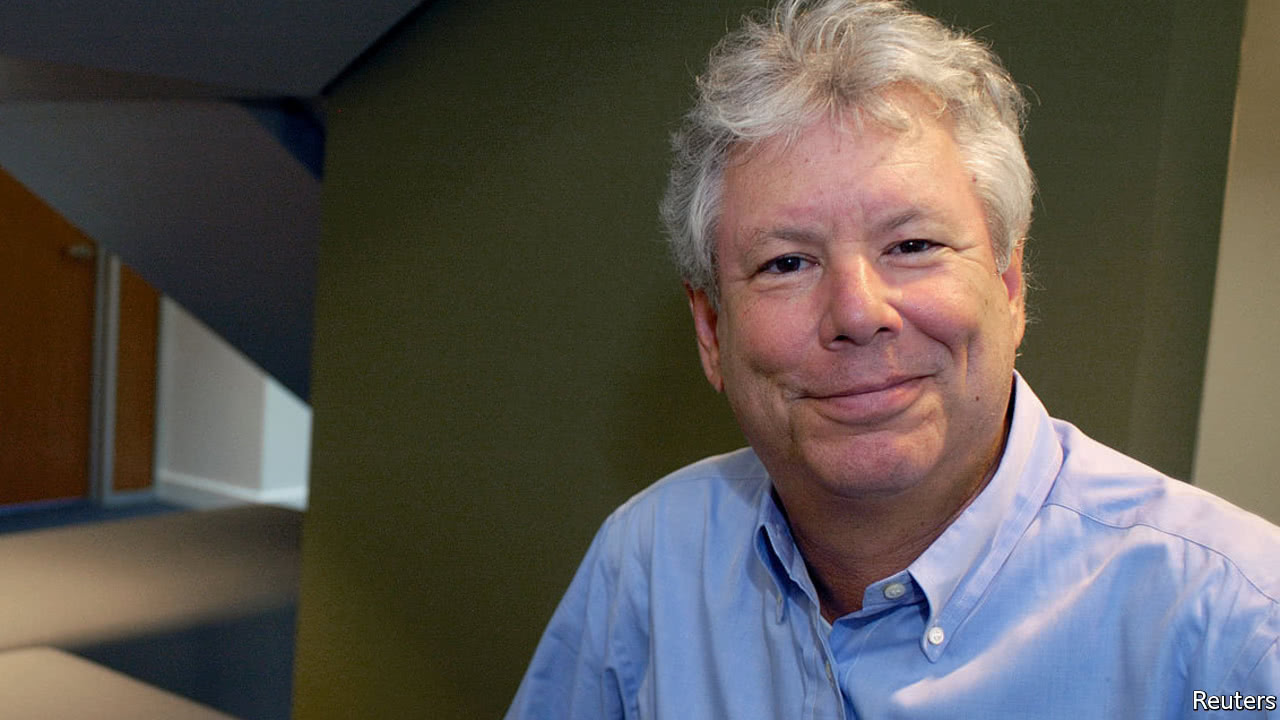
NOT long ago, the starting assumption of any economic theory was that humans are rational actors who maximise their utility. Economists summarily dismissed anyone insisting otherwise. But over the past few decades, behavioural economists like Richard Thaler have progressively chipped away at this notion. They combine economics with insights from psychology to show how heavily economic decisions are influenced by cognitive biases. On September 9th Mr Thaler’s work was recognised at the highest level when the Nobel Committee awarded him this year’s prize in economics. Mr Thaler thus becomes one of very few behavioural economists to win the prize.
Mr Thaler’s has been a prolific career, spanning over four decades, the last two of them at the University of Chicago’s Booth School of Business. His research has touched on subjects as varied as asset prices, personal savings and property crime. For example, Mr Thaler developed a theory of mental accounting, which explains how people making financial decisions look only at the narrow…Continue reading
Bitcoin is fiat money, too
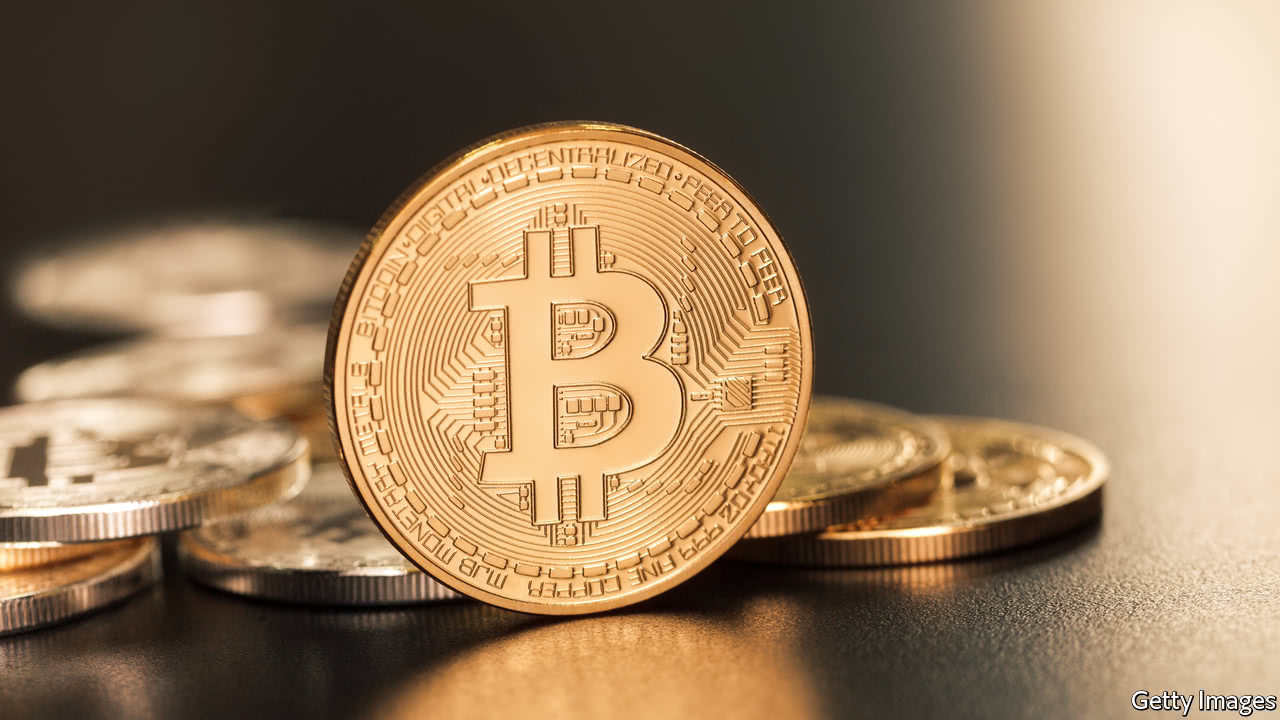
FINANCIERS with PhDs like to remind each other to “read your Kindleberger». The rare academic who could speak fluently to bureaucrats and normal people, Charles Kindleberger designed the Marshall Plan and wrote vast economic histories worthy of Tolstoy. “Read your Kindleberger” is just a coded way of saying “don’t forget this has all happened before”. So to anyone invested in, mining or building applications for distributed ledger money such as bitcoin or ethereum: read your Kindleberger.
Start with A Financial History of Western Europe, in which Kindleberger documents how many times merchants in different centuries figured out clever ways of doing the exact same thing. They made transactions easier, and in the process created new deposits and bills that increased the supply of money. In most cases, the Bürgermeister or the king left these innovations in place, but decided to control the supply of money and credit themselves. It is good for the king to be in charge of his own creditors. But also, it has…Continue reading
The case against shrinking the Fed’s balance-sheet
AS EXPECTED, the Federal Reserve announced on September 20th that it will soon begin reversing the asset purchases it made during and after the financial crisis. From October, America’s central bank will stop reinvesting all of the money it receives when its assets start to mature. As a result, its $4.5trn balance-sheet will gradually shrink. However, the Fed did not give any clues as to what the endpoint for the balance-sheet should be. This is an important question. There are strong arguments for keeping the balance-sheet large. In fact, it might be better were the Fed not shedding any assets at all.
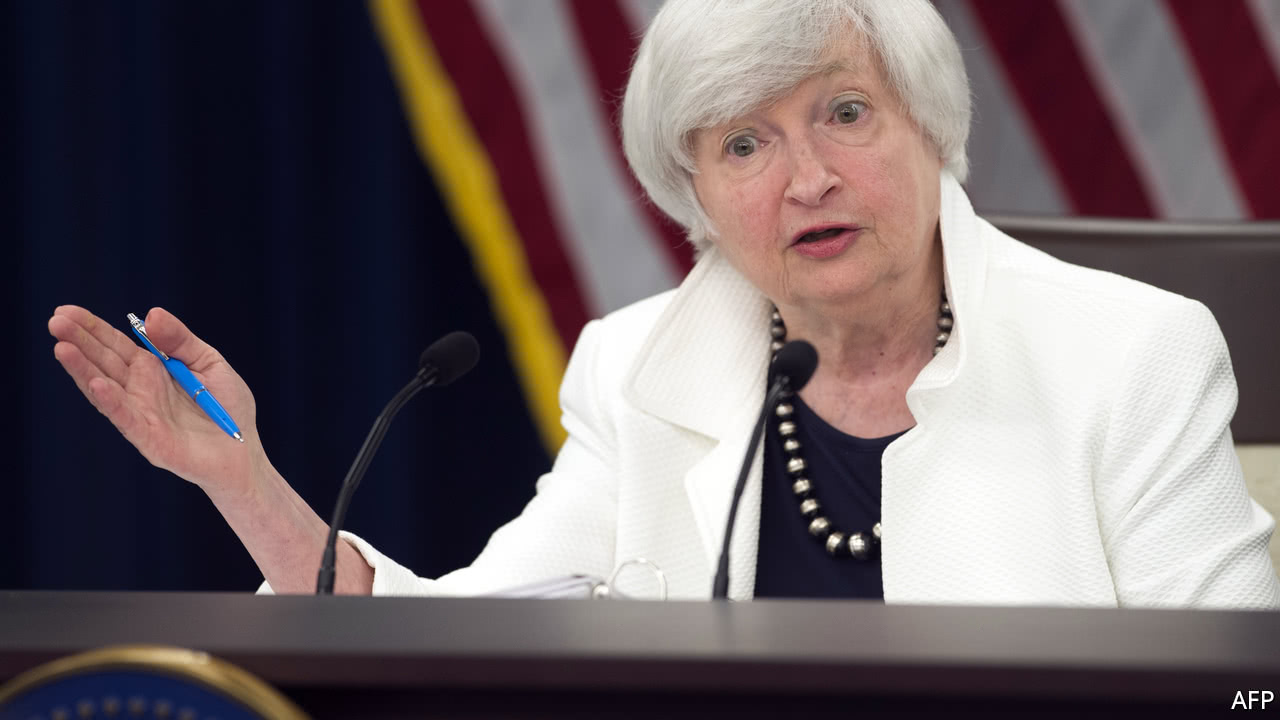
Most commentators view a large balance-sheet, which is the result of quantitative easing (QE), as an extraordinary economic stimulus. Janet Yellen, the Fed’s chair, seems to agree: at a press conference after the Fed announcement, she said the balance-sheet should shrink because the stimulus it provides to the economy is no longer needed. But the claim that the balance-sheet is stimulating the economy is far from an…Continue reading
Is there a wage growth puzzle in America?

TODAY’S labour market report showed that the American economy created 156,000 net new jobs in August. That was a bit less than expected, but payrolls are still growing comfortably faster than the working-age population. Despite having created over 2m jobs in the last year, pushing unemployment below 4.5% for the last five months, wage growth remains muted, at around 2.5%, compared to more like 3.5% the last time unemployment was comparably low. In a recent article for the print edition, I anlysed one potential explanation for weak wage growth: retirements of high-earnings baby-boomers.
Scott Sumner has taken issue with the premise of my piece. He says there is no puzzle at all. Instead, slow wage growth is being caused by slow growth in nominal GDP (cash-terms spending in the economy) —…Continue reading
The hubris of ten-year budgets
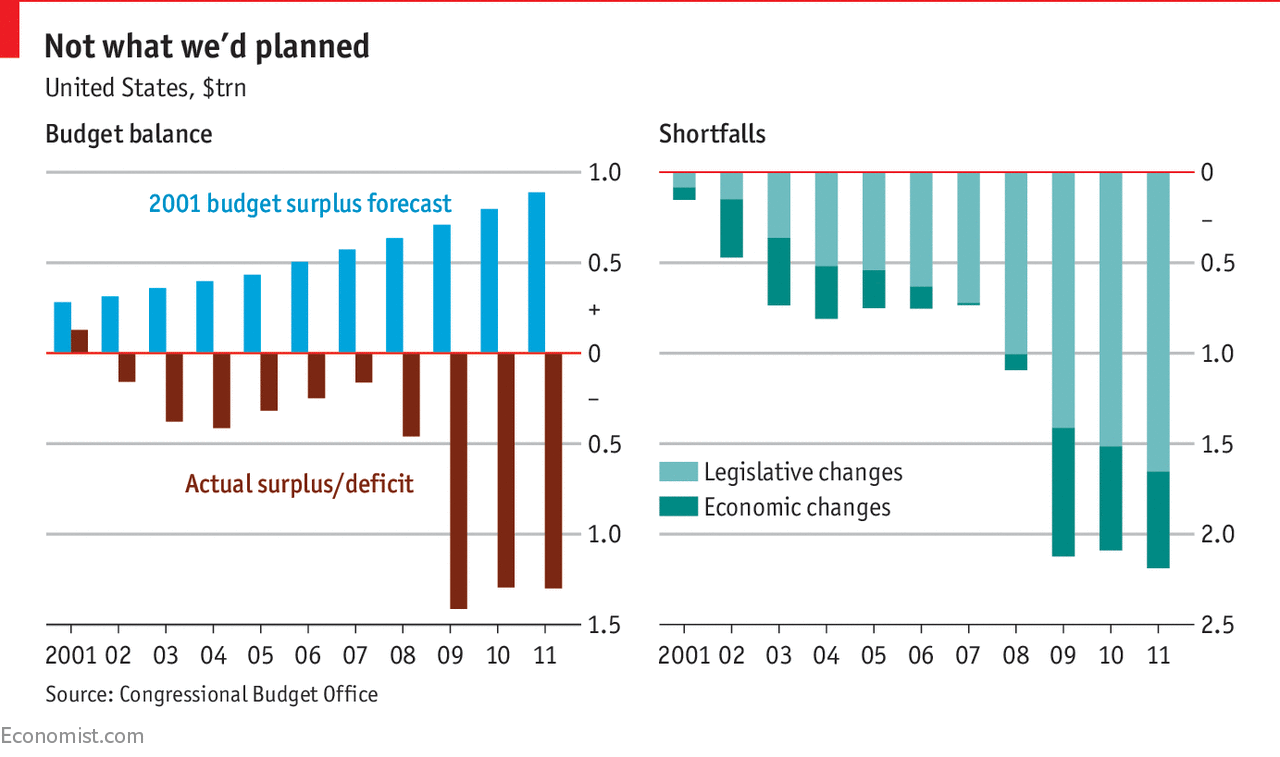
IN February of 2001, Alan Greenspan, then still the chairman of the Federal Reserve, and still called the “Maestro”, testified to the Senate Budget Committee. The committee wanted to get started on the tax cuts George W. Bush had promised during his campaign. Mr Greenspan gave them his qualified blessing, with an argument that now sounds incredible: he was worried that America would pay down its debt too soon.
That week the Clinton administration’s Office of Management and Budget had released its final ten-year budget projections. Firms had just completed several years of capital investments in desktop computers, and workers had become more productive. This had increased corporate revenue, and consequently taxes paid to the government. A long bull market in stocks meant that the Treasury was taking in more in capital gains taxes, too. “The experience of the last five to seven years,” said Mr Greenspan, “has truly been without precedent.” The Clinton administration had apparently left Washington with a gift. The…Continue reading
Podcast: Goodbye, Benito
Brazil’s rigid labour market regulations were transplanted wholesale from Benito Mussolini’s Italy back in 1943. Now President Michel Temer has approved an overhaul. Will it encourage job creation? Also, an exorcist in Paris fighting “bad spirits”. And why President Trump is playing hardball in renegotiating NAFTA. Hosted by Andrew Palmer.
Podcast: Vorsprung durch Angst
Germany is admired for a stable economy and holding on to blue-collar jobs but derided for its persistent trade surpluses. Our economics editor John O’Sullivan examines what Chancellor Merkel’s government might do next. Also, how “total immersion” could drive the masses to virtual reality. And why banks are de-risking to avoid penalties. Hosted by Simon Long.
Podcast: The Italian bailout job
Italy has been forced to bail out two banks at a cost of as much €17bn euros ($19 bn). Is that the end of the bleeding in Italy’s financial sector? Also, as the iPhone turns ten, we look at how Apple is evolving. And Catherine Mann, Chief Economist at the OECD, tells us how to government can help workers made jobless by globalisation. Hosted by Simon Long.