
Finanzas
Channelling Trump
 Hot property
AS HIS chances of making it to the White House have narrowed in recent weeks, another avenue has opened for Donald Trump. The notion that he might start his own media network has been the subject of speculation for months. Now industry executives are discussing the possibility in some detail.
In September the Republican candidate’s son-in-law, Jared Kushner, owner of the New York Observer, asked his friend Aryeh Bourkoff, a banker who has been a dealmaker in the media industry, for advice. (A spokeswoman for Mr Bourkoff said he personally had no interest in such a project). Mr Trump himself has denied any intention to start a network. But a look at the numbers suggests that Trump TV could be a success, media folk say—far from a juggernaut like Fox News, which has revenues of more than $2 billion a year, but lucrative nonetheless.
Such a product would have a good shot at going mainstream because Mr Trump could sell it directly to consumers over the internet, as a subscription streaming service. The Trump brand may now be too toxic for a publicly-owned media company to go…Continue reading
Contra las trampas, por la brava
La lucha contra los elusores no se desatará solo por distorsionar la competencia
La Comisión Europea pone coto a los trucos fiscales de 6.000 multinacionales
Bruselas propone crear una cláusula antiabuso obligatoria para firmas con ingresos de más de 750 millones, con límites a los arreglos intragrupo
El Gobierno promete a Bruselas el cierre de empresas municipales deficitarias
Hacienda ofrece a los ayuntamientos la posibilidad de que subsidien el servicio o de que asuman la gestión directa
Arabia Saudí se prepara para abrir sus libros a los mercados para cotizar
La inminente emisión de bonos y la anunciada privatización del 5% de Aramco exigen más transparencia
La acusación popular pide imputar a Ordóñez por los nuevos correos de Bankia
Además, pide investigar a toda la alta dirección de Supervisión, al subgobernador Restoy y al expresidente de la CNMV, Segura
The man who knew better

I HAVE not yet had an opportunity to read Sebastian Mallaby’s new biography of Alan Greenspan (pictured), The Man Who Knew. I have heard great things about it; you can read Martin Wolf’s review of the book in The Economist here. (Full disclosure: Mr Mallaby is a former Economist journalist and is married to our editor-in-chief, Zanny Minton Beddoes.) In reading coverage of the book, I have been intrigued by one of Mr Mallaby’s judgments of Mr Greenspan: that he was insufficiently committed to keeping control of asset prices. Mr Wolf quotes the book as follows:
The tragedy of Greenspan’s tenure is that he did not pursue his fear of finance far enough: he decided that targeting inflation was seductively easy, whereas targeting asset prices was hard; he did not like to confront the climate of opinion, which was willing to grant that central banks had a duty to fight inflation, but not that they should vaporise citizens’ savings by forcing down asset prices. It was a tragedy that grew out of the mix of…Continue reading
American airlines can no longer ignore cheap European rivals on transatlantic routes
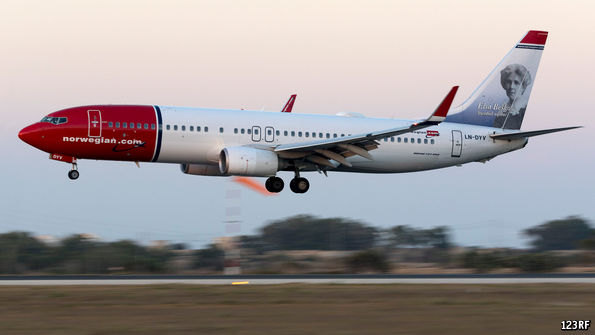
GULLIVER tried an experiment the other day: he visited Kayak, a price-comparison website, plugged in some random dates in December, and looked for flights between New York and Berlin. The lowest fare that came up was a modest $387, with Norwegian Air Shuttle. The second-lowest fare was $419, also with Norwegian. After that came several flights combining legs on Norwegian and other airlines, including easyJet and Iceland’s WOW air, and a full itinerary on WOW. Only after scrolling through nearly two pages of results did the cheapest fare not involving one of these low-cost airlines appear: a $742 itinerary on Aer Lingus.
The lowest fare on an American airline didn’t show itself until page 19 of the results. That round-trip flight, with United, was selling for $2,123—more than five times the cheapest fare, with Norwegian.
That, to put it mildly, is a problem for American carriers. The big American airlines used to compete only with their European equivalents—the likes of Lufthansa, Air France and British Airways—on transatlantic flights. It was a reasonably friendly fight, since they co-operated through codeshare alliances. The…Continue reading
El FROB se ha personado en 24 causas penales contra entidades nacionalizadas
El fondo ha denunciado 47 operaciones irregulares, que suman un perjuicio de 3.588 millones de euros
China’s uncannily stable growth versus the price of reform

IN THE pantheon of economic clichés, the concept of “short-term pain for long-term gain” is surely a contender for top spot. It is trotted out again and again when discussing why Country X must undertake such and such difficult reforms to reap untold benefits down the road. For those analysing or reporting on the Chinese economy, it has become a familiar refrain. This does not mean it is wrong; China’s old growth model of credit-fuelled investment has led to a vast accumulation of debt and a big drop in productivity. Change is needed, even though there will be costs. But being a cliché, it can obscure details. What exactly is this short-term pain?
To start, one thing that should be clear: China has so far felt little in the way of pain. Although some regions, especially the north-east, have endured a tough few years, China has kept defaults to a minimum and held its credit spigot wide open. Thanks in large part to that, the economy grew 6.7% in the third quarter from a…Continue reading