
Tag: Approved
American companies snub the National Rifle Association

FOR all the controversy that the National Rifle Association (NRA), America’s gun lobby, arouses, Americans of all political stripes have tended to regard it as nearly unassailable. The NRA and its 5m members have therefore been valued customers for companies, too. But after the latest school shooting, at Marjory Stoneman Douglas High School in Florida on February 14th, that has started to change. Not only has the political discussion shifted, but corporate America has reacted.
Snubs from big business began just a week after the shooting. On February 22nd First National Bank of Omaha, a bank, said “customer feedback” prompted it to stop issuing NRA-branded credit cards. Angry customers and riled-up activists, students from Marjory Stoneman Douglas foremost among them, have pushed a campaign to #BoycottNRA on Twitter, piling pressure on companies. In the span of just a few days, several firms ended their discounts for NRA members, including Delta and United, two airlines; MetLife, an insurer;…Continue reading
Forecasting congressional votes could yield juicy returns

STOCK traders hang on central bankers’ every utterance. They scan news sites for market-moving events, such as terrorist attacks, and monitor President Donald Trump’s tweets for hostility towards publicly traded firms. Curiously, though, few analyse goings-on in Congress, which can shift the course of the world’s largest economy. Jonathan Strong, a former reporter (including at Roll Call, a sister publication of The Economist), hopes to change that.
With the help of 0ptimus, a firm of Republican data wonks, he has spent three years building Legis, an algorithm powered by vast quantities of data and a neural network (a computer system modelled on the human brain), which predicts the outcome of congressional votes. Each of the 44 votes it has forecast so far has been correct. Last year a hedge fund (which does not want to be named) began trading derivatives using its predictions.
According to legend, carrier pigeons brought news of the Duke of Wellington’s…Continue reading
Money stolen by Bernie Madoff is still being found
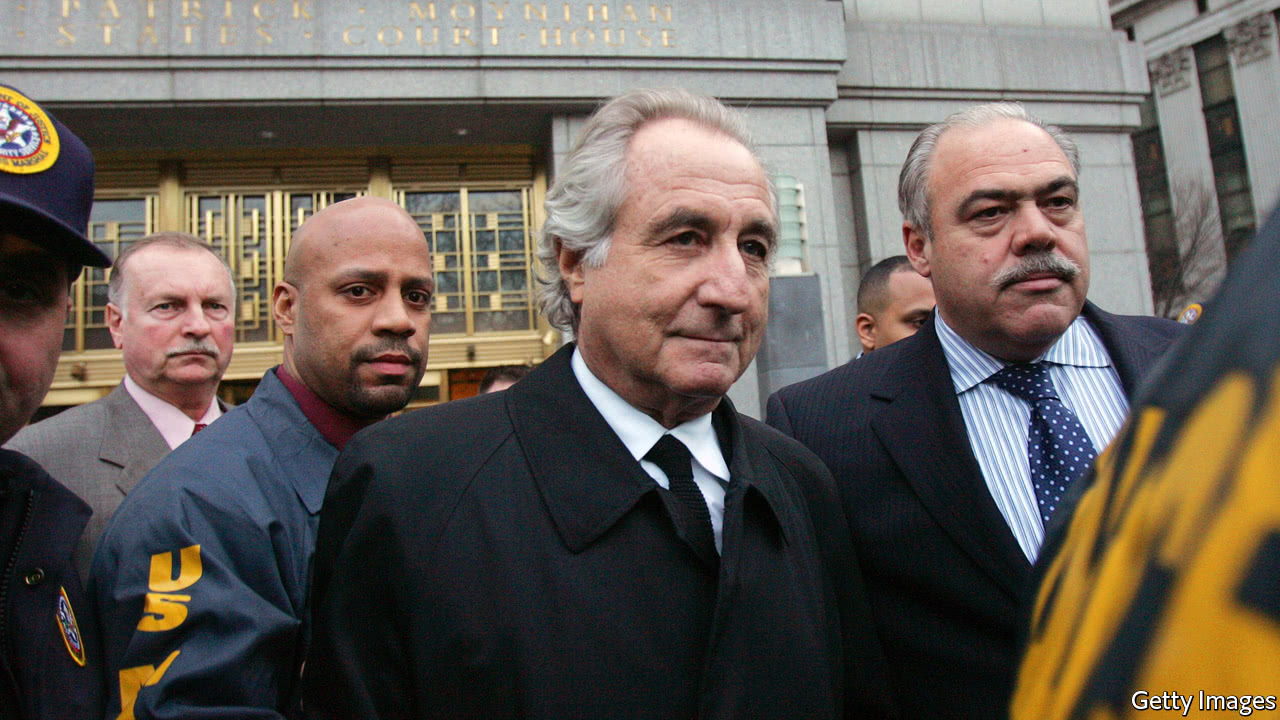
WHEN bankruptcy trustees were appointed over a hectic weekend late in 2008, there seemed no end to the losses caused by the collapse of Bernie Madoff’s Ponzi scheme. Cash in the bank was no more than $150m. But the losses have been less, and the assets available for compensation greater, than had been feared.
On February 22nd Irving Picard, the bankruptcy trustee overseeing the liquidation of Mr Madoff’s firm, announced that a fund set up to reimburse customers would make its ninth distribution, of $621m, bringing the total handed out so far to $11.4bn. Another $1.8bn in held in reserve for contested claims. This is on top of a separate distribution of $723m last November from a separate fund run by the Department of Justice. Another $3bn remains to be distributed in that fund and the bankruptcy trustees hold out hope that substantially more will be recovered and returned.
Mr Madoff, who will turn 80 in April, is serving a 150-year sentence in a North Carolina prison. At his…Continue reading
The rapid rise and fall of the Anbang empire
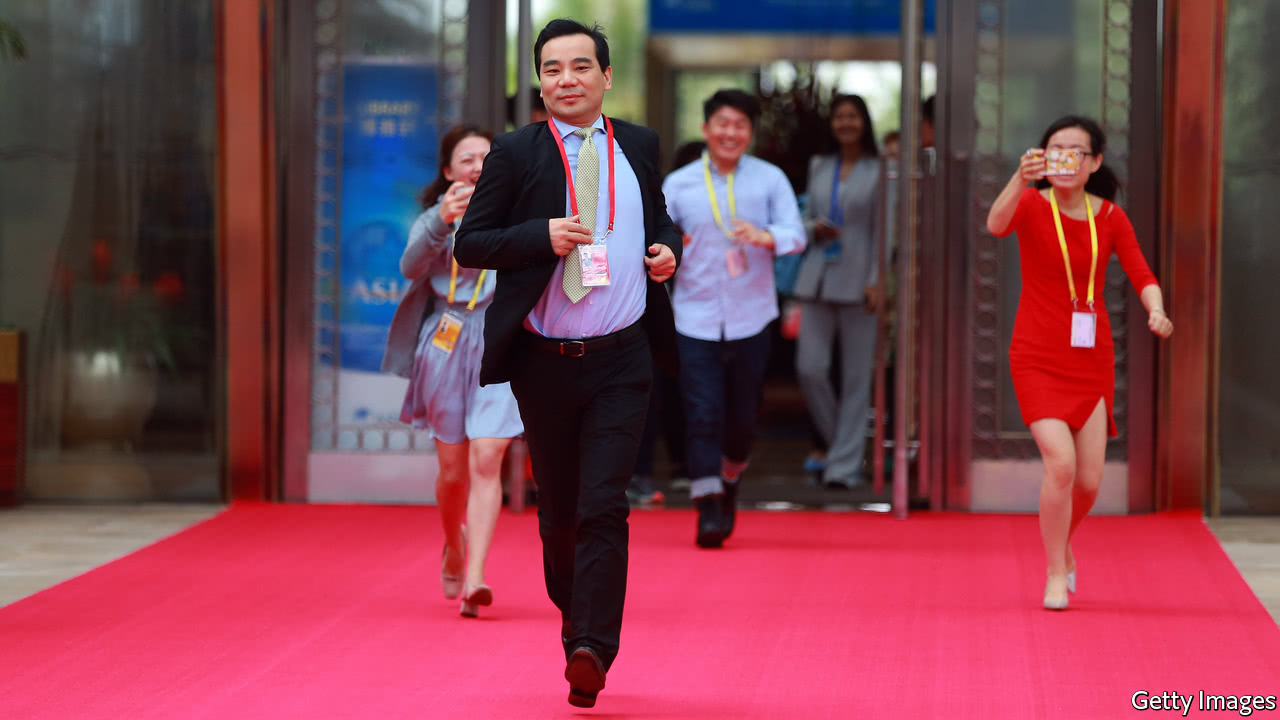
RARELY in corporate history has a giant come and gone so quickly. Anbang was founded in 2004 as a small Chinese car-insurance company. By the start of last year it ranked among the world’s biggest insurers with some $300bn of assets, including stakes in hotels and financial firms across America, Europe and Asia. Given another ten years, boasted Wu Xiaohui, its swashbuckling founder, Anbang’s scale would “exceed your imagination”. But then, just as vertiginous as its ascent, came its fall. Alarmed at its debt-fuelled expansion, regulators started blocking its overseas deals, reined in its insurance business and detained Mr Wu. On February 23rd its disgrace became complete: the Chinese government announced that it had taken over Anbang and would prosecute Mr Wu for economic crimes.
The insurance regulator said it had intervened because illegal operations could have “seriously endangered” the company’s solvency. It did not spell out the exact nature of Anbang’s alleged…Continue reading
A pharmaceutical firm bets big on a cancer drug
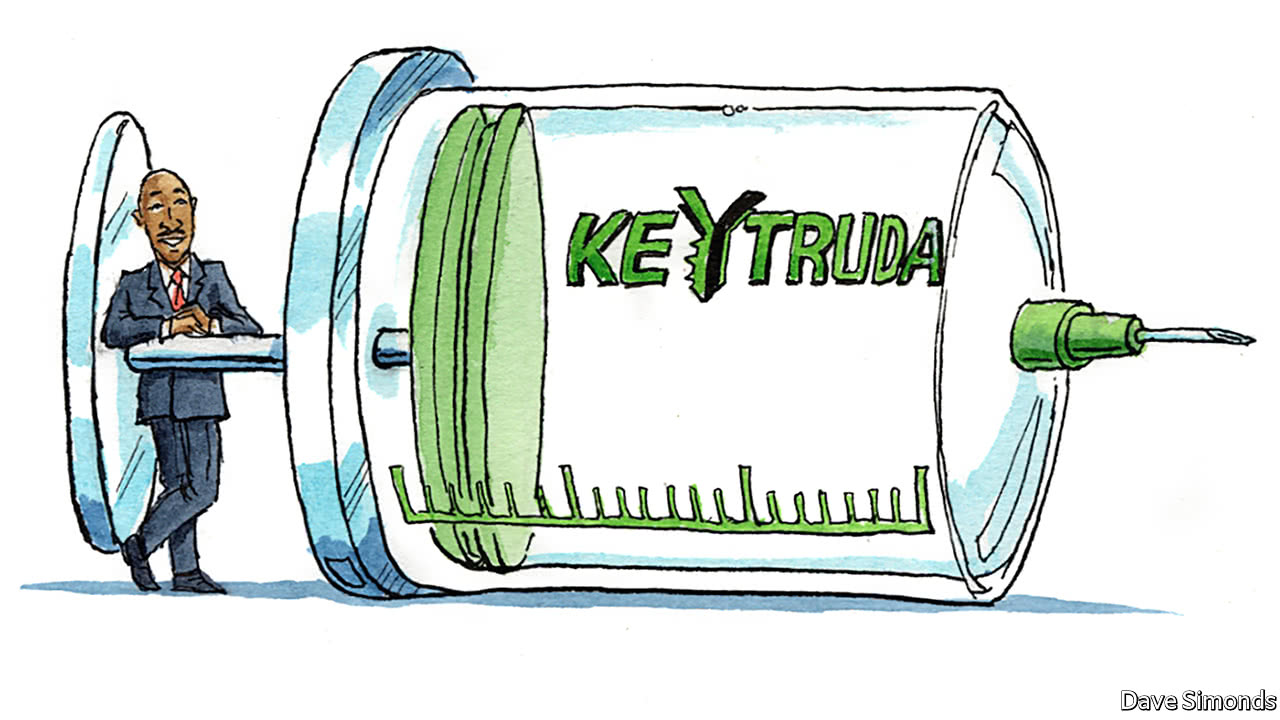
WHEN Ken Frazier, chief executive of Merck, an American pharmaceutical giant, started his job in 2011, he had a hard decision to make. The firm had promising new drugs—such as Januvia, for diabetes, and Gardasil, a vaccine against cervical cancer. But the pharma industry was struggling with dismal returns on R&D and investors were questioning if companies were overspending on science. Some surrendered and started buying in drugs instead. But Mr Frazier opted to carry on backing his labs and promised publicly to spend on R&D for the long term, not for the stockmarket’s immediate gratification.
An opportunity to implement the pledge soon arrived. Merck’s merger with another pharma firm, Schering-Plough, in 2009, had brought it an obscure new cancer drug. At first Merck’s scientists were unimpressed and relegated the drug to a list of assets to be licensed out. There was widespread scepticism at the time about whether drugs that attacked cancer using the immune system would…Continue reading
Chinese cities are competing to woo overseas entrepreneurs

WHEN Maria Veikhman, founder of SCORISTA, a Russian credit-scoring startup, was considering expansion abroad, China immediately came to mind. She believes the scope there is vast, for two-fifths of Chinese have no credit records. Ms Veikhman settled in Tianfu Software Park, a state-owned incubator in Chengdu, capital of Sichuan province where city authorities “offer almost everything for free”. Complementary facilities range from office space, basic furniture and logistics services to detailed guidance on entrepreneurial methods.
Chengdu aims to catch up with Beijing, Shanghai, and Shenzhen, which at present are in a different entrepreneurial league—together they have over a hundred unicorns, or private startups worth over $1bn. The south-western city allocated 200m yuan ($30m) in 2016 to an innovation-and-startup fund for overseas founders, and hands out up to 1m yuan in cash to well-capitalised foreign startups and joint ventures. If the…Continue reading
Europe’s flourishing gunmakers

IT WAS a blunder by Heckler & Koch, a big German gunmaker. On February 15th the firm apologised for a “mistake” after its American subsidiary posted a Valentine’s image showing a handgun surrounded by ammunition arranged in the shape of a heart. The image went out to social media shortly after a deadly school shooting in Florida.
The post was also a reminder that although Europeans often criticise lax firearm-ownership laws across the Atlantic, the region’s firms are increasingly present in America’s market for small arms—defined as revolvers, pistols, rifles and shotguns. Americans buy far more such weapons than any other nationality and their appetites have been growing steadily. This year they are likely to buy 14.5m such firearms, notes Jurgen Brauer of Small Arms Analytics, a consultancy. Europeans have proved deft at grabbing a sizeable portion of all this.
One of Russia’s most successful private entrepreneurs sells–to the state

IN THE Russian business community Sergei Galitsky served as a rare example of a self-made billionaire who rose with relatively little state help and outside the natural-resources trade. He built his retail company, Magnit, from scratch into Russia’s largest network; it has more than 16,000 stores. Rather than moving to Moscow, he kept his headquarters in his hometown of Krasnodar, where he also founded a football club. On February 16th he made a telling exit, announcing he would sell nearly all of his shares in Magnit—29.1%—to VTB, a state bank.
That Mr Galitsky (pictured, above) decided to sell is the result of a tough business cycle and some strategic mistakes. More remarkable is that he found a buyer not on the domestic private markets, or from among foreign investors. Selling to a pubic-sector bank reflects the growing role of the state in the Russian economy. Russia’s federal anti-monopoly service puts its share at 70%. Yet the retail sector had largely been insulated from the trend….Continue reading
The spoils from American corporate tax reform are unevenly spread
“IT’S always a lot of fun when you win,” President Donald Trump enthused after his tax package was approved by Congress in December. Company bosses nodded along. The centrepiece of the reform is a drastic cut to the corporate-tax rate, from 35% to 21%, taking it below the rich-country average. Although its impact is partly offset by some revenue-raising measures, the congressional Joint Committee on Taxation estimates that American business will gain around $330bn from the reform over the next ten years. Yet within that are sizeable variations in terms of which firms and industries benefit most.
The biggest winners are more domestically oriented companies. These typically face higher effective tax rates than American companies with a big presence overseas, which do business in lower-tax countries. Bosses are also evaluating other new measures. So-called “full expensing”, for example, helps those with big spending plans by allowing them to deduct investment costs up front. But using debt will become less attractive, as interest payments are no longer fully deductible.
Some firms experienced high volatility in their earnings for the final quarter of 2017 thanks to the treatment of so-called “deferred tax assets”. These are past tax losses carried forward to set against future tax bills, and such assets have shrunk in value because of the lower…Continue reading
Protestantism might be good for the wallet, after all
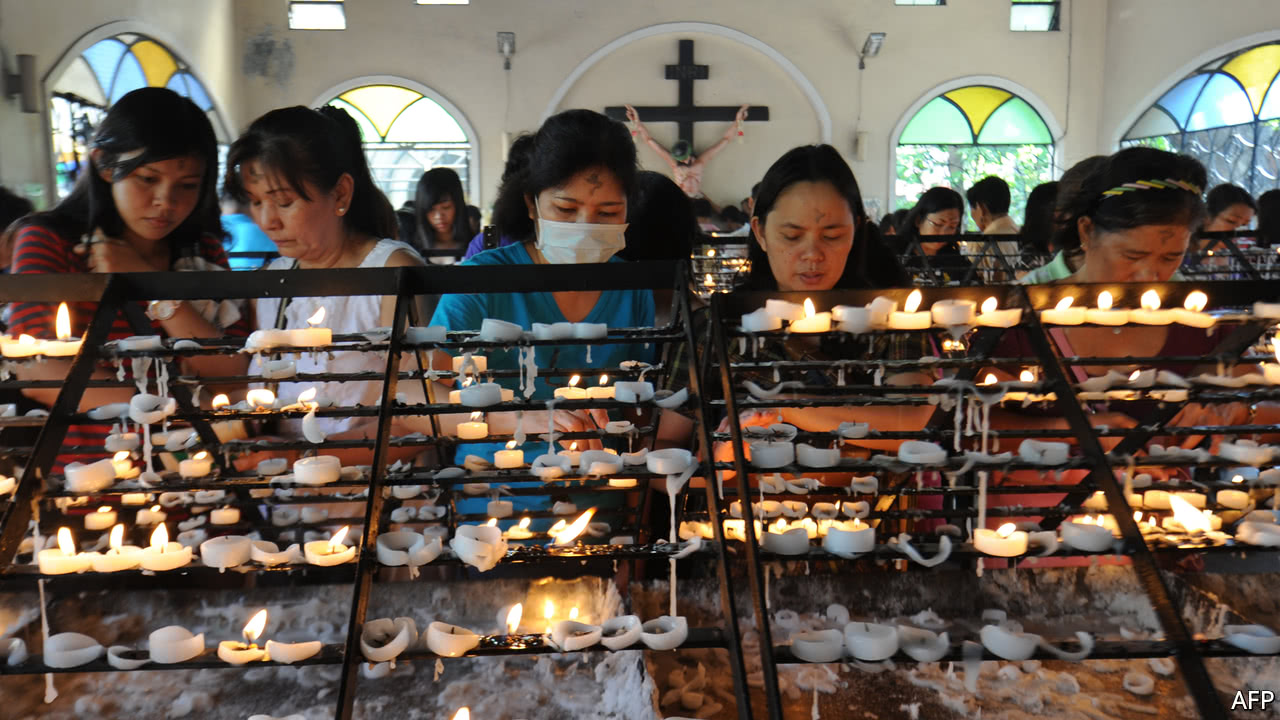
CAN religion make people wealthier? In 1905 Max Weber, a German sociologist, argued that it had happened in Europe. Protestants did not invent capitalism in the 16th century, he suggested. But, by discarding monastic asceticism and embracing the notion that diligence and self-improvement are pleasing to God, they became particularly good at it.
Weber’s idea is unfashionable these days, partly because so many non-Protestant countries have become rich and partly because of a cause-and-effect problem. Were Protestants truly better at business, or were ambitious, business-minded people drawn to Protestantism? One way of settling that question is through a randomised controlled trial of religion. A National Bureau of Economic Research working paper released on February 19th reports on an experiment in the Philippines that suggests Weber was onto something.
International Care Ministries (ICM), an evangelical charity, tries to help the…Continue reading