
Tag: Gulliver
How to ensure Ryanair foots the bill for flight delays

THERE is little doubt that Ryanair takes umbrage at EU261, a piece of European law that guarantees passengers compensation in the event of most flight delays and cancellations. Michael O’Leary, the low-cost carrier’s boss, insists that he complies with the “ridiculous” piece of legislation. But many say otherwise. Indeed, Mr O’Leary seems to revel in refusing to give out compensation; he once told a customer who dared to ask for one “you’re not getting a refund so fuck off”. Last year, when a pilot-rostering mishap grounded thousands of Ryanair flights, Britain’s Civil Aviation Authority (CAA) accused it of “persistently misleading” customers about their rights. Which?, a British consumer group, agreed that Ryanair fell “woefully short” of its obligations. Media reports exposing poor treatment of passengers abounded. Yet, in the past five months, Gulliver has received two EU261 pay-outs from Ryanair. The circumstances surrounding them…Continue reading
A hamster is the latest victim in the row over emotional-support animals

THE roster of emotional-support animals that are and are not allowed onto flights in America can sound, at times, like a retelling of the story of Noah’s Ark. Although the number allowed on for nothing has grown in recent years, airlines—which believe that the loophole is being abused by those not wanting to pay to transport their pets—are fighting back. Only last month a peacock was barred from a United Airlines flight for bending the rules, and for not even being the right size for a normal plane seat. But the debate has now taken a deadly twist. The victim is a hamster.
Belen Aldecosea, a college student, booked a flight on Spirit Airlines, a low-cost carrier, from Baltimore to her home in Florida in November for medical treatment, according to the Miami Herald, a local paper. Concern about a growth on her neck had led her to buy a hamster, whom she named Pebbles, for comfort. She called Spirit to ask if she could bring Pebbles on…Continue reading
Why United Airlines has got into a flap over a peacock
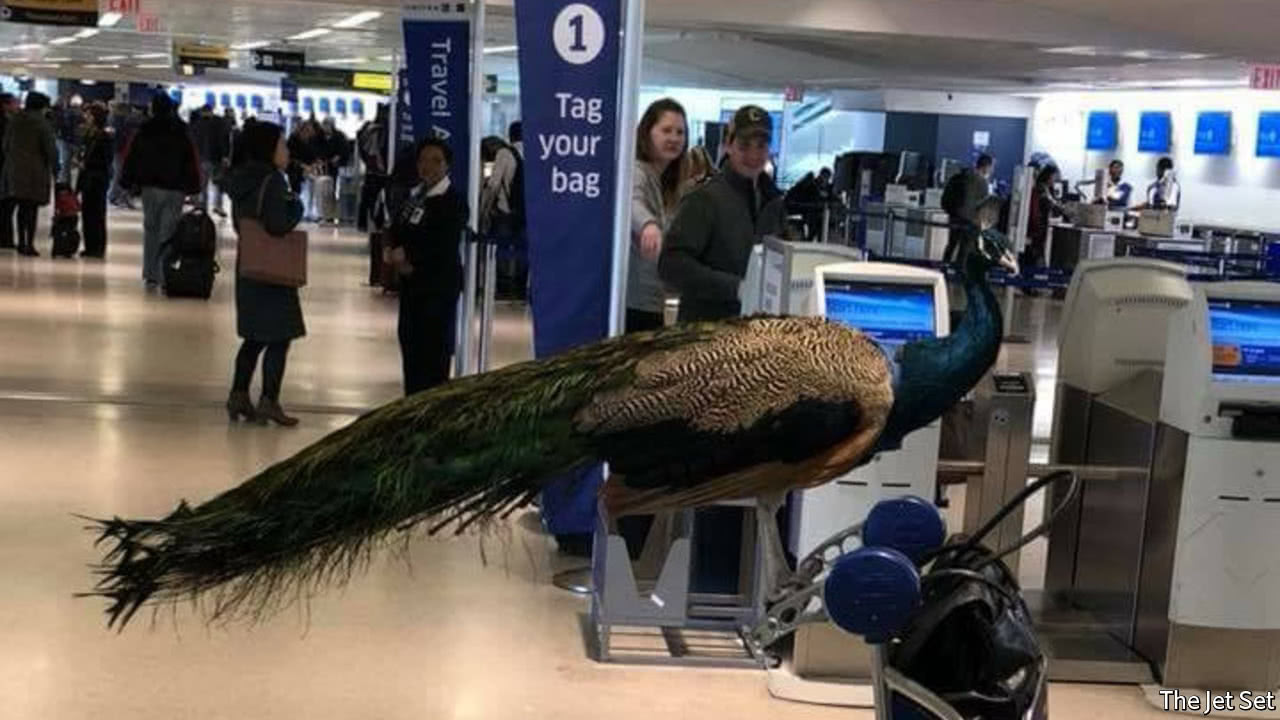
FEDERAL guidelines in America stipulate that airlines must allow passengers with disabilities to bring support animals onto flights. The rules were originally designed with guide dogs for the blind and the like in mind. Yet in recent years the rules have allowed a host of unusual and exotic animals to board planes for their owners’ emotional wellbeing.
Last weekend United Airlines, America’s third-largest carrier, drew the line at a peacock. A woman arrived at Newark International Airport and attempted to board her flight with the large bird, which she claimed was an emotional-support animal. The Jet Set, a travel show, captured images of the bird as it was denied boarding (see picture). The airline told the Washington Post that the peacock “did not meet guidelines for a number of reasons, including its weight and size” and that “we explained this to the customer on three separate occasions before they arrived at the airport.”
Service animals, including emotional-support animals, can generally fly for free. As…Continue reading
A travel agent is trying to charge fees for sunbeds
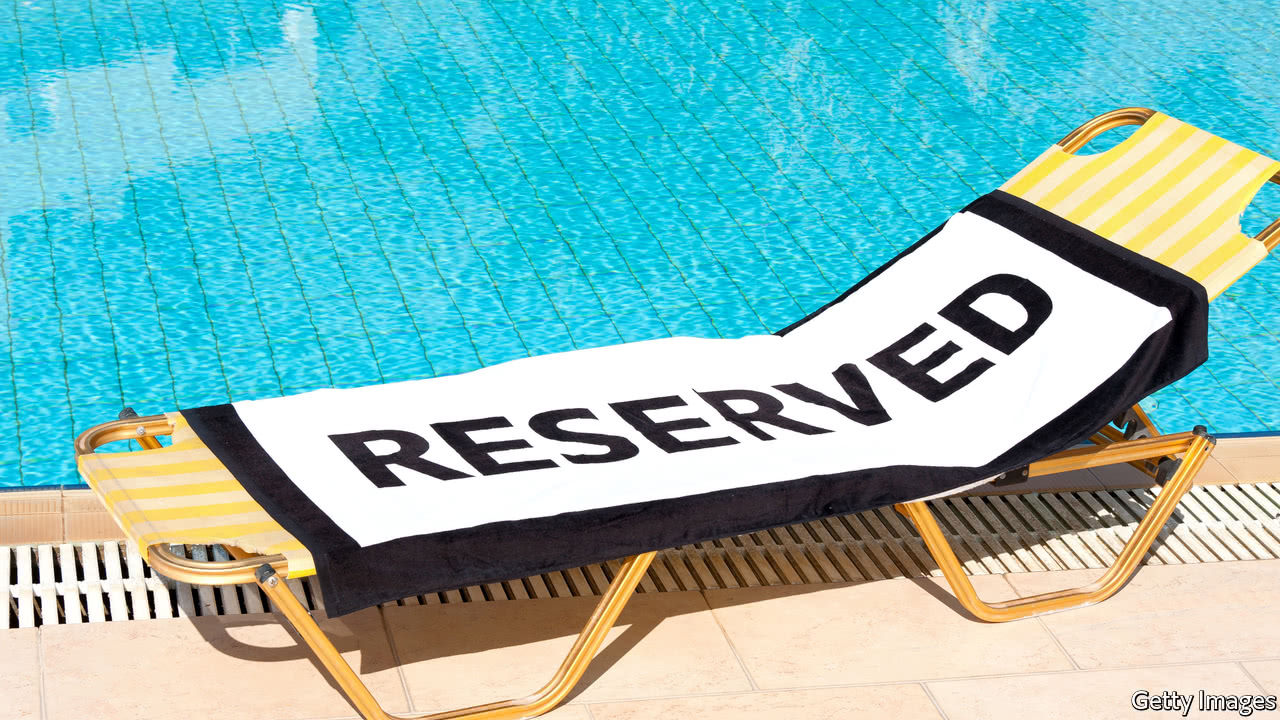
IN KEEPING with the trend for charging for things travellers used to get free, it should perhaps come as no surprise that sunbeds are the latest feature of a standard holiday on which travel agents are slapping extra fees. Thomas Cook, a British package-holiday firm, has announced that it will allow holidaymakers to pre-book poolside loungers for £22 ($31) per person. Six days before the start of a trip, travellers will get an email offering them the chance to reserve specific sunbeds. The booking tool will include a map that allows people to see where the sun will shine at various times of day. The experiment will start in late February at three hotels on the Canary Islands and will expand to 30 hotels this summer.
To some holidaymakers, this will seem like yet another attempt by the travel industry to get money from every source possible. Airlines, for instance, made $82bn in add-on fees last year alone, according to IdeaWorksCompany, a research firm. Over the past few years, both full-service and low-cost airlines have introduced…Continue reading
How to board a plane without a boarding pass

EARLIER this month a woman arrived at O’Hare International Airport in Chicago without a ticket, boarding pass, or passport and flew to London. Prosecutors claim she did this by sneaking past officials from the Transportation Security Administration, a government agency responsible for airport security, while they were inspecting other travellers’ boarding passes. She was briefly thwarted when she tried to do the same thing at the boarding gate for a flight to Connecticut. But the gate agent caught her and asked her to sit down. After spending the night in the airport, she took the shuttle to the international terminal—again without the required boarding pass and passport—and got on a British Airways flight to Heathrow, where she was arrested on arrival.
The woman, 66-year-old Marilyn Hartman of Illinois, has done this before. In fact, she has been convicted of criminal trespassing at O’Hare four times over the past few years. Ms Hartman’s lawyers have attributed her behaviour to mental-health issues. She has never appeared to pose…Continue reading
Why drones could pose a greater risk to aircraft than birds
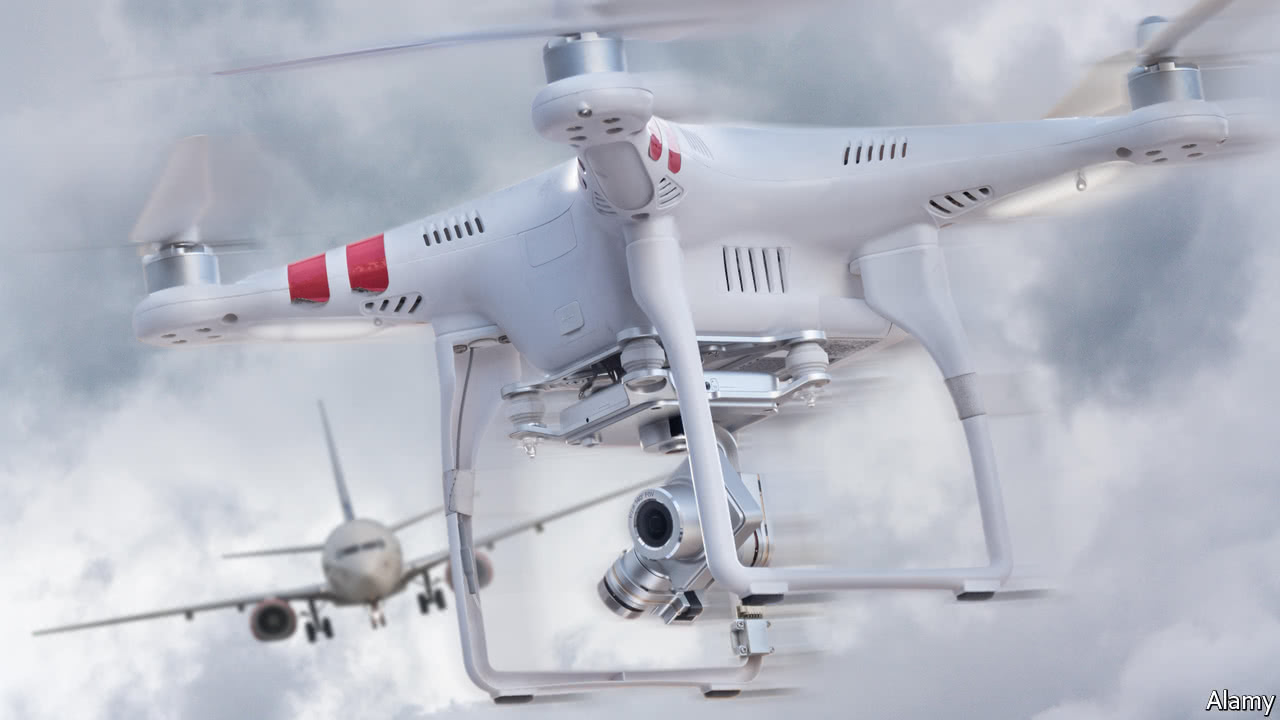
THE “Miracle on the Hudson”—the successful ditching of a US Airways jetliner into New York’s Hudson River in 2009 after it hit a flock of geese—taught frequent flyers two things. First, it really is possible to land an aircraft on water, just as is shown on seat-back safety cards. Second, and more worryingly, the incident showed how dangerous birds can be to aircraft, particularly when they get sucked into engines. The machines are supposed to be designed to withstand an impact by the feathered creatures. Using big guns, chickens have been fired at aircraft engines in safety tests since the 1950s. But what about drones?
New research suggests that small unmanned aerial vehicles (UAVs) can actually be much more damaging than birds at the same impact speed, even if they are a similar weight. The study, published by the Alliance for System Safety of UAS through Research Excellence, a think-tank, used computer simulations to examine the impact of bird and UAV…Continue reading
Some hotels charge visitors for bad reviews

TRAVELLERS have grown accustomed to annoying hidden fees, from the baggage charges that bring airlines tens of billions of dollars a year to the resort fees that account for nearly a fifth of American hotels’ revenue. But a new one that has popped up in recent years might be the most irksome of all due to its sheer perversity: fees for leaving bad reviews.
Last March, a couple arrived at the suite they had booked at the Abbey Inn in Indiana only to find, they claim, a dirty bed, a foul smell, an insect infestation and no hotel employees on the premises to assist them. Upon leaving, they did what so many travellers do these days. They wrote an online review warning others about the hotel’s shortcomings. Sometimes, negative reviews prompt apologies and compensation from their subjects. But in this case, the couple
Legacy airlines are facing new competitors on transatlantic routes

EVEN for a global industry like aviation, Primera Air’s business model seems remarkably cosmopolitan. The Icelandic-owned budget airline is headquartered in Latvia, but mainly operates low-cost flights from Denmark and Sweden to sunny places in the Mediterranean. This summer, it will begin long-haul flights from Britain and France to America. The company bears more than a passing resemblance to Norwegian Air Shuttle, another nominally Scandinavian airline with global aspirations. More than two-thirds of Norwegian’s capacity by passenger-km now bypasses its home country, and the rapid growth of its long-haul operations are proving to be a serious challenge for legacy carriers such as British Airways. And its tentacles are spreading around the world. This autumn, the carrier will begin operating domestic Argentinian flights, 12,000km away from its home base.
Low-cost airlines are not new. Ryanair, founded in the 1980s, has grown to become…Continue reading
The days of the A380 look numbered
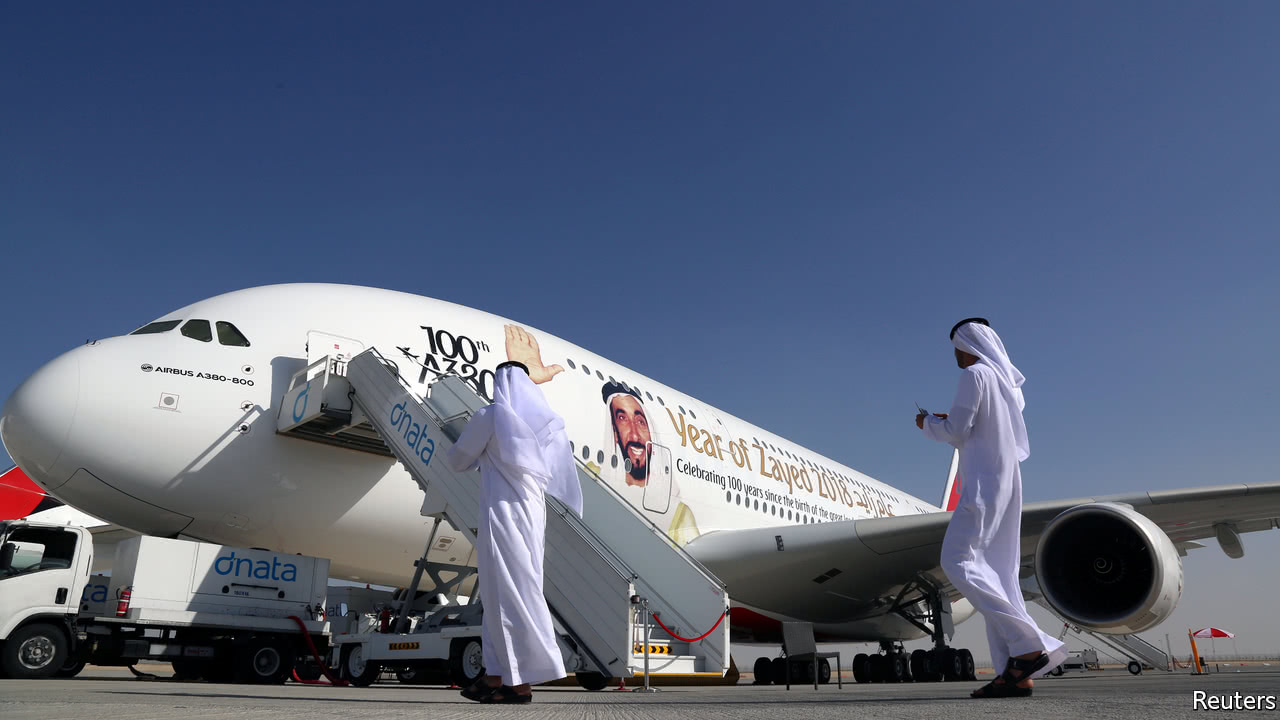
ASK frequent flyers which is their favourite aircraft and most come up with the same answer: the A380 superjumbo made by Airbus, a giant European planemaker. Able to carry 525 passengers in a typical three-class layout, on two full-length decks, the aircraft still feels spacious, with wide aisles and plenty of headroom. Frequent flyers also admire the freshness of the cabin air, the lighting systems that are designed to reduce jet lag and the quietness of the cabin. “You can hardly hear it take off,” one fan recently told Gulliver. “And I can actually go to sleep on the plane unlike any other I’ve been on before.”
But less than a decade after it carried its first paying passengers, the age of the superjumbo looks like coming to an end. When Airbus announced its plans to build the plane in 2000, it hoped to sell up to 1,200 of them over two decades. Eighteen years later it has sold just a quarter of that figure, and has…Continue reading
Turkish Airlines bounces back to growth
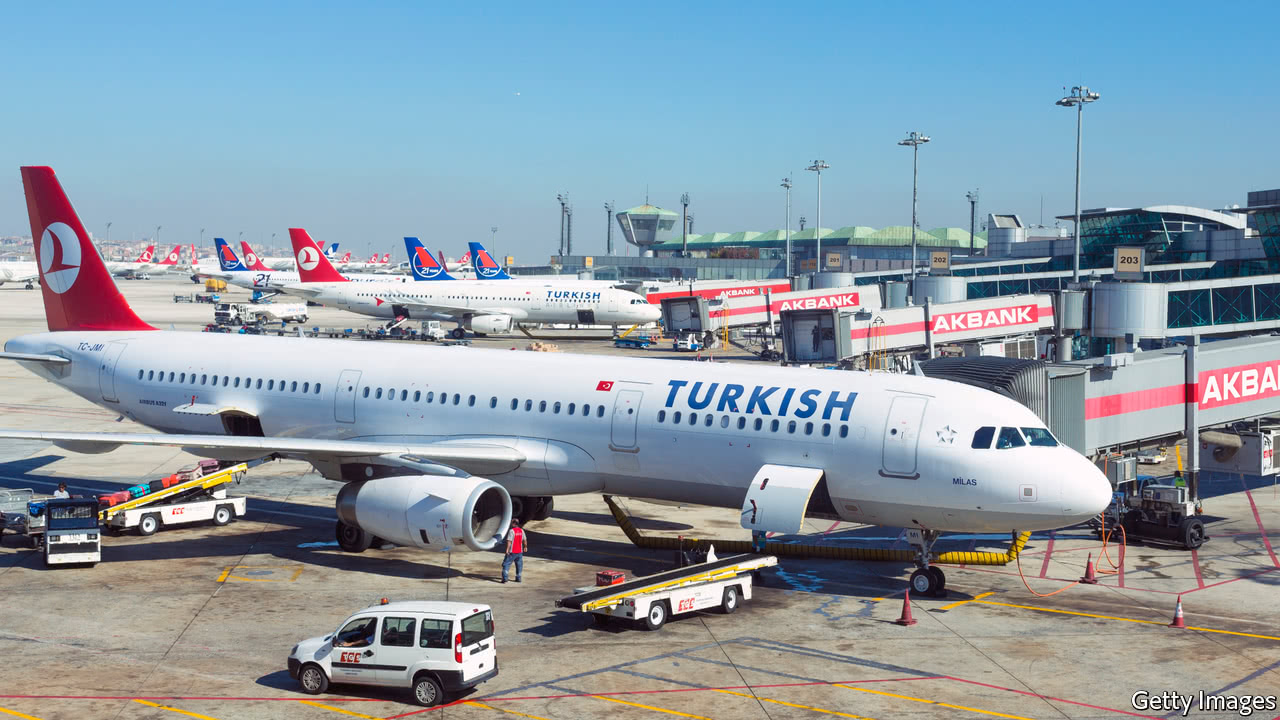
A LITTLE over a year ago, Gulliver gave a downbeat assessment of the prospects for Turkey’s aviation sector. Having enjoyed a decade of uninterrupted growth of more than 10% a year, Turkish Airlines, the country’s flag-carrier, was grounding aircraft and closing routes amid growing unrest at home and violence across its border with Syria. Concerns about regional security were also making life difficult in the United Arab Emirates (UAE) and Qatar, two other countries that have built aviation empires by connecting far-flung parts of the globe through their hub airports. Yet whereas the Gulf carriers remain in the doldrums, Turkish is gaining altitude again.
There had been just cause for concern about Turkey at the end of 2016. The year unleashed a failed military coup, a resultant purge of dissenters, and a wave of attacks mounted by Islamic State terrorists. When Istanbul’s Atatürk Airport was struck by bombers in June, even transit passengers started to…Continue reading