
Tag: Gulliver
Supersonic jets may be about to make a comeback
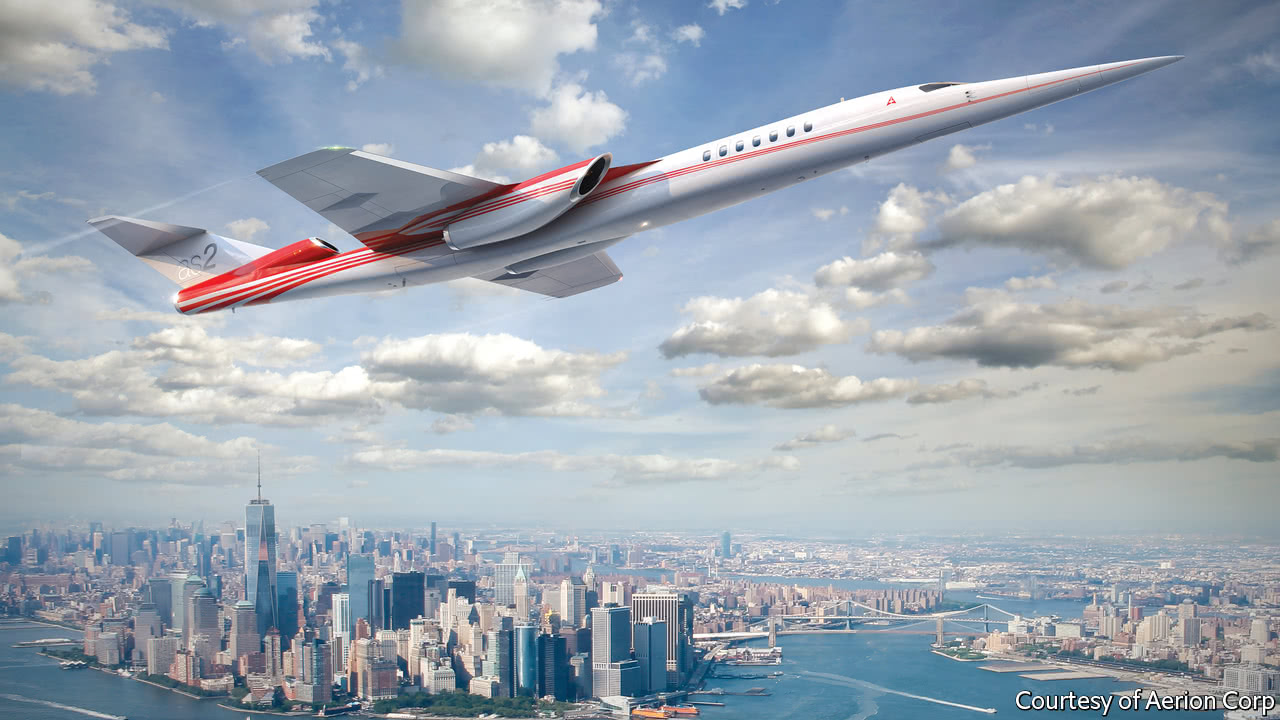
IN OCTOBER 2003, the age of supersonic passenger travel came to an inauspicious end. That month British Airways withdrew from service its last Concorde jet, a Franco-British aircraft from the 1970s that could fly at twice the speed of sound. Since the 1940s executives in the aerospace industry had predicted that the future of passenger travel would be supersonic. But since the retirement of Concorde there have been no passenger jets that can fly that fast in service. Worse still, even conventional sub-sonic jetliners these days fly slower than their equivalents from the 1960s.
In 2017 the race to break the sound barrier gained new momentum. In December Aerion, an aerospace start-up from Nevada, Lockheed Martin, a defence giant, and GE Aviation, an enginemaker, announced a joint venture to develop what they are calling the world’s first supersonic business jet, the AS2. Aerion’s executive chairman, Brian Barents, has said that he hopes the jet will be able to carry up to 12 passengers at 1.4 times the speed of sound—about 60 percent faster…Continue reading
America’s Department of Commerce imposes a tariff of 292% on Bombardier’s C-Series jets
A YEAR ago Dennis Muilenburg, the chief executive of Boeing, the American aerospace giant, had a problem. Tweets written by Donald Trump, America’s newly elected president, were hitting Boeing’s share price. Initially buoyed by Mr Trump’s promise of extra spending on defence, the firm’s share price fell in December 2016 when he suggested in a tweet that an order for new presidential planes worth $4bn should be cancelled. After the president elect picked a fight with Lockheed Martin, a rival planemaker, Boeing’s executives were left in fear of being the next target.
And so, it seemed, Mr Muilenburg came up with a plan. Boeing would snuggle up to Mr Trump’s “America First” agenda to avoid the flack. Boeing started to stress in its press releases how many American jobs it was creating; it asked the president to unveil the first 787-10 jet produced in February. In April it filed a trade case against Bombardier, alleging that its Canadian…Continue reading
Ryanair stops Christmas strikes, but at a cost
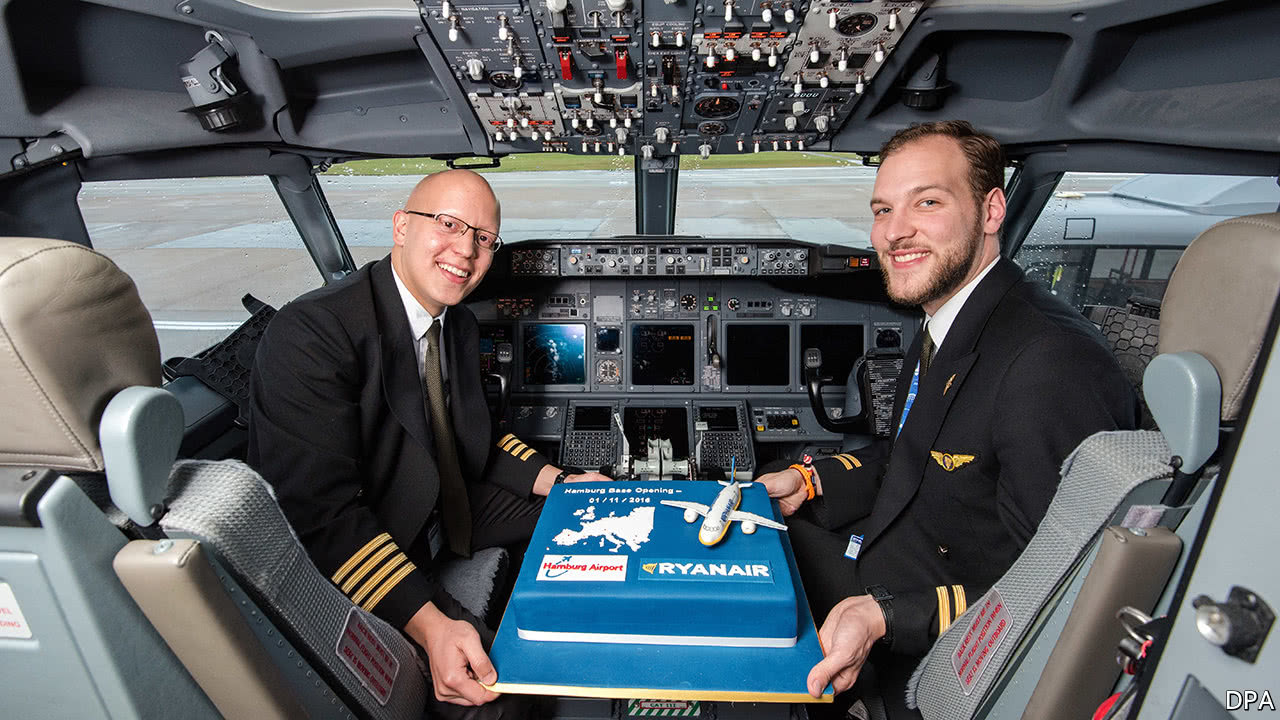
AIRLINES respond to greater demand for travel around Christmas by increasing fares. But this year, Ryanair has found that it is not the only one taking advantage of the desire to be home for the holidays. To avert proposed strikes by pilots across Europe, the Dublin-based carrier offered on December 15th to recognise pilot unions for the first time in its history. The offer came just in time to avert a four-hour strike by Italian pilots scheduled that afternoon. Pilots in Ireland and Portugal also called off a strike they had planned for December 18th. Ryanair may have saved Christmas, but its stock price fell by 8% on the day of the announcement.
Michael O’Leary, Ryanair’s chief executive, acknowledged that union recognition marked a “significant change” for the company. During a dispute with baggage handlers in 1998, Mr O’Leary said that Ryanair would recognise unions “when a majority of our people wishes to do so.” Nonetheless, Ryanair has strongly resisted attempts by its employees to join independent unions, preferring to…Continue reading
Military and civil-aviation bosses are stepping up their efforts to recruit new pilots

FOR MANY people, the Hollywood blockbuster “Top Gun” captures the allure of becoming a pilot. In it, fighter-pilot trainees don aviator sunglasses and flight suits, and zipp about the skies to a soaring 1980s soundtrack. But despite such pop-culture appeal, America’s Air Force is struggling to capture the imagination of would-be recruits. This year it will be short of around 900 new airmen.
To counter this, the Air Force is stepping up its efforts to recruit new cadets. This month they introduced a $35,000 signing-on bonus for newly hired military airmen, the first new incentive of its kinds since 1999. Commercial carriers, too, are trying to entice more newcomers with better financial rewards. The average pay for new pilots in that sector has nearly tripled from $20,000 to $59,000 in the past three years.
One of the main barriers for would-be pilots is training. To become a pilot requires an investment of $200,000, often more than student loans will cover. In addition trainees are required by law to fly 1,500 hours…Continue reading
India’s new aviation policies are breathing life into a once-ailing sector

WHY would one of the world’s fastest-growing airlines buy a ten-seat propeller plane, when most of its customers fly on 200-seat jets? Switching to smaller, less efficient aircraft defies commercial logic. But it is an appealing thought for those living in isolated communities far from big airports. That is what India’s new regional connectivity scheme, Ude Desh Ka Aam Nagrik (UDAN) or “let the common man fly”, promises to offer. It uses subsidies to improve the commercial viability of seldom-used routes. It also caps half of the fares on such routes at 2,500 rupees ($38) per hour of travel. If properly implemented and funded, the scheme could become a powerful tool for spreading India’s economic wealth more evenly.
When Gulliver last reported on the aviation policies of Narendra Modi, India’s prime minister, there was little cause for optimism. At the time, Mr Modi was stonewalling a new policy aimed at resuscitating the ailing sector. Airlines…Continue reading
Public-relations woes may be catching up with Uber

UBER has had a tough year. It has fired staff on the back of sexual-harassment allegations and faced reports of a hostile workplace culture. It has been sued for allegedly stealing self-driving-car technology. It lost customers when it flouted a New York taxi boycott in protest of President Donald Trump’s travel ban. And, amid all the turmoil, its boss resigned. But despite all this, the company continued to win more and more customers, including business travellers.
Now, however, there are signs that the tide may be turning. Certify, an expense-management software company, has released its latest quarterly report on business-travel spending in America. And for the first time since it started collecting data in 2013, Uber has seen a decline in use among business travellers.
Uber and other ride-hailing apps still dominate the business-travel market for ground transport, accounting for around two-thirds of it. And they are growing at the expense of traditional services. The market share of taxis and rental cars…Continue reading
Hotels are employing fewer concierges
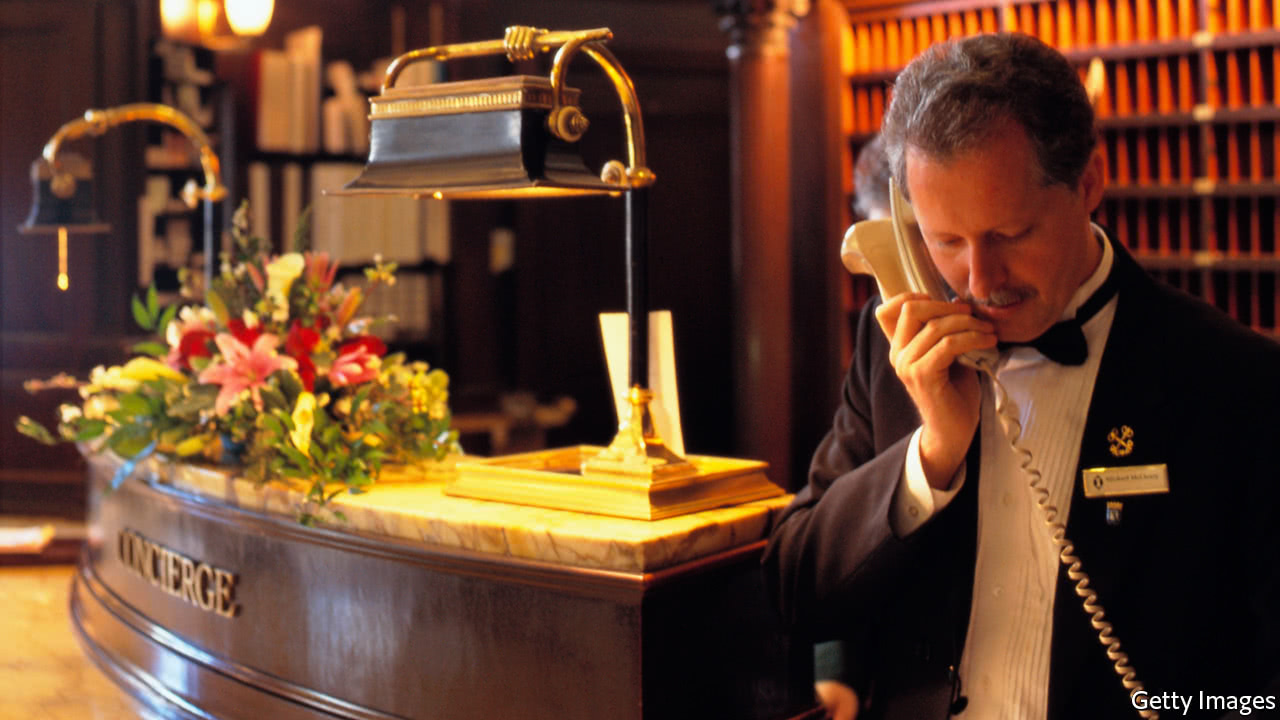
IF BUSINESS travellers need to reserve a table at a restaurant, they may use OpenTable, a website. If they wish to find a nearby museum, a Google search will probably be their first port of call. And if they want transport into town, they can easily hail an Uber. Given that so many services are just one swipe away, is there a need for a hotel concierge anymore?
Increasingly hoteliers think that there is not. The share of American hotels with concierges has fallen from 27% in 2010 to 20% last year, according to a report by the American Hotel and Lodging Association, a trade group. Since 2014 the number of luxury hotels that employ a concierge has declined by 20%.
Though concierges are not extinct quite yet, those that remain tend to work in upmarket establishments. In America 82% of luxury hotels employ concierges, as do 76% of “upper upscale” hotels, the second most glamourous category. After that concierges are a much rarer sight. Just 16% of “upscale” hotels have them. For…Continue reading
More airlines are offering free Wi-Fi for messaging services
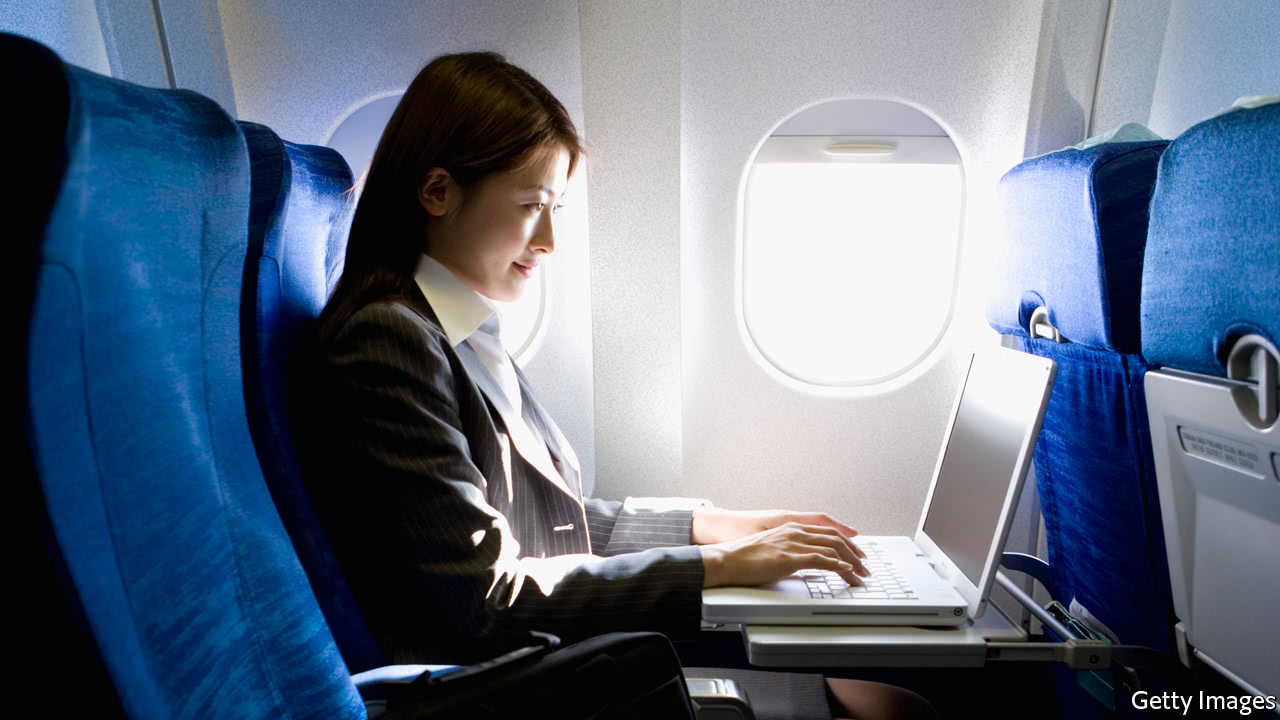
AT A time when all aspects of air travel seem to come with a price tag, one service quite suddenly has become free. And it is not in-flight dining or checking in a bag or securing an exit-row seat.
The increasingly common free service is onboard messaging. Earlier this month, Delta Airlines began allowing passengers to use its Wi-Fi system to send free messages on third-party apps, such as iMessage, WhatsApp, and Facebook Messenger. Passengers can do so on their smartphones, laptops or tablets. (Mobile-network services, like 4G, tend to be unreliable after lift off). Delta is following the lead of Alaska Airlines, which rolled out a similar service earlier this year, as the Los Angeles Times reports, and American Airlines which announced its own plans to offer messaging in the near future.
Sadly, this is still a far cry from a free internet service. Airlines still charge for browsing and they have a…Continue reading
Carriers in America are doubling down on budget airfares

GLEN HAUENSTEIN, the president of Delta, is optimistic about the future of basic economy. On a conference call this week, he boasted that the stripped-down airfares actually act as an incentive for passengers to upgrade to the more expensive standard economy tickets. Despite Mr Hauenstein describing it as a product that “people don’t really want”, the airline says it will expand the revenue-boosting basic-fares system in 2018.
Delta was the first carrier to roll out basic economy fares—sometimes called “last class”—in America in 2012. Since then the model has caught on. Both American and United quickly introduced similar services on some domestic routes. By taking away a perk here and adding another there, each airline has created a unique version of the same miserable experience.
The new fare system is not without its critics. Many have
Airlines are trying to cram ever-more seats onto planes
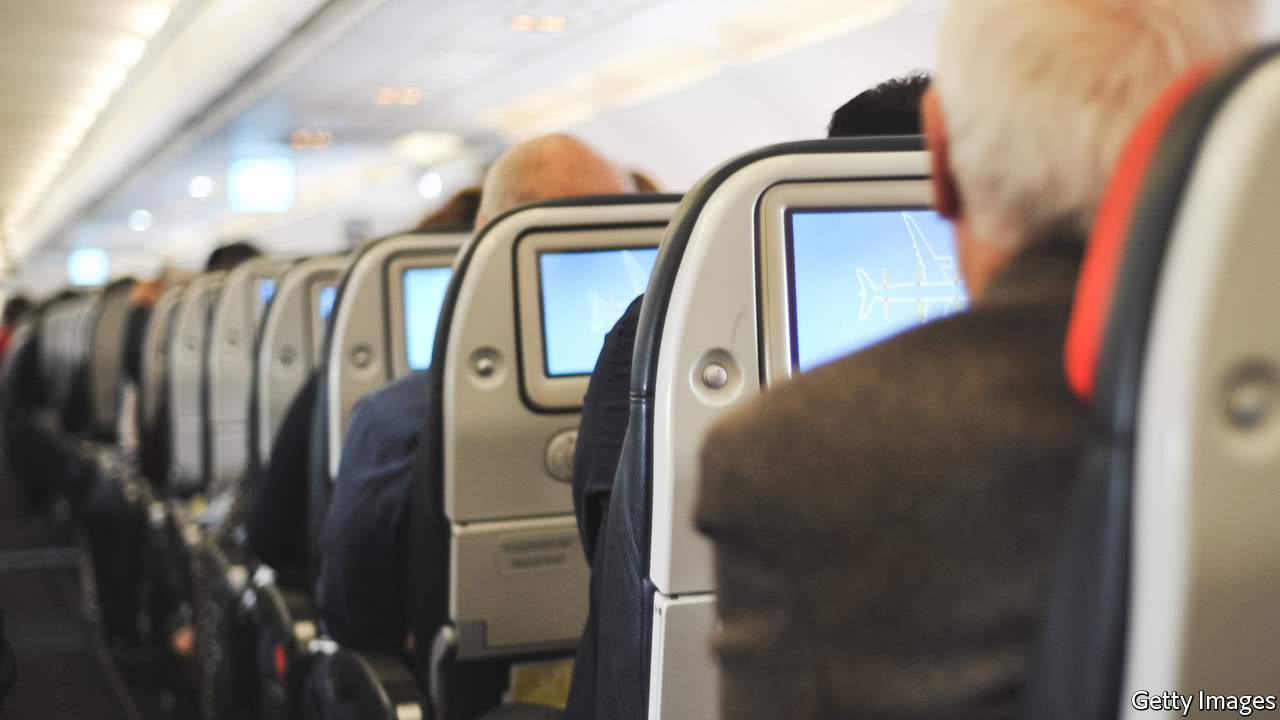
AIRLINES use all sorts of clever tricks to make more money from passengers. They charge extra for bags, for food and for selecting where you sit. Now they are embracing another strategy: packing more seats onto each plane. Last month American Airlines announced that it will insert 12 more seats, or two rows, into its economy class on its Boeing 737-800 fleet and an extra nine seats into its Airbus A321s. Similarly, JetBlue recently said it will cram 12 additional seats into its A320s.
But flyers do not like being packed ever-more tightly into the sardine tins that planes have become. This summer American Airlines announced that it would reduce the distance between rows—known as seat pitch—from 30 to 29 inches on some of its new planes. The public outcry was so heated that the carrier scrapped its plans, as Gulliver has previously reported. This February a member of Congress