
Tag: Gulliver
More business travellers are booking their own trips

A friend of Gulliver’s recently received some devastating news, in the form of a change to company policy. No longer would he and his co-workers be able to book their own flights and file for reimbursements. Instead, the firm would buy all employees’ plane tickets from the start.
On the face of it, this is a convenient change. It saves staff time by ensuring that they do not have to fill in tedious expense forms. But many business travellers may not see it that way. A study from Phocuswright, a travel-research firm, finds that more and more employees are booking their own travel and filing for reimbursements. Sometimes doing so allows for a better itinerary: travellers can avoid annoying layovers and airlines for which they reserve particular ire. Sometimes, if they are feeling generous towards their employer, it can save money too.
But the most-compelling reason is often the credit-card reward points. Say you are booking a flight from London to New York. On United Airlines, the round-trip will earn you close to…Continue reading
What effect is Donald Trump really having on American tourism?
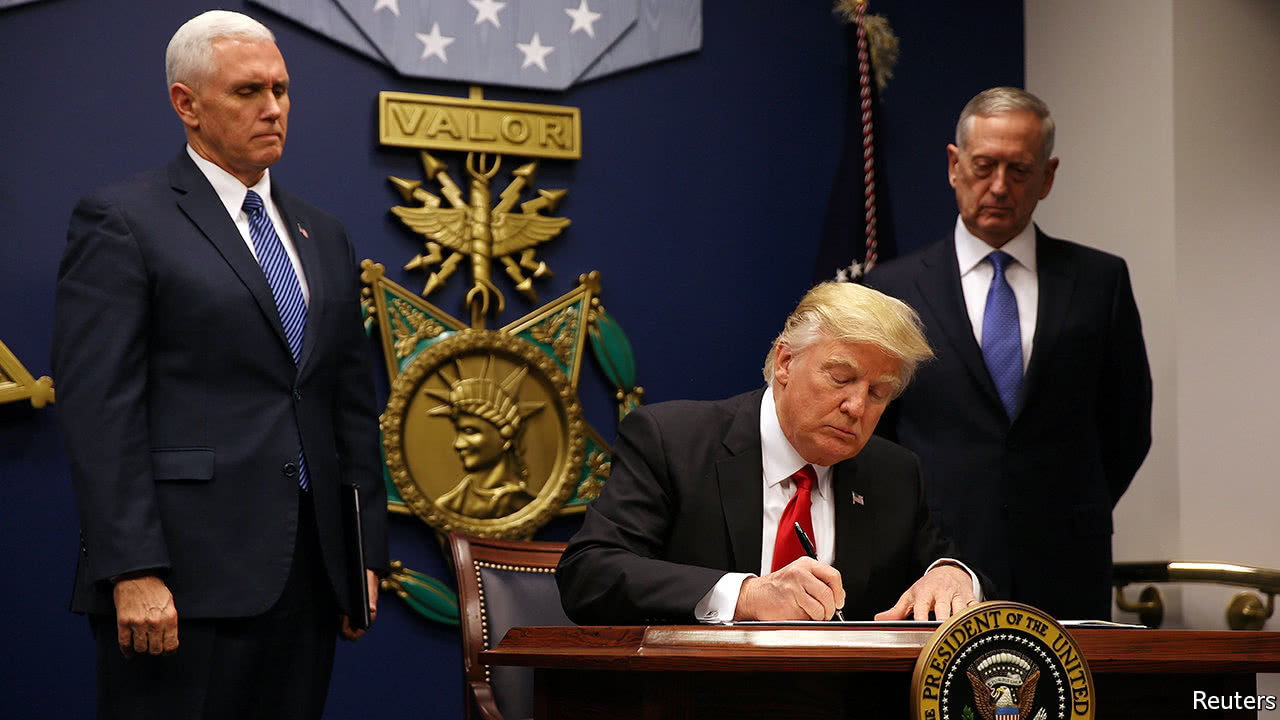
WHEN Donald Trump was inaugurated in January, he wasted no time in trying to bar people from certain Muslim-majority countries entering America. He swiftly, too, promised to make good on his pledge to build a wall along the Mexican border. The nation’s travel industry shuddered. It did not feel like the actions of a man keen to woo visitors from abroad.
The predicted “Trump slump” quickly appeared to materialise. Within months, several online travel firms, including Kayak and Hopper, reported that fewer people were searching for flights to America. That seemed plausible. The country was getting terrible press abroad and the firms that sell flights online seemed the best placed to monitor demand for travel in real time. Come July, however, the U.S. Travel Association revealed that everything was rosy. Instead of a Trump slump, the country was in fact enjoying a Trump bump. The organisation’s Travel Trends Index, which tracks flight and hotel bookings, plane boardings and other data, suggested that the number of…Continue reading
A scheme to let non-flyers through the security gates

In an era of strict security checks and other inconveniences for air travel, one American airport is making a sharp move in the opposite direction. On September 5th, Pittsburgh International will become the first American airport since the terrorist attacks on September 11th 2001 to allow people who are not booked on a flight to pass through security. Families will be able to see loved ones off as they board their flight. Children will be able to join a travelling parent to watch planes take off. Friends will be able to eat and shop at the stores that flyers normally frequent (in Pittsburgh, some retailers, such as Hugo Boss, Armani Jeans and Bar Symon, only have shops in the airport).
Pittsburgh International has been pushing for years for this change, which flies in the face of…Continue reading
Hurricane Harvey wreaks havoc on American air travel

Donald Trump went to the Texas coast on August 29th to see for himself the disaster-relief effort in response to Hurricane Harvey. But few other people are able to travel there. The storm has brought record-breaking rains and devastating floods to the Houston area, killing at least 30 people so far (the toll is expected to rise as the waters recede). The human and economic damage is extensive, but Harvey has had repercussions in a wide variety of less critical areas, including business travel.
Across America, more than 9,000 flights have been cancelled since Friday, nearly all due to Harvey. On August 29th, as the storm continued to dump water on Houston and threaten New Orleans 350 miles to the east, more than 1,500 flights to, from, or within the United States were cancelled as of mid-afternoon and twice…Continue reading
Appalling behaviour on London’s Tube
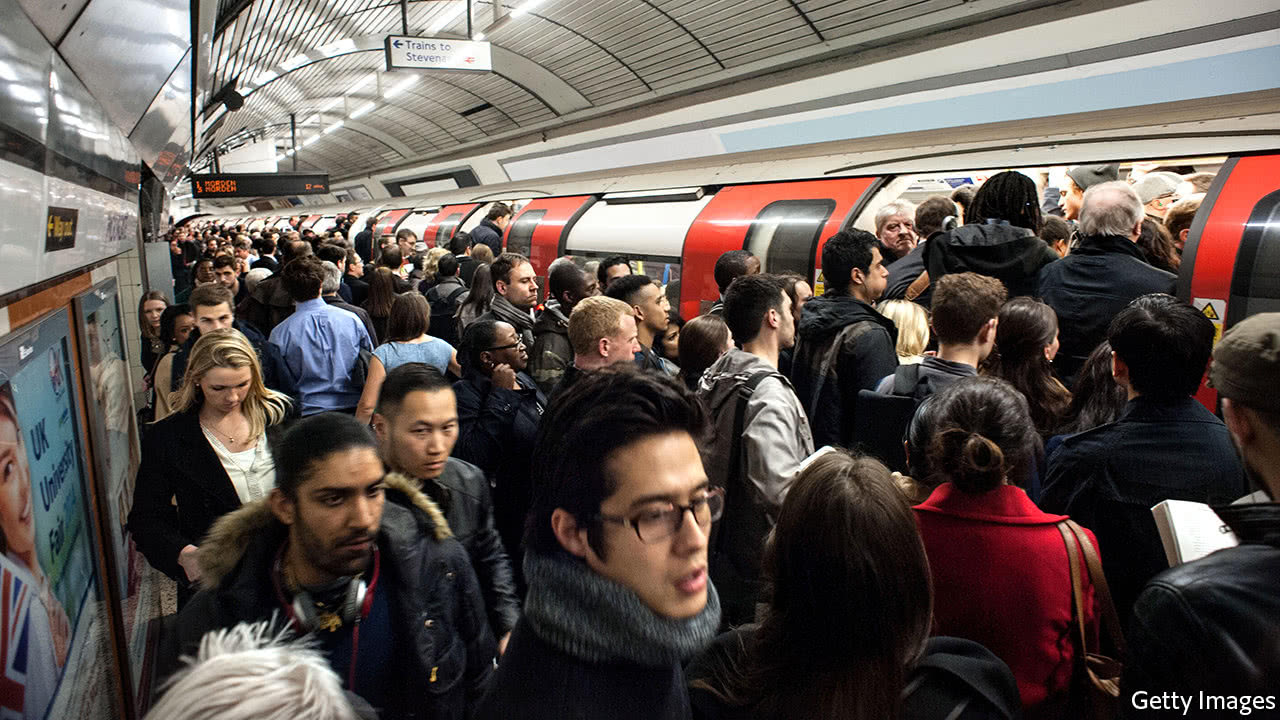
WITH 1.4bn passengers annually, the London Underground is one of the world’s busiest transport systems. It is also one of the most crowded, sometimes producing an element of friction among commuters over small acts of inconsideration. This week YouGov released the results of a survey of the things that most wind up passengers as they scurry around the Tube. Impatient commuters pushing to get into the carriage without letting riders off first are what drives people mad the most.

The survey also revealed some interesting differences when broken down by gender: “manspreading” (unfurling one’s legs wide enough to take up unnecessary room) and…Continue reading
The way airlines board planes affects how easily bugs are spread among passengers
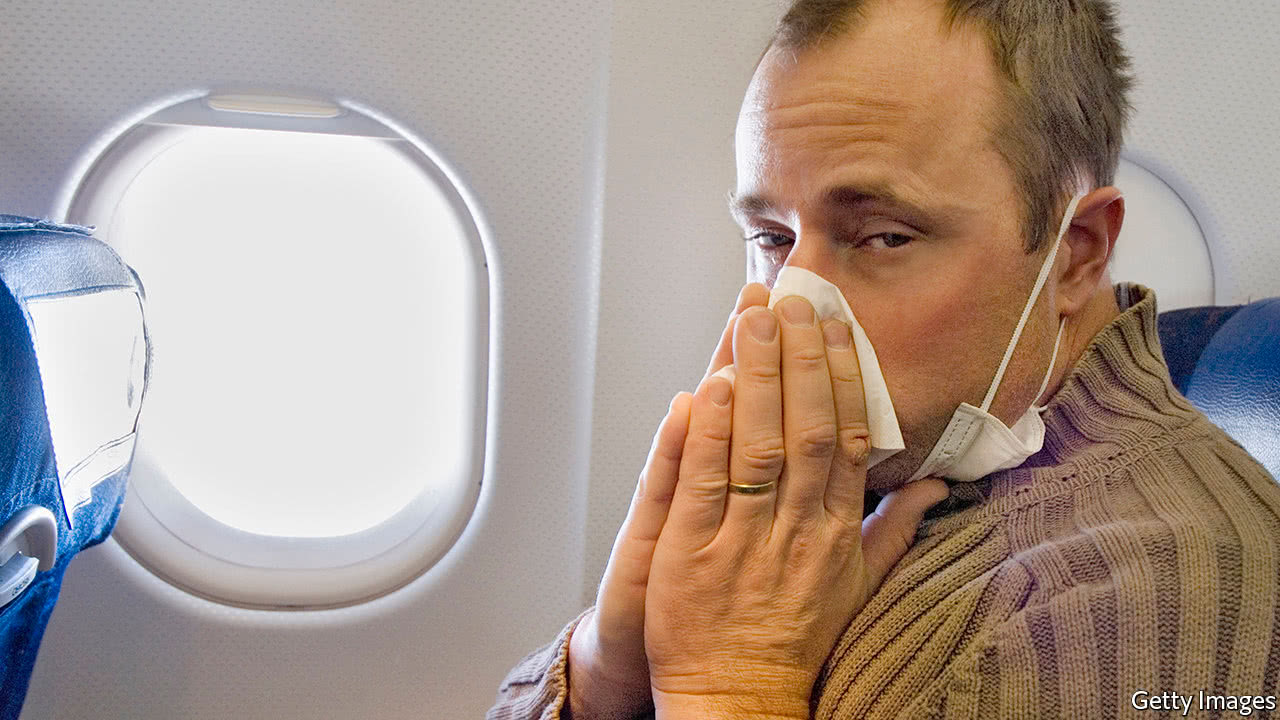
IT IS an often-heard office conversation. Someone returns from a trip with a nasty bug, and colleagues say he must have caught it from a germ-ridden plane. It is not unusual to come come down with something nasty after flying. And as a fellow Gulliver reported last week, contaminated air on flights is widespread.
Someone has to carry those bugs into the cabin in the first place, before infecting fellow flyers. Researchers at Arizona State University, Florida State University and Embry-Riddle Aeronautical University have found that the way airlines board planes can have a huge effect on the potential for disease contagion. The researchers considered a hypothetical outbreak of the Ebola virus and the effect that different boarding methods could have on infection rates. With the standard boarding method of dividing the plane into three sections and boarding…Continue reading
Involuntary bumping seems to be a thing of the past

IF AVIATION had an astrological sign, 2017 would surely be the Year of the Bump. Most infamously, it was the year that a United Airlines passenger who refused to leave an overbooked flight in April was dragged violently from the plane. There followed airline policy changes to reduce involuntary bumping, a novel system to make bumping less inconvenient, and even bipartisan action in Congress to render involuntary bumping illegal.
Such headlines suggest that the practice is spiralling out of control. In fact it is at its lowest level since the government began recording data in 1995, according to a Department of Transportation
Airlines want tighter control of alcohol sales in British airports
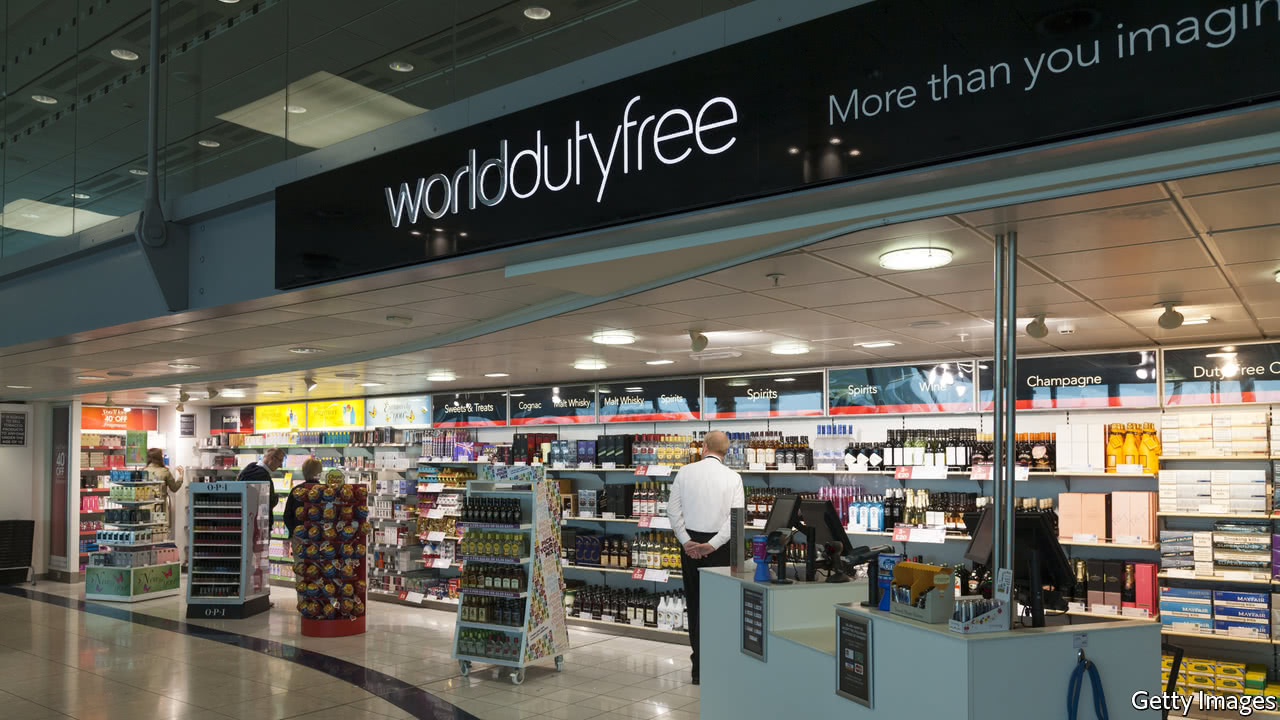
TRYING to stop Britons from boozing can be a forlorn task. Drinking has been woven into the nation’s culture for centuries, from the “loose-tongued” pilgrims of Chaucer to the apprentices who ran amok on London’s streets in the 16th century. According to Susie Dent, a lexicographer, English has 3,000 words for being drunk. Some take that list as a challenge. Whether at football matches or funerals, children’s parties or cheese-rolling, Britons turn almost any occasion into an excuse to get ramsquaddled (thanks, Ms Dent).
A visit to a British airport is a crash course in this culture. Regardless of the time of morning, the bars are full and the English breakfasts come accompanied with pints of Guinness. That is an increasing problem for airlines….Continue reading
The problem of contaminated air on planes
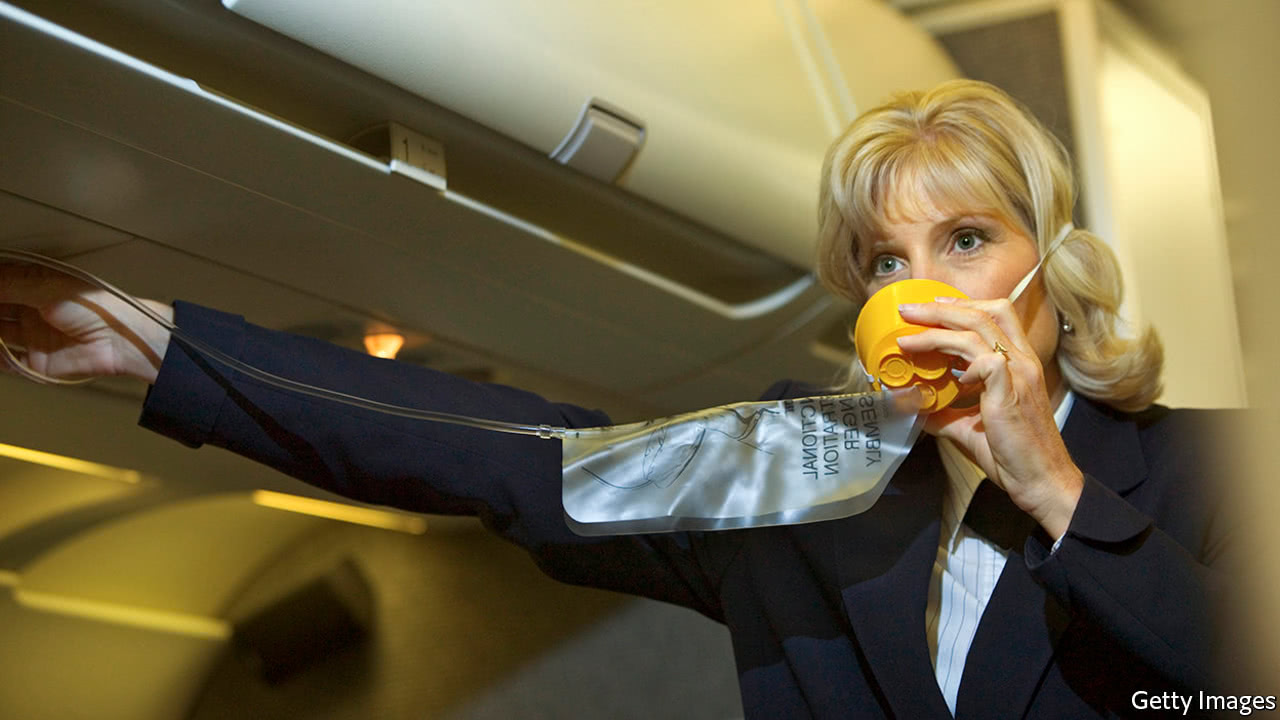
AT 30,000 feet the skies may be clear, but the oxygen certainly is not. Anyone who has wheezed his way through a long plane journey will know that cabin air is hardly pristine. Nearly all aircraft draw in air by way of the plane’s engine compressor. It is common for a small amount of oil to leak over the engine, which then contaminates the stuff that passengers and crew members breathe. Most of the 3.5bn passengers who traveled by plane in 2015 were probably exposed to at least a low level of contamination. But frequent exposure can come with debilitating symptoms, including memory impairment, dizziness and vision problems.
A recent study from the University of Stirling and the University of Ulster reveals the scale of the problem. Researchers examined hundreds of aeroplane crew members and discovered a direct link between air contamination and respiratory, cognitive and even neurological health…Continue reading
Why an eight-hour bus ride from Los Angeles to San Francisco might beat a flight
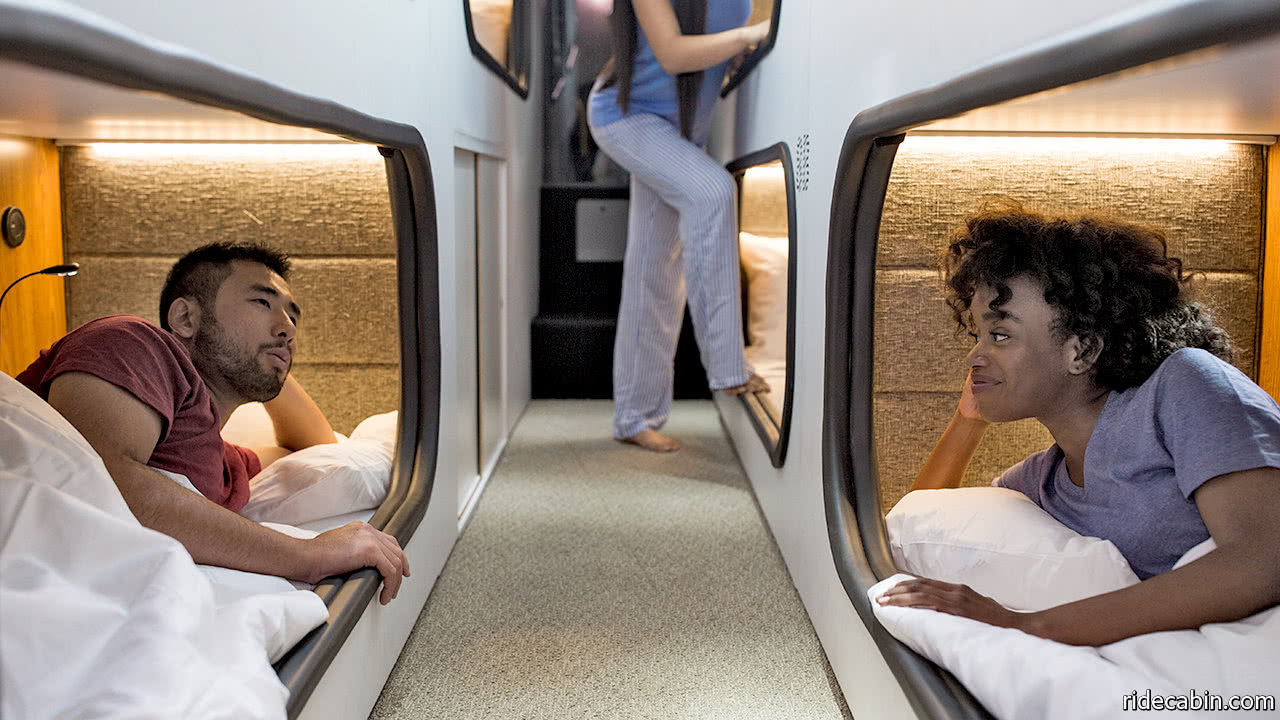
THERE is a new way to travel between Los Angeles and San Francisco. At $230 for a round trip, it may not be cheaper than flying, but at least it is slower.
Cabin is an interesting experiment; an attempt to compete with airlines by promising a better night’s sleep. Flying between the two cities may take less than an hour and a half. But getting to the airport, shuffling through the security queue, waiting at the gate, picking up your bag upon arrival, and getting from the airport to your actual destination can nearly quadruple the total travel time. That means a trip can eat up most of the day. Or if you want to travel at night, you have about an hour to sleep, between several hours of hassle and tedium.
Rather than go through that rigmarole, Cabin is betting that some passengers will instead choose an overnight bus, on which they crawl into sleeping pods, stacked like bunk beds but ensconced behind curtains and soundproof walls, and wake up eight hours later at their destination. On offer: water, coffee, melatonin and a…Continue reading