
Finanzas
El Banco de España defiende que se ajustó a la norma en la salida a Bolsa de Bankia
El supervisor “manifiesta su confianza” en los jefes de supervisión que dimitieron ayer tras ser imputados por la Audiencia Nacional
La economía europea resiste en medio de las incertidumbres globales
El PIB europeo avanzó un 0,4% en el último trimestre del año y crece un 1,7% en tasas anuales con Italia rezagada de sus socios
Fomento amenaza el ‘statu quo’ de los estibadores y pone en cuestión sus sueldos
La reforma abaratará los costes de manipulación y reducirá el salario medio. Los trabajadores alertan contra la precarización
Dimite la cúpula de supervisión del Banco de España tras ser imputada
Mariano Herrera es Director General de Supervisión y, Pedro Comín, el Director General Adjunto, que dirigía a los inspectores de Bankia antes de su salida a Bolsa
Business travellers are keener on the sharing economy than their employers
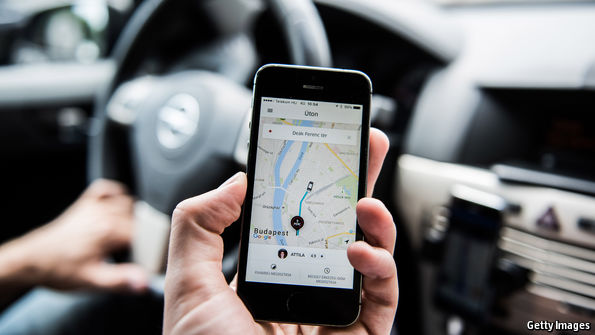
RIDE-HAILING apps and home-rental sites are fast becoming mainstays of the corporate travel world—but perhaps not quite as fast as many business travellers would like.
Two recent reports shed light on the rapid changes taking place within the industry. One comes from the Global Business Travel Association (GBTA), which represents corporate travel managers. Its latest survey found that the number of businesses allowing their employees to use ride-hailing services such as Uber and Lyft has increased by nearly 15% since June. Over the same period, the share permitting workers to book lodging through Airbnb and similar services increased 20%. Yet despite that growth, half of corporate travel policies still don’t allow employees to use ride-hailing apps, and 70% prohibit home-rental services in favour of traditional hotels.
At first glance, those figures appear at odds with a survey released by Certify, which makes software that tracks business-travel expenses. It found…Continue reading
The problem that links business, finance and politics

THE problem is as old as mankind. The Roman author Juvenal encapsulated it into a phrase “Quis custodiet ipsos custodes” or “Who guards the guards themselves?” It was neatly illustrated in the classic BBC series “I, Claudius”. The infirm Claudius wants the return of the Republic. But the Praetorian guard, set up by his relatives, needed an Emperor to ensure their special status. So on the murder of Caligula, they drag Claudius from his hiding place behind a curtain, and make him Emperor.
Throughout history, dictators have faced this problem. They can surround themselves with men with swords or guns. But it only takes one guard with a sword or gun to turn into an assassin or to seize power for himself. The Shah of Iran had a huge army in 1979 but it did him no good; the soldiers had more sympathy with the revolutionaries than with the Shah himself.
In business and finance, this is known as the “principal-agent” problem. Shareholders employ managers to run a company; investors use fund managers to look after their savings. That makes sense. It allows us to take advantage of the expertise of others, and of…Continue reading
Fernández Ordóñez, imputado por la salida a Bolsa de Bankia
La Sala de lo Penal revoca la decisión de Andreu de no investigar al exgobernador del Banco de España y a Julio Segura, expresidente de la CNMV
Bruselas sitúa el déficit español en el 3,5% del PIB en 2017 y apunta a más recortes
La Comisión aprecia signos de desaceleración y duda de que España recaude tanto como espera con las últimas subidas fiscales
Bruselas sitúa el déficit español al 3,5% del PIB en 2017 y apunta a más recortes
La Comisión aprecia signos de desaceleración y duda de que España recaude tanto como espera con las últimas subidas fiscales
Europa teme que el ‘efecto Trump’ tenga impacto en las primas de riesgo
Las previsiones de Bruselas apuntan a un 2017 plácido, pero detecta «incertidumbres» que pueden lastrar el crecimiento