
Tag: Approved
For American Express, competition will only intensify
HE IS leaving with the share price rising and the announcement, on October 18th, of earnings that were largely well received. Better still, Kenneth Chenault, American Express’s chief executive for 16 years, accomplished a feat rare in the upper reaches of American finance: to stand down without an obvious helping shove. No grandstanding senators hounded him out (see Wells Fargo). No boardroom coup hastened the end (Citigroup). The financial crisis left him untouched (take your pick). His successor, Stephen Squeri, promoted from within and apparently groomed for the job, takes over in February.
For all that, Mr Chenault’s long tenure has not been an unequivocal triumph. Though generating strong returns on assets and equity, American Express has continued its slide within the fast-changing and competitive payments industry. According to Nilson, an industry bible, in 1974 the amount of money for purchases channelled through American Express was equivalent to 50% of what went through…Continue reading
Sauce for a Brussels goose
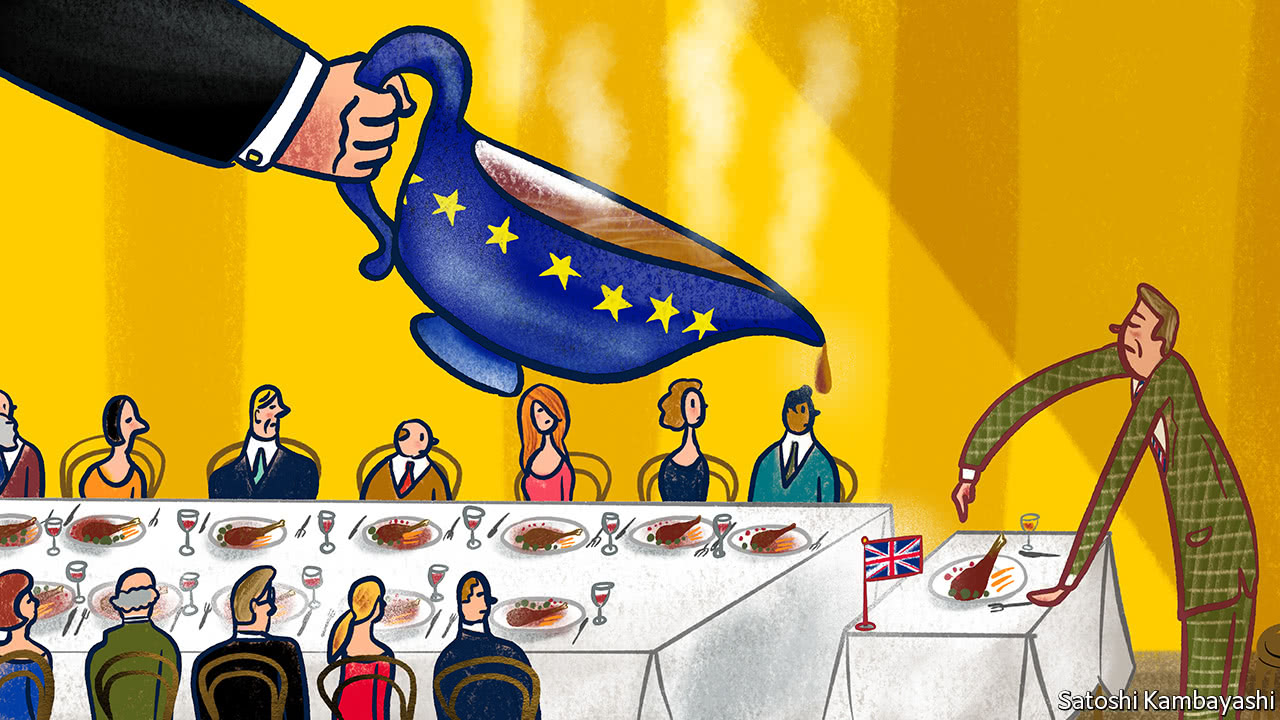
DIVORCES are rarely easy. In the 16 months since Britain voted to leave the EU in a referendum, the negotiations have made little progress. One of the trickiest aspects is the amount that Britain should pay to meet its existing spending commitments for EU programmes.
This is not analogous to dividing up the bill in a restaurant, and deciding who had the lobster and who stuck to the mixed green salad. Take the cost of EU officials’ pensions. The tricky bit in calculating it is that pensions are long-term commitments; a bureaucrat who starts work in Brussels today might still be collecting a pension 70 years from now. Working out the cost is fiendishly complicated, requiring estimates of how much wages will rise (if the pension is linked to salary) and how long employees will live. Then the sum of future benefits has to be discounted at some rate to work out the current cost; the higher the discount rate, the lower the presumed expense.
The EU doesn’t pre-fund pensions for…Continue reading
Aldi and Lidl grow despite ignoring the internet

THE aisles are wide, the lights bright and shelves low. Most obviously, however, the apples shine and the broccoli beckons. For those used to the cramped, dimly lit Aldi stores of yore, all expense spared, the new supermarket in Herten, Germany, is almost shocking.
Opened in April this is the prototype for a vast new renovation and expansion programme across Europe, Britain and America. It is the discount giant’s big bet on the future of shopping, all the more daring as the money is going almost entirely on bricks and mortar. Defying the conventional wisdom that customers want both in-store and online shopping (“omnichannel” in the jargon) Aldi wants to conquer the retail world by ignoring the internet. As too, to a lesser extent, does its great German rival Lidl. Plenty of other grocers reckon this may be the miscalculation that eventually brings them down.
Founded in 1945 and 1973 respectively, Aldi (split into two legally separate companies, Aldi Nord and Aldi Süd)…Continue reading
American business schools dominate our MBA ranking
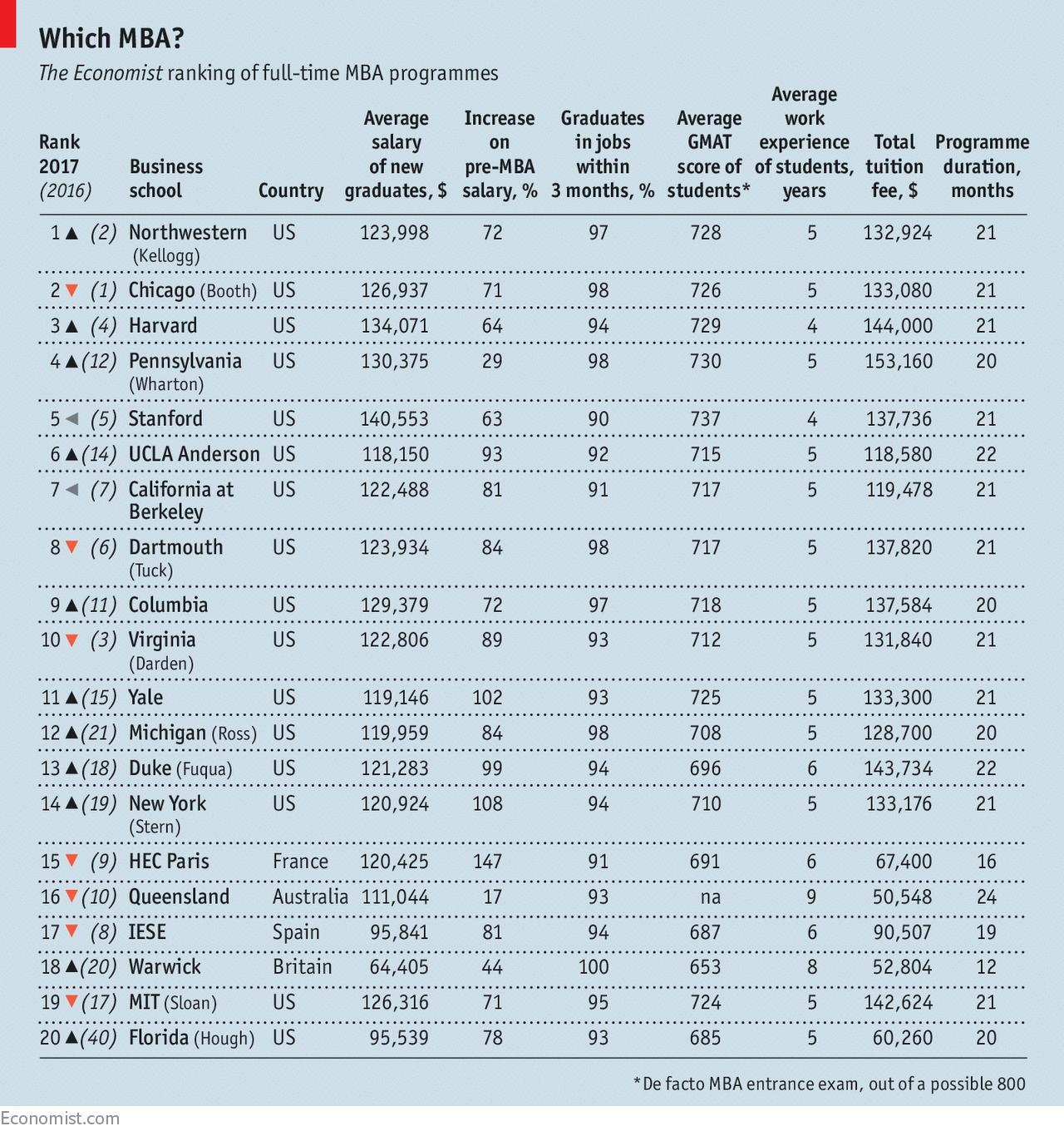
American business schools dominate The Economist’s 2017 Which MBA? ranking, taking 16 of the top 20 places. Northwestern University’s Kellogg School of Management returns to the top spot for the first time since 2004. Kellogg students praise its facilities and collaborative culture. Their career opportunities are among the best, thanks in part to one of the largest alumni networks in the world; 97% of students find a job within three months of graduation, pocketing a 72% pay bump. All of the top ten slots in the ranking are now occupied by large, prestigious American schools, for which students are happy to pay extra. Their average tuition fee is $134,600, and has risen quickly in recent years. Employers, too, are willing to shell out for the best students. Their average basic salary was $127,300, a 70% increase on their pre-MBA pay cheques. But life, like rankings, isn’t just about money. So we weight data according to what students tell us is important. The four categories covered are: opening new career…Continue reading
Apple should shrink its finance arm before it goes bananas
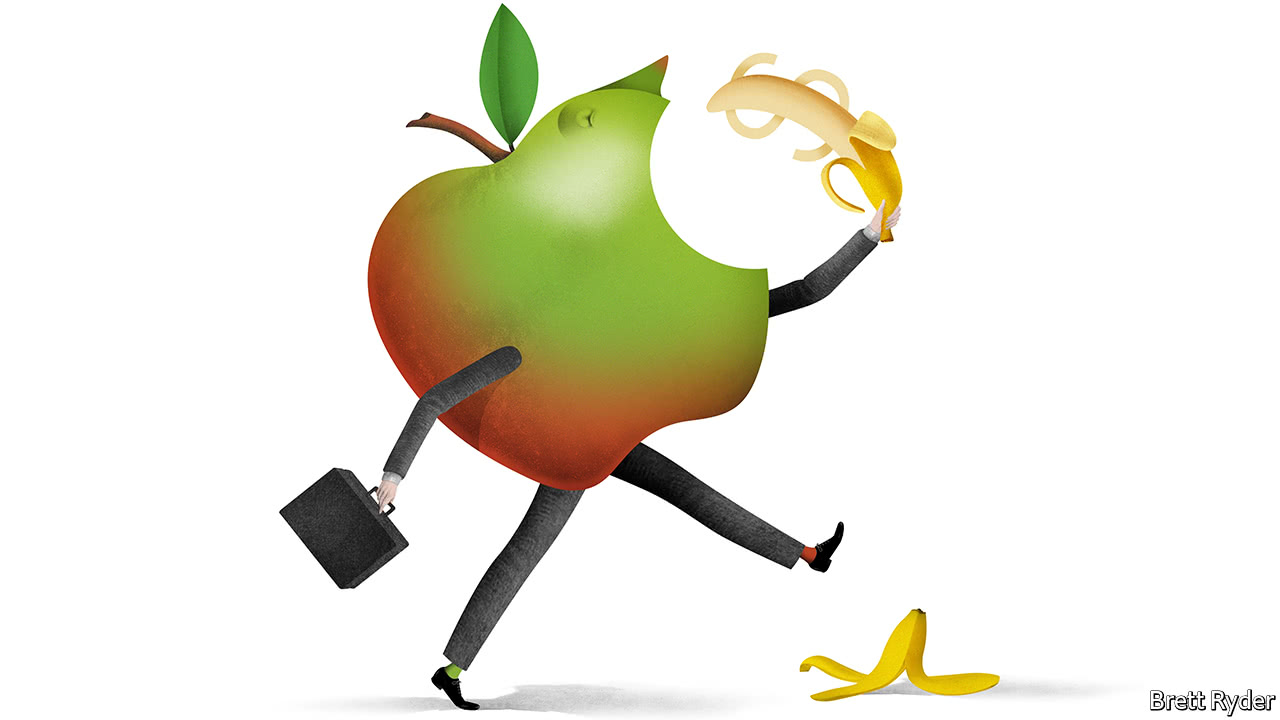
IT IS fashionable to say that tech firms will conquer the financial services industry. Yet in the case of Apple, it seems that the opposite is happening and finance is taking over tech by stealth. Since the death of Steve Jobs, its co-founder, in 2011, the world’s biggest firm by market value has sold hundreds of millions of phones with bionic chips and know-it-all digital assistants. But it has also grown a financial operation that is already, on some measures, roughly half the size of Goldman Sachs.
Apple does not organise its financial activities into one subsidiary, but Schumpeter has lumped them together. The result—call it “Apple Capital”—has $262bn of assets, $108bn of debt, and has traded $1.6trn of securities since 2011. It appears to be run fairly cautiously and is part of a thriving firm, but it still deserves scrutiny. Companies have a history of being hurt by their financial arms; think General Electric (GE) or General Motors (GM).
Apple Capital has lots…Continue reading
Fears that Xi Jinping is bad for private enterprise are overblown
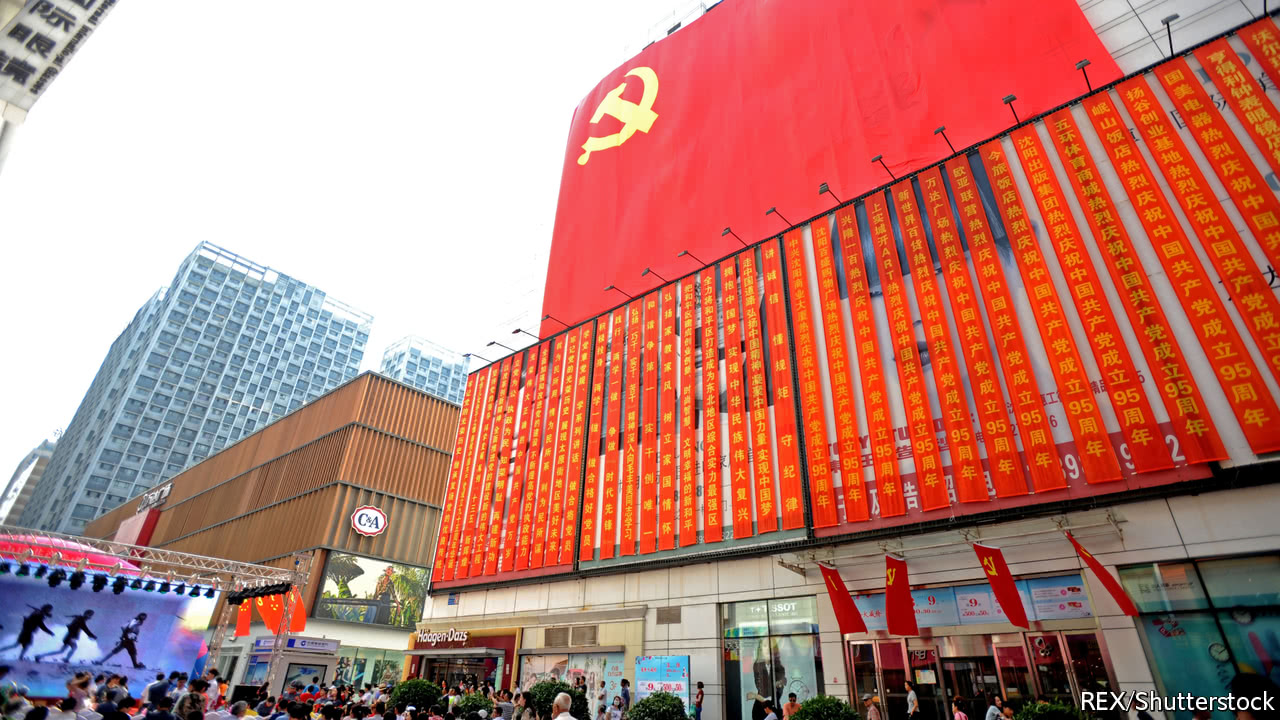
FOR a moment it seemed China was reverting to Maoist economic management. On the sidelines of the Communist Party congress this month, an official told Xi Jinping that her village distillery sells baijiu, a potent spirit, for 99 yuan ($15) a bottle. Mr Xi, China’s most powerful leader since Mao, remarked that this seemed a bit dear. The chastened official thanked him and pledged to follow his guidance. But Mr Xi gestured her to stop. “This is a market decision,” he chuckled. “Don’t cut the price to 30 yuan just because I said so.” The audience, perhaps relieved that Mr Xi had no intention of dictating the price of booze, broke into laughter.
This rare spot of levity at the dreary five-yearly congress was telling. The occasion cemented Mr Xi’s unrivalled position at China’s apex. For companies, the question is what he will do with it. His vision can seem ominous. “North, south, east and west—the party is leader of all,” he intoned in a speech laying out his…Continue reading
A geopolitical row with China damages South Korean business further

IN A cosmetics emporium in central Seoul, rows of snail-slime face-masks sit untouched. Not long ago, visiting Chinese tourists would snap these up as avidly as a designer handbag in New York or anything from London featuring the Queen. Yet now their rejuvenating properties are failing to lure the country’s shoppers. Seo Sung-hae, a salesman, says business has slowed to a snail’s pace, because of a drop in the number of Chinese visitors. “We used to have 100 customers a day, but after THAAD, there are almost none,” he says.
THAAD, or Terminal High Altitude Area Defence, is an American missile-defence system designed to guard against North Korea that was installed in South Korea starting in March. Chinese authorities protest that its radar could be used to spy on its territory. Chinese newspapers have encouraged consumers to boycott South Korean goods. The plan was to “bully” Korea into ditching…Continue reading
A property billionaire rescues Harvey Weinstein’s studio
AS DISTRESSED assets go, the Weinstein Company (TWC) is uniquely distressing. Much of its value was bound up in the brands of its eponymous founding brothers, one of whom, Harvey Weinstein, has been accused of sexual harassment and of assault by dozens of women in the film industry in America and elsewhere. Amazon Studios, Apple and some television networks have hastened to cut ties with the studio, unwind production deals and remove Mr Weinstein’s name from credits. Mr Weinstein’s accusers may well sue the company. It was already heavily indebted after a recent string of box-office flops.
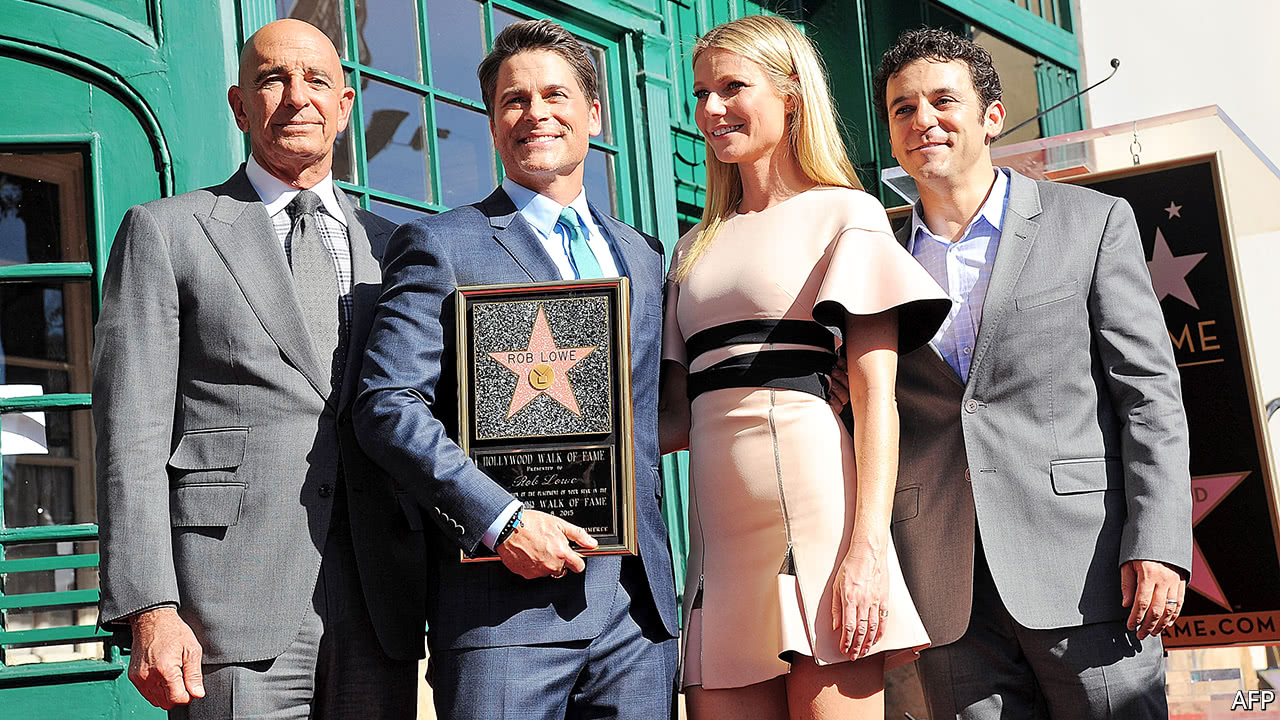
Who would see an opportunity? Aside from TWC’s particular troubles, independent films are a tough business, and the studio has had to haggle with creditors. But for a vulture investor some of the studio’s assets hold value. On October 16th Thomas Barrack (pictured above), chairman of Colony Capital, a private-equity firm, said he would immediately put an undisclosed sum of cash into TWC and look…Continue reading
Saudi Aramco’s IPO is a mess

THE proposal to sell shares in Saudi Aramco, the world’s biggest oil company, stunned the financial markets last year. Muhammad bin Salman, now Saudi Arabia’s crown prince, promised that it would be the biggest initial public offering (IPO) of all time, valuing Aramco at $2trn. It was to be the centrepiece of his plan to transform the Saudi economy, reducing its dependence on oil. It was meant to foster financial transparency and accountability in one of the world’s most hermetic kingdoms. Above all, it would cement the young prince’s image as a bold moderniser soon to inherit the throne.
Alas, youthful impatience appears to have got the better of him. His tendency to micromanage the IPO and vacillate over where Aramco should be listed has caused delay and confusion. Matters came to a head this week when advisers, speaking anonymously, and company executives doing the same, gave conflicting reports, suggesting a mutinous atmosphere.
The kingdom’s advisers say…Continue reading
Why Airbus’s tie-up with Bombardier is so damaging for Boeing
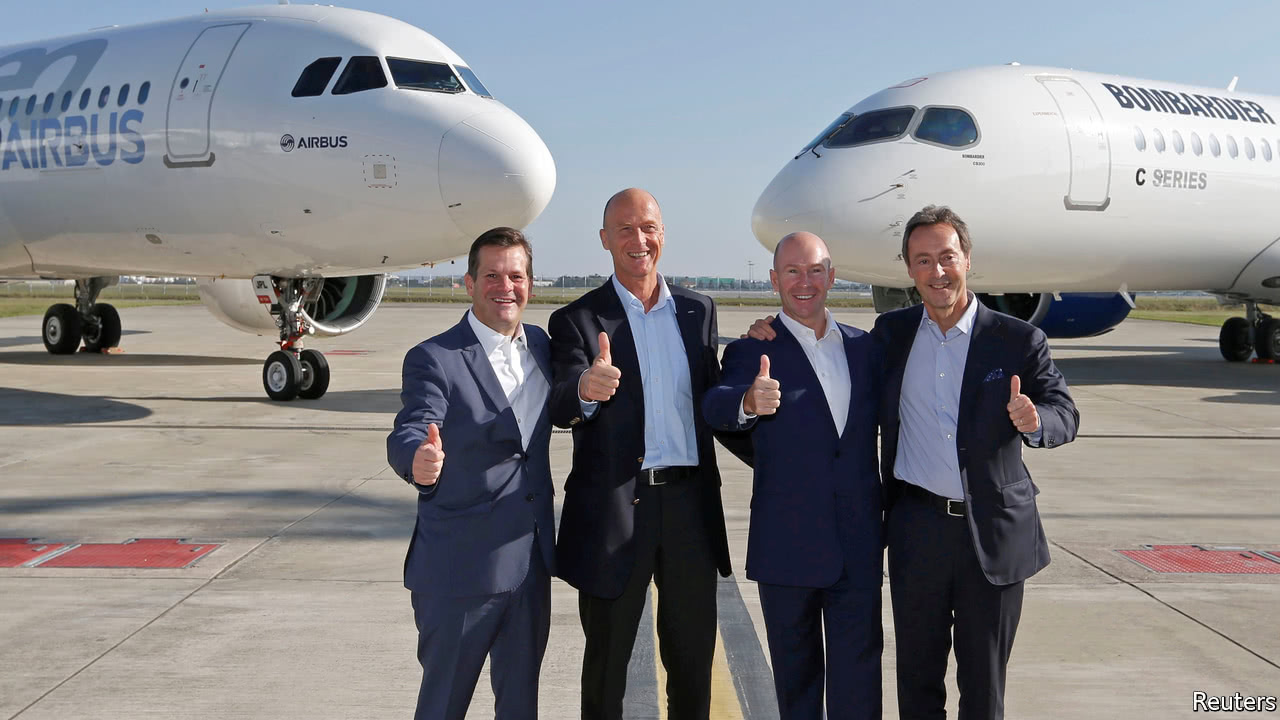
LIKE an airliner in service, Bombardier’s C-Series programme has had multiple highs and lows. In 2008 the Canadian firm began its attempt to break Airbus and Boeing’s duopoly on smaller jets, spooking the pair into upgrading their own models. Costs and delays pushed it near bankruptcy in 2015, followed by a bail-out from the Quebec government worth C$2.8bn ($2.2bn). The next year an order for 75 C-Series jets from Delta, the world’s third-biggest carrier, kept the programme aloft. But decisions in September and October by America’s Commerce Department to agree to demands by Boeing, an aerospace giant, to impose a total tariff of 300% on importing those planes into America risked the C-Series project crashing once and for all.
On October 16th came a surprise surge. Bombardier said it would hand over half the project to Airbus, a European aerospace firm, free of charge. Bombardier and Investissement Québec, the province’s…Continue reading