
Tag: Approved
Firms that burn up $1bn a year are sexy but statistically doomed
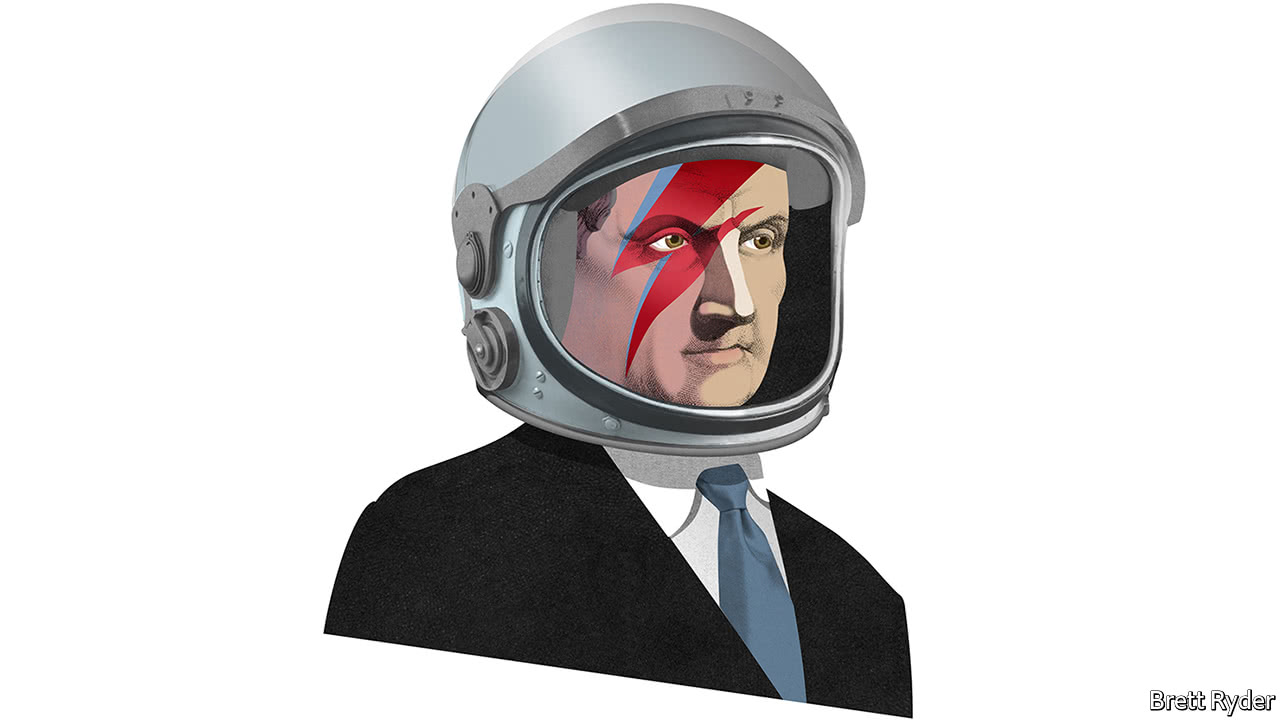
YVES SAINT LAURENT, Lady Gaga, David Bowie. Some people do not operate by the same rules as everyone else. Might the same be true of companies? Most bosses complain of being slaves to short-term profit targets. Yet a few flout the orthodoxy in flamboyant fashion. Consider Tesla, a maker of electric cars. This year, so far, it has missed its production targets and lost $1.8bn of free cashflow (the money firms generate after capital investment has been subtracted). No matter. If its founder Elon Musk muses aloud about driverless cars and space travel, its shares rise like a rocket—by 66% since the start of January. Tesla is one of a tiny cohort of firms with a licence to lose billions pursuing a dream. The odds of them achieving it are similar to those of aspiring pop stars and couture designers.
Investing today for profits tomorrow is what capitalism is all about. Amazon lost $4bn in 2012-14 while building an empire that now makes money. Nonetheless, it is rare for big companies to…Continue reading
On NAFTA, America, Canada and Mexico are miles apart

THESE are troubling times for Roberto Santana Flores, a Mexican maker of charro shirts, a modern take on the Mexican cowboy aesthetic. He recalls life before the North American Free-Trade Agreement (NAFTA), a trade deal linking Mexico with America and Canada. He remembers his shirts incurred a whopping 37.5% tariff if exported to America. Now they cross the border duty-free. But his dream of expanding his factory and his American customer base is under threat. He scours the newspapers daily for news of the NAFTA negotiations. They tell of conflict. Some even warn the deal may collapse. Since it covers trade worth more than $1trn a year, that is alarming for many more than Mr Flores.
On October 17th trade representatives of the three countries gathered to mark the end of the fourth round of talks. A collapse does not seem imminent. Robert Lighthizer, the United States Trade Representative (pictured, centre), denied that abandoning the deal was even being discussed,…Continue reading
The internationalisation of China’s currency has stalled
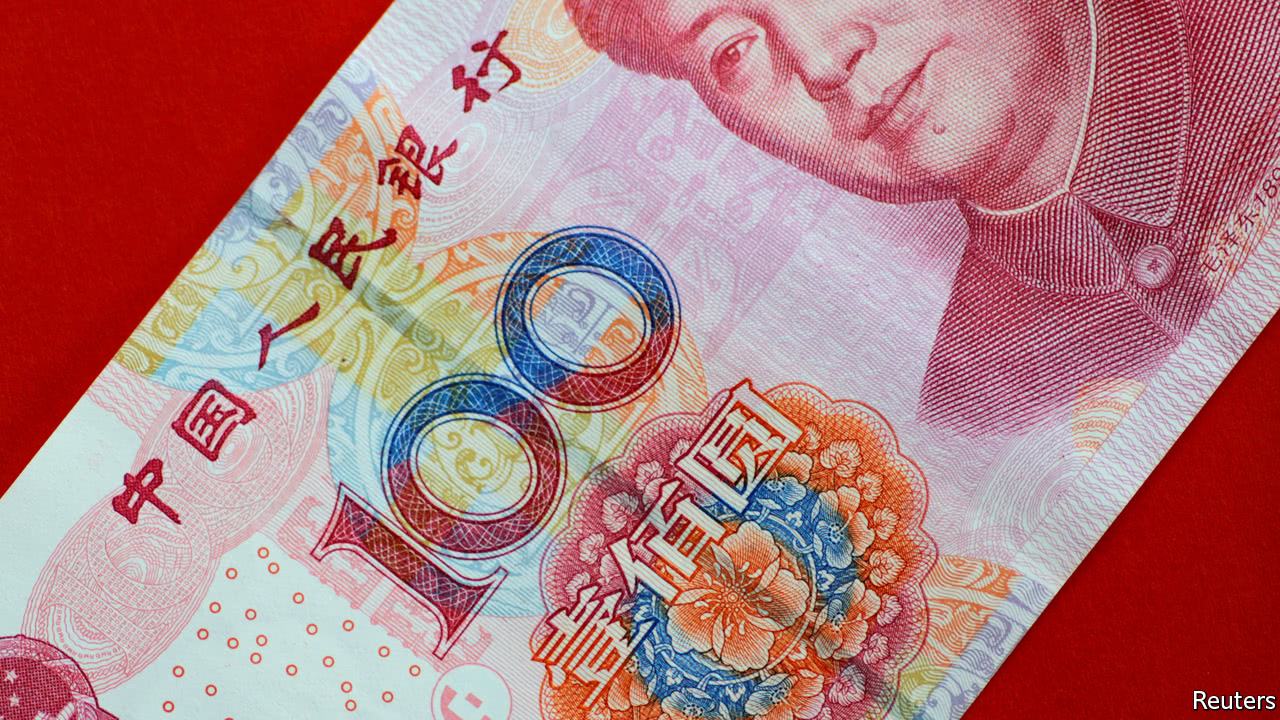
ON OCTOBER 18TH, President Xi Jinping will preside in Beijing over the most important political event in five years. At the Communist Party’s 19th congress much will be made of the triumphs achieved in nearly four decades of reform and opening up. So expect a glossing over of one part of that process where progress has largely stalled: the “internationalisation” of China’s currency, the yuan.
This seems odd. Just a year ago, the yuan became the fifth currency in the basket that forms the IMF’s Special Drawing Right (SDR). This marked, in the words of Zhou Xiaochuan, China’s central-bank governor, in a recent interview with Caijing, a financial magazine, “historic progress”. Symbolically, China’s monetary system had been awarded the IMF’s seal of approval. A further boost to prestige was the announcement in June this year that some Chinese shares would be included in two stockmarket benchmarks from MSCI.
Yet the yuan’s…Continue reading
Kobe Steel admits falsifying data on 20,000 tonnes of metal
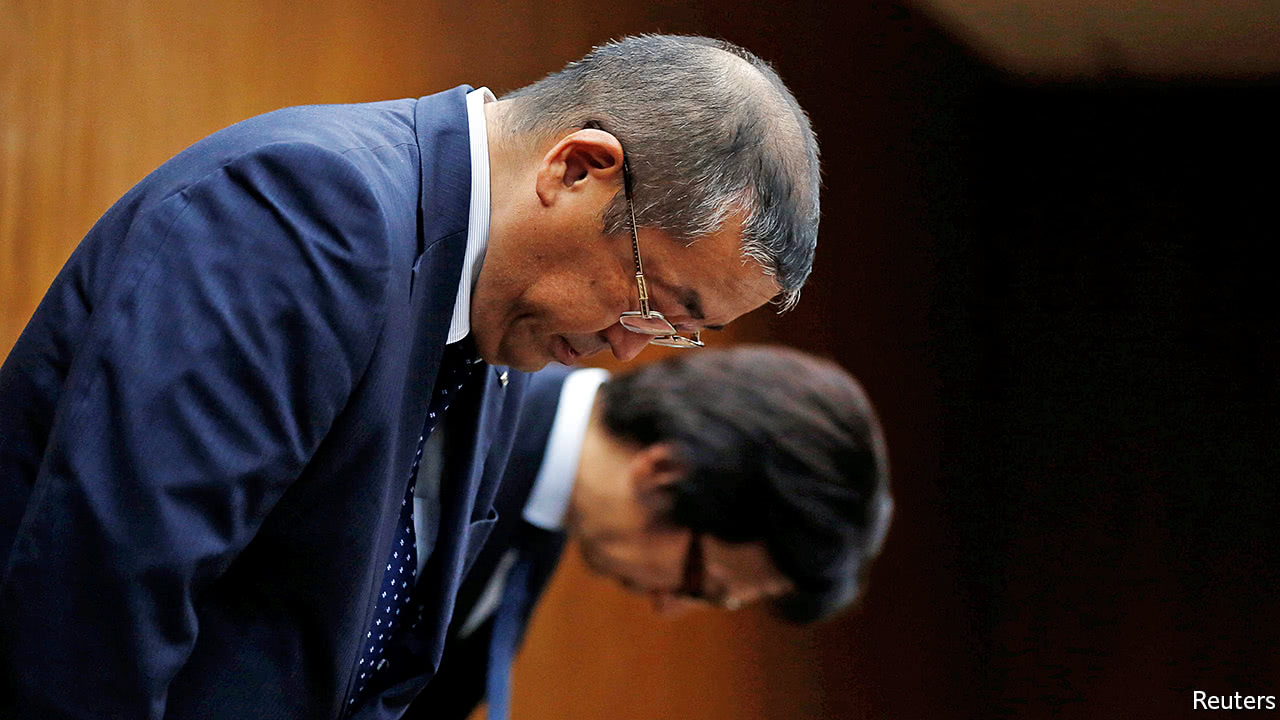
THE port city of Kobe, on the southern side of Japan’s main island, is known for luxury beef from pampered cattle, fine sake and precision engineering. Its reputation for the last of those products took a blow on October 8th when one of its oldest industrial firms, Kobe Steel, admitted that that it had falsified data on many of its aluminium, copper and steel products. By October 11th, the company’s shares had fallen by a third, reducing its market value by ¥180bn ($1.6bn).
Kobe Steel has admitted to falsification over the past year relating to large quantities of four types of material; 19,300 tonnes of aluminium sheets and poles; 19,400 aluminium components; 2,200 tonnes of copper products and an unspecified amount of iron powder that was supplied to over 200 customers. These items were certified as having properties—such as a level of tensile strength, meaning stiffness—that they did not in fact possess.
No deaths or accidents have yet resulted, but the…Continue reading
In dirt-poor Myanmar, smartphones are transforming finance

MYANMAR’S democratic transition sometimes seems marked as much by continuity as by change. Depressingly, the army continues its bloody persecution of Rohingya Muslims in the west, for example (see article). But elsewhere moves to open the country’s markets, started by the preceding military regimes, have gathered pace. New commercial and financial services are springing up.
Take Khin Hlaing, who owns Global Mobile Shop, a small store surrounded by tarpaulin-covered stalls selling fresh fruit in Hlaing Tharyar, an industrial area outside Yangon, the biggest city. He is one of almost 12,000 agents for Wave Money, Myanmar’s largest mobile-money transfer platform. Most days about 20 people use his shop to send funds to friends or family elsewhere in the country. One…Continue reading
Crafty app developers are ripping off big-name brands

THE new app for an upmarket British department store certainly looks the part. Released on Google Play, a shop for Android software, on September 5th, it has the right logo, the correct vibrant colour and offers fashionable clothes and accessories. But the app is not authorised by the brand, is littered with pop-up ads and is painfully slow (furious users gave it one-star ratings). Its developer, Style Apps, has also launched apps for other clothing brands that are household names in America.
Such fake apps are designed by crafty developers to trick inattentive users. Google and Apple police their app stores but many impostors get through. In third-party app stores, unofficial platforms run by someone other than the two tech giants, the problem is even worse. Users are tricked in two ways. Some apps fill a gap in the market. Selfridges, a chain of British fashion stores, for instance, has a legitimate app for Apple devices but not for Android ones. RadioShack, an American electronics…Continue reading
An epic but inconsequential proxy vote at Procter & Gamble

SHAREHOLDER meetings in Ohio are not usually the stuff of high drama, but a recent gathering was a nail-biter. Nelson Peltz of Trian Fund Management, an activist hedge fund, sought a seat on the board of Procter & Gamble (P&G), the world’s largest consumer-goods company, in a proxy vote on October 10th. It was the biggest such battle ever. In the weeks leading up to P&G’s shareholder meeting, the fight resembled a political contest, complete with carefully crafted videos, lengthy white papers, mass mailings and tens of thousands of phone calls urging shareholders to vote blue (P&G) or white (Trian).
As The Economist went to press, P&G said it had won and Mr Peltz was contesting the tally. “Everybody but [P&G’s] current employees voted for us,” he said after P&G declared victory. “Maybe that’s why they keep so much overhead.” So the brawl is not over. Yet the outcome may not matter much. Mr Peltz will push P&G for…Continue reading
BBVA, a Spanish bank, reinvents itself as a digital business
OUTSIDE, a patch of grass affording a spectacular view of the Sierra de Guadarrama is littered with cartridge casings. Inside the Club de Tiro de Madrid (Madrid Shooting Club), on the city’s northern edge, over 400 people are fixing their sights for the next three months. Their business is not shooting but banking. Teams sit at 27 tables working on specific projects—to improve the global mobile platform, say, or to share information about job applicants. At another 12 tables are data specialists, in-house lawyers and others whose expertise the teams will need. The targets are on the walls: white boards that are soon covered in yellow and pink Post-it notes, listing tasks for the weeks ahead.
BBVA, Spain’s second-largest bank, began quarterly planning sessions like this three years ago, in its Mexican subsidiary. This is the fourth global gathering. The idea, explains Derek White, head of global customer solutions, is to replicate the nimbleness of financial-technology startups (“fintechs”) at large scale. When a project is conceived, a small group is assembled to work on it within three days. A prototype is created in six weeks. The finished article should be “en las manos de los clientes”—in customers’ hands—within nine months. The quarterly cycle starts with a planning session to thrash out priorities. It ends…Continue reading
The finance industry ten years after the crisis
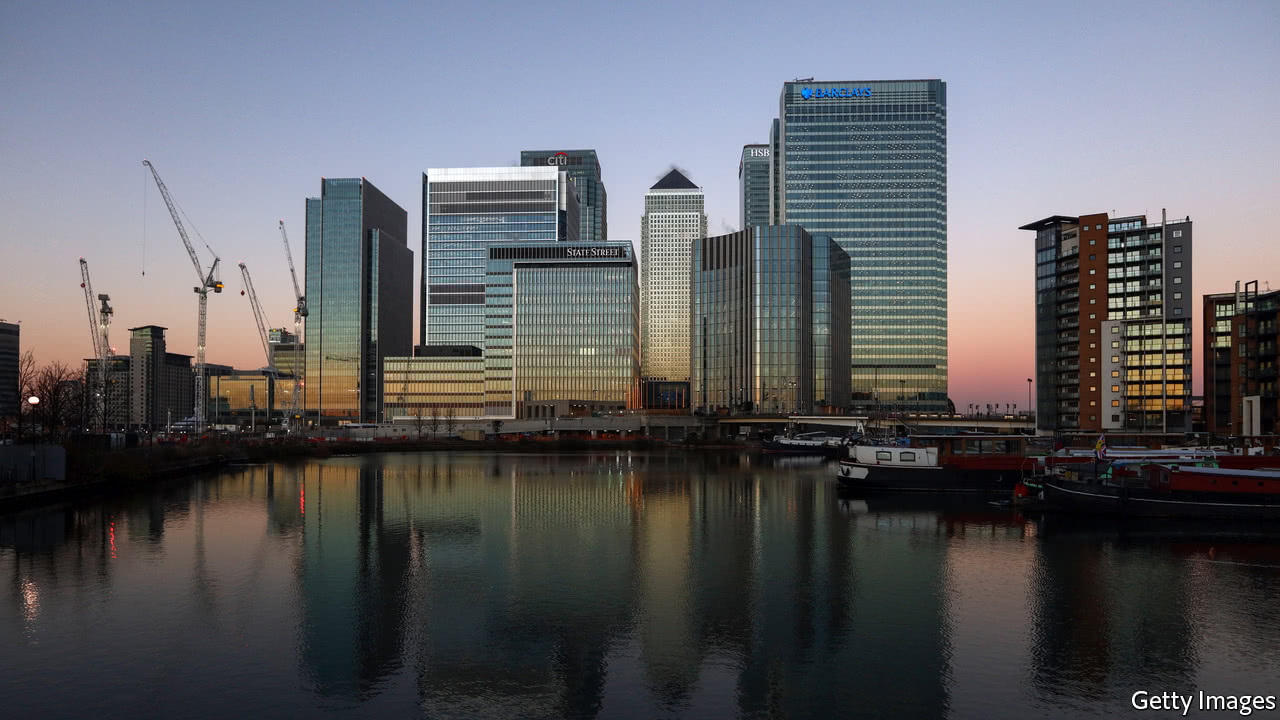
MANY people complain that the finance industry has barely suffered any adverse consequences from the crisis that it created, which began around ten years ago. But a report from New Financial, a think-tank, shows that is not completely true.
The additional capital that regulators demanded banks should take on to their balance-sheets has had an effect. Between 2006 and 2016, the return on capital of the world’s biggest banks has fallen by a third (by more in Britain and Europe). The balance of power has shifted away from the developed world and towards China, which had four of the largest five banks by assets in 2016; that compares with just one of the biggest 20 in 2006.
The swaggering beasts of the investment-banking industry have also been tamed. The industry’s revenues have dropped by 34% in real terms, with profits falling by 46%. Return on equity has declined by two-thirds. Staff are still lavishly remunerated, but pay is down by 52% in real terms. (Perhaps…Continue reading
Brexit will give the derivatives market a nasty headache

FOR all the talk of banks deserting London as Britain’s departure from the EU looms, relatively little attention has been paid to the derivatives market. Yet this is a crucial area of business for British-based banks. The City handles a big chunk of the market, including 39% of the market in interest-rate derivatives alone, where global daily turnover averages $3trn. The rest of the EU accounts for just 9%. Brexit seems sure to cause significant disruption. Mark Carney, the governor of the Bank of England, recently warned that the very “legal validity” of pre-existing derivatives contracts could be put into question.
Brexit-related discussion of derivatives has tended to focus on the role of clearing-houses, which ensure that a contract can be honoured even if one side goes bust. Since the financial crisis, most countries have made it mandatory to clear derivatives trades. LCH, a clearing-house in London, clears over 50% of interest-rate swaps across all currencies; London houses…Continue reading