
Tag: Approved
The British government sells its last shares in Lloyds bank

IN OCTOBER 2008, amid post-Lehman pandemonium, Britain’s Treasury said it would pump £37bn (then $64.4bn) into three big banks: £20bn into the stricken Royal Bank of Scotland (RBS); the rest into Lloyds TSB and HBOS, a sickly rival that ministers had cajoled Lloyds into buying. After rights issues in 2009, in all the state paid £20.3bn for 43.4% of the merged Lloyds Banking Group. On May 17th Lloyds said the last state shares had been sold.
The government has recouped £21.2bn, including £400m-plus in dividends, since it started to unload its stake in 2013. The return may sound slim, but had big lenders imploded the costs of the financial crisis would surely have been far greater even than they were. (Not surprisingly, anyone holding Lloyds TSB or HBOS shares since before the crisis has made a heavy loss.)
The group is Britain’s biggest retail bank. Its brands—Lloyds Bank, with its “black horse” logo, Halifax and Bank of Scotland—boast around…Continue reading
The markets frustrate OPEC’s efforts to push up oil prices

BORROWING three words from Mario Draghi, the central banker who helped save the euro zone, Khalid al-Falih, Saudi Arabia’s energy minister, and his Russian counterpart, Alexander Novak, on May 15th promised to do “whatever it takes” to curb the glut in the global oil markets. Ahead of a May 25th meeting of OPEC, the oil producers’ cartel, they promised to extend cuts agreed last year by nine months, to March 2018, pushing oil prices up sharply, to around $50 a barrel. But to make the rally last, a more apt three-word phrase might be: “know thy enemy”.
In two and a half years of flip-flopping over how to deal with tumbling oil prices, OPEC has been consistent in one respect. It has underestimated the ability of shale-oil producers in America—its nemesis in the sheikhs-versus-shale battle—to use more efficient financial techniques to weather the storm of lower prices. A lifeline for American producers has been their ability to use capital markets to raise money, and to use…Continue reading
A new anthology of essays reconsiders Thomas Piketty’s “Capital”
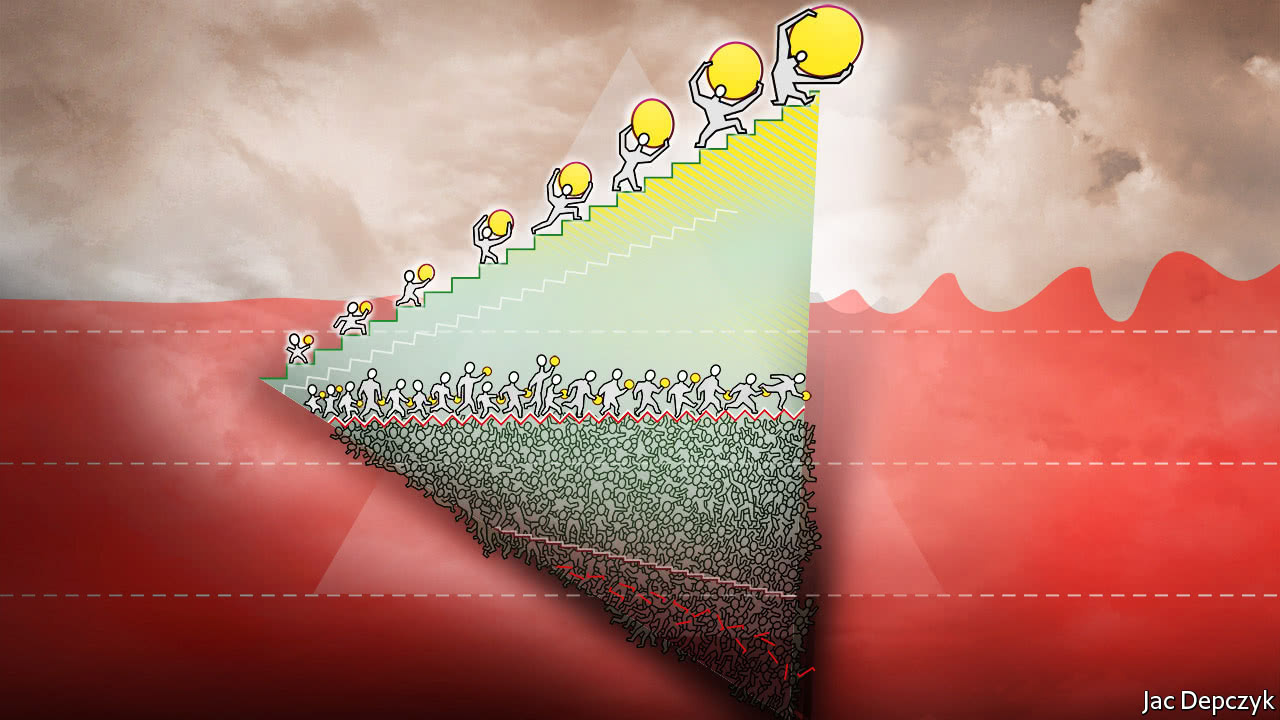
“A MODERN Marx” was how The Economist described Thomas Piketty three years ago, when he was well on his way to selling more than 2m copies of “Capital in the Twenty-First Century”. It was meant as a compliment, mostly: as advice to take the analysis seriously, yet to treat the policy recommendations with caution. The book’s striking warning, of the creeping dominance of the very wealthy, looks as relevant as ever: as Donald Trump’s heirs mind his business empire, he works to repeal inheritance tax. But “Capital” changed the agenda of academic economics far less than it seemed it might. A new volume of essays reflecting on Mr Piketty’s book, published this month, prods economists to do better. It is not clear they can.
“After Piketty: The Agenda for Economics and Inequality”, edited by Heather Boushey, Bradford DeLong and Marshall Steinbaum, is a book by economists, for economists. In that it resembles “Capital” itself. Before he was an…Continue reading
A British firm plans a secondary market for crowd-funded shares

EVERYONE would like a piece of the next Google or Facebook. But the big venture-capital (VC) firms do not usually raise money from small investors. And some entrepreneurs complain that it is hard to get noticed by the hotshots in the VC industry. Hence the enthusiasm for crowd-funding, where small investors can buy a stake in startup companies.
Seedrs, a British crowd-funding firm, was set up in 2012, and has backed 500 firms so far, raising a total of £210m ($271m) from more than 200,000 users. But there are two big problems with crowd-funding. First, it is risky: most startups fail. Second, investments tend to be illiquid—shareholders have to wait for a takeover or a stockmarket flotation to recoup their investment.
Seedrs is trying to solve the illiquidity problem by setting up a secondary market, where buyers and sellers can exchange shares. The new market will start operating this summer, and will allow trading for a week every month, starting on the first…Continue reading
2017 Marjorie Deane internship
Internship The Economist invites applications for the 2017 Marjorie Deane internship. Paid for by the Marjorie Deane Financial Journalism Foundation, the award is designed to provide work experience for a promising journalist or would-be journalist, who will spend three months at The Economist writing about economics and finance. Applicants are asked to write a covering letter and an original article of no more than 500 words suitable for publication in the Finance and economics section. Applications should be sent to deaneintern@economist.com by June 2nd. For more information, please visit www.marjoriedeane.com.
Sinclair Broadcast buys Tribune Media
AT A time when ever fewer people are watching television, it may seem improbable that the owners of local TV stations in America want to expand their empires. It turns out that they can hardly wait. On May 8th, just 18 days after a change in federal rules made the deal possible, Sinclair Broadcast Group announced that it would buy Tribune Media in a transaction worth $6.6bn, beating out interest from others including 21st Century Fox, which is owned by Rupert Murdoch. Sinclair will become America’s dominant owner of local TV stations.
The deal signals a broader interest in expanding what has been a surprisingly decent business in recent years. In America local TV stations tend to affiliate themselves with a national broadcast network, transmitting its content, including live sports. In exchange the stations make substantial payments. Despite falling viewership of network TV, the economics of local-station ownership have remained robust for two reasons.
First is the resilience of local TV advertising, especially in election years, says Mark Fratrik of BIA/Kelsey, a media consultancy. The ability of small TV stations to reach specific areas for local political races has proved difficult to match.
Second, TV stations have tapped a new vein of cash: retransmission fees, the payments they command from cable- and satellite-TV providers for their consent…Continue reading
The super-connector airlines face a world of troubles

WHEN a video of a passenger being dragged off a United Airlines flight went viral last month, the American carrier’s Middle Eastern rivals were quick to mock its customer service. Qatar Airways updated its smartphone app to say it “doesn’t support drag and drop”. The ribbing was justified. Over a decade of expansion, Qatar Airways, along with Emirates of Dubai, the world’s largest airline by international passenger miles travelled, and Etihad Airways of Abu Dhabi, wowed customers with superior service and better-value fares.
Passengers joined them in droves, abandoning hub airports in America and Europe as well as the airlines that use them. Over the past decade the big three Gulf carriers and Turkish Airlines trebled their passenger numbers, to 155m in 2015 (see chart). They went a long way to dominating long-haul routes between Europe and Asia. Most international airlines rely on travellers going from or to their home countries, but customers of the four “super-connectors”,…Continue reading
Management lessons from an American general
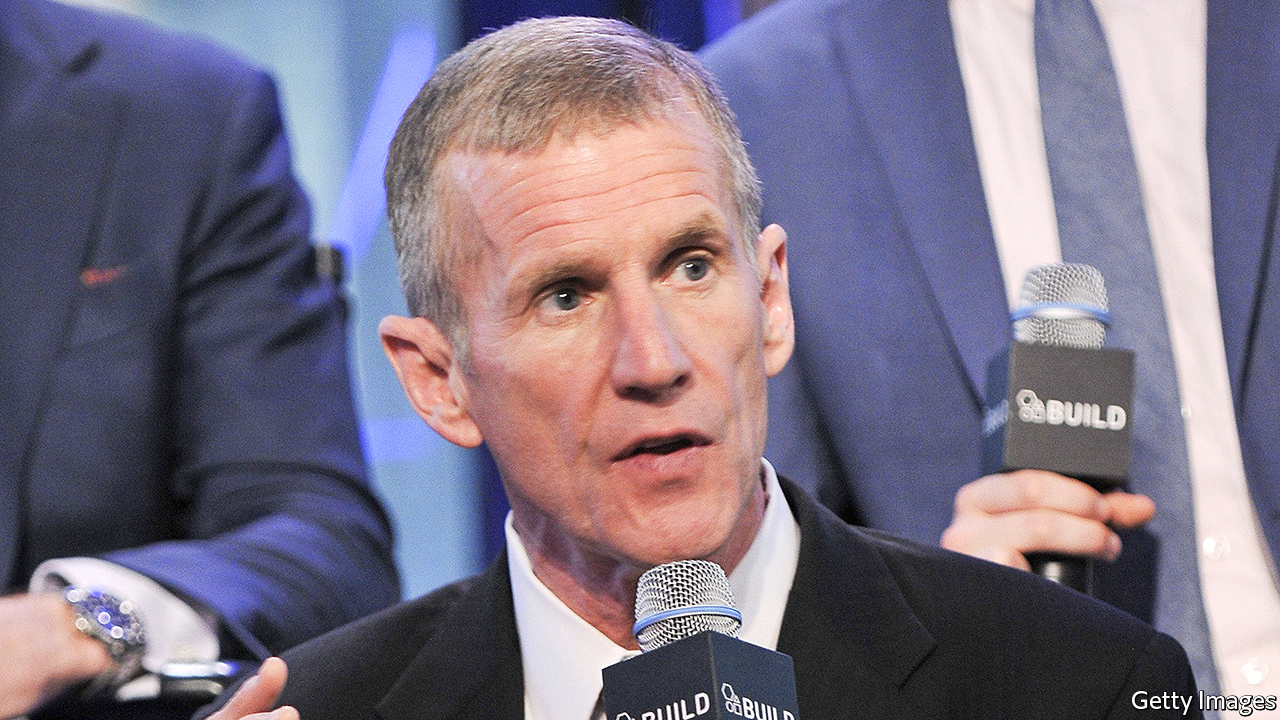
STANLEY MCCHRYSTAL’S voice is hoarse as he addresses a packed arena in Helsinki. His audience, mostly businessmen in dark suits, is rapt. The American former general tells thrilling battlefield stories of leading the Joint Special Operations Command in Iraq, which captured Saddam Hussein and killed Abu Musab al-Zarqawi, al-Qaeda’s local chief. He explains how his outfit adapted against an unexpectedly difficult enemy. A change in management style let his group go from conducting a handful of raids each month to hundreds, achieving better results against insurgents.
Neither America’s occupation of Iraq nor Mr McChrystal’s military career ended well. He went on to lead Western forces in Afghanistan, but stood down in 2010 after falling out with his political bosses. He reinvented himself as a management consultant. His McChrystal Group employs 65 people. It draws on its founder’s experience hunting insurgents to advise businesses,…Continue reading
A boss’s guide to fending off an activist attack

MODERN bosses are a resilient bunch who can handle everything from Twitter storms to takeovers. But one thing drives many of them berserk: activist hedge funds, which buy stakes in companies and lobby for change. Last month Klaus Kleinfeld, the boss of Arconic, an industrial firm, succumbed to a bout of “activist apoplexy”. He sent a confidential letter to Paul Singer, head of Elliott Management, a fund that was trying to oust him. Its mysterious references to parties during the 2006 football World Cup in Germany and to a feather headdress seemed to be a threat to expose details about Mr Singer’s personal life. Mr Kleinfeld, who had spent over a decade running big listed firms including Siemens and Alcoa, resigned when his board found out.
Bosses feel that they are being stalked by activists. Elliott is now in a confrontation with Akzo Nobel, a Dutch chemicals firm that is using a poison pill to resist a takeover by PPG, an American rival. Since 2010, on average, 8% of…Continue reading
Donald Trump’s family and a controversial visa scheme
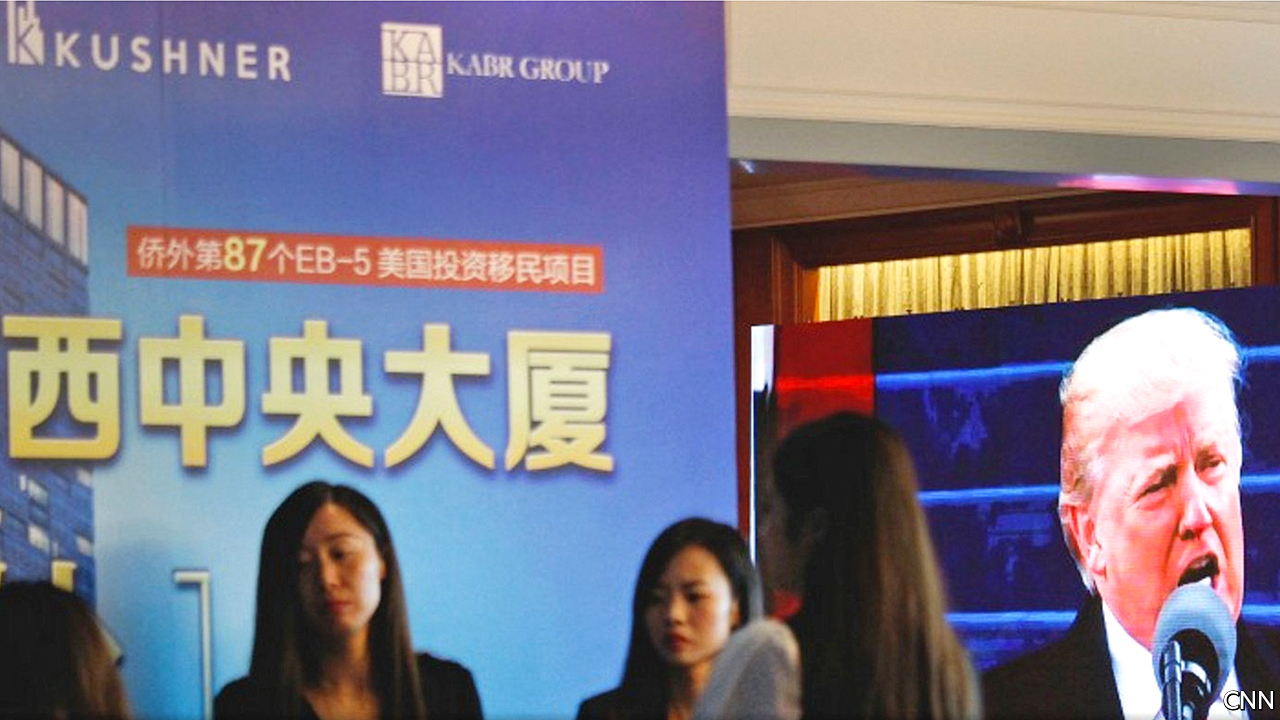
THE events seemed inconspicuous enough: presentations in smart hotels in Beijing and Shanghai seeking investors for luxury American apartments. The details might have gone unnoticed had not a journalist from the Washington Post heard about the event’s star attraction. But these days the surname “Kushner” is like a magnet. It quickly emerged that Nicole Meyer, sister of Jared Kushner, Donald Trump’s son-in-law and senior adviser, spoke in her pitch on May 6th to prospective investors about her powerful brother. One slide (pictured) that was shown to the audience included a photo of Mr Trump himself.
The affair underlined potential conflicts of interest surrounding Mr Trump’s family members and their businesses. Mr Kushner is not directly involved in the family firm. But Kushner Companies later apologised if Ms Meyer’s name-dropping “was in any way interpreted as an attempt to lure…Continue reading