
Tag: Buttonwood’s notebook
Beware of performance figures

GOLFERS are familiiar with the concept of a «mulligan» – the chance to retake a shot. Give an averagely talented player enough mulligans and he or she will get one close to the hole. And a version of the mulligan exists in fund management too.
Readers will be familiar from past blog posts with the idea that actively-managed funds cannot be relied upon to beat the index. Many of these studies are conducted in the US market, which is probably the most efficient (and thus hardest to beat) in the world. But the same is true in Europe.
Figures from S&P Dow Jones Indices show that, over the 10 years to December 2017, less than 15% of euro-denominated European equity funds beat their benchmark; for emerging market funds, it was less than 3%; and global funds, under 2%. For sterling-denominated funds, less than…Continue reading
The real problem with pensions

PAYING for pensions is like one of those never-ending historical wars; a confusing series of small battles and skirmishes that can obscure the long-term trend. The latest conflict is in Britain where university lecturers are indulging in strike action over changes to their future benefits.
Let us start by making the long-term trends clear.
1. People are living longer and retirement ages have not kept pace. This increases the cost of paying pensions
2 Interest rates and bond yields have fallen. This increases the cost of generating an income from a given pension pot
3. Private sector employers have reacted to this cost by closing their defined benefit (DB) schemes (which link pensions to salaries) and switching to defined contribution (DC) schemes (which simply generate a savings pot)
British universities have reacted in a similar way; they are proposing switching future benefits to a DC basis. To avoid confusion, this means…Continue reading
A history of the Trump slump

LOOKING back from the vantage point of 2025*, economic historians are starting to write their analyses of the Trump slump. It seemed to appear from nowhere with the economy growing at around the trend rate (2.3% in 2017) and the stockmarket booming. The abrupt change came in March 2018 when President Donald Trump decided to impose tariffs on steel and aluminium imports. Both China and the European Union (EU) retaliated in kind without trying to escalate the tensions. It might have ended there.
But unfortunately, the president’s more mainstream advisers like Gary Cohn had been sidelined by a more aggressive group that saw the trade deficit as the key measure of economic progress. In this mercantilist view, any American deficit was proof of cheating. Unfortunately, the president had also enthusiastically passed a tax-cutting programme which resulted in demand sucking more imports into the country. The trade deficit widened rather than declined. So in late 2018, just before the mid-term Congressional elections, an enraged President passed a general…Continue reading
Jerome Powell's game of Kerplunk

THERE is an old children’s game called Kerplunk. It is similar in concept to Jenga. Marbles are poured into a plastic tube through which sticks have been threaded. The players take it in turns to remove the sticks with the aim of avoiding the fall of marbles. The normal pattern is for a few marbles to drop until the unlucky player removes the strut that keeps up the rest. A noisy crash ensues.
Jerome Powell (pictured), the new chairman of the Federal Reserve, may be that unlucky player. Janet Yellen, his respected predecessor, managed to pull out five sticks (ie, raised rates five times) before she departed, leaving both the economy and the markets in fine shape. Doubtless, Ms Yellen was not happy when President Donald Trump denied her a second term. But it may have been a blessing in disguise. The task of the central banker gets a lot more difficult from here.
Mr Powell’s first Congressional testimony as Fed chair yesterday was seen as bullish on the economy…Continue reading
Snap, chatter and pop goes the share price
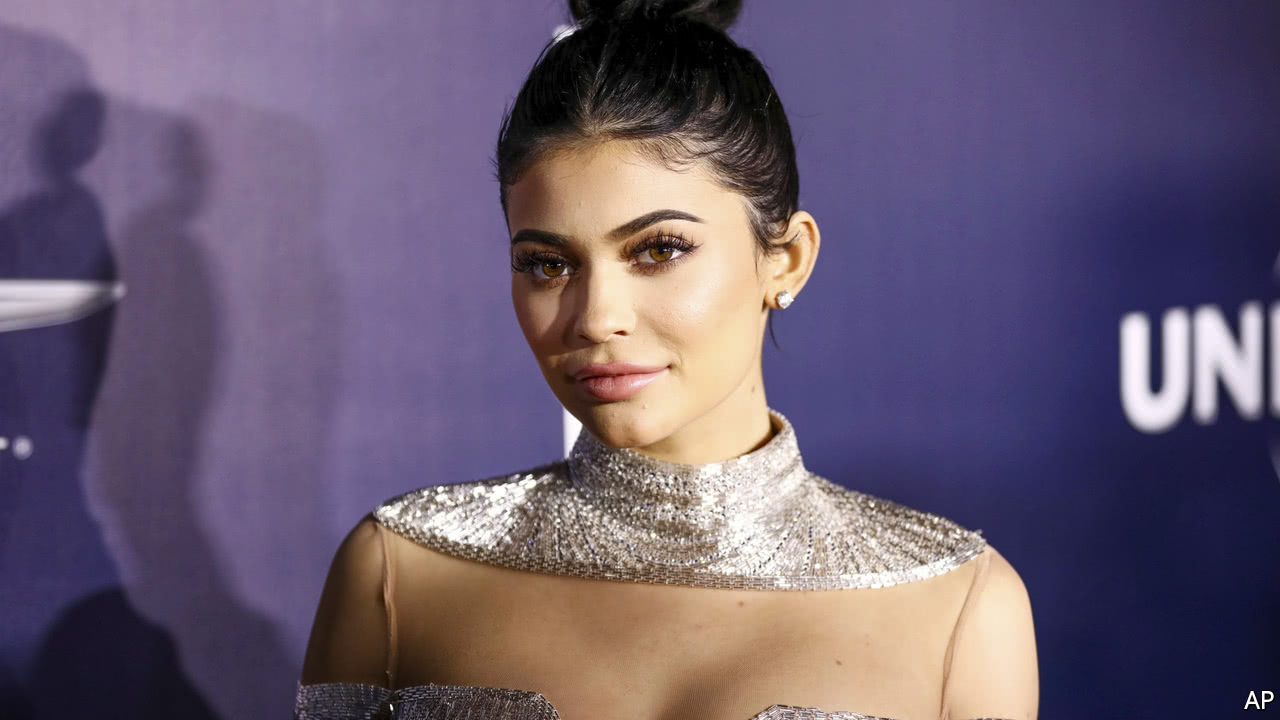
KYLIE Jenner, a model best known for being the, er, second most famous Kylie in the world, managed to cause a stir on Wall Street. With this idiosyncratic tweet
sooo does anyone else not open Snapchat any more? Or is it just me…ugh this is so sad
she knocked back the share price of Snap, the parent compnay of the video- and picture-sharing app. Ms Jenner’s influence in the target market is deemed to be huge; she has 24.5m Twitter followers, and her message has (at thew time of writing) been retweeted 58,000 times and «liked» by 310,000.
Snap’s share price fell 6%, reducing the company’s market value by $1.3bn. The decline was not just down to the influence of Ms Jenner, who recently gave birth to a daughter Stormi, named after the weather/porn star/grime artist. Investors were already worried about the impact of a recent app redesign. More than 1.2m people signed a petition calling for the…Continue reading
Why low returns are inevitable

WHEN the stockmarket is close to a record high, the chances are that recent returns will have been very strong. The terrible tendency among investors is to assume that those returns will continue. But the higher you go, the harder it is to keep rising at the same pace.
When I visited America for a story on pensions last autumn, I was struck by how few people failed to grasp this point. Public pensions have return targets of 7-8% for their portfolios. When challenged they tend to cite their 30-year record of achieving those numbers. But that record makes it less likely, not more that they will hit their targets.
The easiest way to think of this is via the bond market. In 1987, the yield on the ten-year Treasury bond was just under 9%. Since then it has fallen to its current level of just under 3%. So not only did bond investors get a high yield in their early years,…Continue reading
Those Brexit clichés explained
Ever since February 2016, when David Cameron, the British prime minister, called a referendum on the
Project Fear
This was how the Leave campaign dubbed the economic forecasts made by the Treasury and bodies like the OECD and IMF about the potential adverse impact of a Brexit vote. George Osborne, the chancellor, certainly went over the top with his threats of a “punishment Budget” after a Leave vote. So far, the
Financial markets abhor an equilibrium
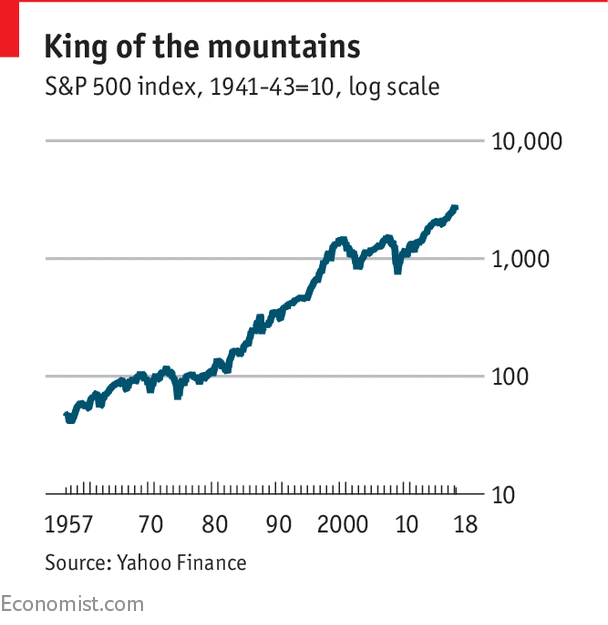
THE recent volatility in the stockmarket has come as a shock in part because equities have been performing well for an extended period. Share prices have been on a broadly upward trend ever since the spring of 2009. That follows the long bull market of 1982 to 2000. As the chart shows (on a log scale), there has been a tendency for bull markets to be longer-lasting than they were in the 1960s or 1970s.
The same can be said for the economy. The average business cycle since the Second World War has lasted around six years. By that standard the current expansion is elderly, at…Continue reading
Why don't foreign investors take fright more often?
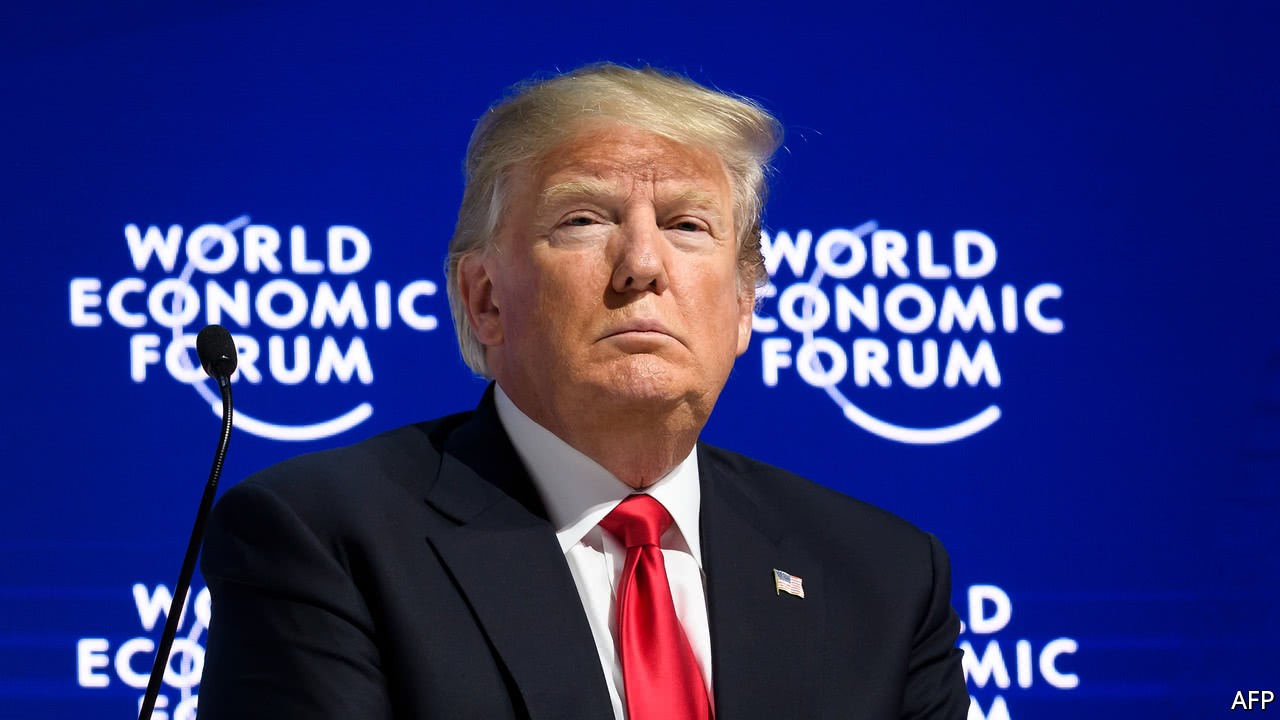
BACK in the days of the gold standard, central bankers were very concerned about the views of international investors. They believed that maintaining the value of their currencies would reassure creditors. That is why they were so resistant to the idea of floating currencies. Georges Bonnet, a French finance minister, put it best
Who would be prepared to lend with the fear of being paid in depreciated currencies always before his eyes?
This fear still shows up from time to time. Under the old exchange rate mechanism, countries like Italy would undergo periodic devaluations to restore their competitiveness*. As a result, investors would demand a higher bond yield to compensate for this risk. When the single currency was planned, bond yields slowly converged on the German level as the risk of devaluation disappeared. It popped up again in 2011 and 2012 as investors feared some countries might drop out of the euro and reintroduce domestic currencies; that would have required a partial default. (Of course,…Continue reading
The buck drops here
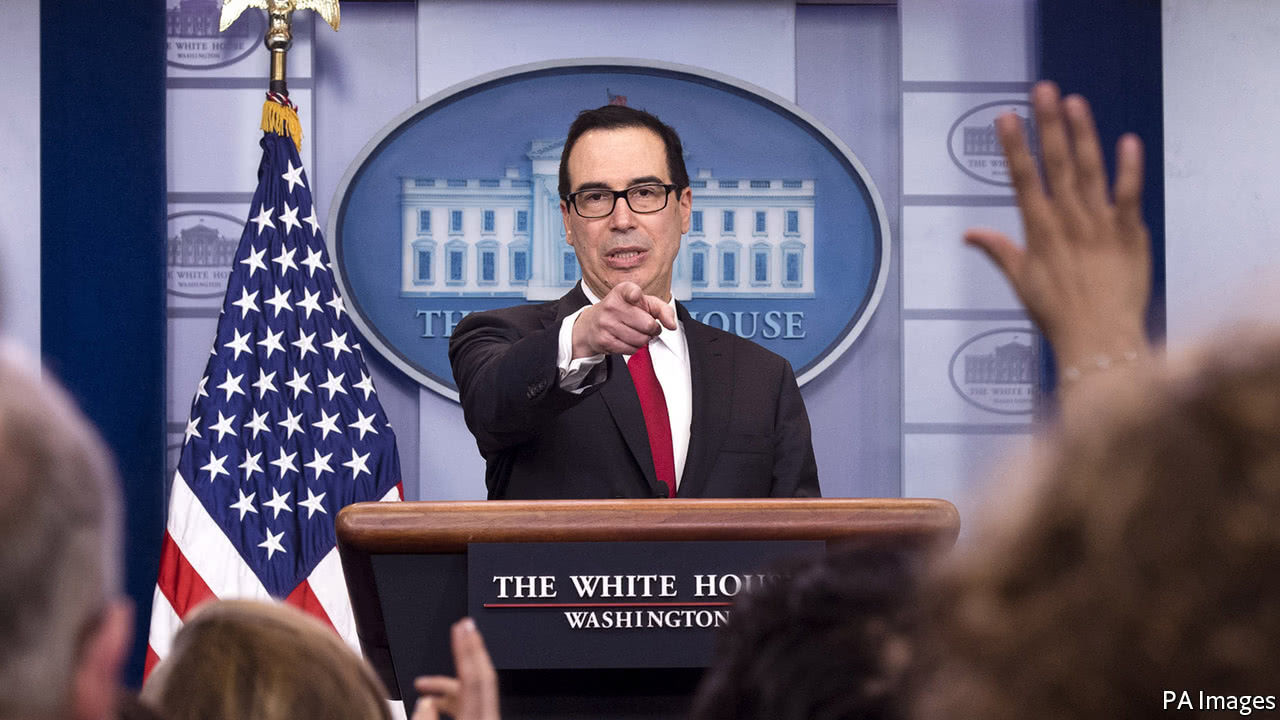
THERE may have been a «Trump bump» in the stockmarket but the opposite has been true in currency markets. The dollar has steadily weakened and the administration does not seem too concerned about it. Steven Mnuchin, the Treasury secretary, said this week that
Obviously a weaker dollar is good for us as it relates to trade and opportunities
He qualified his remarks by saying a strong dollar reflects a strong US economy. Leaving aside his clear confusion (so does the dollar’s weakness mean the US economy is weak?), it is rare for any Treasury secretary to welcome a fall in the greenback.
Paul O’Neill, who held the position under George W Bush, declared that
I believe in a strong dollar, and if I decide to to shift that stance I will hire out the Yankee Stadium and some rousing brass bands, and announce that change in policy to the whole world.
There are many reasons why politicians like to speak about a strong dollar. A decline in the currency tends to push up import…Continue reading