
Tag: Gulliver
Why some airlines remove Israel from their online route maps
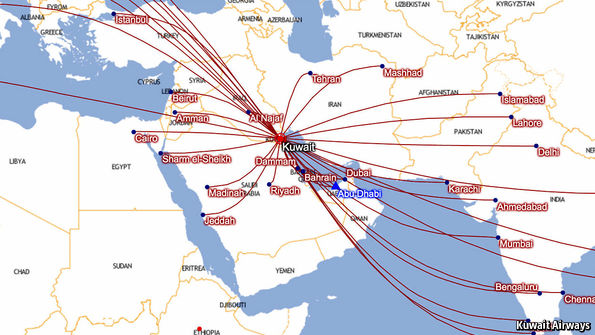
STARING at an airline’s route map can cause the heart to flutter. It seems to divide the world into two distinct groups, between memories and possibilities. But on some carriers’ maps, a third classification exists: the non-existent.
Many airlines’ route maps show every country in the world, regardless of whether they fly there. Those that do not usually illustrate their network by showing only those cities and countries served by the airline. But a few are more selective still, omitting only a single country from their worldview: Israel.
A new paper*, which is currently under peer review, by Joel Waldfogel and Paul Vaaler, both of the University of Minnesota, looks into the phenomenon. The pair classified 111 of the world’s international airlines depending on how they treat Israel on their online route maps. Outside the Middle East, all dealt with it consistently: either Israel was shown as part of a comprehensive map, or it its inclusion was dependent on whether the airline served the country.
Not so for those based in the Middle East. Here, many airlines simply erase Israel’s name off otherwise comprehensive maps (this is often done by…Continue reading
The European Parliament votes to reintroduce visas for Americans
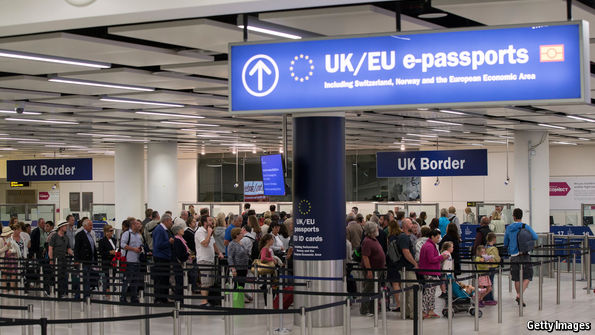
EUROPE and America have been slowly drifting apart for millions of years. Tectonic shift means that the physical distance between the continents grows by about an inch every year. If only the political divergence were so languid. From NATO to Donald Trump’s travel ban to accusations of currency manipulation, the gap between once-strong allies on either side of the Atlantic has rarely felt as chasmic.
Relations may get frostier yet. On March 2nd, the European Parliament voted temporarily to suspend visa-free travel for Americans visiting the EU. The vote is not binding—it will be up to the European Commission, the body’s executive arm, to decide whether to implement the recommendation. Nonetheless, the decision marks a sad state of affairs.
The main reason for the vote is the way that travellers from some EU countries are treated by America. While most citizens of EU countries can travel to the United States without a visa, those from Bulgaria, Croatia, Cyprus, Poland and Romania must still obtain one. Because the EU demands equal treatment of all its citizens in such matters, it says it is legally obliged to fight back.
Some media outlets, including…Continue reading
Air passengers rail against allowing mobile-phone calls on planes

ONE by one, airline passengers’ privileges have been taken away: free checked bags, free carry-ons, complimentary food and drink, on-board entertainment. Now, with the advent of “basic economy” class, some flyers are even losing the ability to choose their seats, sit with family members and accrue qualifying miles toward elite status. So it is rather interesting that when passengers are offered the chance of a new privilege, their response seems to be an overwhelmingly “no thank-you”.
The issue at hand is the use of cell phones on planes. The U.S. Transportation Department recently sought public comment on whether it should continue to ban calls from mobiles in the air. More than 8,000 people weighed in before the deadline in February. And in an era when it’s hard to achieve public consensus on just about anything, this issue seems to unite people to an uncommon degree.
Of the last 100 public comments submitted, for example, just one was in favour of calls on planes—and only if airlines agreed to strict regulations and imposed “no call periods” during takeoff, landing…Continue reading
Are airlines' new "last class" fares just a bait-and-switch?
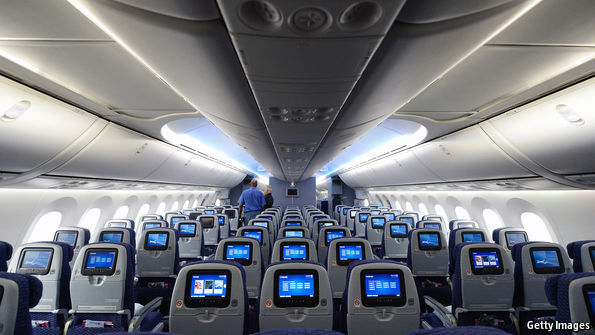
THIS week, United Airlines introduced the change that no flyers were eagerly awaiting: “basic economy” class. You might think that some budget-conscious travellers would welcome the arrival of the new no-frills designation, which offers the lowest fares but strips away flyers’ ability to select their seats, bring full-size carry-on bags onto the plane and earn elite qualifying miles. They might, except basic economy doesn’t actually bring lower fares than the ones already available.
Ben Schlappig was the first to note this on his popular «One Mile at a Time» blog. Mr Schlappig looked at fares on a Minneapolis-Denver route before and after the introduction of basic economy. (On February 22nd United began offering basic economy only between its seven American hubs and Minneapolis; other routes in the United States, Latin America, and the Caribbean will follow.) Prior to the rollout, he found that standard economy fares on this route started at $173. When the “new” fares became available, the basic economy seats began…Continue reading
What to drink at 30,000 feet

THERE exists a genre of information which might be termed “little-known facts that everyone knows”. It is the sort of tidbit you expect to amaze your friends at a dinner party, but which is greeted with rolled eyes. Casinos don’t have clocks or windows. Alanis Morissette’s song “Ironic” contains no example of irony. The body exerts more calories digesting celery than is contained within the vegetable. (Except the last of these facts—and everyone knows this—is in fact untrue.)
Then there is Bloody Marys and aeroplanes. Have you ever wondered why the only time most people fancy gulping down vodka, tomato juice and Worcestershire sauce is when strapped into the seat of a passenger jet? It is a little-known fact (that everyone knows) that our taste buds are dampened by the low pressure and humidity in the cabin, as well as the white noise of the engines. This particularly affects flavours that are sweet and salty. The umami taste, however, remains prominent. Tomato juice is high in umami. Worcestershire sauce, meanwhile, is what one cook…Continue reading
The busiest airports in Europe

ANYONE who has tried to hold a conversation in a West London garden will wonder how it is possible to squeeze any more more flights into Heathrow Airport. On average, a chinwag is interrupted every minute or so by a Boeing or an Airbus rumbling overhead.
And yet each year more people manage to pass through. The latest figures from Airports Council International (ACI), an industry group, show that in 2016 passenger numbers grew by 1% at Europe’s busiest hub, to 75.7m. Charles de Gaulle in Paris, Europe’s second busiest airport, lags way behind (see chart).

Heathrow’s two runways are currently running at the very limit of their capacity. That will change once a third runway opens, perhaps in 2026. But in the meantime the only way for the airport to continue to grow is to service bigger planes. This year Korean Air became the ninth airline to fly A380 superjumbos into the airport….Continue reading
Dubai is to test passenger-carrying drones

AT TIMES it can feel like we are living in an episode of “Travel Futurama”. This week: flying drone taxis.
Dubai, a city that sometimes seems to inhabit a time zone five years ahead of the rest of the planet, has embraced another improbable travel innovation, to go alongside its enthusiasm for hyperloop trains and long driverless metro lines. This week, the Emirati metropolis announced it is to test passenger-carrying drones in its skies by July.
The unpiloted drone taxis won’t exactly replace the traditional earthbound sort, since they will be able to carry only one passenger, who together with luggage cannot weigh more than 100 kilograms (220 pounds). And it will have a range of just 50 kilometres (31 miles), or half an hour of flying time. But if it works, the long-term implications are huge not only for Dubai, which has among the world’s Continue reading
International visitors are already turning their back on Trump-era America

WHEN President Donald Trump announced his travel ban last month, affecting people from seven majority-Muslim countries, this blog wondered what effect it would have on tourism and business travel to America. “The direct impact to tourism of a travel ban from these countries will be small,” a fellow Gulliver noted, since “each sends a piddling number of visitors to America.” But there was a bigger concern: “Will the decree—easily interpreted as a deep hostility to the world beyond America’s shores—put off global travellers?”
Two weeks later, it has become clear that the answer is yes.
Last week, the travel ban was blocked temporarily by a federal judge and the suspension upheld by a panel of appeals court judges. But that hasn’t stopped Mr Trump’s executive order from having an effect on travel to the United States.
Hopper, a market research firm, looked at online searches for flights into America, comparing the final weeks of the Obama administration with the…Continue reading
Business travellers are keener on the sharing economy than their employers
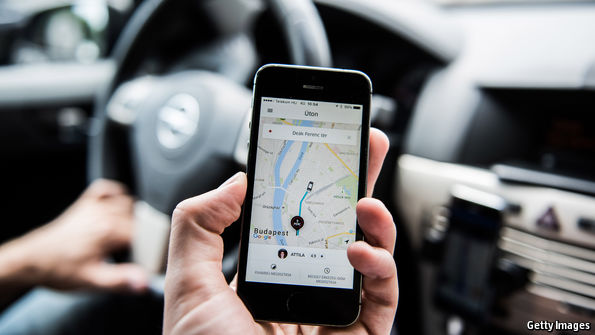
RIDE-HAILING apps and home-rental sites are fast becoming mainstays of the corporate travel world—but perhaps not quite as fast as many business travellers would like.
Two recent reports shed light on the rapid changes taking place within the industry. One comes from the Global Business Travel Association (GBTA), which represents corporate travel managers. Its latest survey found that the number of businesses allowing their employees to use ride-hailing services such as Uber and Lyft has increased by nearly 15% since June. Over the same period, the share permitting workers to book lodging through Airbnb and similar services increased 20%. Yet despite that growth, half of corporate travel policies still don’t allow employees to use ride-hailing apps, and 70% prohibit home-rental services in favour of traditional hotels.
At first glance, those figures appear at odds with a survey released by Certify, which makes software that tracks business-travel expenses. It found…Continue reading
Passengers like flying on planes not made by Boeing or Airbus

ONE statistic that never fails to amaze is the claim by Boeing that one of its 737-model planes lands or takes off somewhere in the world every two seconds. Airbus, the American planemaker’s bitter European rival, makes a similar assertion about its A320 series (although fewer have been built). So ubiquitous are these mid-sized, short-haul aircraft that if you are sat on a modern plane with 120-200 seats you are all but guaranteed to be on an A320 or a 737. That duopoly is nice for Boeing and Airbus, which have collectively delivered 16,800 of the two models. But, in Europe at least, passengers are getting a taste of what else might be.
Last July, Swiss International Air Lines became the first carrier in the world to fly the Bombardier CSeries on scheduled commercial operations. It currently deploys five CS100s (pictured) from Zurich to two dozen European cities. The 125-seat jets are borrowed from parent company Lufthansa, Germany’s flag-carrier, which has ordered 30 CSeries and expects to receive another 12 of the planes this year. More recently, Air Baltic, the flag-carrier of Latvia, became the first to fly the CS300, a larger variant which it has configured with 145…Continue reading