
TAURUS
Santander o el reto de evitar ‘merendarse la cena’
Santander regresa sobre sus propios pasos. El banco acaba de anunciar la recompra del 50% del negocio de gestión de activos que vendió en 2013 a los fondos Warburg Pincus y General Atlantic. Leer
La victoria de Trump da alas a Gestamp y Aernnova, pero abarata la venta de Itínere y Redexis
El nuevo escenario favorece a los valores cíclicos y la banca de inversión advierte de las consecuencias del cambio de perspectivas. Leer
Una juez abre la vía para reclamar fondos por la manipulación del euríbor
El colectivo OpEuríbor gana una causa contra Caixabank que puede generar un aluvión de demandas
Un exempleado de BBVA, condenado a pagar 7 millones en costas por una demanda “temeraria”
Un juzgado de A Coruña declara que el exasesor jurídico “litigó con temeridad” al pedir 140 millones por usar su firma una vez jubilado
Los novios a punto de casarse logran en India sortear la crisis de los billetes
El Ejecutivo les permite retirar de los bancos hasta 250.000 rupias (unos 3.384 euros) para el enlace
Sanción a JPMorgan por ‘enchufar’ a hijos de la élite china
El mayor banco por activos de Estados Unidos contrató a cerca de 200 personas por recomendación para apuntalar su negocio en Asia
Los reguladores americanos multan a JP Morgan con 264 millones por sobornar a políticos chinos
El banco contrató a hijos de influyentes políticos del país para obtener negocios en el gigante asiático. Leer
Airlines are finally explaining what “last class” means. It isn’t pretty
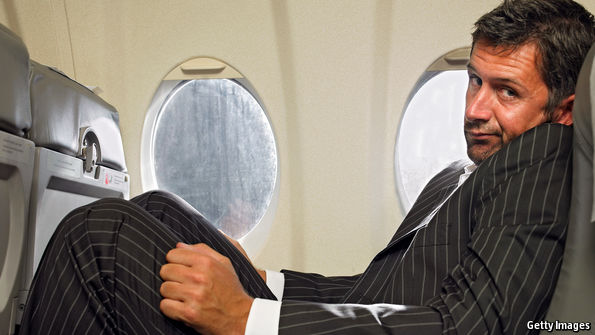
OVER the past couple of years America’s three biggest carriers, Delta, United and American, have each unveiled a fare class below economy. The new designation, known as “basic economy” to the airlines and derided as “last class” by their customers, is an attempt to compete with the low fares on profitable no-frills carriers such as Spirit and Frontier.
From the airlines’ initial announcements, it seemed that the sacrifices passengers would have to make in order to secure last-class fares would be modest. The most notable was the inability to select seats when booking a flight. For families travelling together that might be unpalatable, since they would run the risk of being split up. For solo travellers it would mean more chance of a middle seat—not ideal, but worth the lower cost for many flyers.
That changed this week when United, on a call with investors, dropped a bombshell: flyers in basic economy would be barred from using the overhead bins. Instead, they will be allowed only a small carry-on bag that can fit under the seat in…Continue reading