
Tag: Approved
The private-equity business learns to be more flexible
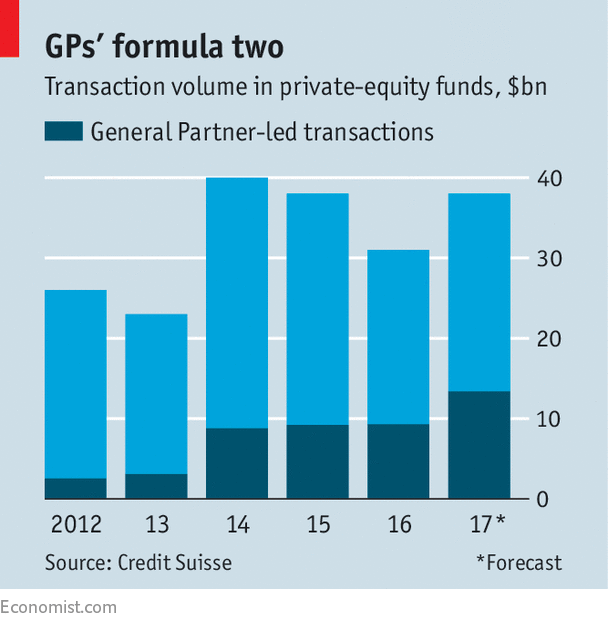
THE private-equity business presents a paradox. Its barons like to boast of revamping the companies they buy. But they themselves have been steadfast to their own business model, centred on funds with a ten-year life. Within this time span, fund managers, known as “general partners” (GPs), commit to buy, manage and sell a clutch of companies; investors commit to lock up their money for the duration. Sometimes GPs or investors chafe at the time constraint. A new segment of the secondary market, “GP-led” deals, has sprung up to help them.
Investors wanting to exit a fund early need to find a buyer for their stake in the secondary market. But sometimes none will offer an attractive price. Sometimes also, a fund nearing its expiry date may find itself still holding a large number of its investments. GP-led deals place the onus on fund managers to find buyers.
Such transactions have quickly grown from just 10% of the secondary market in 2012 to over one-third this year, according…Continue reading
Genetic testing threatens the insurance industry
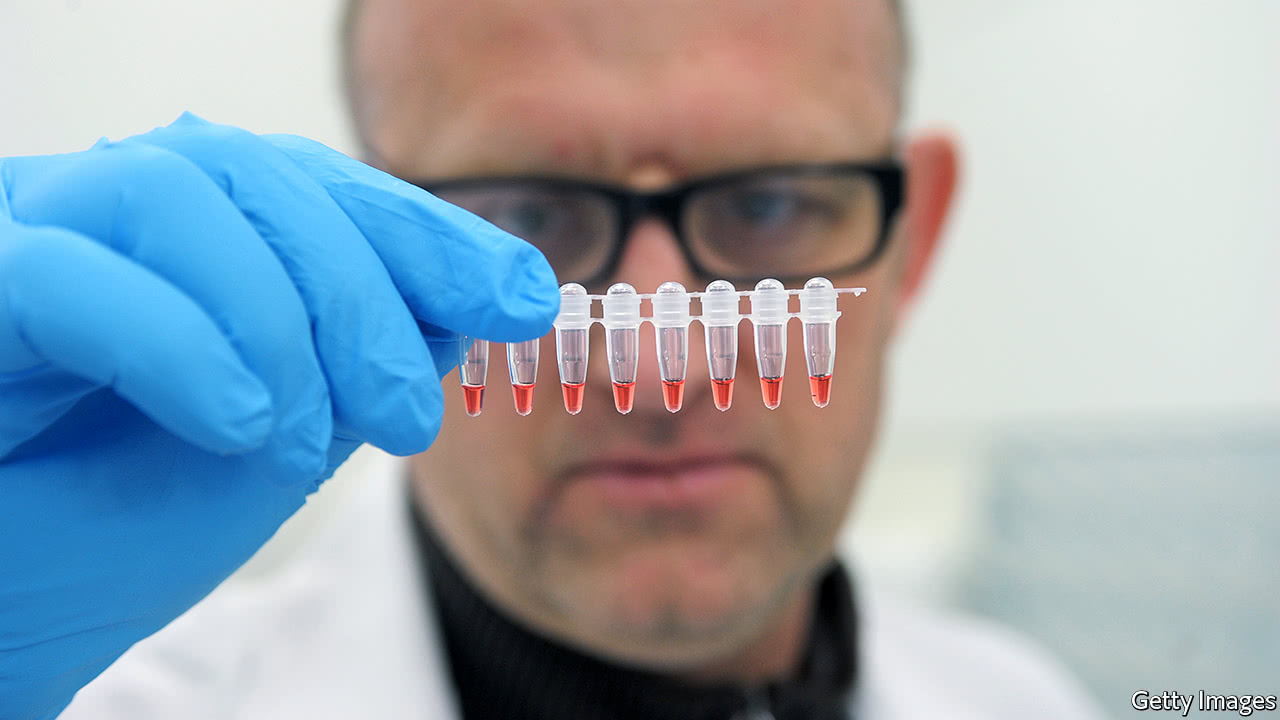
IF A genetic test could tell whether you are at increased risk of getting cancer or Alzheimer’s, would you take it? As such tests become more accessible, more and more people are saying “yes”. The insurance industry faces a few headaches as a result.
Once used only for medical reasons, basic predictive genetic tests can now be ordered online for a few hundred dollars. One company, 23andMe, in California, has collected some 4,000 litres of sputum since 2007, enlightening 2m people on their ancestry, health risks and what they may pass on to offspring. In April it received regulatory approval to screen for risk factors connected to ten diseases and genetic conditions, including late-onset Alzheimer’s and Parkinson’s. The ruling could open the floodgates for others to sell direct to consumers.
“Information is power”, argue many who take such tests. But insurers fear that without equal access to such information, they…Continue reading
Hong Kong, the global capital of hustle, is gripped by self doubt
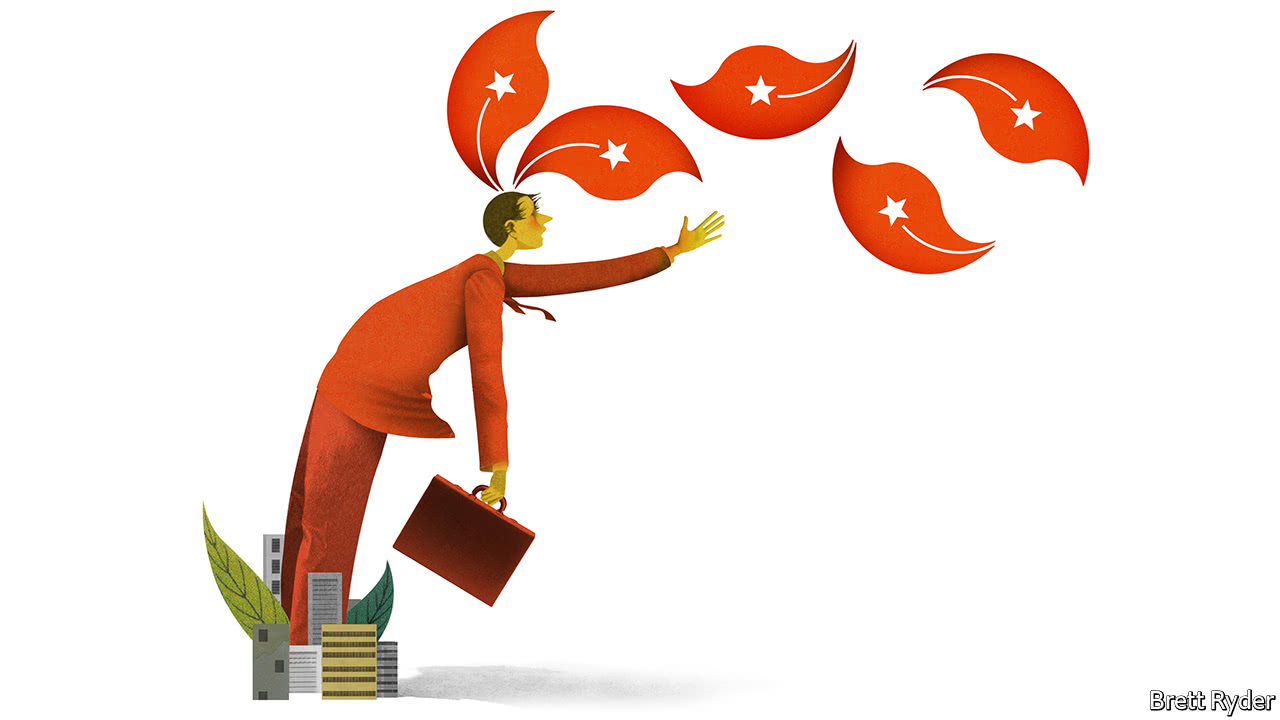
OF THE world’s three great commercial centres—New York, London and Hong Kong—two are on the defensive. London faces a rupture with the European Union, which wants to seize the City’s euro-related activities and shift them inside the currency zone. In Hong Kong the fear is of deeper assimilation by mainland China, followed by irrelevance.
Entrepots, after all, can become obsolete. Venice once teemed with merchants, not tourists. Yet while London’s problem is complacency, Hong Kong’s pessimism seems overdone. It remains vital both to China and to the country’s trading partners—the adaptor that converts the mainland’s financial and legal voltage into the one used by the rest of the world.
Today’s gloom partly reflects a fear of Chinese autocracy. During Schumpeter’s recent visit, Xi Jinping, China’s president, in town for the 20th anniversary of the resumption of mainland rule, warned that, while the constitutional structure of “one country, two…Continue reading
Why national accounts might be like corporate balance-sheets
THE easiest way to get an economist to laugh sardonically is to compare a country’s finances to those of a family. It is both simplistic and wrong, they will argue, for politicians to say that a country “must live within its means”.
But in a new working paper* from the National Bureau of Economic Research, Patrick Bolton and Haizhou Huang make a different comparison; between the finances of a government and those of a company. A business can finance itself in three ways: through internal funds (its revenues); through borrowing; and through equity (the issuance of new shares). In the first two cases, it is easy to see the analogy with a nation state; governments can raise money from taxes or borrow in the form of government bonds.
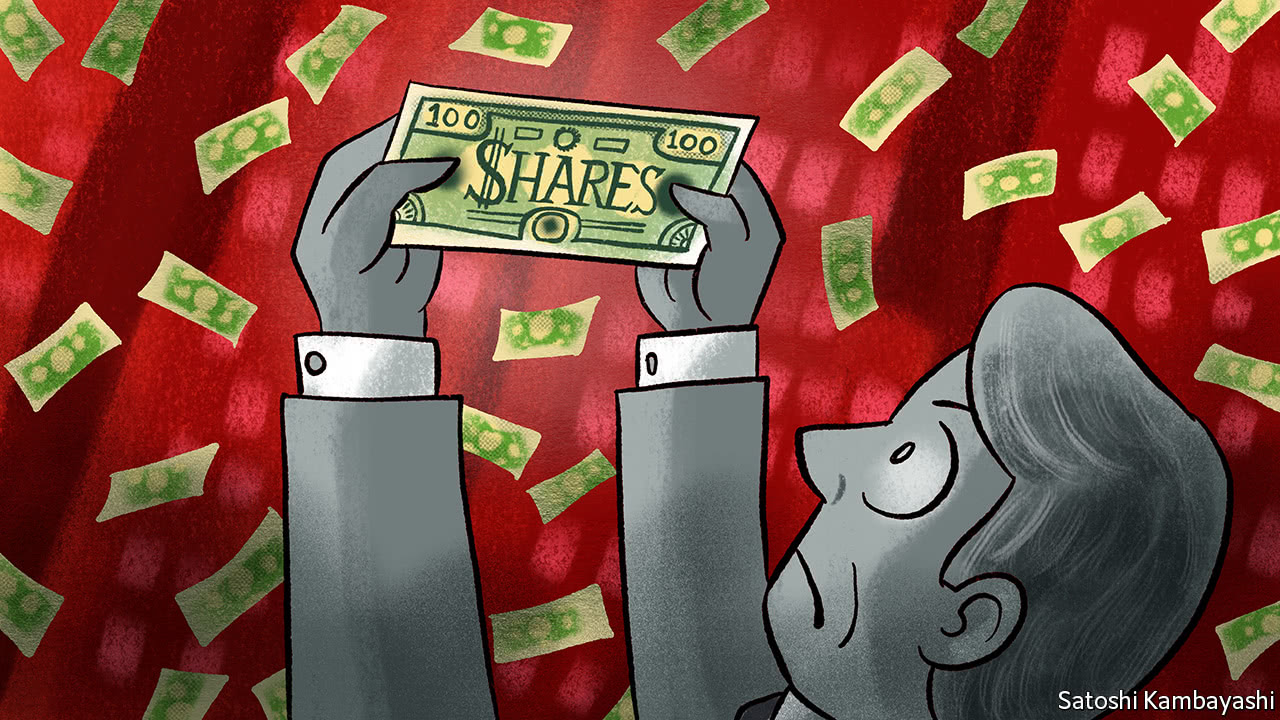
But the paper’s most striking idea is that the national equivalent of equity is fiat money. Governments are able to issue money that can be used to settle debts and pay taxes—the term “fiat” comes from the Latin for “let it be done”….Continue reading
How crisis-hit economies become investment darlings
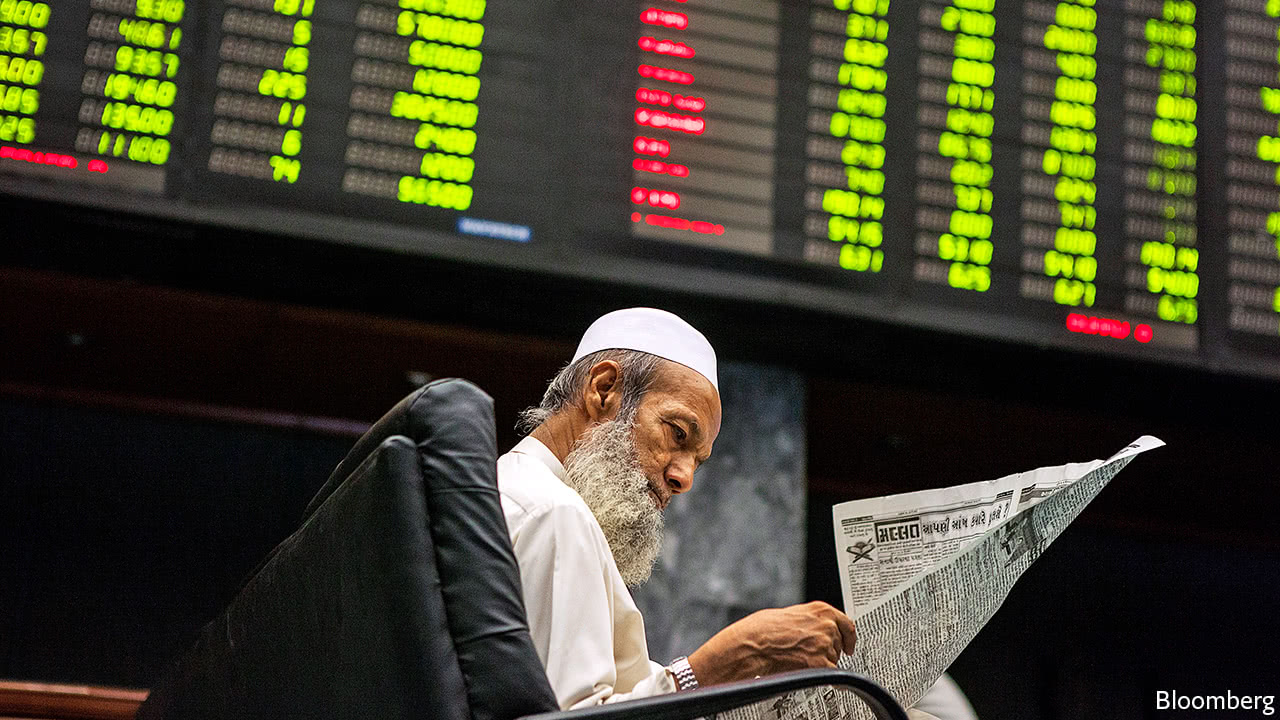
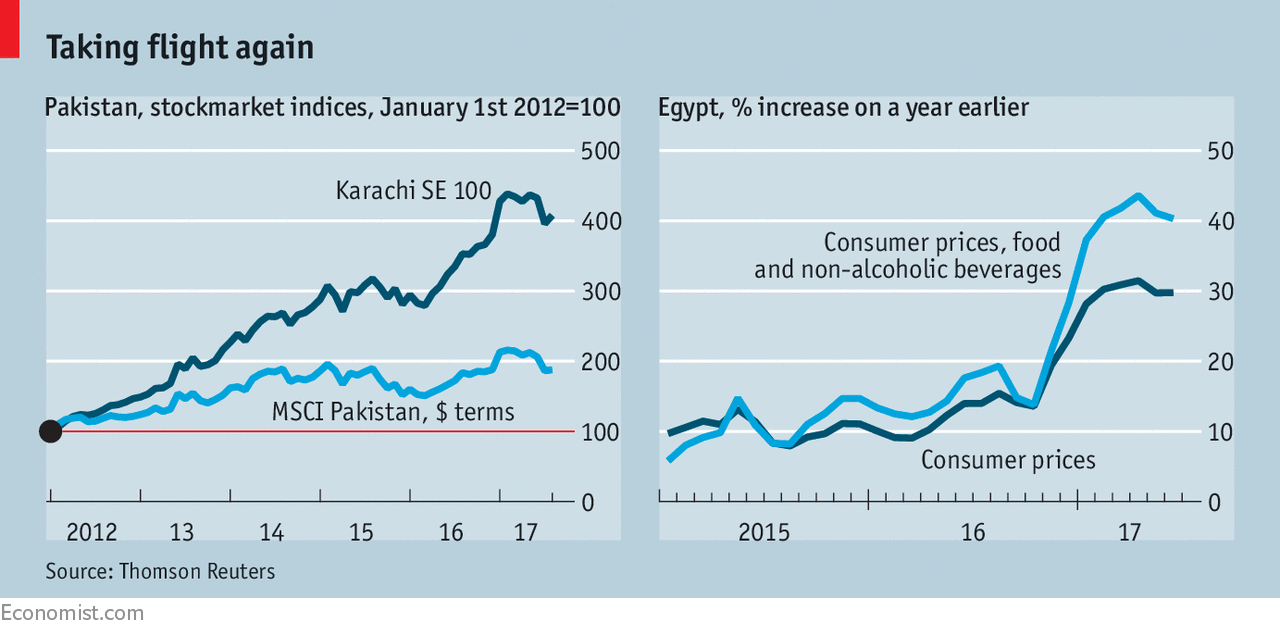
NAWAZ SHARIF is the ex-prime minister of Pakistan again. His third stint in the job ended on July 28th after the Supreme Court disqualified him from office. Yet he could justifiably claim that he left Pakistan’s economy in a better state than he found it. When Pakistan last went to the polls, GDP had been growing at around 3%, a dismal rate for a poor country with a burgeoning population. Inflation was above 10%. The budget deficit had ballooned. A crisis loomed. Four years on, inflation is in the low single digits. The budget deficit has shrunk to a little above 4% of GDP. The GDP growth rate is closing in on 6%. Investors too have taken notice. Since 2012, Pakistan’s stockmarket capitalisation has doubled in dollar terms (see chart).
Bitcoin divides to rule
COMPARED with Brexit, Bitexit seems a piece of cake. On August 1st, without much agonising or awkward negotiation, a group of Bitcoin activists and entrepreneurs managed to create a second version of the crypto-currency. It immediately gained a following: in less than a day of existence, the value of a unit of “Bitcoin Cash” jumped to over $600, and tokens worth more than $10bn were in circulation (although that is still much smaller than Bitcoin classic, which stood at about $2,700 and nearly $45bn).
This “fork”, as such events are called, came earlier than foreseen. But it is broadly how insiders had expected a two-year-old conflict over the future of Bitcoin to end. At the heart of this “civil war” was the question of how to increase the capacity of the system, which can only handle up to seven transactions per second. The new version is able to process 56 per second, but otherwise works much like the original one.
Will Bitcoin Cash be more than just another “altcoin”, as the many existing clones of the crypto-currency are called? It is backed by Chinese “miners”, firms that provide the computing power to confirm payments and mint new digital coins. They have been unhappy with how the original system has been managed by its developers—and made some further technical tweaks to ensure that the new Bitcoin survives. The followers of…Continue reading
Tech stocks have regained their dotcom-era highs
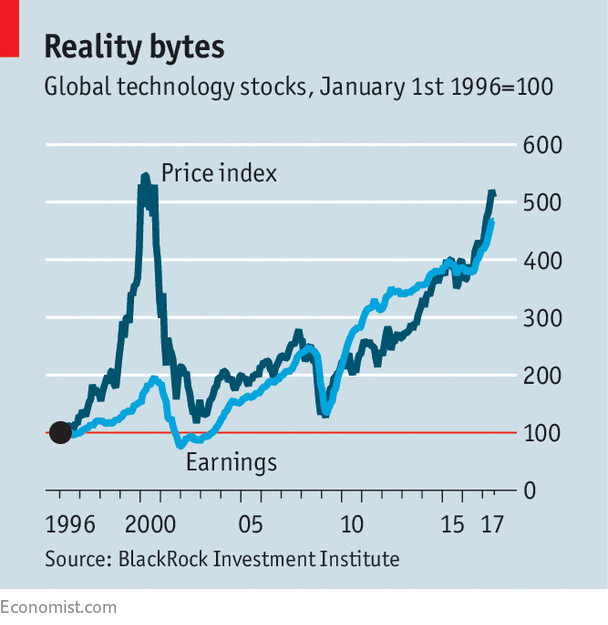
CAST your mind back to when Bill Clinton was president, Tony Blair and Vladimir Putin were fresh-faced new leaders and tweeting was strictly for the birds. That was when technology stocks, as measured by the S&P 500 tech index, last traded at their current levels.
The horrendous decline in share prices that followed the peak in 2000 was the first financial calamity of this millennium. The dotcom crash had much less impact on the broader economy than the mortgage and banking crisis of 2007-08. Nevertheless, the tech revival has caused some twitchiness among investors. Might history be repeating itself?
In the intervening years the world, and the tech industry, have changed a lot. In the late 1990s enthusiasm for tech shares was so great that the sector’s market value rose far faster than its earnings. The gap is nothing like as great today (see chart). Back then, leading firms like Microsoft and Oracle were valued at more than 20 times their annual revenues, let alone earnings….Continue reading
Making Bitcoin work better

IN DIFFERENT circumstances the two people could be good friends. Each is rather shy and very smart. And each is passionate about bitcoin, a digital currency. One invented hashcash, which foreshadowed components of the crypto-currency; the other is the author of the first Chinese translation of the white paper in which Satoshi Nakamoto, the elusive creator of bitcoin, first described its inner workings.
Adam Back is the chief executive of Blockstream, a British startup, which employs some of the main developers of the software that defines bitcoin’s inner workings. Jihan Wu is the boss of Bitmain, a Chinese firm, which makes about 80% of the chips that power “miners”, specialised computers that keep the bitcoin network secure, confirm payments and mint new digital coins. But far from being fellow-travellers, each represents one of the two main camps in what has come to be called a “bitcoin civil war”, fought over how, if at all, the system should grow.
The worst seems…Continue reading
The closing of American bank branches
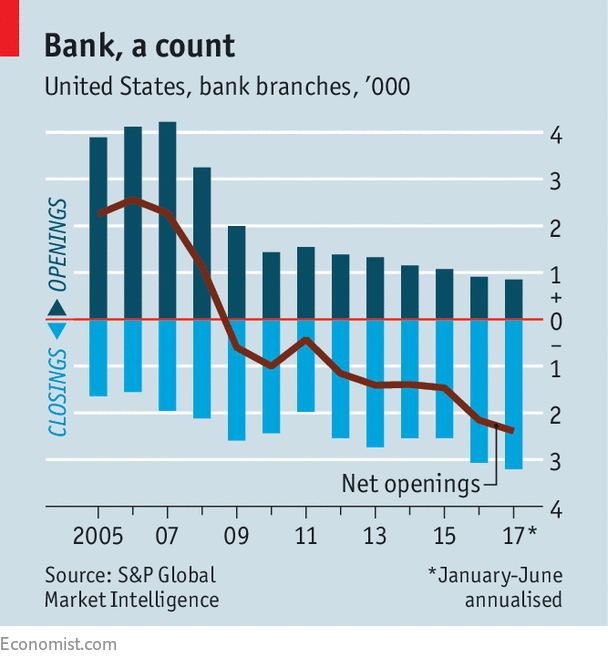
WINDSOR, a community of 6,200 people two hours outside Albany in New York state, offers many of the amenities commonly found in a small town, including a bakery, a car-repair outfit and several restaurants. There is just one thing missing: a bank. The town’s only financial institution, First Niagara Bank, shut its doors in October.
Towns like Windsor are becoming ever more common in America. Since the financial crisis, banks have closed over 10,000 branches, an average of three a day. In the first half of 2017 alone, a net 869 brick-and-mortar entities shut their doors, according to S&P Global Market Intelligence, a research firm. Some fret that branch closures risk turning poorer neighbourhoods into “banking deserts”, cut off from current accounts, loans and other basic services.
Can data predict fashion trends?

IN THE film “The Devil Wears Prada”, the character of Miranda Priestly, whose role is based on a feared Vogue editor, scolds her new assistant for not understanding fashion. Fashion, she tells her, is whatever a select group of designers and critics says it is. What she does not say, however, is that their judgments are themselves often influenced by another group: fashion forecasters, who predict what will be “in”. Might these seers of style in turn be undone by artificial intelligence (AI)?
Fashion forecasting has always been a peculiar profession. The business came into its own in Paris in the 1960s when agencies began releasing “trend books”, collections of fabrics and design ideas. Retailers use these books for inspiration as they put together designs.
The biggest of these forecasting firms is WGSN, with a market share of 50%. It employs 150 forecasters who scour the world’s catwalks, bars…Continue reading