
Tag: Approved
An illustrious Hong Kong container firm sells to China
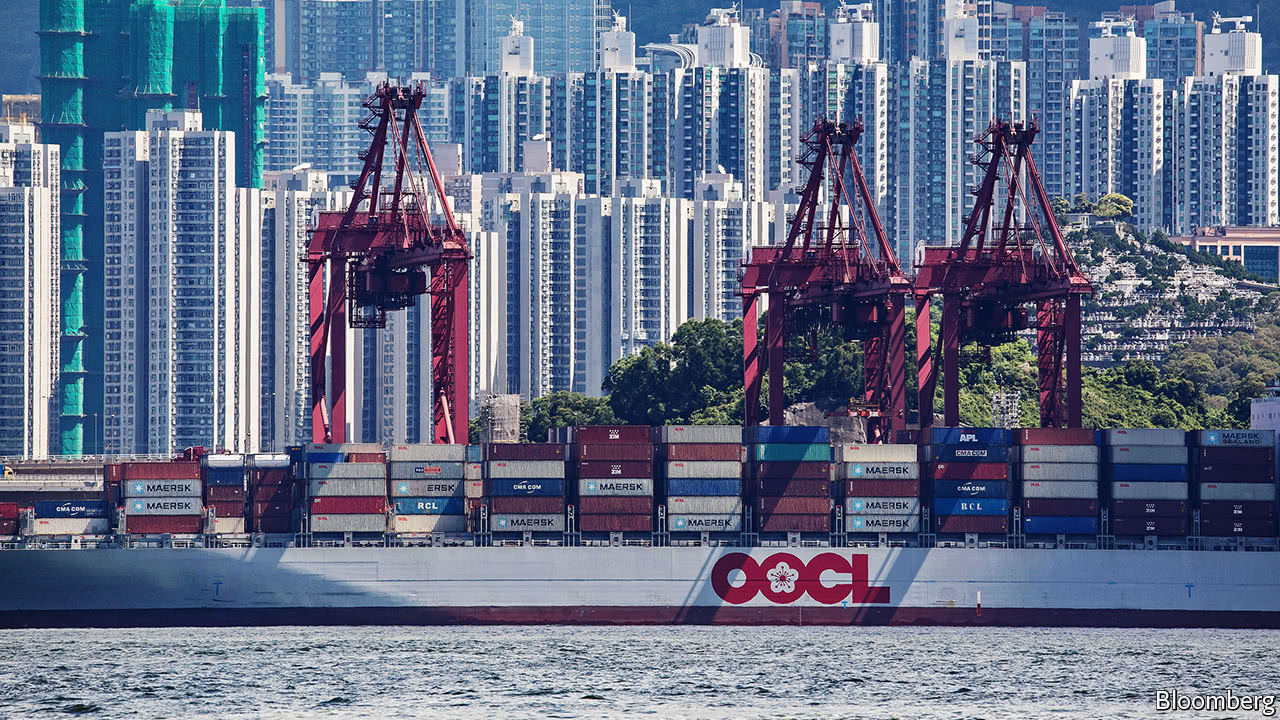
STONECUTTERS ISLAND in Hong Kong used to be a favoured habitat for poisonous snakes and eye-catching birds such as the white-bellied sea eagle. Thanks to Hong Kong’s rapid development, it is no longer so hospitable. Its sky is full of gantry cranes, stacking 20-foot-long shipping containers in multicoloured tessellations, like giant Lego bricks. A cluster of decorative containers, daubed in graffiti, line the perimeter of container terminal eight, which is partly operated by COSCO, a state-owned Chinese shipping giant. In bright yellow lettering, one slogan instructs passers-by to “Respect Past, Embrace Future”.
Few Hong Kong companies have as much to tell about the past as Orient Overseas Container Line (OOCL), the world’s seventh-biggest container shipping line. Its founder, Tung Chao-yung, owned the first Chinese-crewed steamship to travel from Shanghai to France in 1947, and went on to build a shipping empire of over 150 vessels. His…Continue reading
Africa is Islamic banking’s new frontier
IN 2008 Ethiopia’s conservative central bank experimented: it authorised interest-free banking. Interest is prohibited under sharia law, so the move was lauded as a step towards expanding financial services for the country’s large and often poor Muslim minority. But momentum soon stalled. An attempt to launch a fully-fledged Islamic bank foundered. Today most of Ethiopia’s big commercial banks offer a narrow range of Islamic financial products, but to few customers. Islamic finance in Ethiopia was stillborn.
Outside Africa, Islamic finance is in much healthier condition. Between 2007 and 2014, the sector tripled in size (although growth has slowed lately). Total assets are around $1.9trn. Sub-Saharan Africa accounts for less than 2% of this, yet it should be especially fertile territory. The continent’s Muslim population is 250m and growing. And according to the World Bank, as many as 350m Africans do not have a bank account.
Several countries are vying to become…Continue reading
The Big Mac index
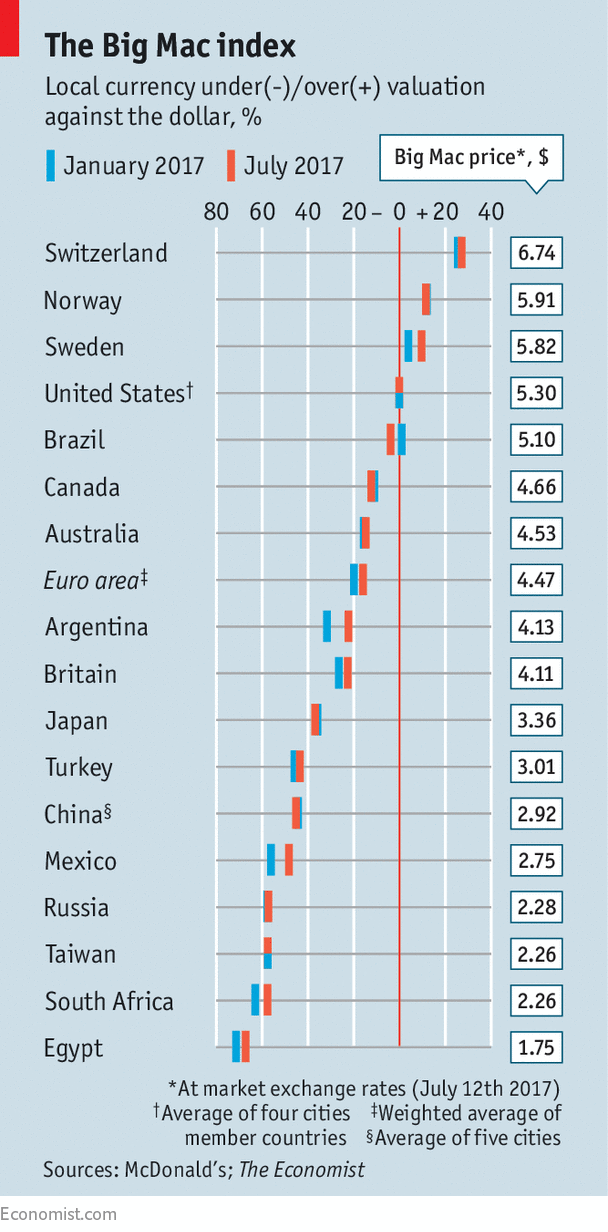
THIRTY-ONE years ago, The Economist created the Big Mac index as a way of gauging how different currencies stacked up against the dollar. The index is based on the theory of purchasing-power parity, the idea that in the long run, exchange rates should adjust so that the price of an identical basket of tradable goods is the same. Our basket contains one item, a Big Mac.
The latest version of the index shows, for example, that a Big Mac costs $5.30 in America, but just ¥380 ($3.36) in Japan. The Japanese yen is thus, by our meaty logic, 37% undervalued against the dollar.
Millions of things will soon have digital twins

THE factory of the future will be a building stuffed full of robots making robots. A factory in Amberg, a small town in Bavaria, is not quite that, but it gets close. The plant is run by Siemens, a German engineering giant, and it makes industrial computer-control systems, which are essential bits of kit used in a variety of automated systems, including the factory’s own production lines.
The Amberg plant is bright, airy and squeaky clean. It produces 15m units a year—a tenfold increase since opening in 1989, and without the building being expanded or any great increase in the 1,200 workers employed in three shifts. (Production is about 75% automated, as Siemens reckons some tasks are still best done by humans.) The defect rate is close to zero, as 99.9988% of units require no adjustment, a remarkable feat considering they come in more than 1,000 different varieties.
Such achievements are largely down to the factory’s “digital twin”. For there is another factory, a…Continue reading
Norwegian might still transform long-haul flying

A DECADES-old dream of many low-cost carriers (LCCs), to break into the market for long-haul flights, has also been a long-standing nightmare for executives at full-service airlines, who earn their corn chiefly on such routes. So a series of setbacks for Norwegian, the latest LCC to try its hand at long-haul flights, has set off a round of Schadenfreude at established airlines across Europe. On July 13th, Norwegian revealed a disappointing set of results for the three months to June. A week earlier its chief financial officer of 15 years, Frode Foss, resigned with immediate effect, sending the share price down by 8%. Over the past year the shares have lost a third in value, as investors grow nervous.
The worries go back to Norwegian’s decision to begin long-haul flights. Founded in 1993 by Bjørn Kjos, still its CEO and biggest shareholder, it took over some domestic routes in Norway from a bankrupt charter…Continue reading
The fashion industry pays attention to plus-size women

A GOOD fit is everything, stylists often counsel, but in assessing its market America’s fashion business appears to have mislaid the measuring tape. A frequently-cited study done a few years ago by Plunkett Research, a market-research firm, found that 67% of American women were “plus-size”, meaning size 14 or larger. That figure will not have changed much, but in 2016, only 18% of clothing sold was plus-size, according to NPD Group, another research firm.
Designers and retailers have long thought of the plus-size segment as high-risk. Predicting what these customers will buy can be difficult, as they tend to be more cautious about styles. Making larger clothes is more expensive; higher costs for fabric cannot always be passed on to consumers. In turn, plus-size women shopped less because the industry was not serving them well. “We have money but nowhere to spend it,” says Kristine Thompson, who runs a blog called Trendy Curvy and has nearly…Continue reading
A new approach to financial regulation
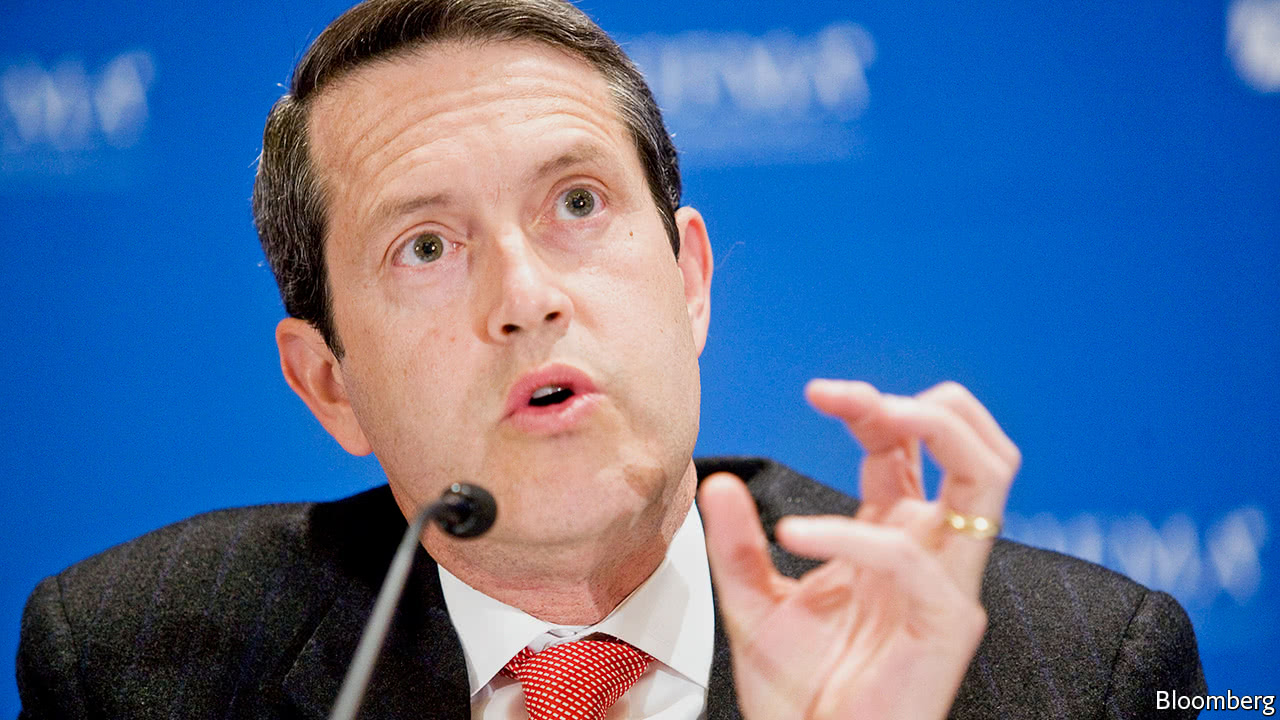
DONALD TRUMP promised to unshackle America’s financial firms from mounds of stultifying regulation and the grip of bureaucrats with little practical experience of capitalism. One way to put that pledge into practice is to appoint officials with business backgrounds and deregulatory agendas. This element of the Trump strategy was on show this week, with a presidential nomination for a critical job at the Federal Reserve and the first public address by the new head of the Securities and Exchange Commission (SEC), another financial regulator.
Buried in the voluminous pages of the Dodd-Frank act, an Obama-era law passed in response to the financial crisis, was the creation of a new supervisory job at the Fed. Thus far, this powerful post has been informally delegated to an existing Fed board member, first Daniel Tarullo and, since his departure, Jerome Powell. That is set to change. Randal Quarles was formally nominated for the…Continue reading
Can the world thrive on 100% renewable energy?

A WIDELY read cover story on the impact of global warming in this week’s New York magazine starts ominously: “It is, I promise, worse than you think.” It goes on to predict temperatures in New York hotter than present-day Bahrain, unprecedented droughts wherever today’s food is produced, the release of diseases like bubonic plague hitherto trapped under Siberian ice, and permanent economic collapse. In the face of such apocalyptic predictions, can the world take solace from those who argue that it can move, relatively quickly and painlessly, to 100% renewable energy?
At first glance, the answer to that question looks depressingly obvious. Despite falling costs, wind and solar still produce only 5.5% of the world’s electricity. Hydropower is a much more significant source of renewable energy, but its costs are rising, and investment is falling. Looking more broadly at energy demand, including that for domestic heating, transport and industry, the share of…Continue reading
Climate change and inequality

ON JULY 12, the Larsen C ice shelf in Antarctica disgorged a chunk of ice the size of Delaware, a small state on America’s east coast. America’s government seems unfazed by the possibility that such shifts might one day threaten Delaware itself. Its climate defiance grows not only from the power of its fossil-fuel industry and the scepticism of the Republican party, but also from a sense of insulation from the costs of global warming. This confidence is misplaced. New research indicates not only that climate change will impose heavy costs on the American economy, but also that it will exacerbate inequality.
Calculating the economic effects of climate change is no simple matter. It means working out how a given increase in global temperature affects local weather conditions; how local weather affects things like mortality and crop yields; how those changes add to or subtract from regional GDP; and how thousands of local-level changes in GDP add up nationally or globally. No…Continue reading
The United States of debt
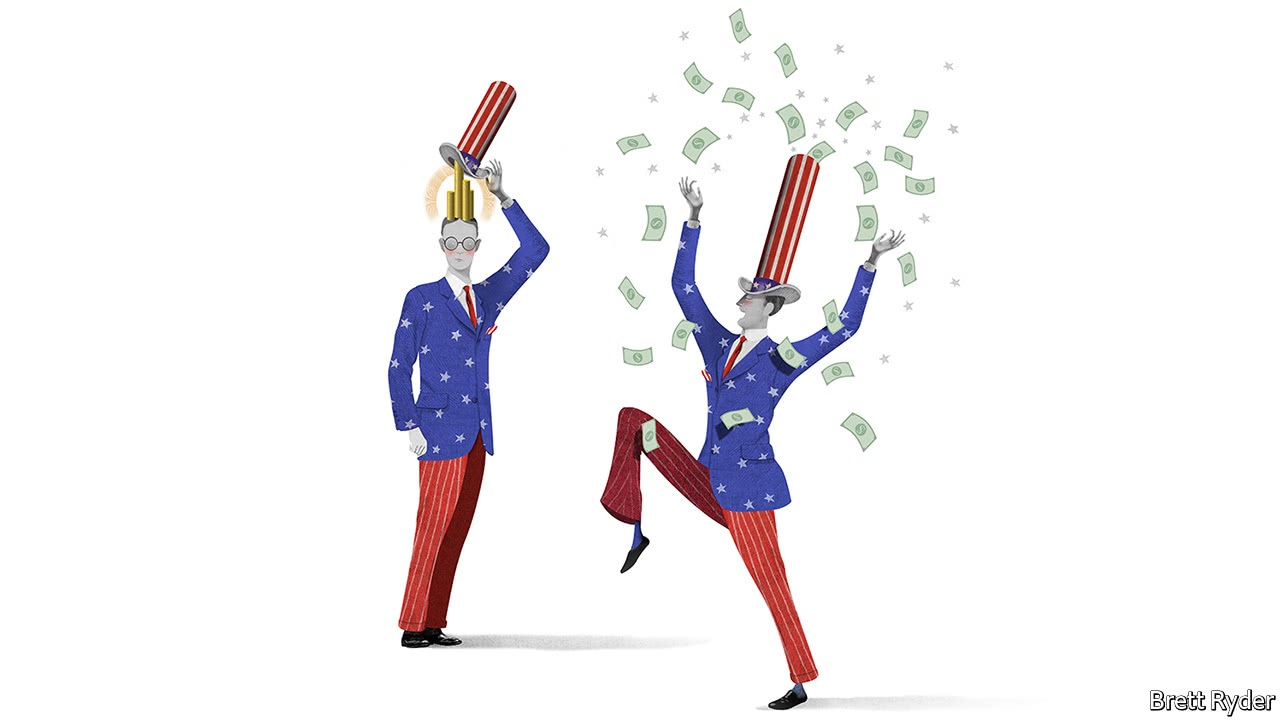
POLITICS in America may be an arena of mutual incomprehension with few settled facts, but the debate about the health of American firms’ balance-sheets is, if anything, even more bewildering. Ranged on one side are those who complain that America Inc is hoarding $2trn of idle cash and that this acts as a powerful drag on the economy. On the other are those, including the IMF, who yell that firms are bingeing on debt, with borrowing hitting an all-time high of $8.4trn last year. As a result firms are simultaneously accused of being timid wimps and reckless idiots.
In fact, the numbers show that they are by and large a sensible bunch (especially compared with the country’s bankers and politicians). What is more, the debate over debt, as framed, misses the most intriguing thing about their balance-sheets. These have been radically reshaped to adapt to three national economic sicknesses—a financial system that companies still mistrust after the crisis; a broken tax code; and monopoly…Continue reading