
Tag: Approved
China may match or beat America in AI

AT THE start of this year, two straws in the wind caught the attention of those who follow the development of artificial intelligence (AI) globally. First, Qi Lu, one of the bosses of Microsoft, said in January that he would not return to the world’s largest software firm after recovering from a cycling accident, but instead would become chief operating officer at Baidu, China’s leading search engine. Later that month, the Association for the Advancement of Artificial Intelligence postponed its annual meeting. The planned date for the event in January conflicted with the Chinese new year.
These were the latest signals that China could be a close second to America—and perhaps even ahead of it—in some areas of AI, widely considered vital to everything from digital assistants to self-driving cars. China is simply the place to be, explains Mr Lu, and Baidu the country’s most important player. “We have an opportunity to lead in the future of AI,” he says.
Other…Continue reading
How to kill a corporate zombie

WHAT is the best way to kill a zombie? Fans of Daryl Dixon, a character in “The Walking Dead”, a television series, will know the answer: a crossbow bolt to the brain. Getting rid of corporate zombies, however, is a much more complicated process.
Ageing populations mean that the workforces in developed economies are likely to stagnate, or even shrink, in coming decades. That means almost all the burden of economic growth is likely to fall on productivity improvements. There has been a lot of focus on labour-market flexibility as the key to solving this problem, but the flexibility of the corporate sector may be just as important. Indeed, there is a growing belief that the persistence of zombie firms—companies that keep operating despite a poor financial performance—may explain the weak productivity performance of developed economies in recent years.
An inability to kill off failing companies seems to have two main effects. First, the existence of the…Continue reading
A reality check for virtual headsets

JUSTIN WILLIAMS takes off a virtual-reality (VR) headset and wobbles away from a demo area at E3, the world’s largest gaming convention, in Los Angeles. The bottoms of his feet and calves are “on fire,” he says. Mr Williams, a 32-year-old former marine, was playing “Sprint Vector”, a VR running game: players swing hand-held controllers to simulate motion. Though he has been standing in one place, his brain believes he has just run for several miles.
This sensation of complete immersion is called “presence”. Boosters of VR say it is what will drive the technology’s mass adoption, in time. When Facebook bought Oculus, a VR startup, for $2bn in 2014, and sent interest in the technology rocketing, it was this feeling of being present that Mark Zuckerberg, the social network’s boss, described as “incredible”.
Yet despite many pronouncements that 2016 was the year of VR, a more apt word for virtual reality might be absence. Of the 6.3m headsets that were…Continue reading
Russian oligarch Vladimir Yevtushenkov falls from grace, again
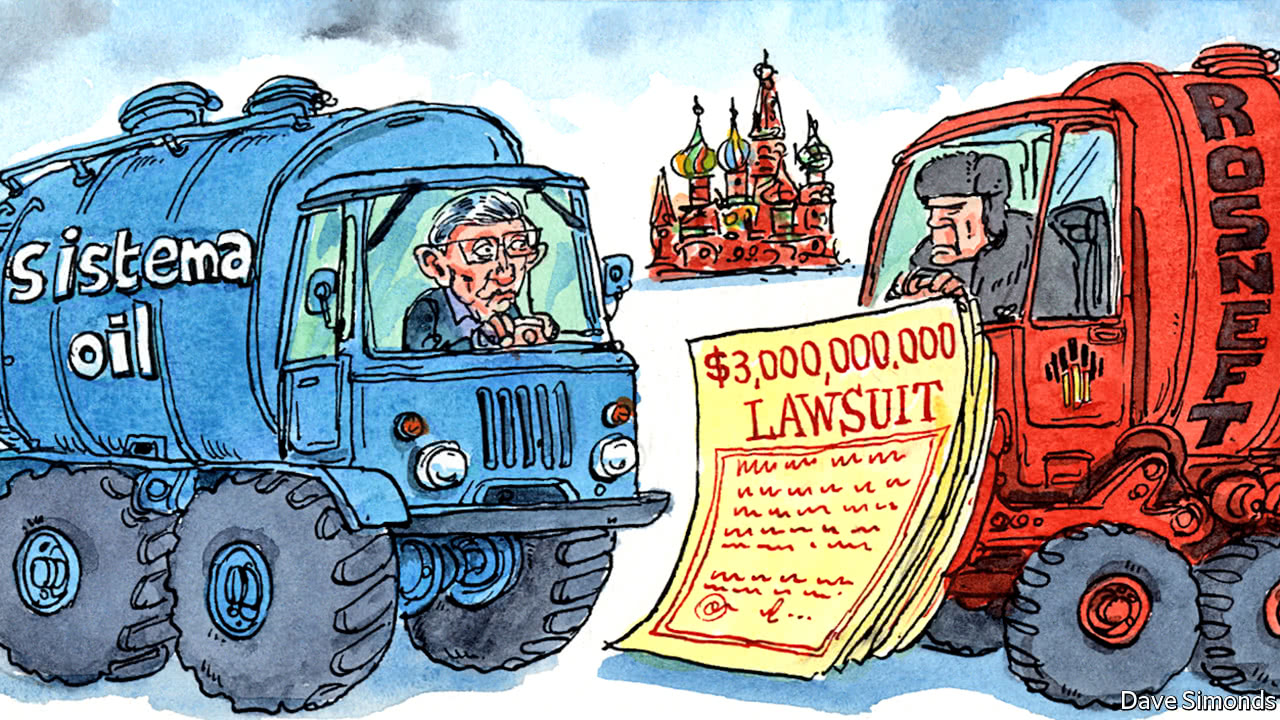
HE WAS back in favour, or so it appeared. After spending several months under house arrest in late 2014, Vladimir Yevtushenkov, a Russian oligarch, relinquished control of Bashneft, a midsized oil firm, to the state. “If you like another company tomorrow and want to take it, you are welcome,” he told Vladimir Putin at the time, he later recalled. The president publicly gave his approval to Sistema, Mr Yevtushenkov’s conglomerate, shares in which had plunged. Mr Yevtushenkov subsequently appeared at annual Kremlin receptions and late last year joined a presidential delegation to Crimea.
Now he is under pressure again, facing a lawsuit from Rosneft, a state-run oil giant, which is demanding 171bn roubles ($2.8bn) in damages. Rosneft’s boss is Igor Sechin, a Putin confidant, who many in Moscow reckon orchestrated the initial 2014 case against Mr Yevtushenkov as well. (Rosneft and Mr Sechin have denied any involvement in it.) Late last year, Rosneft purchased Bashneft from the state…Continue reading
Craft beer in America goes flat

JULY 4th is a day to celebrate American independence, first and foremost, but also to grill meat and swill beer. For American beer lovers in particular, the pint-glass runneth over in terms of choice. They had 5,000 breweries to pick from this year; 35 years ago there were under 100. Drinkers can enjoy time-honoured traditions, guzzling Budweiser to wash down all that sizzling beef, and newer ones such as sipping ale “finished with fennel, liquorice and anise” at Tørst, a Brooklyn bar.
For the producers of beer, the mood is darker. Though the number of brands has proliferated, the number of drinkers has not. Sales have been flat for a few years and 2017 has been especially slow so far. The volumes of beer sold at stores for the three months to June 17th were 1% lower than in the same period last year, according to Nielsen, a market-research firm. Brewers are now waiting with some anxiety for data about sales during the July 4th…Continue reading
Who would buy Air India?

A FAMOUS brand in the world’s fastest-growing aviation market, sitting on valuable slots at international airports and able to borrow cheaply thanks to being state-owned: Air India ought to be hugely profitable. But under state ownership it has guzzled public funds as hungrily as its jets consume kerosene. Last week the authorities threw in the towelette and announced an “in principle” cabinet agreement to privatise it. The chances of that going ahead rose on June 30th when IndiGo, a well-run private low-cost carrier, said it wanted to bid.
Whoever seizes the controls can expect a hard task. Air India has struggled since private rivals were first allowed in 1994 to fly in India’s skies. Together with Indian Airlines, another state-owned carrier with which it merged in 2007, it has a domestic market share of just 13% and is shedding one percentage point or so every six months. A bail-out of 300bn rupees ($4.7bn) agreed in 2012 was meant to stop losses, but has…Continue reading
Hollywood studios dip their toes in virtual reality

OUTSIDE a squat grey building in Santa Monica, the California sun melts the tar. Inside, in a dark room roughly the size of a small shipping container, two men are exploring the world by means of virtual reality (VR). They squash spiders in an abandoned temple, hit a home run at Yankee Stadium and float through a Blade Runner-esque landscape, all in the span of eight minutes. It feels much longer than that, and also shorter—time is hard to grasp in VR.
The creator of the experience is Walter Parkes, a former boss of DreamWorks Pictures, a film studio, who last year co-founded Dreamscape Immersive. The startup plans a chain of VR multiplex cinemas offering ten-minute interactive experiences for around $15 each. The first will open at a shopping mall near Beverly Hills at the end of the year; another 14 are planned for 2018. Mr Parkes says it costs about $2m to make a ten-minute VR experience, compared with around $200m for a big-budget…Continue reading
Markets worry about central banks
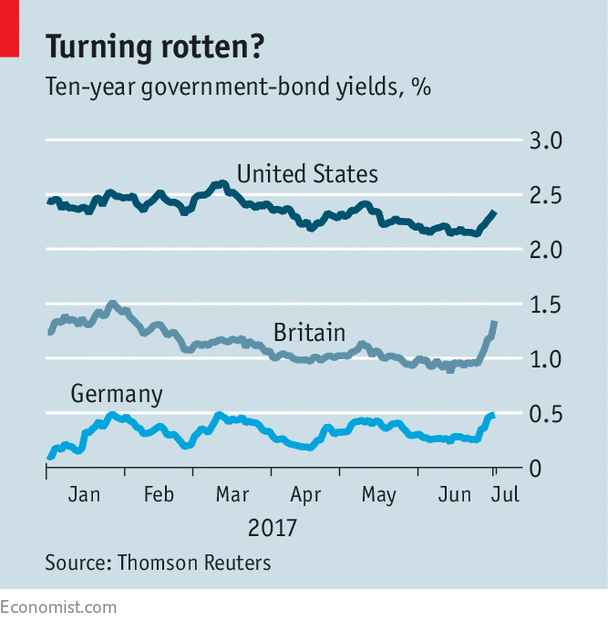
IN JANE AUSTEN’S novel, “Sense and Sensibility”, Henry Dashwood’s death plunges his wife and two daughters, Elinor and Marianne, into financial distress, because his heir grants them only a meagre allowance. Bond-market investors have started to worry that something similar is about to happen to them.
Since 2009 central banks have been incredibly supportive of the financial markets—keeping short-term interest rates at historic lows and buying trillions of dollars worth of bonds. But in recent weeks, several of them have been hinting at reducing their largesse.
The Federal Reserve has been slowly pushing up interest rates and has talked about reducing the size of its balance-sheet, by not reinvesting the proceeds of bonds when they mature. There have been suggestions that the Bank of Canada might push up rates when it meets on July 12th. Both Mark Carney, the governor of the Bank of England and Andrew Haldane, its chief economist, have hinted that a rate rise may be on…Continue reading
Economists argue about minimum wages
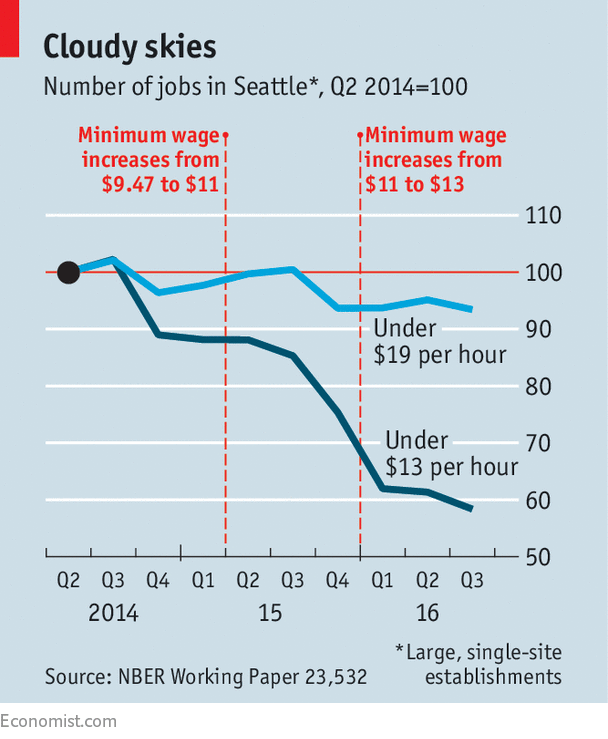
JUST what is the point of a minimum wage? It seems a straightforward enough question to answer. Minimum wages are designed to protect vulnerable workers who might otherwise lack the bargaining power to command a decent pay package. They are a means to limit severe poverty among those in work.
Yet they also attract opposition from critics who see wage minimums as price controls that discourage firms from hiring as many workers as they otherwise might. For decades, feuding camps of dismal scientists have tussled over whether the good done by minimum wages outweighs the bad. A series of recent minimum-wage increases in America will shine a light on that question and others as well. Indeed, the time may have come for economists to broaden their view of just what a minimum wage is meant to accomplish.
As voter frustration at stagnant pay has grown, politicians on the American left have spotted an opportunity to court popularity by calling for higher minimum wages. Democrats are united behind a demand for a national minimum…Continue reading
An American payments firm goes online and buys British
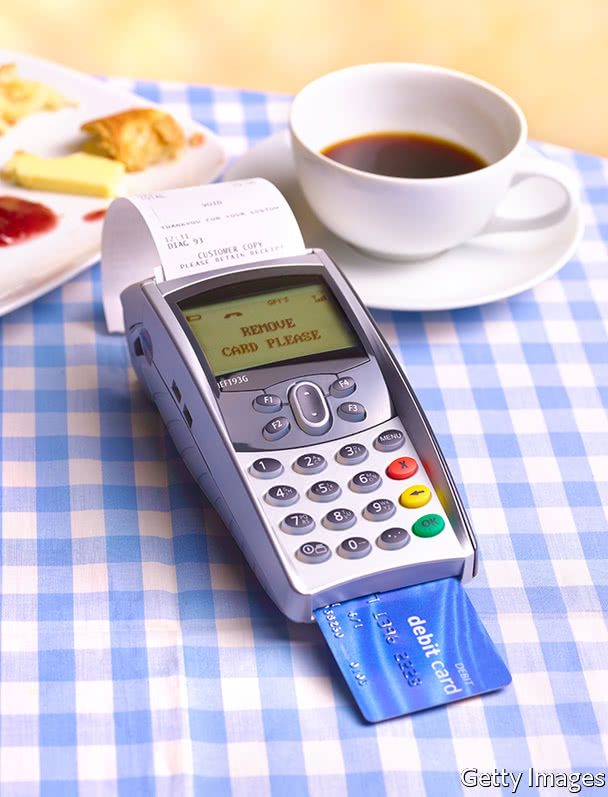
A BIDDING war was briefly but eagerly anticipated. In the end, not a shot was fired. On July 4th the share price of Worldpay, a British payments processor, leapt by 28% after the company said it had received preliminary approaches from JPMorgan Chase, America’s biggest bank, and Vantiv, an American payments firm. The next day Worldpay said it had accepted a cash-and-shares bid from Vantiv, worth £7.7bn ($10bn), giving its shareholders 41% of the combined group. JPMorgan Chase, sniffily explaining that it had considered a bid after an “invitation” from Worldpay, which is a client, declined to proceed. Under Britain’s takeover code that refusal rules out a counter bid for six months. The shares slipped back by nearly 9%.
Vantiv and Worldpay are “merchant acquirers”: companies that have contracts with sellers of goods and services, and licences from credit- and debit-card companies, to accept and process card payments. They also provide…Continue reading