
Tag: FINANCE
KKR, a private-equity giant, lays out its succession plan
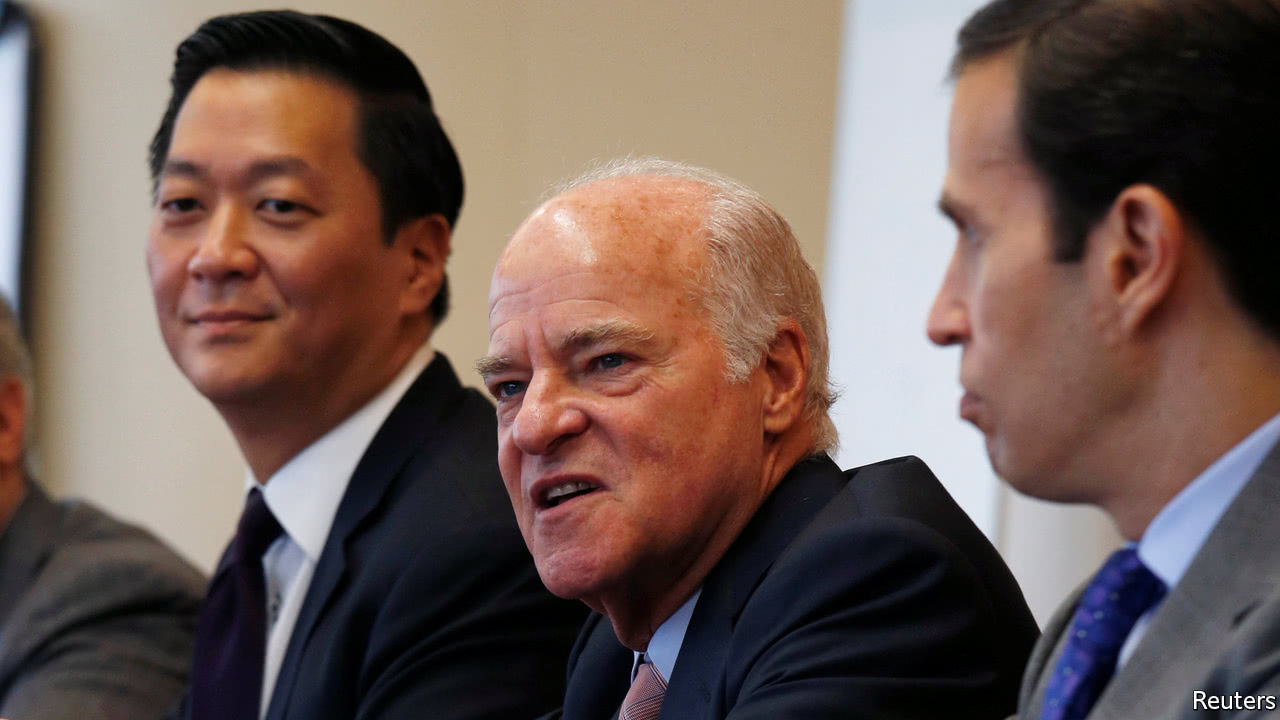
IN MOST four-decade-old firms run by greying co-founders, investors would have long since demanded clarity on succession. But private equity works differently: the industry has been dominated by its pioneers ever since its origins in the 1970s. So an announcement on July 17th about its future leadership by KKR, one of the world’s largest private-equity firms, puts it a step ahead of its rivals. Its aim of ensuring that the firm has the right structure in place “for decades to come” is not obviously shared across the industry.
KKR has been run since 1976 by two of its founders, Henry Kravis and George Roberts (both in their early 70s). They are staying on as co-chairmen and co-chief executives but with less of a day-to-day role. Lining up behind them are a pair of 40-somethings, Joe Bae and Scott Nuttall, who will join the board and take the titles of co-president and co-chief operating officer.
Such explicit, public succession planning is unusual. Stephen…Continue reading
Regulating credit unions in Africa
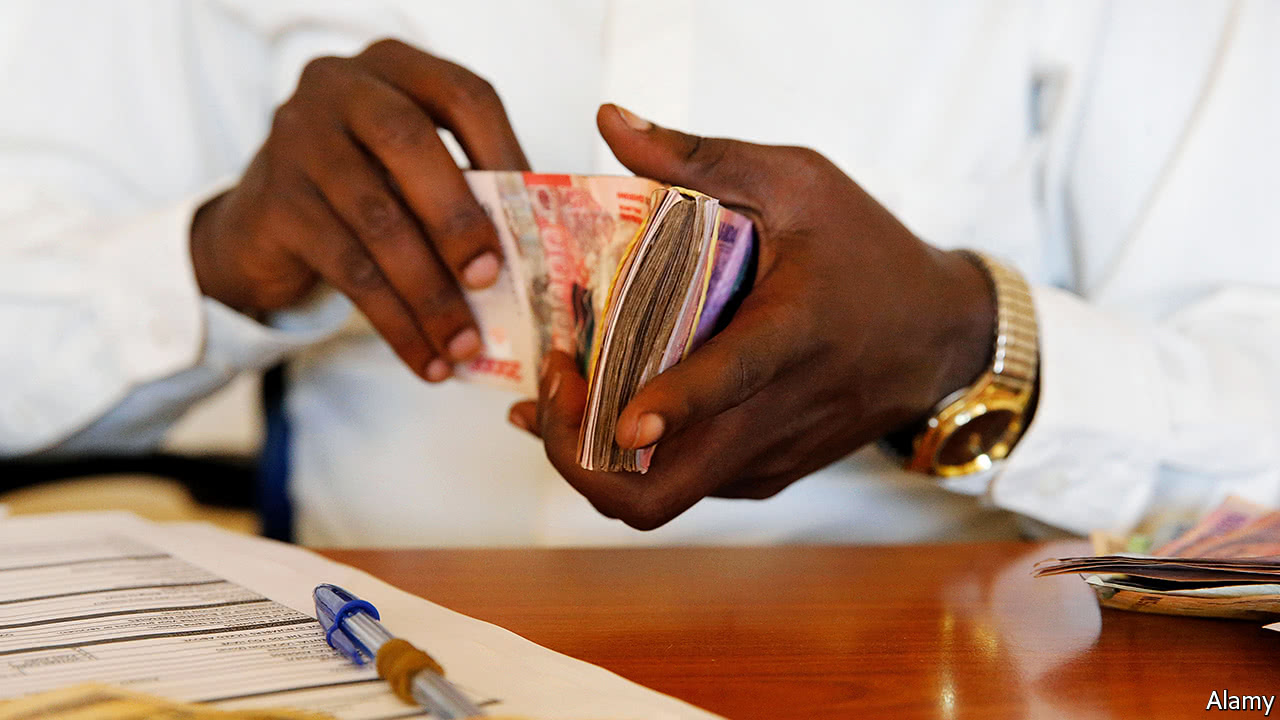
THE most recent time Moses Kibet Biegon needed a quick loan was when his roof blew away. He got one from the Imarisha Savings and Credit Co-operative, in Kericho in western Kenya. Imarisha channels the savings of its 57,000 members into loans for school fees, business projects or, in Mr Biegon’s case, roof repairs. It runs a fund to help with medical bills. And it pays dividends to its members from its investments, which include a shopping plaza that it opened last year.
Savings and credit co-operatives (SACCOs) like Imarisha are the African version of credit unions: member-owned co-ops, usually organised around a community or workplace. Some are rural self-help groups with a few dozen members and a safe. Others have branch networks and mobile apps. The largest SACCOs rival banks; Mwalimu National, which serves Kenyan teachers, has even bought one.
The co-operative model brings “a more humane face” to finance,…Continue reading
The power of populists
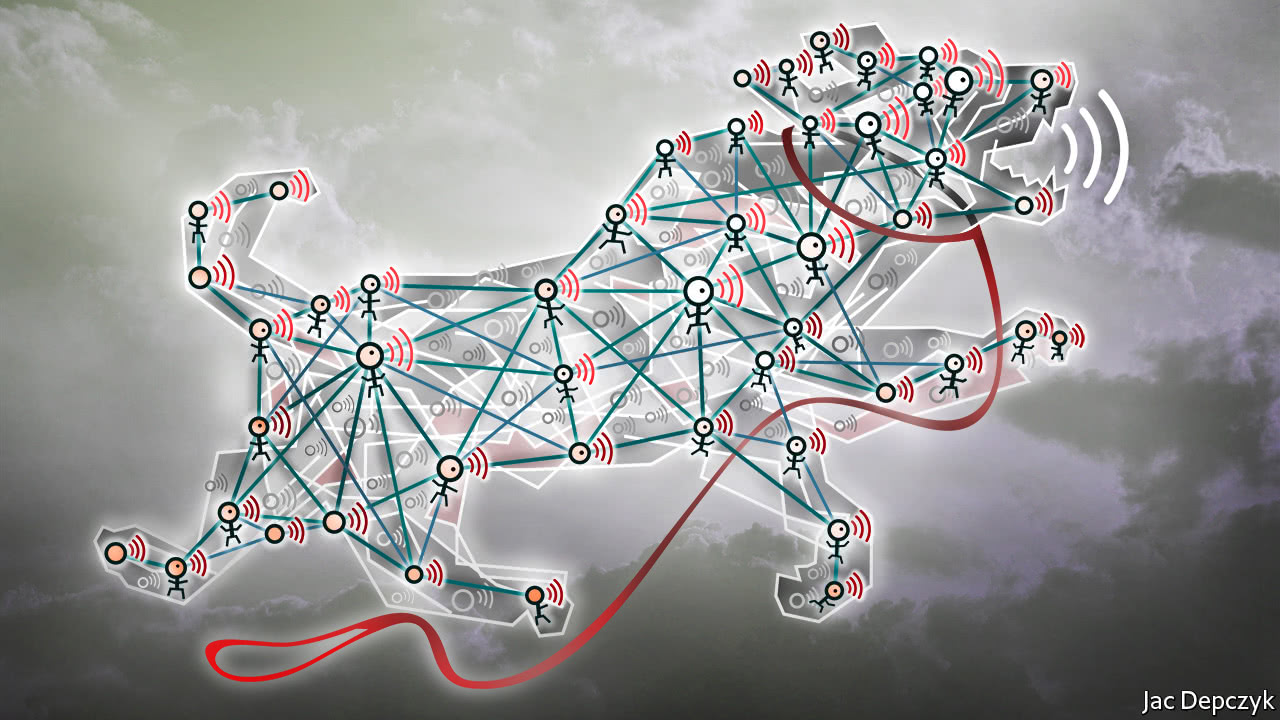
WITH the defeat of Marine Le Pen in her bid for the French presidency, establishment politicians in rich countries breathed a sigh of relief. The fortunes of extremist candidates have faltered since the populist surge that put Donald Trump into the White House. But it is hard to be confident that this was populism’s high-water mark without a better understanding of what caused the swell in the first place. The most convincing explanations suggest that populist upswings are not in the past.
It is tempting to dismiss the rise of radicalism as an inevitable after-effect of the global financial crisis. Studies show that the vote shares of extreme parties, particularly on the right, tend to increase in the years after a crisis. The Depression spawned some of the 20th century’s most dangerous and radical populist movements. But the facts do not fit that story precisely. In Europe, for example, populist parties have steadily won more voters since the 1980s. What is more, populist rage is…Continue reading
Africa is Islamic banking’s new frontier
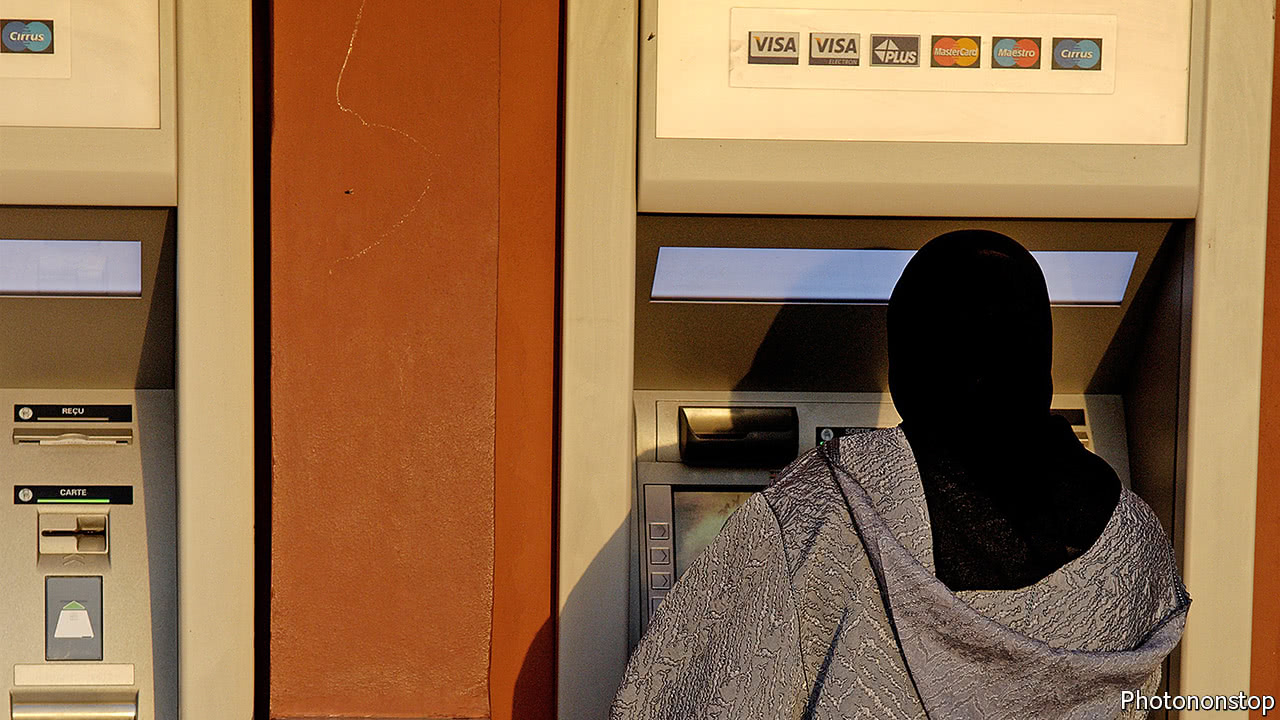
IN 2008 Ethiopia’s conservative central bank experimented: it authorised interest-free banking. Interest is prohibited under sharia law, so the move was lauded as a step towards expanding financial services for the country’s large and often poor Muslim minority. But momentum soon stalled. An attempt to launch a fully-fledged Islamic bank foundered. Today most of Ethiopia’s big commercial banks offer a narrow range of Islamic financial products, but to few customers. Islamic finance in Ethiopia was stillborn.
Outside Africa, Islamic finance is in much healthier condition. Between 2007 and 2014, the sector tripled in size (although growth has slowed lately). Total assets are around $1.9trn. Sub-Saharan Africa accounts for less than 2% of this, yet it should be especially fertile territory. The continent’s Muslim population is 250m and growing. And according to the World Bank, as many as 350m Africans do not have a bank account.
Several countries are vying to become…Continue reading
The Big Mac index
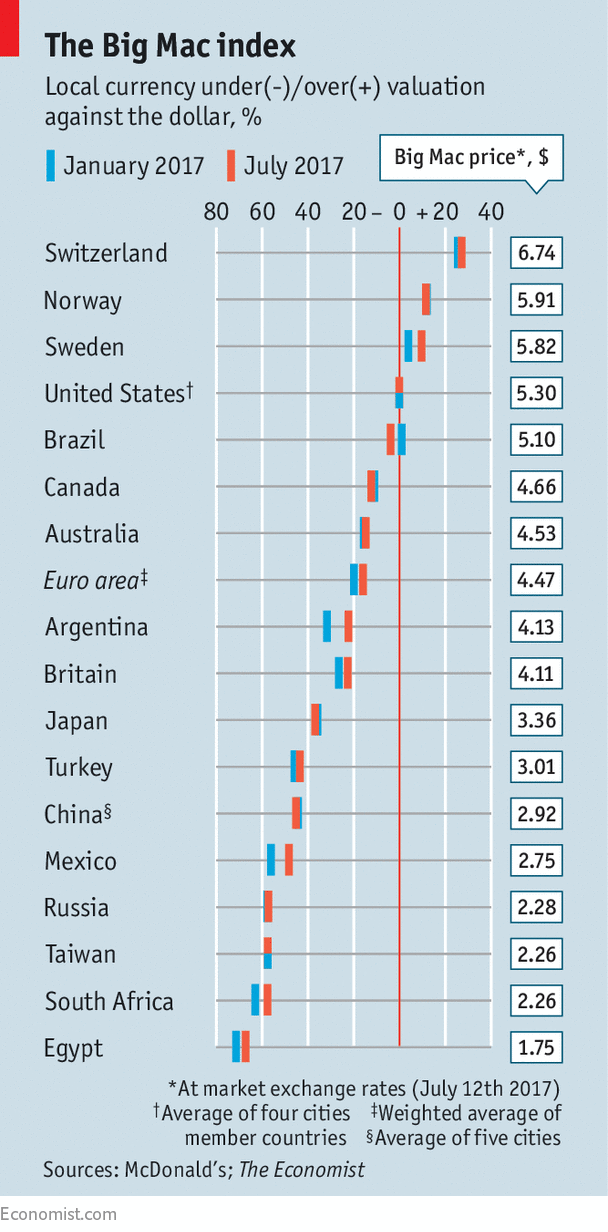
THIRTY-ONE years ago, The Economist created the Big Mac index as a way of gauging how different currencies stacked up against the dollar. The index is based on the theory of purchasing-power parity, the idea that in the long run, exchange rates should adjust so that the price of an identical basket of tradable goods is the same. Our basket contains one item, a Big Mac.
The latest version of the index shows, for example, that a Big Mac costs $5.30 in America, but just ¥380 ($3.36) in Japan. The Japanese yen is thus, by our meaty logic, 37% undervalued against the dollar.
A new approach to financial regulation
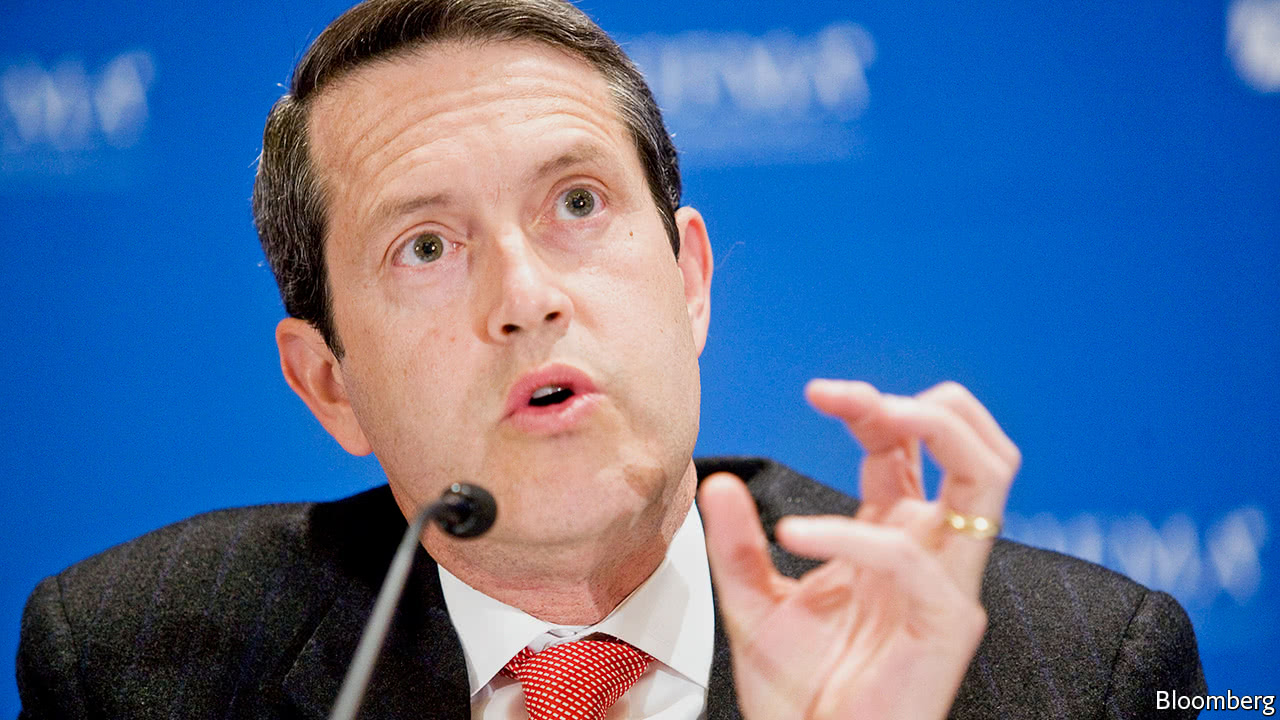
DONALD TRUMP promised to unshackle America’s financial firms from mounds of stultifying regulation and the grip of bureaucrats with little practical experience of capitalism. One way to put that pledge into practice is to appoint officials with business backgrounds and deregulatory agendas. This element of the Trump strategy was on show this week, with a presidential nomination for a critical job at the Federal Reserve and the first public address by the new head of the Securities and Exchange Commission (SEC), another financial regulator.
Buried in the voluminous pages of the Dodd-Frank act, an Obama-era law passed in response to the financial crisis, was the creation of a new supervisory job at the Fed. Thus far, this powerful post has been informally delegated to an existing Fed board member, first Daniel Tarullo and, since his departure, Jerome Powell. That is set to change. Randal Quarles was formally nominated for the…Continue reading
Can the world thrive on 100% renewable energy?
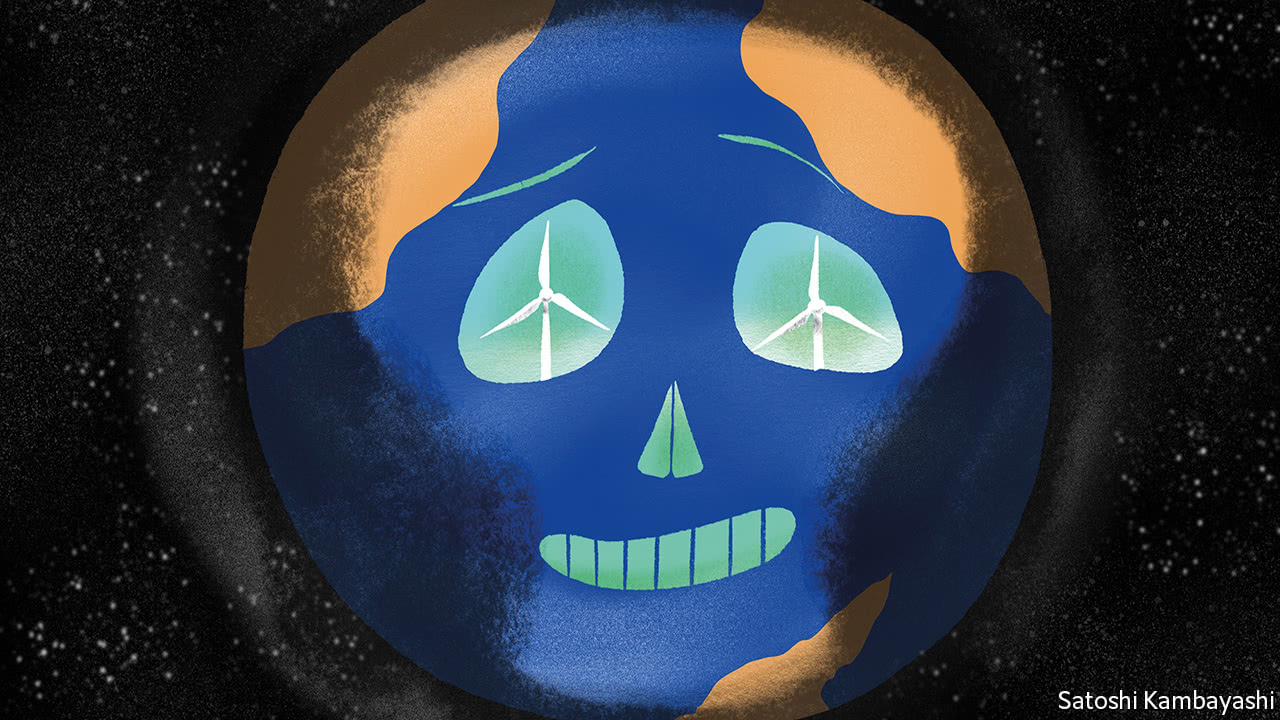
A WIDELY read cover story on the impact of global warming in this week’s New York magazine starts ominously: “It is, I promise, worse than you think.” It goes on to predict temperatures in New York hotter than present-day Bahrain, unprecedented droughts wherever today’s food is produced, the release of diseases like bubonic plague hitherto trapped under Siberian ice, and permanent economic collapse. In the face of such apocalyptic predictions, can the world take solace from those who argue that it can move, relatively quickly and painlessly, to 100% renewable energy?
At first glance, the answer to that question looks depressingly obvious. Despite falling costs, wind and solar still produce only 5.5% of the world’s electricity. Hydropower is a much more significant source of renewable energy, but its costs are rising, and investment is falling. Looking more broadly at energy demand, including that for domestic heating, transport and industry, the share of…Continue reading
Climate change and inequality

ON JULY 12, the Larsen C ice shelf in Antarctica disgorged a chunk of ice the size of Delaware, a small state on America’s east coast. America’s government seems unfazed by the possibility that such shifts might one day threaten Delaware itself. Its climate defiance grows not only from the power of its fossil-fuel industry and the scepticism of the Republican party, but also from a sense of insulation from the costs of global warming. This confidence is misplaced. New research indicates not only that climate change will impose heavy costs on the American economy, but also that it will exacerbate inequality.
Calculating the economic effects of climate change is no simple matter. It means working out how a given increase in global temperature affects local weather conditions; how local weather affects things like mortality and crop yields; how those changes add to or subtract from regional GDP; and how thousands of local-level changes in GDP add up nationally or globally. No…Continue reading
Markets worry about central banks
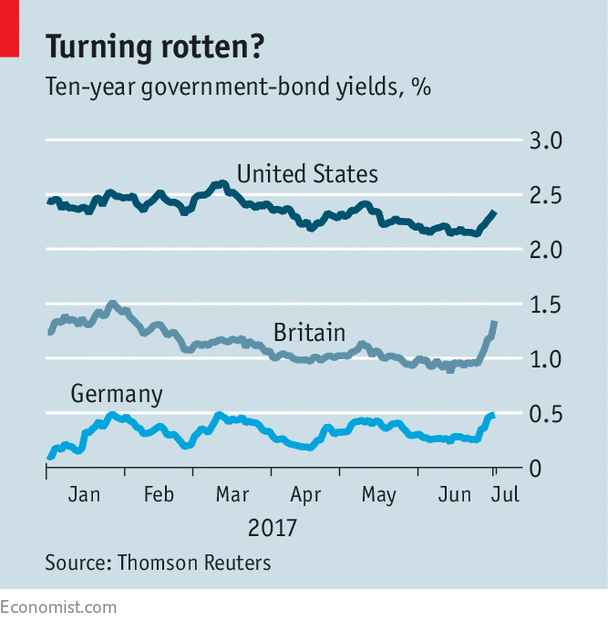
IN JANE AUSTEN’S novel, “Sense and Sensibility”, Henry Dashwood’s death plunges his wife and two daughters, Elinor and Marianne, into financial distress, because his heir grants them only a meagre allowance. Bond-market investors have started to worry that something similar is about to happen to them.
Since 2009 central banks have been incredibly supportive of the financial markets—keeping short-term interest rates at historic lows and buying trillions of dollars worth of bonds. But in recent weeks, several of them have been hinting at reducing their largesse.
The Federal Reserve has been slowly pushing up interest rates and has talked about reducing the size of its balance-sheet, by not reinvesting the proceeds of bonds when they mature. There have been suggestions that the Bank of Canada might push up rates when it meets on July 12th. Both Mark Carney, the governor of the Bank of England and Andrew Haldane, its chief economist, have hinted that a rate rise may be on…Continue reading
Economists argue about minimum wages
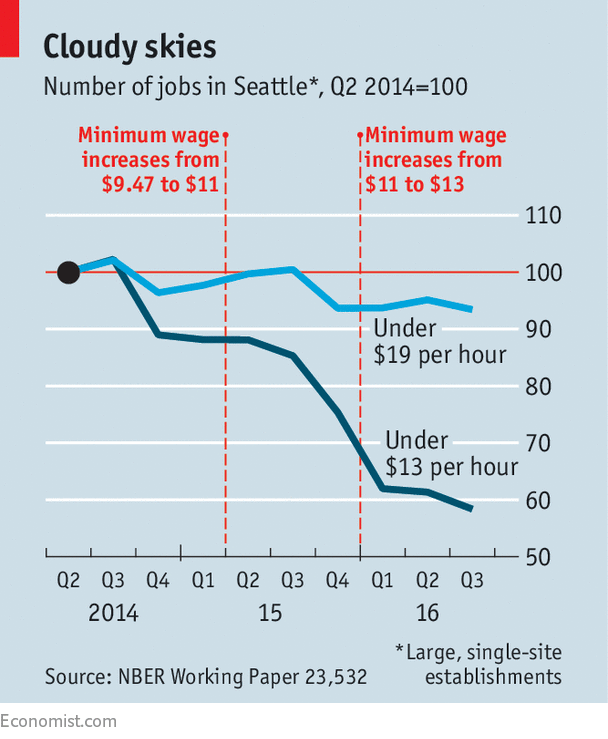
JUST what is the point of a minimum wage? It seems a straightforward enough question to answer. Minimum wages are designed to protect vulnerable workers who might otherwise lack the bargaining power to command a decent pay package. They are a means to limit severe poverty among those in work.
Yet they also attract opposition from critics who see wage minimums as price controls that discourage firms from hiring as many workers as they otherwise might. For decades, feuding camps of dismal scientists have tussled over whether the good done by minimum wages outweighs the bad. A series of recent minimum-wage increases in America will shine a light on that question and others as well. Indeed, the time may have come for economists to broaden their view of just what a minimum wage is meant to accomplish.
As voter frustration at stagnant pay has grown, politicians on the American left have spotted an opportunity to court popularity by calling for higher minimum wages. Democrats are united behind a demand for a national minimum…Continue reading