
Tag: FINANCE
An American payments firm goes online and buys British
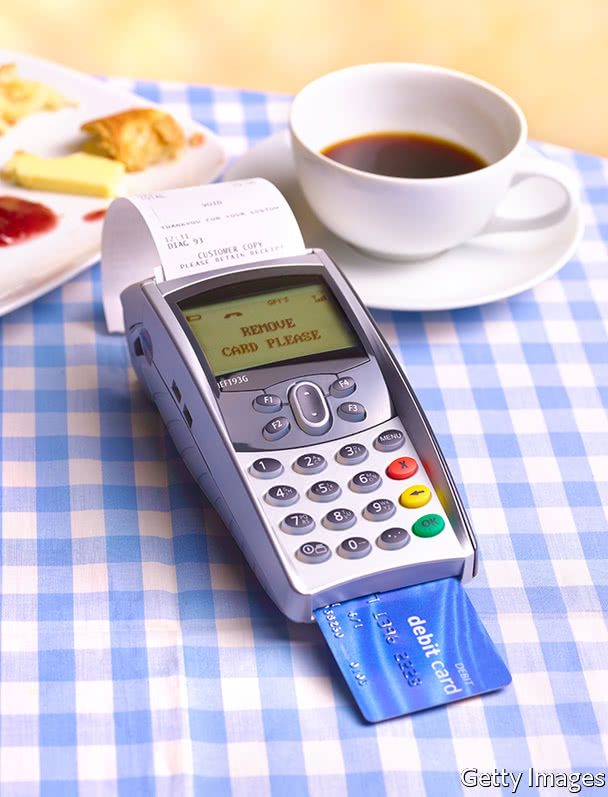
A BIDDING war was briefly but eagerly anticipated. In the end, not a shot was fired. On July 4th the share price of Worldpay, a British payments processor, leapt by 28% after the company said it had received preliminary approaches from JPMorgan Chase, America’s biggest bank, and Vantiv, an American payments firm. The next day Worldpay said it had accepted a cash-and-shares bid from Vantiv, worth £7.7bn ($10bn), giving its shareholders 41% of the combined group. JPMorgan Chase, sniffily explaining that it had considered a bid after an “invitation” from Worldpay, which is a client, declined to proceed. Under Britain’s takeover code that refusal rules out a counter bid for six months. The shares slipped back by nearly 9%.
Vantiv and Worldpay are “merchant acquirers”: companies that have contracts with sellers of goods and services, and licences from credit- and debit-card companies, to accept and process card payments. They also provide…Continue reading
The EU proposes pan-European pension products

THE story of the European Union is in part that of the steady accretion of power by its central bodies. But until now the politically touchy business of running pensions has, like taxation, been zealously guarded by national governments. No longer: on June 29th the European Commission presented a long-awaited proposal for a pan-European personal-pension product, the snazzily named “Pepp”.
Any attempt to encourage Europeans to make adequate provision for their old age is welcome. The combination of ageing populations, falling birth rates and generous state pensions could leave future generations footing the bill, unless people work for longer. Especially in countries such as Italy and Greece, where the state is the main pension provider, encouraging people to make personal savings for their retirement would be sensible (see this week’s Continue reading
The City of London prepares for Brexit
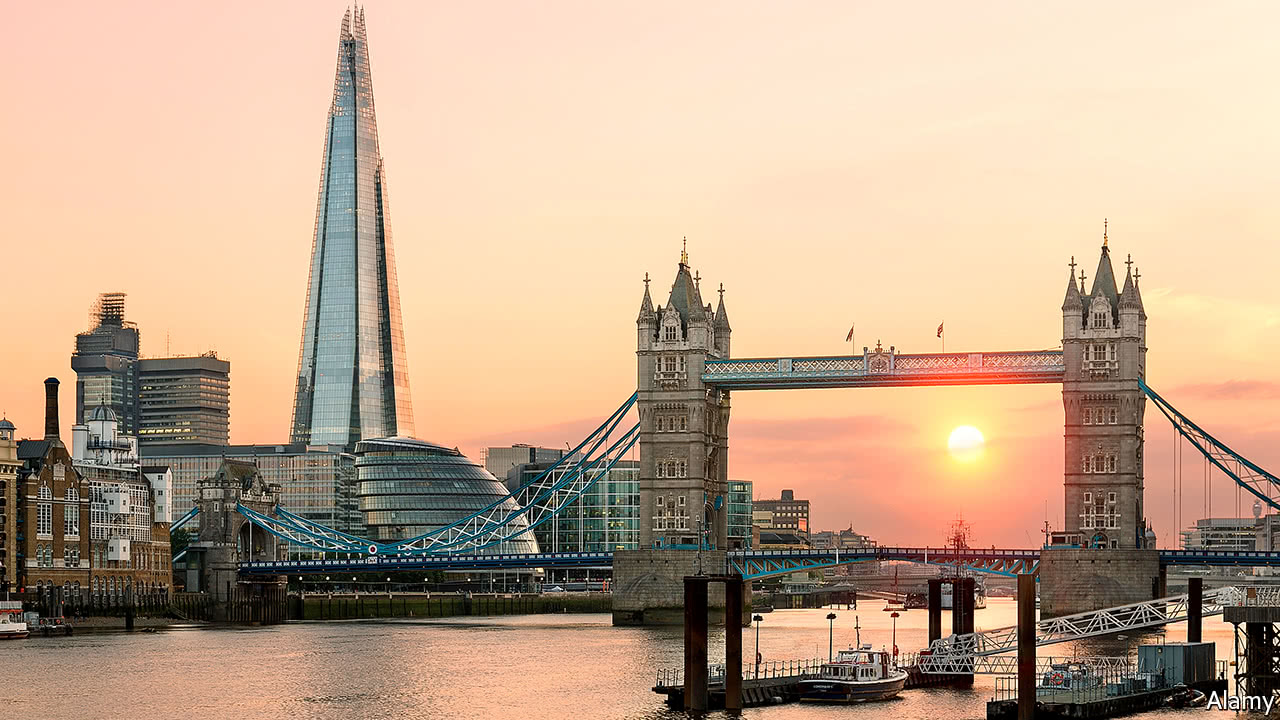
OVER a year has passed since Britons voted to leave the European Union. More than three months have gone by since Britain gave formal notice to quit. Less than 21 months remain until March 29th 2019, the scheduled date of Brexit. Yet banks, insurers, asset managers and other financial firms that use London as a base from which to serve the entire EU are little wiser than they were on referendum day about what Brexit will entail. They must plan for it nonetheless.
The Prudential Regulation Authority (PRA), Britain’s financial supervisor, wants to see their contingency plans by July 14th. The European Central Bank (ECB) has also asked the banks it watches to lay out their post-Brexit strategies. This is probably not demanding for big banks, which are in constant touch with their overseers and already operate both in London and elsewhere in the EU. But some smaller lenders, especially, have work to do. “I think it is fair to say that most banks are not where they should be,” said…Continue reading
Wanna buy some cash? It will cost you
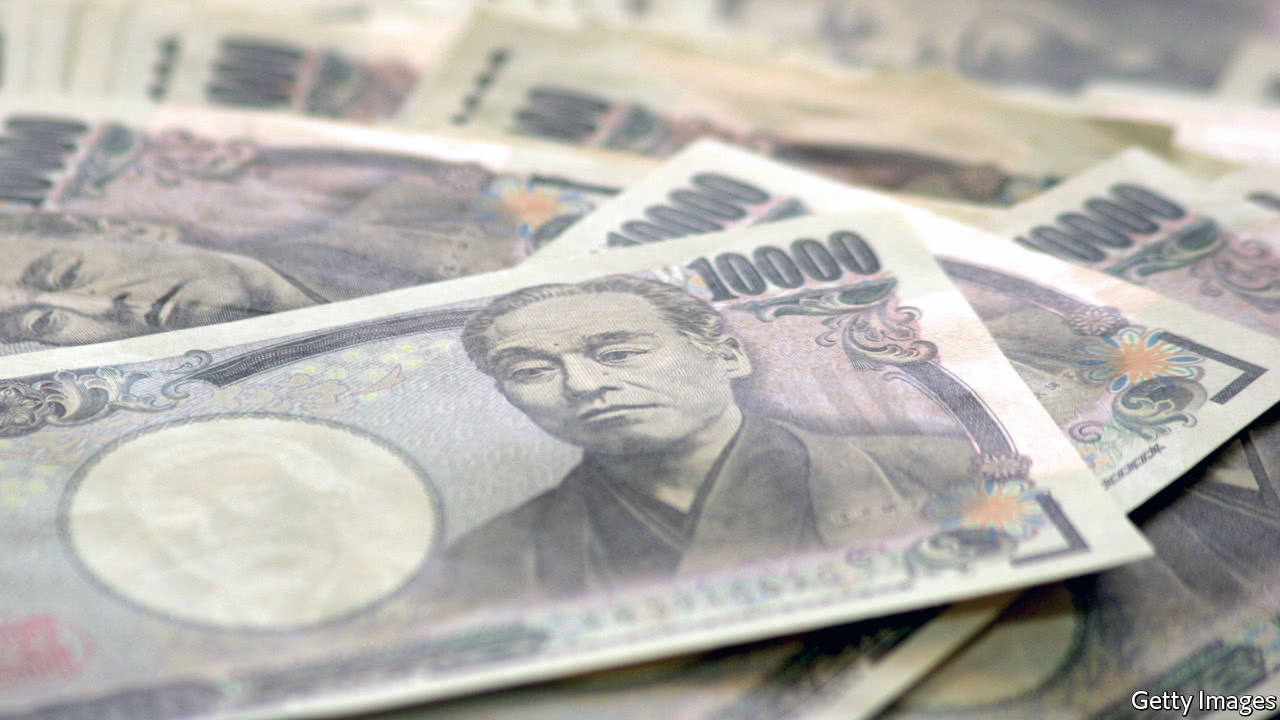
ALMOST anything can be bought and sold online. Even so, sales of ordinary banknotes at a big premium are puzzling. On a newish e-commerce site in Japan called Mercari, ¥10,000 ($90) notes were on sale earlier this year for as much as ¥13,000. So bizarre was the phenomenon that it created a furore, leading the firm to ban such deals in April. A rival site, Yahoo Auctions, soon followed suit. The buyers were not indulging a passion for rare banknotes. They simply wanted the money. In need of emergency finance, and having used up all their bank limits, they resorted to buying cash with their credit cards.
The ban has prompted some crafty work-arounds. “Valuable portraits” of Yukichi Fukuzawa, a thinker revered as a guiding light of Japan’s 19th-century modernisation, have been on sale for as much as ¥15,000. That is a hefty premium to the highest-denominated banknote, ¥10,000, which happens to be adorned with Fukuzawa’s likeness. Or take the bottles of water claiming…Continue reading
A new trade deal between the EU and Japan
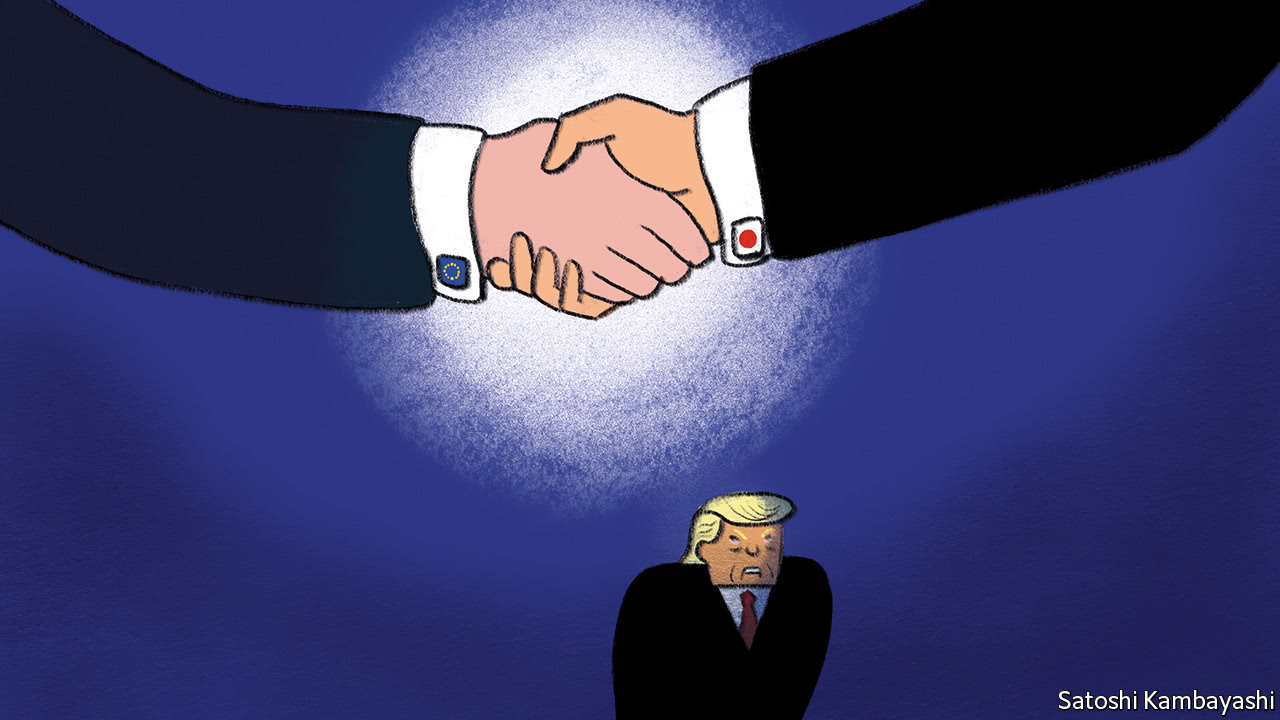
FREE-TRADE agreements have seemed out of fashion as President Donald Trump has set about scotching some of America’s. But on July 5th Cecilia Malmström, the EU trade commissioner, and Fumio Kishida, the Japanese foreign minister, announced they had achieved consensus on a Japan-EU Economic Partnership Agreement (JEEPA). In front of the cameras, they swapped Japanese Daruma dolls, talismans of perseverance and good luck, and, they hope, of a win-win agreement.
The timing of JEEPA was just as carefully co-ordinated. When negotiations started in 2013, it was neither side’s main priority. But now both want to show that they can fill the vacuum left by America’s withdrawal under Mr Trump from its role as the world’s trade leader. To highlight its political importance, they note that this is the first trade agreement to mention the Paris climate accord, another deal Mr Trump has spurned. Haste is handy: the EU wanted success before Brexit negotiations and…Continue reading
Developing countries rebel against the credit-rating agencies

EARLIER this year, a crowd of patriotic Indian students bristled when Arvind Subramanian, the government’s chief economic adviser, showed them a slide with two charts. One showed India’s steady economic growth and flat debt-GDP ratio; the other China’s slowing growth and fast-rising debt. Yet India’s credit rating from S&P Global Ratings (formerly Standard and Poor’s), has been stuck at BBB-. China, on the other hand, was upgraded from A+ to AA- in 2010 even as its debt shot up. The slide was pithily titled “Poor Standards”.
Rating government debt is always controversial. And India v China is often a grudge match. But many emerging-market governments agree with Mr Subramanian, who has contrasted the rating agencies’ treatment of India with that of the rich world in the 2008 crisis, when they “closed the stable doors after the horses bolted”.
In frustration, the BRICS grouping—Brazil, Russia, India, China and South Africa—plans to set up an…Continue reading
Pakistan’s old economic vulnerabilities persist
THE IMF, claims Pakistan’s government, is surplus to requirements. Ministers in its business-minded ruling party, the Pakistan Muslim League-Nawaz (PML-N), boast of a record that means the country can pay its own bills. “We will not go back to the IMF programme,” declared Ishaq Dar, the finance minister, in May, almost a year after the completion of Pakistan’s most recent, $6.6bn bail-out. In a country that mistrusts Western assistance and where protesters portray the IMF as a bloodthirsty crocodile, such words have a heady appeal. But they ring hollow.
On June 16th the IMF warned of re-emerging “vulnerabilities” in Pakistan’s economy. It praised GDP growth of above 5% a year, but noted missed fiscal targets and a ballooning current-account deficit. The fund’s own projections a year ago for the fiscal year ending this June underestimated this deficit by about half the final total of $9bn. And based on trends in early April it overestimated the fiscal-year-end foreign-exchange reserves by $3bn.
Independent economists point out that, many times before, collapse has come on the heels of an IMF programme’s conclusion. Sakib Sherani, a former government economist, says that to avoid “egg on its face” for cheerleading Pakistan’s economic recovery just months ago, the IMF is slowly changing its story. By the end of 2018, many predict,…Continue reading
America’s banks pass the Federal Reserve’s tests
OVER the years, the grumbles have got louder. Since 2011 America’s big banks have undergone annual “stress tests” overseen by the Federal Reserve, along with scrutiny of their plans for paying dividends and buying back shares. A product of the post-crisis Dodd-Frank act, the tests are intended to make sure that lenders have enough equity on hand should catastrophe strike again. But banks say they are both opaque and burdensome. And because failure can mean a block on payouts, the tests have bred caution and ire.
The time for caution seems to be over. On June 28th the Fed said it had approved the dividend and buy-back plans of all 34 banks tested this year—plans which propose handing shareholders a pile of cash. All 34 also passed the first stage, results of which were revealed six days earlier and which assume no repurchases and unchanged dividends. Even under a “severely adverse” scenario involving a nasty recession, all would keep key capital ratios above the…Continue reading
Alarm grows about over-exuberance in corporate lending
WHEN the financial crisis was at its height in 2008, being a debtor was a dreadful experience. Banks and companies scrambled desperately to get the financing they needed.
But the balance of power in the financial markets can easily shift. In 2005 and 2006, credit had been easy to get on generous terms. Not only were loans cheap and plentiful; they also suffered from fewer restrictions. Until then, corporate loans had many covenants offering safeguards for lenders if the debtor’s financial position were to deteriorate. But 2005-06 saw the emergence of “covenant-lite” loans in which such restrictions were virtually non-existent.
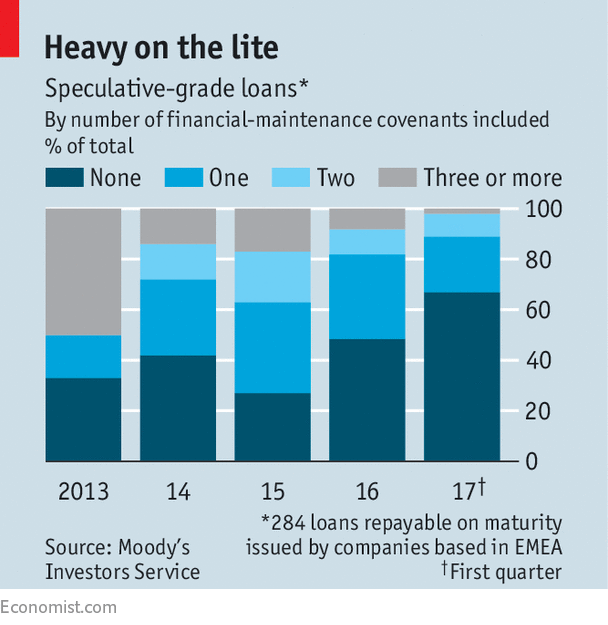
The cycle has turned again. Analysis by Moody’s, a ratings agency, shows that the proportion of the loan market that is “covenant-lite” has risen from 27% in 2015 to more than two-thirds in the first quarter of this year (see chart). Some loans even contain restrictions on the lender, not just the borrower. Private-equity firms demand a veto over…Continue reading
What Asia learned from its financial crisis 20 years ago
MUSEUM SIAM in Bangkok is dedicated to exploring all things Thai. Until July 2nd, that includes an exhibition on the Asian financial crisis, which began on that date 20 years ago, when the Thai baht lost its peg with the dollar. The exhibition features two seesaws, showing how many baht were required to balance one dollar, both before the crisis (25) and after (over 50 at one point). Visitors can also read the testimony of some of the victims, including a high-flying stockbroker who was reduced to selling sandwiches, and a businesswoman whose boss told her to “take care of the work for me” before hanging himself. (In Hong Kong, Japan and South Korea, 10,400 people killed themselves as a result of the crisis, according to subsequent research.) In Thailand the financial calamity became known as the tom yum kung crisis, after the local hot-and-sour soup, presumably because it was such a bitter and searing experience.
The exhibition’s subtitle, “Lessons (Un)learned”, seems unfair. The victims of the crisis (Thailand, South Korea, Malaysia, Indonesia and Hong Kong) took many lessons to heart. With the exception of Hong Kong, they no longer rely on a hard peg to the dollar to anchor inflation, giving their currencies more room to move. (The sandwich vendor’s chosen logo for his new business…Continue reading