
Finanzas
Atasco en los tribunales: más de 300.000 recursos tributarios pendientes de resolver
El colapso amenaza la pérdida de cientos de millones de euros de las arcas del Estado
Guindos admite que deja en herencia al nuevo Gobierno un ajuste de 5.500 millones
“El déficit estará en 2017 por encima del compromiso del 3,1%. En cuanto haya nuevo Gobierno tendrá que tomar las medidas oportunas”, ha apuntado en Bruselas
Flash Crash Bang Wallop
Philip Coggan joins host Simon Long to explain what’s next for the pound in the light of the latest flash crash in its value. Also: Ryan Avent delves into the work that won the latest Economics Nobel prize and Patrick Foulis lays out why Elon Musk’s finances might be as combustible as his rockets
El auditor de Bankia considera ilegales las tarjetas de directivos y consejeros
Iñaki Azaola afirma que las black estuvieron fuera de control y asegura que la hoja Excel de gastos es correcta
Bruselas tendrá una propuesta de ‘tasa Tobin’ para solo 10 países a final de año
Alemania, Francia, Italia y España siguen adelante con el proyecto
Brexit is making Britons poorer, and meaner

THESE are exciting times for Britain’s currency, and not in a good way. On the eve of the vote on whether to leave the European Union, back in June, a pound bought you $1.48. Sterling has since declined by more than 16% against the dollar, to $1.22. Nearly half of the drop has occurred in the last week or so, as the Conservative government has outlined plans for a “hard” Brexit: one which shoves Britain right out of the single market in exchange for the ability to do more harm to itself by reducing migration.
In a piece for the Wall Street Journal, Greg Ip (a friend and former colleague of this blogger) does a nice job explaining the links between Brexit and a tumbling pound. Markets anticipate that it will become more costly for British firms to sell goods and services to Europe. Europeans will consequently buy fewer of them, and therefore fewer pounds, leading to a weaker currency. That is, cheap sterling is part of the adjustment to a loss in British competitiveness: the mechanism by which Britons come to spend less on foreign goodies (now…Continue reading
El ex número dos de Bankia afirma que advirtió a Rato de la ilegalidad de las ‘black’
Francisco Verdú, ex consejero delegado, dice que los gastos de la tarjeta suponían exceder el máximo sueldo permitido
Guindos critica la “actitud a la defensiva” de Europa con los bancos
El BCE permitió a Deutsche Bank el maquillaje de sus resultados en las últimas pruebas de estrés, según el ‘Financial Times’
Dijsselbloem endurece el discurso con el ajuste fiscal en España
«Espero que España mire con lupa esta vez las cifras del presupuesto», dice el presidente del Eurogrupo
Airlines are to cough up for cross-border flight pollution
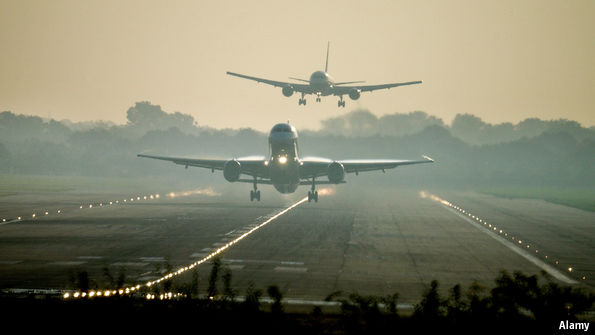
CIVIL aviation accounts for perhaps only 2% of manmade carbon emissions. Add in other pollutants, such as contrails and nitrous oxide, and the industry’s overall contribution to climate change might be twice that figure. That may not seem much. But the sector is growing rapidly. Since the 1970s, global air traffic has doubled in size about every 15 years. Rising prosperity in developing countries and massive backlogs of aircraft orders means that the growth will continue for decades. Without regulation, the world’s airlines could quickly choke the skies.
Last week, the International Civil Aviation Organisation (ICAO), a United Nations agency, announced a framework for mandatory carbon-offsetting on all international flights. The agreement was backed by 65 countries, which between them account for 86.5% of international flight operations.
International flights, unlike domestic ones, were exempt from last year’s Paris Agreement on climate change. This new tentative accord seeks…Continue reading