
Tag: Business and finance
Masayoshi Son may raise yet more cash to pump into tech

AT AN investor briefing in 2015, Masayoshi Son, chief executive of SoftBank, flashed up a picture of a goose. The company is like the bird of legend that produces golden eggs, he explained. In his quest to encourage more laying, Mr Son has taken SoftBank well beyond its telecoms business. The firm also manages the world’s largest tech-investment fund, the $100bn Vision Fund, which has a slew of wealthy backers, including Saudi Arabia’s Public Investment Fund and Apple.
Using both the firm and the fund, Mr Son has acquired stakes in tech companies at a frenetic pace, by one count opening his chequebook once every four days on average in 2017. Such shopping sprees do not come cheap. SoftBank is one of Japan’s most highly leveraged companies, with debt exceeding ¥15trn ($139bn), not least because of its purchase in 2013 of a controlling stake in Sprint, an American mobilenetwork operator.
News reports this week suggest SoftBank is now hatching a plan to raise ¥2trn by…Continue reading
Innovative materials from bamboo are helping a new industry to sprout

FANNING out from the sodden delta of the Yangtze, and southward to the flanks of the Nanling mountains, over 6m hectares of emerald bamboo groves—one-fifth of the world’s reserves—flourish in China. Giant pandas nibble the softest shoots. Around 40bn pairs of disposable chopsticks are made from bamboo twigs annually in China, for use with everyday meals. Steel scaffolding is still often shunned for bamboo on skyscrapers under construction in even the ritziest parts of Hong Kong. The history of the grass is colourful, too. Before paper, Chinese wrote on bamboo slips; they used bamboo tubes for irrigation, and later stuffed them with gunpowder to ignite muskets.
Yet for all its importance and abundance bamboo is “China’s forgotten plant”, says Martin Tam, an expert in Hong Kong. To demonstrate its potential, he greets visitors with a can of bamboo juice, proffers a bamboo business card, and gestures to a bamboo armchair near his desk….Continue reading
Chinese tech companies plan to steal American cloud firms’ thunder

WHICH of the world’s tech giants boasts the fastest-growing computing cloud? Many would guess either Amazon or Google, which operate the world’s largest networks of data centres, but the correct answer is Alibaba. In 2016 the cloud-computing business of the Chinese e-commerce behemoth grew by 126%, to $675m. Growth is unlikely to slow soon. Simon Hu, president of Alibaba Cloud, wants it to “match or surpass” Amazon Web Services (AWS) by 2019.
That is a stretch: AWS is estimated to have generated revenues of about $17bn in 2017. But Alibaba’s cloud (known locally as Aliyun) is one of a thriving group: China’s cloud-computing industry as a whole is growing rapidly. Even more intriguing than its speedy expansion is the fact that China’s cloud is different to that of Western firms in important ways.
The technology that China’s cloud-computing providers use is not so dissimilar. Indeed, the fact that Western tech firms have released much of the necessary code as open-source…Continue reading
After a huge loss on old reinsurance contracts, GE contemplates a break-up
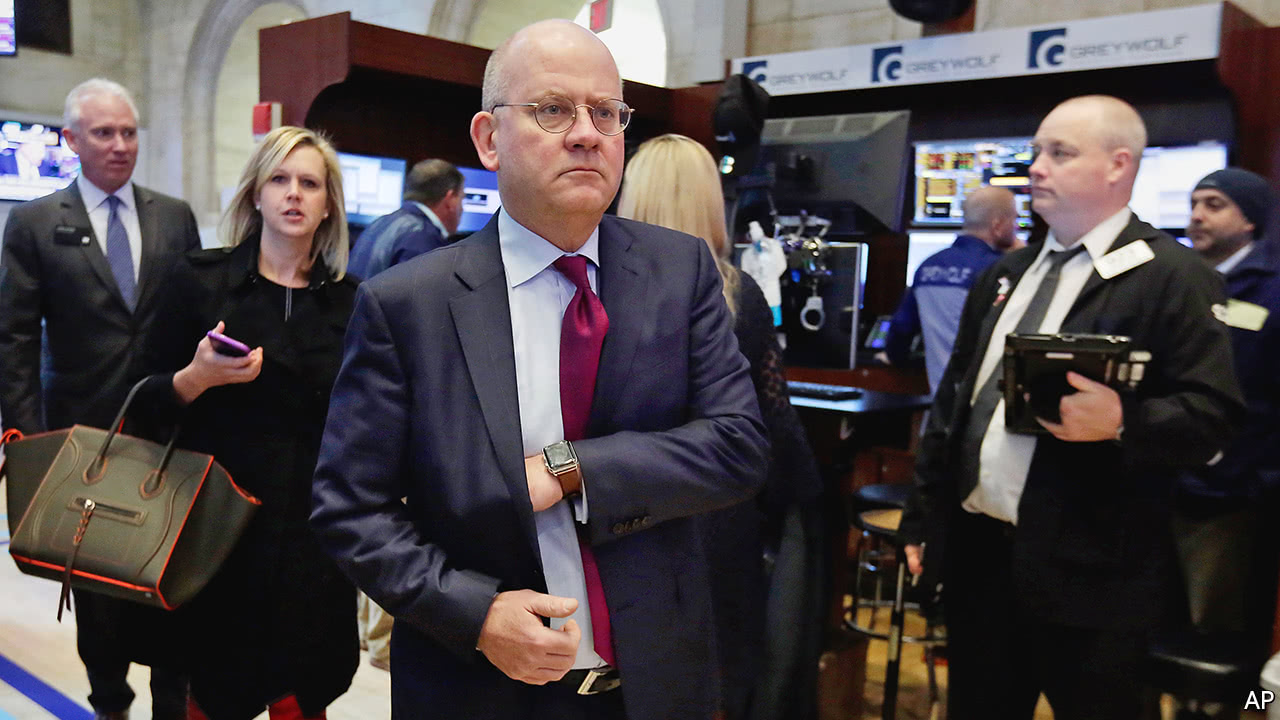
DECISIONS made long ago, and often long since forgotten, can come back to haunt. General Electric (GE), an American industrial conglomerate, has discovered that to its chagrin. On January 16th the company said it would have to take a $9.5bn charge (before tax) on old reinsurance contracts in its financial arm, GE Capital—despite exiting the insurance business in the mid-2000s. The firm also said it would have to set aside up to $15bn of additional reserves for GE Capital over seven years. The conglomerate had already been struggling, with its share price down by over 40% in the past year. News of the latest hit, which the company’s chief executive, John Flannery, called “deeply disappointing”, sent its shares plunging by a further 3% on January 16th alone.
The issue at hand concerns reinsurance contracts in GE Capital’s American life- and health-insurance portfolio. Jack Welch, an idolised former GE boss, had massively expanded the…Continue reading
The rise and fall of Bitcoin
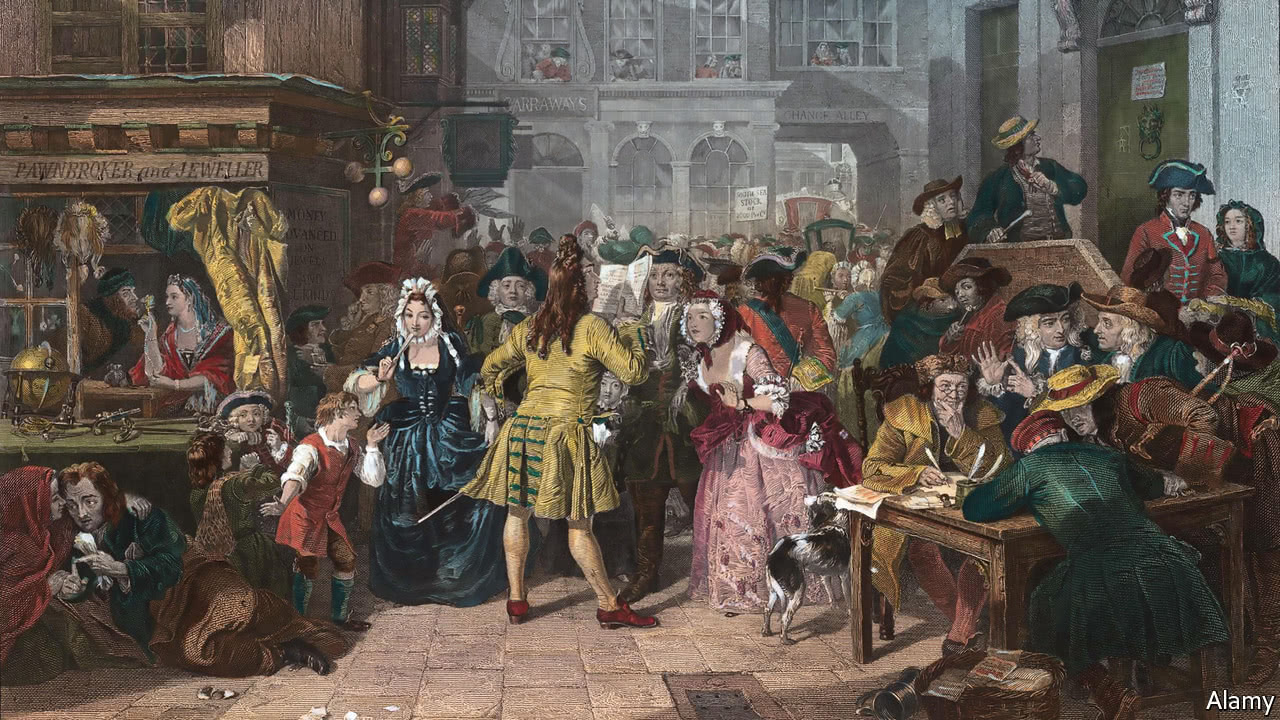
THE great Sir Isaac Newton may have revolutionised our knowledge of the world but he still had his blind spots. He was sucked into the great mania of his day, the South Sea Bubble (pictured) and lost a lot of money. «I can calculate the motion of heavenly bodies but not the madness of people» he ruefully reflected. In retrospect, he should have pondered the popular saying that was used to define his law of gravity: «What goes up, must come down».
Investors in Bitcoin are learning this old truth. The price of the cryptocurrency peaked last month at somewhere over $19,000 (there is a very wide spread, a problem in itself) but, at the time of writing (around 11am GMT), some exchanges now show a price below $10,000.
Perhaps the best way of understanding bitcoin is through a model of how bubbles operate. The classic model, developed by Hyman Minsky and elaborated by Charles Kindleberger, a historian who studied bubbles, has five stages:…Continue reading
The days of the A380 look numbered
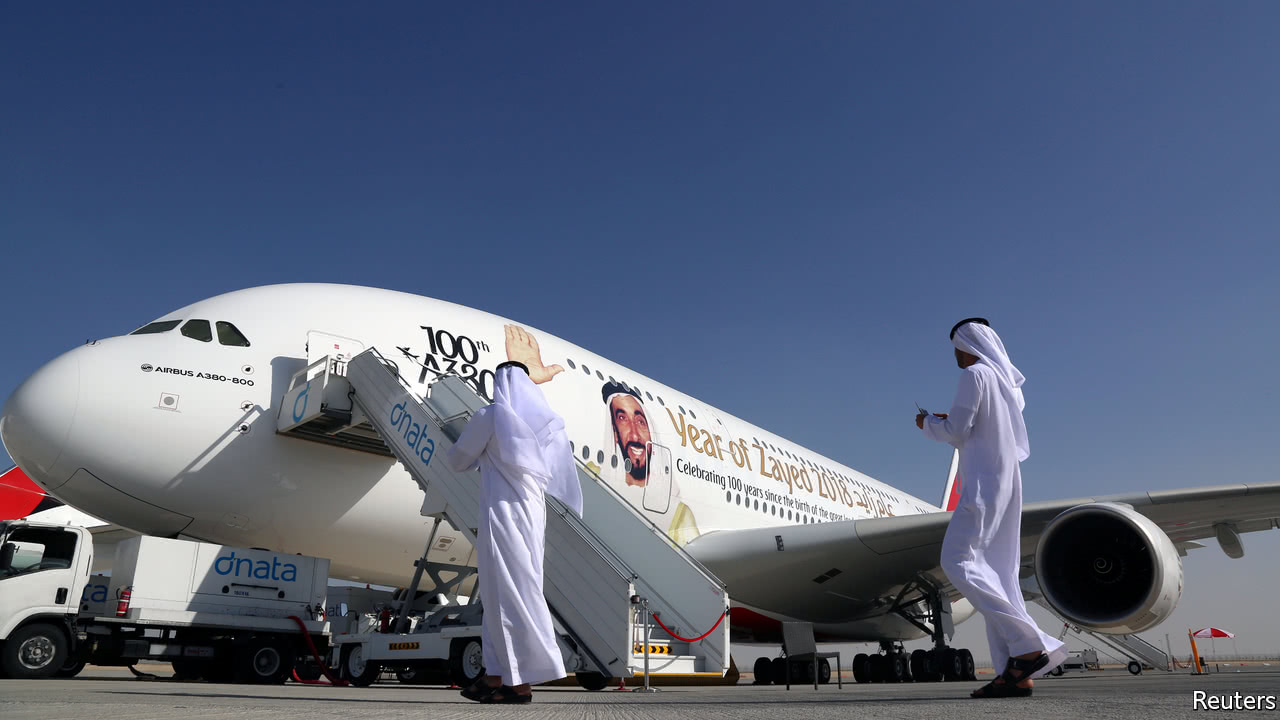
ASK frequent flyers which is their favourite aircraft and most come up with the same answer: the A380 superjumbo made by Airbus, a giant European planemaker. Able to carry 525 passengers in a typical three-class layout, on two full-length decks, the aircraft still feels spacious, with wide aisles and plenty of headroom. Frequent flyers also admire the freshness of the cabin air, the lighting systems that are designed to reduce jet lag and the quietness of the cabin. “You can hardly hear it take off,” one fan recently told Gulliver. “And I can actually go to sleep on the plane unlike any other I’ve been on before.”
But less than a decade after it carried its first paying passengers, the age of the superjumbo looks like coming to an end. When Airbus announced its plans to build the plane in 2000, it hoped to sell up to 1,200 of them over two decades. Eighteen years later it has sold just a quarter of that figure, and has…Continue reading
Turkish Airlines bounces back to growth
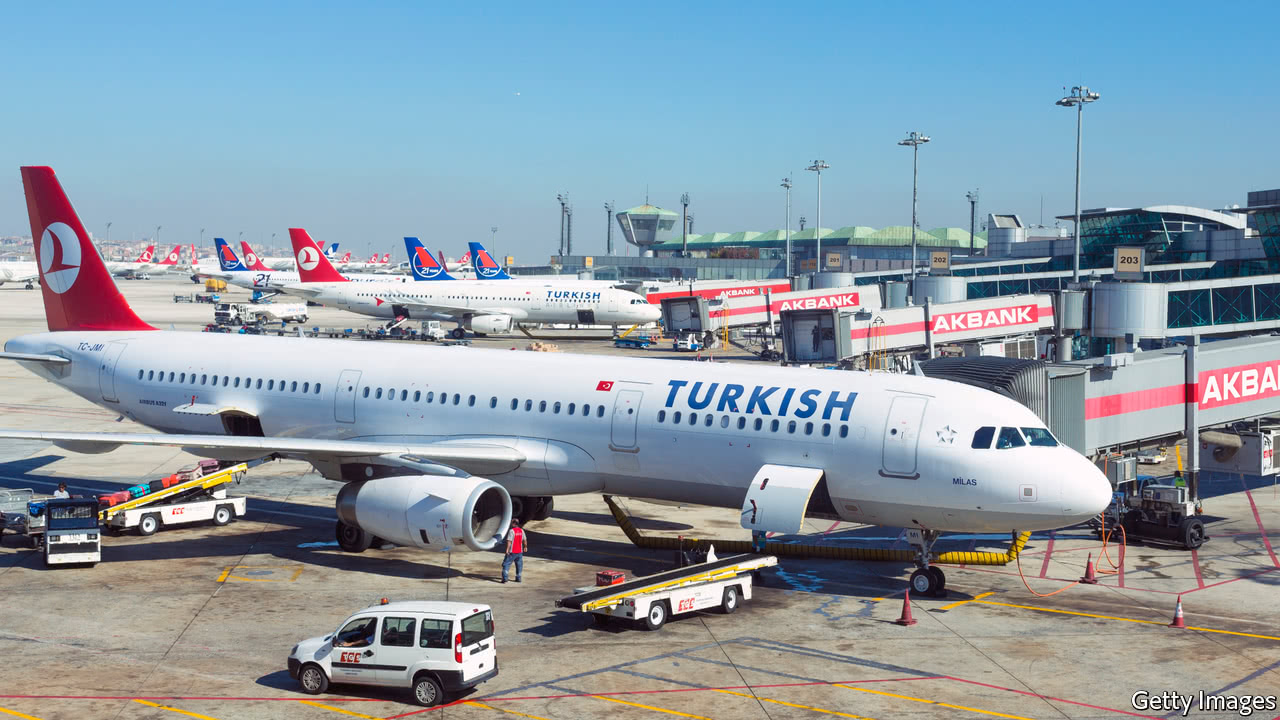
A LITTLE over a year ago, Gulliver gave a downbeat assessment of the prospects for Turkey’s aviation sector. Having enjoyed a decade of uninterrupted growth of more than 10% a year, Turkish Airlines, the country’s flag-carrier, was grounding aircraft and closing routes amid growing unrest at home and violence across its border with Syria. Concerns about regional security were also making life difficult in the United Arab Emirates (UAE) and Qatar, two other countries that have built aviation empires by connecting far-flung parts of the globe through their hub airports. Yet whereas the Gulf carriers remain in the doldrums, Turkish is gaining altitude again.
There had been just cause for concern about Turkey at the end of 2016. The year unleashed a failed military coup, a resultant purge of dissenters, and a wave of attacks mounted by Islamic State terrorists. When Istanbul’s Atatürk Airport was struck by bombers in June, even transit passengers started to…Continue reading
How China won the battle of the yuan
“THE horse may be out of the proverbial barn.” So wrote Ben Bernanke, a former chairman of the Federal Reserve, in early 2016, arguing that capital controls might be powerless to save China from a run on its currency. He was far from alone at the time. As cash rushed out of the country, analysts debated whether the yuan would collapse, and some hedge funds bet that day was coming fast. But two years on, the horse is back in the barn: the government’s defence of the yuan has succeeded, in part through tighter capital controls.
The latest evidence was an 11th consecutive monthly increase in foreign-exchange reserves in December. During that time China’s stockpile of official reserves, the world’s biggest, climbed by $142bn, reaching $3.14trn, roughly double the cushion usually regarded as needed to ensure financial stability. Another sign of China’s success is the yuan itself. At the start of 2017 the consensus of forecasters was that the currency would continue to weaken; it finished the year up by 6% against the dollar.
Investors and analysts were not wrong in viewing Chinese capital controls as porous. Enterprising types had—and have—umpteen ways to sneak money out, from overpaying for imports to smuggling cash across the border in luggage. But there is a wide spectrum between a fully open and fully closed capital account, and China has…Continue reading
Having rescued recorded music, Spotify may upend the industry again

IN JUST a few short years Spotify has evolved from bête noir of some of the world’s most prominent recording artists to perhaps their greatest benefactor. The Swedish company transformed the way people listen to music, and got them used to paying for it again after digital piracy had crippled sales. Global revenues from music streaming, which Spotify dominates with 70m subscribers, more than tripled in three years, to an estimated $10.8bn last year, for the first time surpassing digital and physical sales of songs and albums.
But if it is earning billions for others, Spotify is losing money for itself—with an operating loss of nearly $400m in 2016—because it pays out at least 70% of its revenues to the industry, mostly in royalties. As it prepares for a “direct” listing on the New York Stock Exchange (see article) it must convince…Continue reading
Companies are moving faster than many governments on carbon pricing

ECONOMISTS have long argued that the most efficient way to curb global warming is to put a price on the greenhouse-gas emissions that cause it. A total of 41 OECD and G20 governments have announced either a carbon tax or a cap-and-trade scheme, or both. Add state and local schemes, and they cover 15% of the world’s emissions, up from 4% in 2010. Voters concerned about climate change are egging them on. So, too, are corporate bosses. More firms are imposing such pricing on themselves, even in places where policymakers are dragging their feet.
Of the 6,100-odd firms which report climate-related data to CDP, a British watchdog, 607 now claim to use “internal carbon prices”. The number has quadrupled since CDP first began posing the query in its annual questionnaire three years ago. Another 782 companies say they will introduce similar measures within two years. Total annual revenues of these 1,389 carbon-price champions amount to a hefty…Continue reading