
Tag: Business and finance
What if large tech firms were regulated like sewage companies?
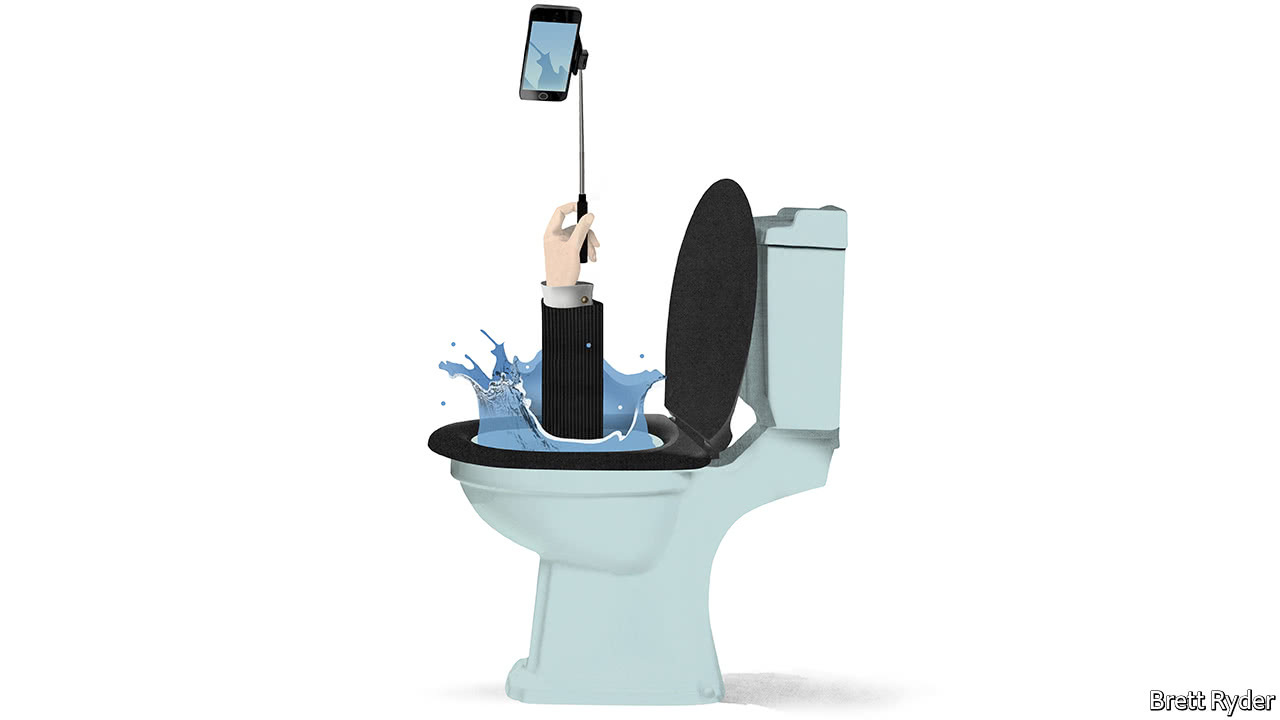
THREE-QUARTERS of Americans admit that they search the web, send e-mails and check their social-media accounts in the bathroom. That is not the only connection between tech and plumbing. The water and sewage industry offers clues to the vexed question of how to regulate the Silicon Valley “platform” firms, such as Alphabet, Amazon and Facebook. The implications are mildly terrifying for the companies, so any tech tycoons reading this column might want to secure a spare pair of trousers.
In America and in Europe a consensus is emerging that big tech firms must be tamed. Their dominance of services such as search and social media gives them huge economic and political clout. The $3trn total market value of America’s five biggest tech firms (Apple and Microsoft are the other two) suggests that investors believe they are among the most powerful firms in history, up there with the East India Company and Standard Oil.
Trustbusters in need of instant gratification want to break…Continue reading
Behind the veil of Saudi Aramco
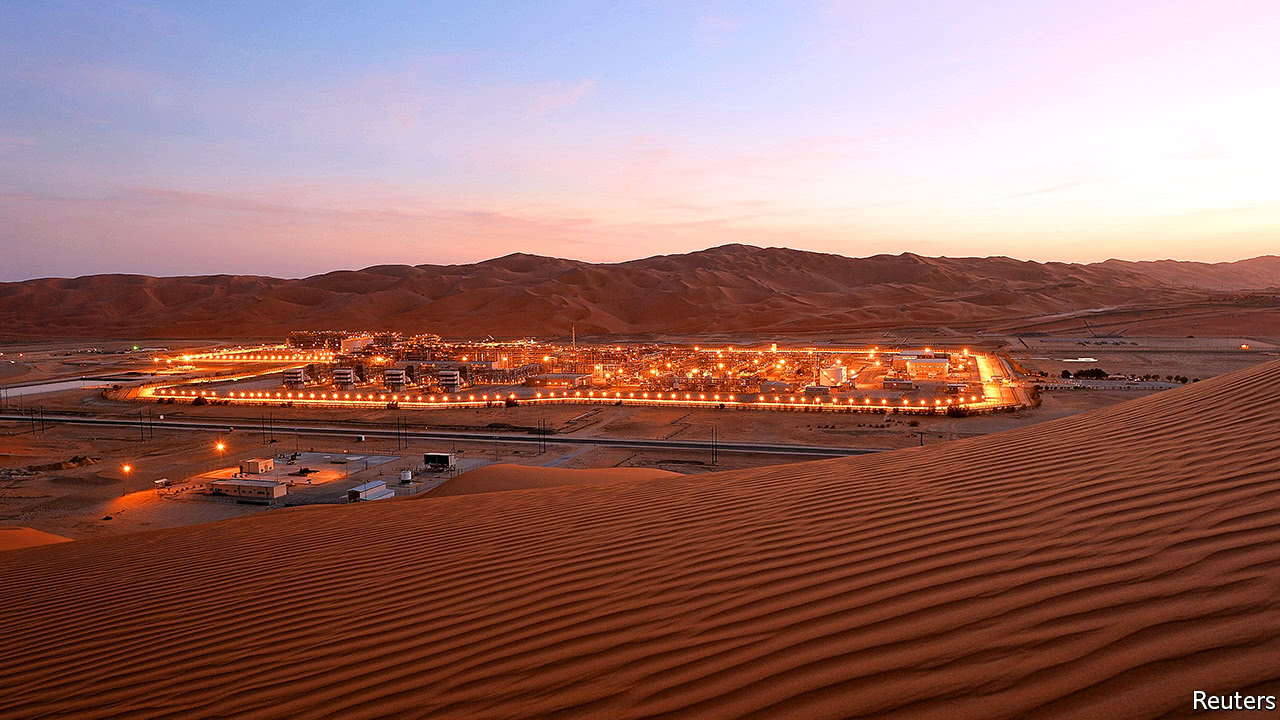
IF SAUDI ARAMCO is a state within a state in Saudi Arabia, then the blandly named Oil Supply Planning and Scheduling (OSPAS) is its deep state. To enter it, you pass tight security at Aramco’s suburban-style headquarters in Dhahran, in the east of the kingdom. The transition is eye-opening. Suddenly, English is the common tongue even among Saudi “Aramcons”, as its workers are known. Female employees, their faces uncovered, lead meetings of male colleagues. The crisp banter is common to engineers everywhere. A toilet break is called a “pressure-relief” exercise.
Deep within, OSPAS is even further removed from the kingdom outside. The few executives with clearance to enter call it the “nerve centre” of the world’s largest oil company. Using 100,000 sensors and data points on wells, pipelines, plants and terminals, it directs every drop of oil and cubic foot of gas that comes out of the kingdom (10% of the world’s oil supply), monitors it on giant screens as it heads to…Continue reading
Ryanair cancels more than 2,000 flights over the next six weeks
RYANAIR, an Irish airline, is known for three things: low fares, the brash way in which Michael O’Leary, its chief executive, advertises them, and its record for sticking to its flight schedules. The last of these is key to its appeal: many businessmen chose Ryanair more for its punctuality than its cheapness. And so the announcement on September 15th that it is cancelling over 2,000 flights between now and the end of October—around 2% of its capacity over the period—is more serious than it may at first seem. Ryanair’s share price fell by more than 5% in the aftermath.
The problems began in early September when Ryanair’s on-time record plunged, owing to a pilot shortage. To restore punctuality, it cancelled many flights at short notice; passengers were marooned around Europe. Up to 400,000 people booked on the 2,000 scrapped flights risk missing business trips and holidays.
Mr O’Leary says the…Continue reading
Boeing takes off on a flight of hypocrisy against Bombardier

“WE WON’T do business with a company that is busy trying to sue us.” So said an uncharacteristically stern Justin Trudeau, Canada’s prime minister, alongside his British counterpart, Theresa May, in Ottawa on September 18th. The two had teamed up to take on Boeing. The giant American aeroplane-maker is pressing Donald Trump’s administration to impose duties on commercial jets made by Canada’s Bombardier. Boeing says its smaller rival is using Canadian government subsidies to sell aircraft to Delta, an American carrier, at below cost price.
Few in either country question that Bombardier has had vital financial support from the Canadian and British governments since 2005 for its small jetliner, the C-Series. As the plane’s development costs soared, to $5.4bn, Bombardier struggled to find buyers for it; financial trouble followed. An estimated C$4bn ($3.4bn) in state support, including C$2.8bn in 2015, stopped a nosedive. It was not until 2016 that the aircraft’s future seemed…Continue reading
Big technology firms are newly in the hot seat at home

ANTITRUST, privacy, hate speech—whenever the European Union tries to rein in tech giants, Americans accuse it of protectionism. That argument has always been simplistic, but now it is harder to make; scarcely a week passes in Washington when companies like Apple and Google are not in politicians’ crosshairs.
The latest target is Facebook. Earlier this month the firm revealed that 470 accounts that appeared to be controlled from Russia had bought advertisements worth a total of $100,000 on the social network between June 2015 and May 2017. Alex Stamos, Facebook’s chief security officer, said they aimed at “amplifying divisive social and political messages”.
This was the first time Facebook had acknowledged that Russia may have used the social network, leading the team of Robert Mueller, the special counsel investigating possible links between Donald Trump’s presidential campaign and the Russian government, to issue a…Continue reading
Marital choices are exacerbating household income inequality

“HERE’S what nobody is telling you: Find a husband on campus before you graduate,” wrote Susan Patton, a human-resources consultant, in 2013. In an infamous letter to the editor of Princeton’s student newspaper, Ms Patton warned female students at the university that they will “never again be surrounded by this concentration of men who are worthy of [them]”. Critics responded harshly. Ms Patton recalls that she was branded “a traitor to feminism, a traitor to co-education and an elitist”.
Economists might offer yet another critique of Ms Patton’s letter: it was largely unnecessary. It is clear to academics that people tend to marry spouses with similar levels of education. They also know that “assortative mating”, as the practice is called in the jargon, is exacerbating income inequality. In America, Britain, Denmark, Germany and Norway, they have found that household income would be more evenly spread if…Continue reading
Huge volumes of data make real-time insurance a possibility
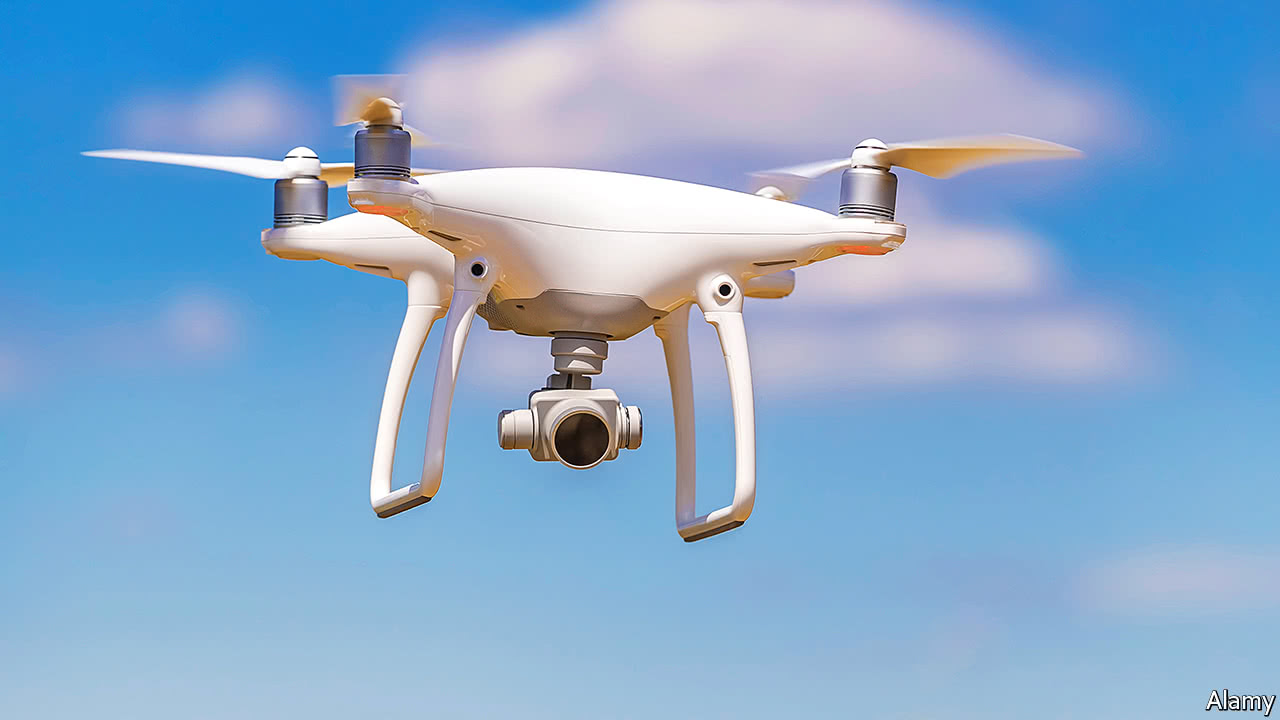
EVEN at weddings or whale watches, the buzz of a drone is no longer a surprise. Drone photography is booming. Gartner, a consultancy, says some 174,000 drones will be sold for commercial use around the world this year, and 2.8m to consumers. It is easy to imagine a few might fall out of the sky, causing damage the pilot cannot hope to pay for: crushed wedding cakes, injured spectators and so on. Amid scores of near-misses, several incidents have already occurred. In 2014, for example, a drone filming a triathlon in Australia crashed on a competitor’s head.
Clearly, drone-users need insurance. Typically, risks are insured through the payment of an annual premium. Insure4drones, a British specialist, charges £738.86 ($1,000) to cover a DJI Phantom, a bestselling drone, for a year. From October Flock, a London startup, will offer insurance on a flight-by-flight basis, at the push of a button in an app, to any commercial drone-operator in Britain….Continue reading
Ethical investment is booming. But what is it?
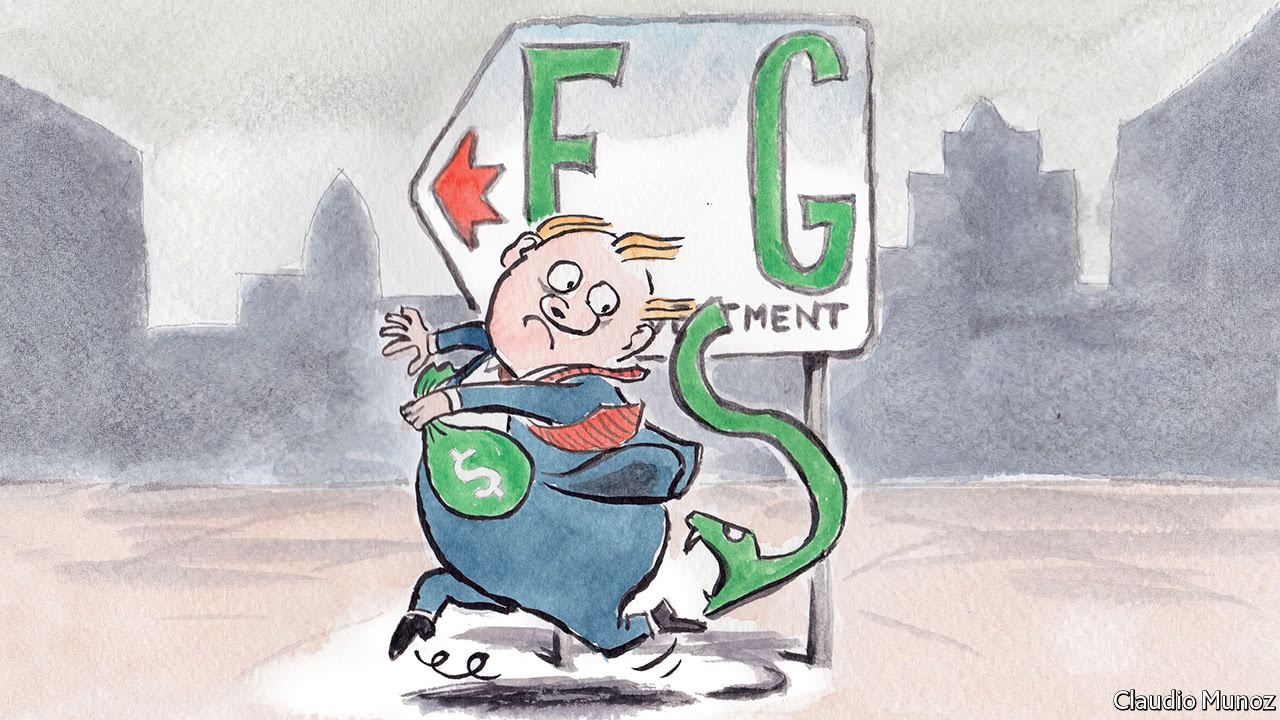
MAYBE weary of its role as a punchbag for moralists, and certainly in search of products with widespread appeal, Wall Street has taken to selling products linked to virtue. That is not easy: how does an industry focused on financial returns go about gauging goodness?
The approach started years ago with funds that called themselves “socially responsible”. More recently the terminology has evolved, with many claiming to pursue “ESG” investing, standing for “environmental”, “social” and “governance”.
Morningstar, a data-tracking firm, places any fund that uses terms such as sustainable investing, ESG and so on in its prospectus into a category that now has 204 members with $77bn in collective assets. The oldest fund in the Morningstar group dates back to 1971. But nearly half have been launched in the past three years. More quietly, the wealth-management offices of many American investment firms constantly roll out investments touting these sorts of…Continue reading
Ukraine’s return to the debt markets worries economic reformers
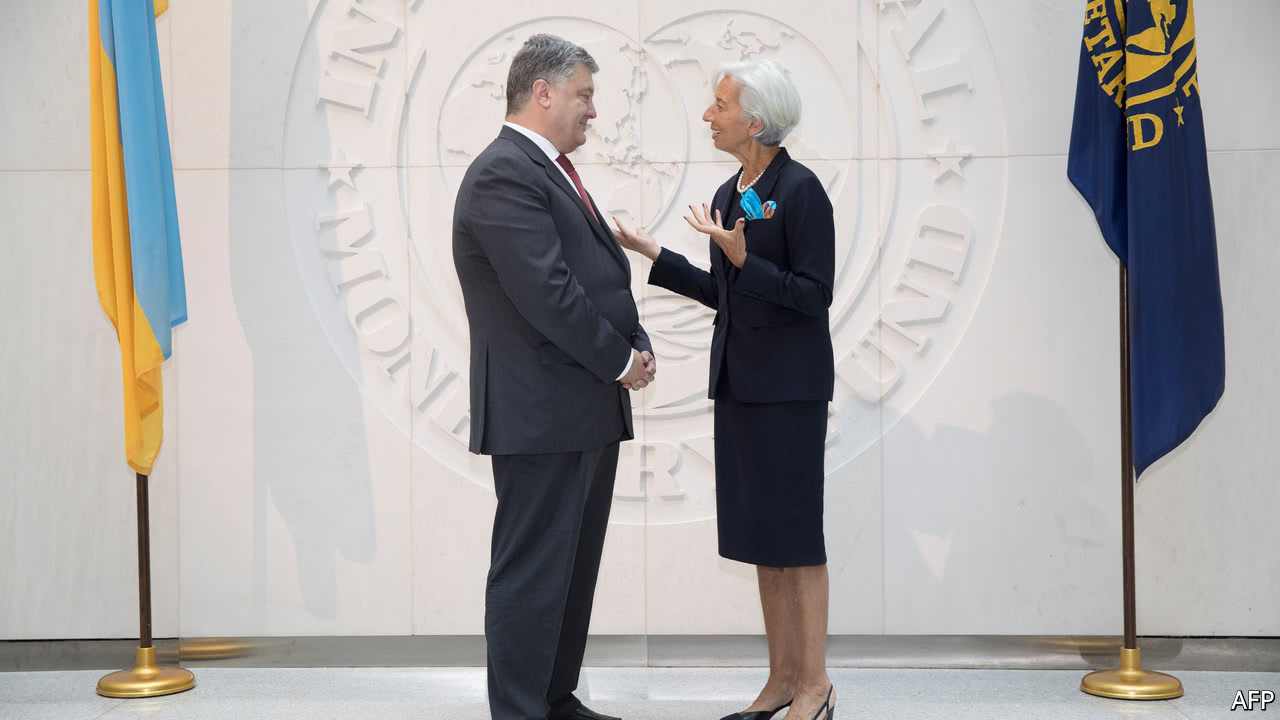
MUCH has changed since Ukraine last tapped global debt markets in 2013. The next year the “Maidan revolution” drove out the corrupt regime of Viktor Yanukovych; and Russia annexed Crimea and stoked a war in Ukraine’s east. The economy languished, with GDP contracting by 16% in 2014-15; only an IMF rescue staved off collapse. Unable to pay its debts, Ukraine in 2015 submitted its creditors to a 20% “haircut”, or debt reduction (an offer rejected by just one creditor, Russia, which is pursuing Ukraine in British courts). This week the government returned to the international markets, issuing $3bn in dollar-denominated bonds.
This testifies to the progress Ukraine has made. As Oleksandr Danylyuk, the finance minister, puts it: “We’re back; we transformed the country.” The government has largely stabilised the economy, bringing inflation down from a peak of 61% in April 2015 to a more manageable 13.5%. It has also undertaken structural reforms: overhauling energy…Continue reading
Norway’s sovereign-wealth fund passes the $1trn mark

A year earlier than expected, Norway’s sovereign-wealth fund, the world’s largest, surpassed $1trn in assets on September 19th. It had gained over $100bn in the past year, thanks in large measure to the global stockmarket boom in 2017: around two-thirds of its assets are held as equities (over 1% of shares globally). It helps that Norwegians continue to earn fat revenues from pumping North Sea oil and gas, which go to the fund to be invested abroad. The fund is so big it is becoming a tool for 5m-odd Norwegians to shape values abroad. It is an increasingly activist shareholder, speaking out on executive pay, ethical behaviour, companies’ use of water, child labour and more. Both its size and influence are likely to keep on growing.