
Tag: Business and finance
An American payments firm goes online and buys British
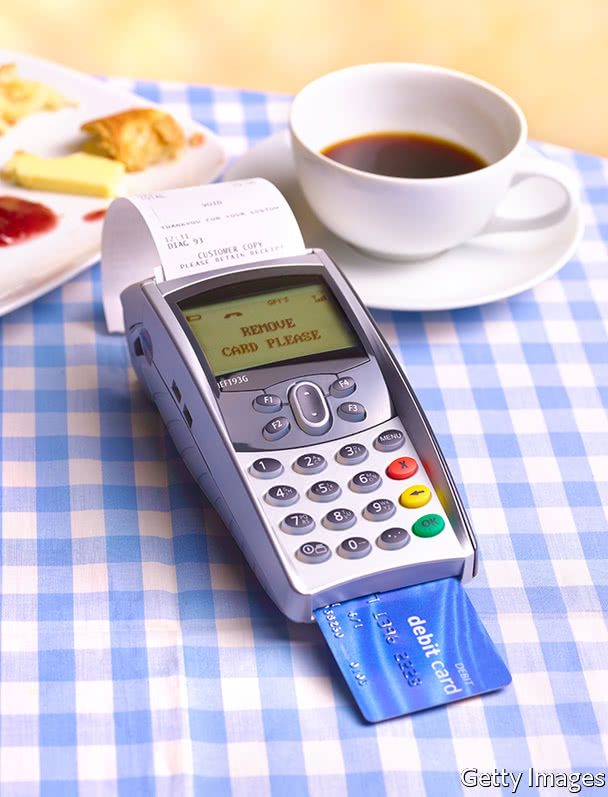
A BIDDING war was briefly but eagerly anticipated. In the end, not a shot was fired. On July 4th the share price of Worldpay, a British payments processor, leapt by 28% after the company said it had received preliminary approaches from JPMorgan Chase, America’s biggest bank, and Vantiv, an American payments firm. The next day Worldpay said it had accepted a cash-and-shares bid from Vantiv, worth £7.7bn ($10bn), giving its shareholders 41% of the combined group. JPMorgan Chase, sniffily explaining that it had considered a bid after an “invitation” from Worldpay, which is a client, declined to proceed. Under Britain’s takeover code that refusal rules out a counter bid for six months. The shares slipped back by nearly 9%.
Vantiv and Worldpay are “merchant acquirers”: companies that have contracts with sellers of goods and services, and licences from credit- and debit-card companies, to accept and process card payments. They also provide…Continue reading
Detroit’s car firms try to match Silicon Valley
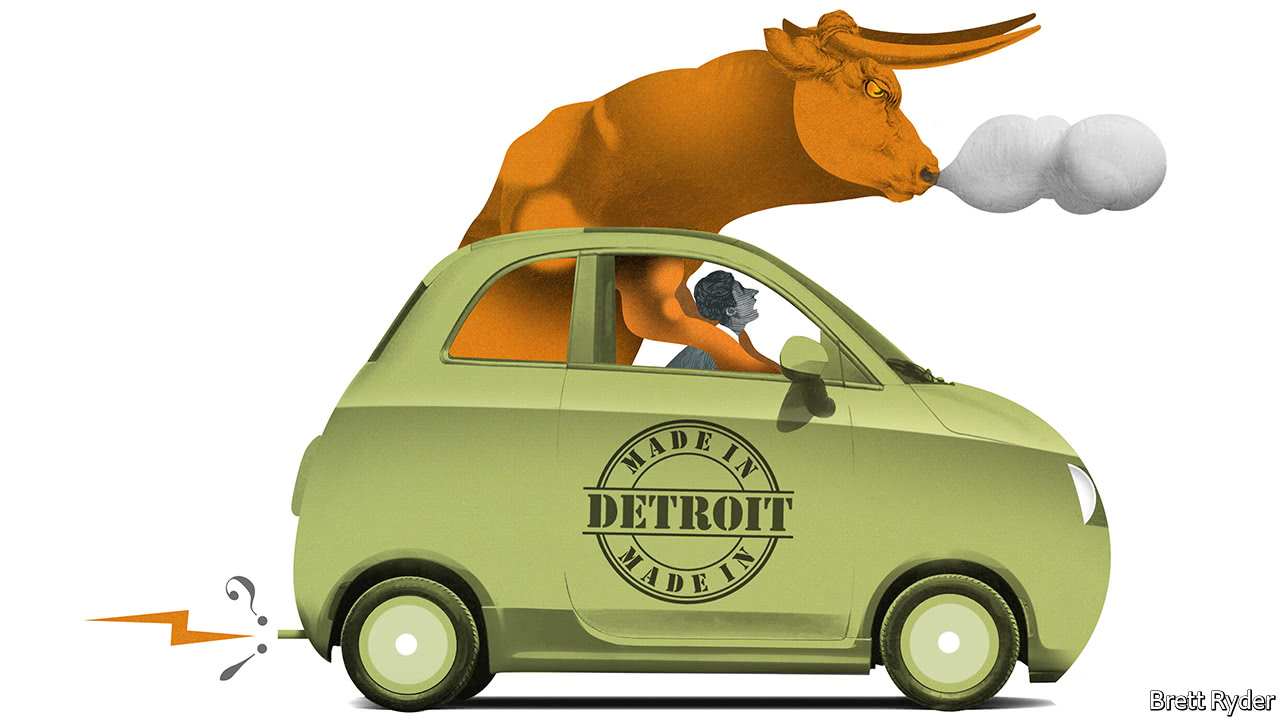
IT IS fashionable to say that the city of Detroit is on the up after decades of decline. Amid the derelict buildings there are signs of revival; art shops and trendy food trucks abound. But for a truer augury of the city’s possible future, consider the rock-bottom stockmarket valuations of Ford and General Motors (GM), Motor City’s two big domestic car firms. (A third, Chrysler, is owned by Fiat Chrysler Automobiles, whose chairman is a director of The Economist’s parent company.) If you put the members of the S&P 500 index in order of their price-earnings ratios, Ford and GM are at the bottom, among the walking dead.
For their investors, creditors and 426,000 staff, about 18% of whom are in Detroit, it is a terrifying signal. A low price-earnings ratio is the stockmarket’s way of telling you that business as you know it is over. GM and Ford together made $18bn of underlying profit last year but have a market value of $98bn. That ratio implies that their…Continue reading
The EU proposes pan-European pension products
THE story of the European Union is in part that of the steady accretion of power by its central bodies. But until now the politically touchy business of running pensions has, like taxation, been zealously guarded by national governments. No longer: on June 29th the European Commission presented a long-awaited proposal for a pan-European personal-pension product, the snazzily named “Pepp”.
Any attempt to encourage Europeans to make adequate provision for their old age is welcome. The combination of ageing populations, falling birth rates and generous state pensions could leave future generations footing the bill, unless people work for longer. Especially in countries such as Italy and Greece, where the state is the main pension provider, encouraging people to make personal savings for their retirement would be sensible (see this week’s Continue reading
The City of London prepares for Brexit
OVER a year has passed since Britons voted to leave the European Union. More than three months have gone by since Britain gave formal notice to quit. Less than 21 months remain until March 29th 2019, the scheduled date of Brexit. Yet banks, insurers, asset managers and other financial firms that use London as a base from which to serve the entire EU are little wiser than they were on referendum day about what Brexit will entail. They must plan for it nonetheless.
The Prudential Regulation Authority (PRA), Britain’s financial supervisor, wants to see their contingency plans by July 14th. The European Central Bank (ECB) has also asked the banks it watches to lay out their post-Brexit strategies. This is probably not demanding for big banks, which are in constant touch with their overseers and already operate both in London and elsewhere in the EU. But some smaller lenders, especially, have work to do. “I think it is fair to say that most banks are not where they should be,” said…Continue reading
Wanna buy some cash? It will cost you
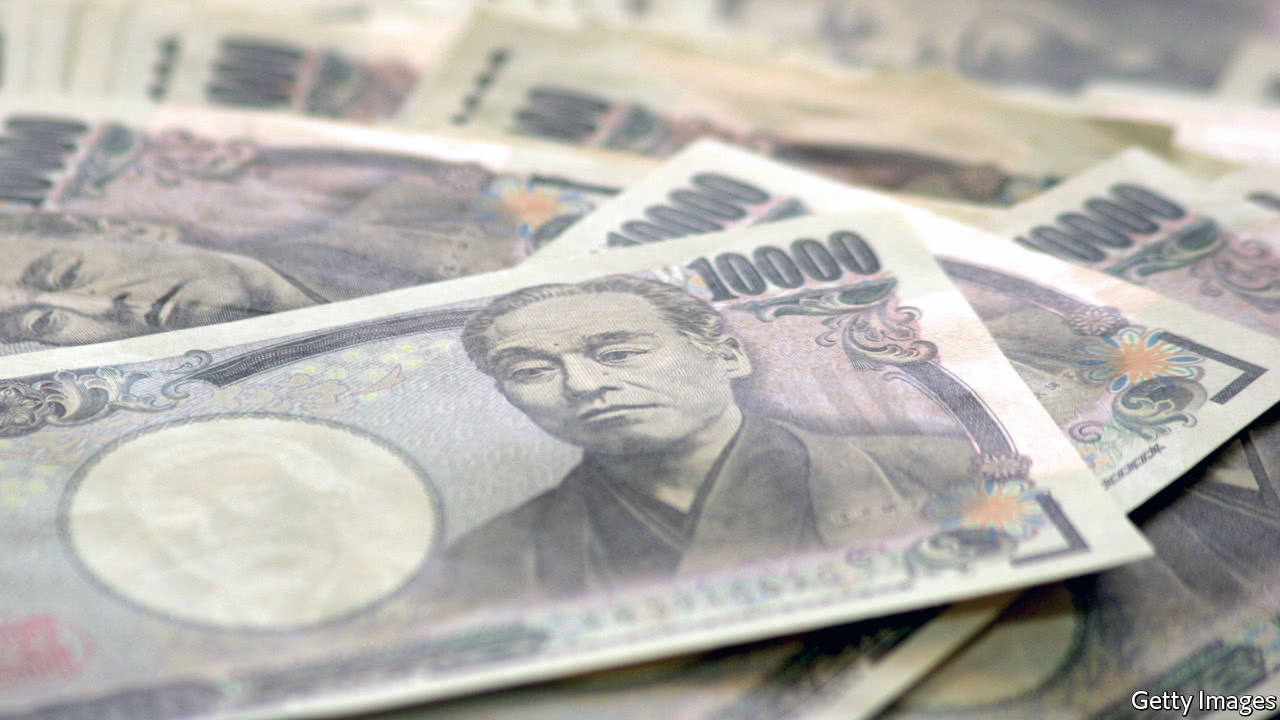
ALMOST anything can be bought and sold online. Even so, sales of ordinary banknotes at a big premium are puzzling. On a newish e-commerce site in Japan called Mercari, ¥10,000 ($90) notes were on sale earlier this year for as much as ¥13,000. So bizarre was the phenomenon that it created a furore, leading the firm to ban such deals in April. A rival site, Yahoo Auctions, soon followed suit. The buyers were not indulging a passion for rare banknotes. They simply wanted the money. In need of emergency finance, and having used up all their bank limits, they resorted to buying cash with their credit cards.
The ban has prompted some crafty work-arounds. “Valuable portraits” of Yukichi Fukuzawa, a thinker revered as a guiding light of Japan’s 19th-century modernisation, have been on sale for as much as ¥15,000. That is a hefty premium to the highest-denominated banknote, ¥10,000, which happens to be adorned with Fukuzawa’s likeness. Or take the bottles of water claiming…Continue reading
A new trade deal between the EU and Japan
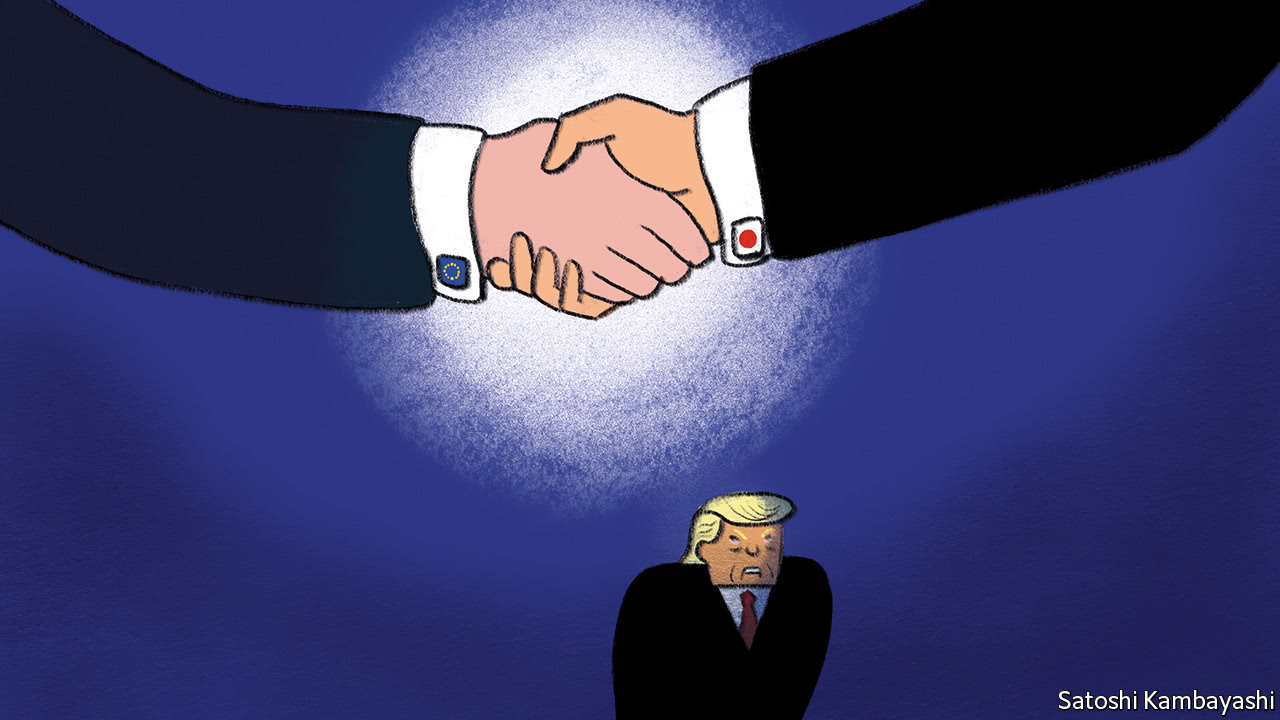
FREE-TRADE agreements have seemed out of fashion as President Donald Trump has set about scotching some of America’s. But on July 5th Cecilia Malmström, the EU trade commissioner, and Fumio Kishida, the Japanese foreign minister, announced they had achieved consensus on a Japan-EU Economic Partnership Agreement (JEEPA). In front of the cameras, they swapped Japanese Daruma dolls, talismans of perseverance and good luck, and, they hope, of a win-win agreement.
The timing of JEEPA was just as carefully co-ordinated. When negotiations started in 2013, it was neither side’s main priority. But now both want to show that they can fill the vacuum left by America’s withdrawal under Mr Trump from its role as the world’s trade leader. To highlight its political importance, they note that this is the first trade agreement to mention the Paris climate accord, another deal Mr Trump has spurned. Haste is handy: the EU wanted success before Brexit negotiations and…Continue reading
Screeners at Minneapolis airport are reported to have a 94% failure rate

TWO more airports have joined Abu Dhabi in having a laptop ban lifted. On July 5th passengers flying from Dubai or Istanbul to America were told that they will once more be allowed to take large electronic devices into plane cabins, rather than having to stow them in the hold, which they have been required to do since March. That will come as a relief to passengers of Emirates, Turkish Airlines and Etihad who have been forced to fly without their laptops and tablets. It follows a change of heart by John Kelly, America’s homeland security secretary. On July 28th, Mr Kelly’s department decided again to trust foreign airports with screening laptops for hidden explosives, so long as they upgraded security. Other airports affected by the ban are expected to pass muster in the coming days and weeks.
That is good news. But America would do well to get its own house in order as well. Fox 9 Continue reading
Podcast: Vorsprung durch Angst
Germany is admired for a stable economy and holding on to blue-collar jobs but derided for its persistent trade surpluses. Our economics editor John O’Sullivan examines what Chancellor Merkel’s government might do next. Also, how “total immersion” could drive the masses to virtual reality. And why banks are de-risking to avoid penalties. Hosted by Simon Long.
BNP Paribas faces accusations over the Rwandan genocide

BNP PARIBAS, France’s biggest bank, pleaded guilty in America three years ago to assisting a monstrous regime in east Africa. In 2006, it had helped to finance Sudan’s government, which in turn supported militias that massacred tens of thousands of civilians in Darfur. The firm thereby abetted in genocide and circumvented American sanctions on Sudan. It agreed to pay a fine of $9bn for breaking that embargo, as well as ones on Cuba and Iran.
The bank, naturally, hopes to put that grim episode behind it. These days it makes much of its social-responsibility efforts. Its 2015 annual report, for example, trumpeted the financing of a big supermarket in Côte d’Ivoire as typical of its contribution to African development. On July 3rd it named a new head of compliance plus a new “company engagement department”, responsible, among other things, for setting strategy on human rights.
Yet the past is hard to banish. The bank now faces scrutiny over an even uglier…Continue reading
America lifts its laptop ban on Etihad
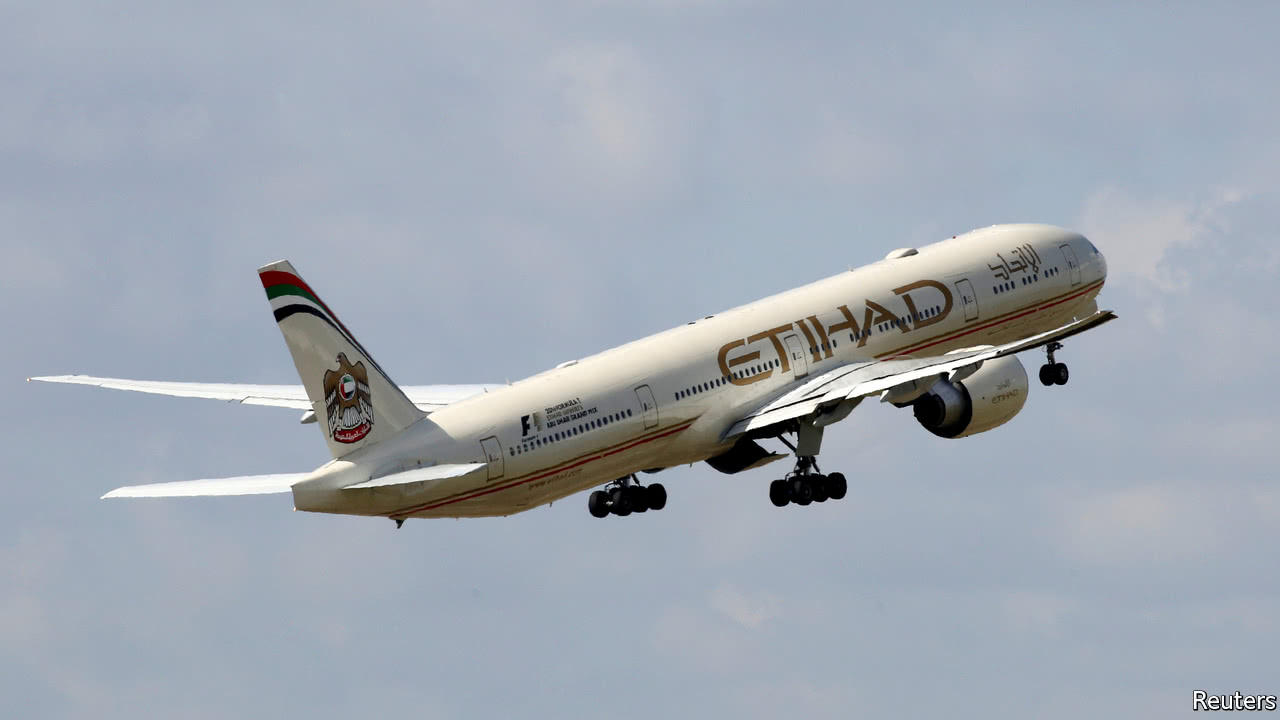
TWO not entirely unrelated pieces of aviation news have come out of the Gulf in the past few days. The first is that America has lifted its laptop restrictions on Etihad. The Department of Homeland Security (DHS) imposed a ban on large electrical devices in the cabins of planes flying from ten Middle Eastern countries in March, including from Abu Dhabi, Etihad’s base. Officials, it seemed, had got wind of a specific terrorist threat, possibly similar to the attempted downing of a jet in Somalia in 2016. On that occasion a passenger detonated a small explosive concealed in a laptop that was placed flush against the cabin wall. (Disaster was probably only averted because the man detonated the device too soon after take-off. The terrorist, who was sucked to his death through the resulting hole, was the only casualty.)
After months of mixed messages (at one point John Kelly, the homeland security secretary, suggested that the laptop ban was “likely” to be extended worldwide) last week the DHS