
Tag: Business and finance
Alarm grows about over-exuberance in corporate lending
WHEN the financial crisis was at its height in 2008, being a debtor was a dreadful experience. Banks and companies scrambled desperately to get the financing they needed.
But the balance of power in the financial markets can easily shift. In 2005 and 2006, credit had been easy to get on generous terms. Not only were loans cheap and plentiful; they also suffered from fewer restrictions. Until then, corporate loans had many covenants offering safeguards for lenders if the debtor’s financial position were to deteriorate. But 2005-06 saw the emergence of “covenant-lite” loans in which such restrictions were virtually non-existent.
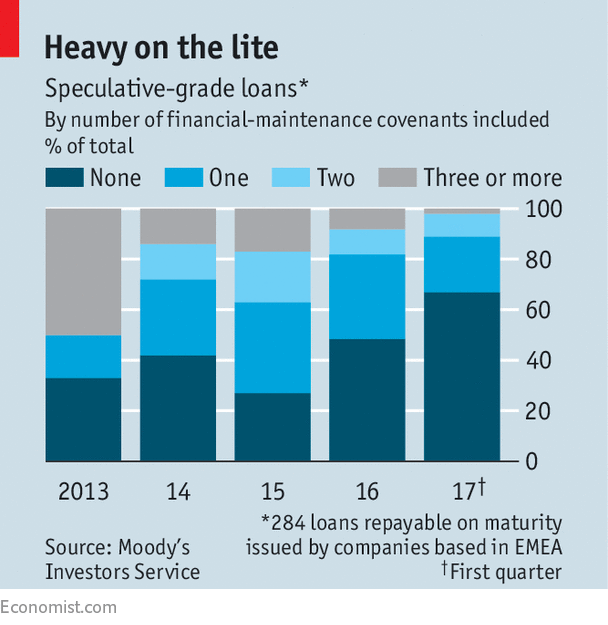
The cycle has turned again. Analysis by Moody’s, a ratings agency, shows that the proportion of the loan market that is “covenant-lite” has risen from 27% in 2015 to more than two-thirds in the first quarter of this year (see chart). Some loans even contain restrictions on the lender, not just the borrower. Private-equity firms demand a veto over…Continue reading
What Asia learned from its financial crisis 20 years ago
MUSEUM SIAM in Bangkok is dedicated to exploring all things Thai. Until July 2nd, that includes an exhibition on the Asian financial crisis, which began on that date 20 years ago, when the Thai baht lost its peg with the dollar. The exhibition features two seesaws, showing how many baht were required to balance one dollar, both before the crisis (25) and after (over 50 at one point). Visitors can also read the testimony of some of the victims, including a high-flying stockbroker who was reduced to selling sandwiches, and a businesswoman whose boss told her to “take care of the work for me” before hanging himself. (In Hong Kong, Japan and South Korea, 10,400 people killed themselves as a result of the crisis, according to subsequent research.) In Thailand the financial calamity became known as the tom yum kung crisis, after the local hot-and-sour soup, presumably because it was such a bitter and searing experience.
The exhibition’s subtitle, “Lessons (Un)learned”, seems unfair. The victims of the crisis (Thailand, South Korea, Malaysia, Indonesia and Hong Kong) took many lessons to heart. With the exception of Hong Kong, they no longer rely on a hard peg to the dollar to anchor inflation, giving their currencies more room to move. (The sandwich vendor’s chosen logo for his new business…Continue reading
The complicated failure of two Italian lenders
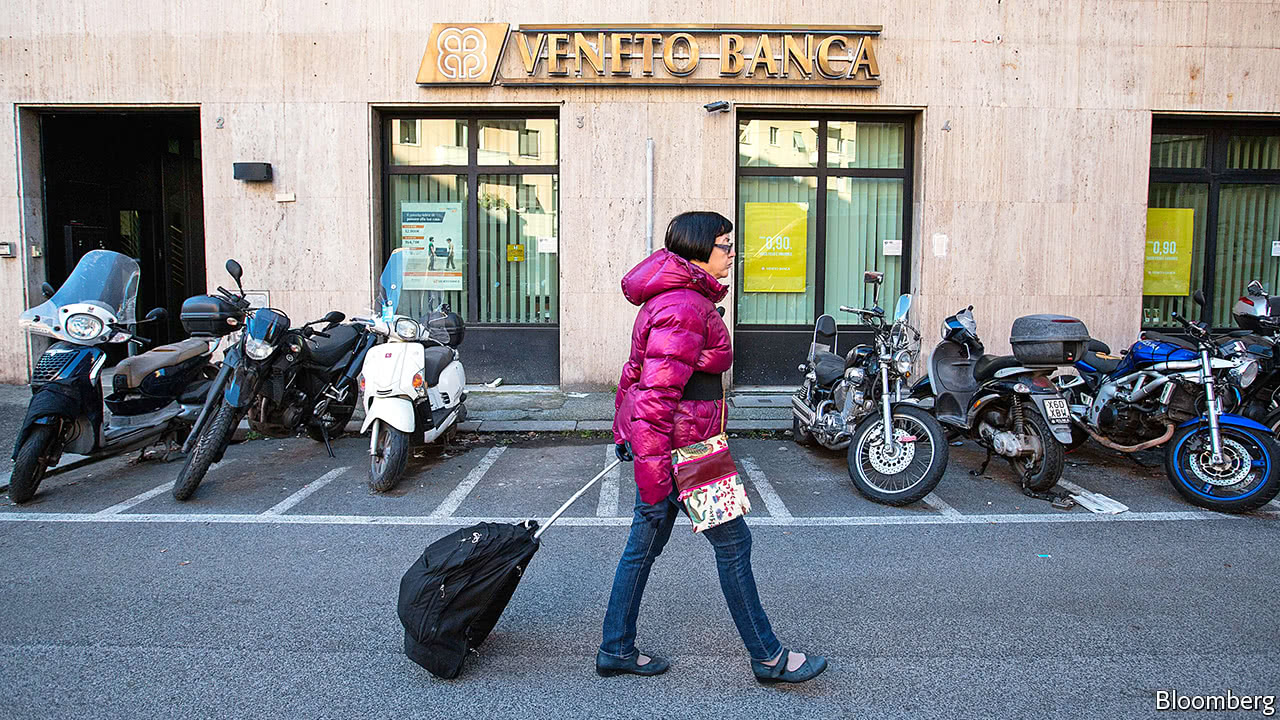
BANKS sicken slowly but die fast. For years Banca Popolare di Vicenza and Veneto Banca, in the prosperous Veneto, in north-east Italy, had been plagued by mismanagement. Even criminal investigations are under way. For months the Italian government had been wrangling with European authorities over the terms of a bail-out. For weeks it had seemed improbable that private investors would put in money alongside the state, as the European Commission insisted.
On June 23rd the European Central Bank (ECB) declared that the banks were “failing or likely to fail”. Two days later, after a frantic weekend, the Italian government pronounced them dead: their good assets were sold to Intesa Sanpaolo, Italy’s second-biggest lender, for a token €1 ($1.14), and their dud ones put into a “bad bank”. The operation may cost Italian taxpayers €17bn. This is the second call on Italy’s public purse this month. On June 1st the commission approved, in principle, the rescue of long-troubled Monte dei…Continue reading
How to Trump-proof your company

TO OUR management team: When I left the White House yesterday, after another two-hour round-table with the president, I knew in my gut that it was time to put in place “plan C” for this great company. The boxer, Mike Tyson, had a point when he said “everyone has a plan until they get punched in the mouth.” But so did Winston Churchill when he observed that “plans are of little importance, but planning is essential.” We owe it to our investors, customers and 131,000 employees globally, to have a reset.
A year ago we were pursuing plan A. We expected that Hillary Clinton would win the election and that American business would continue as it has since the subprime crisis, meaning slow growth and lots of red tape but open borders and record profits that we could return to shareholders as dividends and buy-backs. Together, our firm and fellow members of the S&P 500 index have been paying out $1trn a year, far more than we invest.
After November 8th, we…Continue reading
Kenya launches the world’s first mobile-only sovereign bond
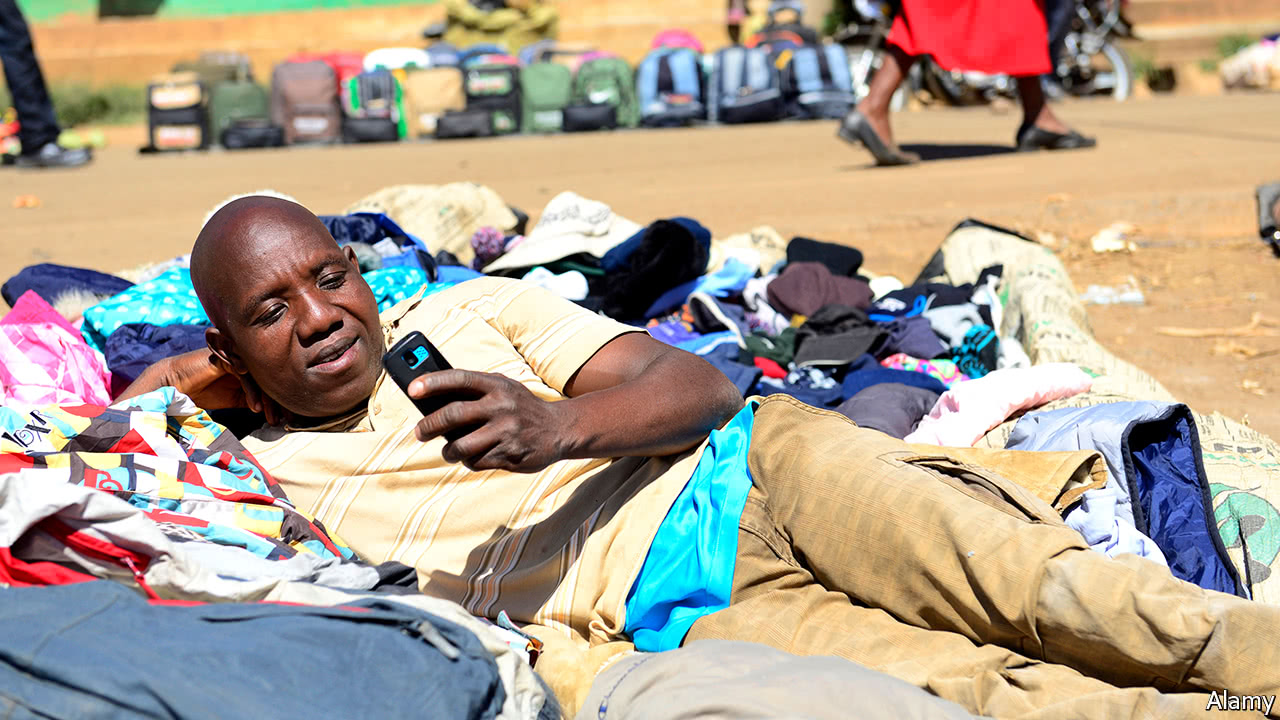
MOBILE money is ubiquitous in Kenya. Someone tapping on their phone might be paying school fees, sending money home or donating to a church. Soon they might be trading bonds. On June 30th the Kenyan government was due to launch M-Akiba, the world’s first sovereign bond to be sold exclusively through mobile platforms.
The bond is marketed at small investors, who will not need a bank account to take part. They can register on their phone in a few minutes and invest as little as 3,000 shillings ($29), far less than the 50,000 shillings needed to buy other treasury bonds. “Akiba” means savings in Kiswahili. The government is keen to promote thrift and is offering a juicy 10% annual return on the three-year bond, about three percentage points above deposit rates at commercial banks. Coupon payments are made through mobile money.
A pilot offer in March lured over 100,000 people to register. But only 5,692 of them went on…Continue reading
America’s programme to help trade’s losers needs fixing
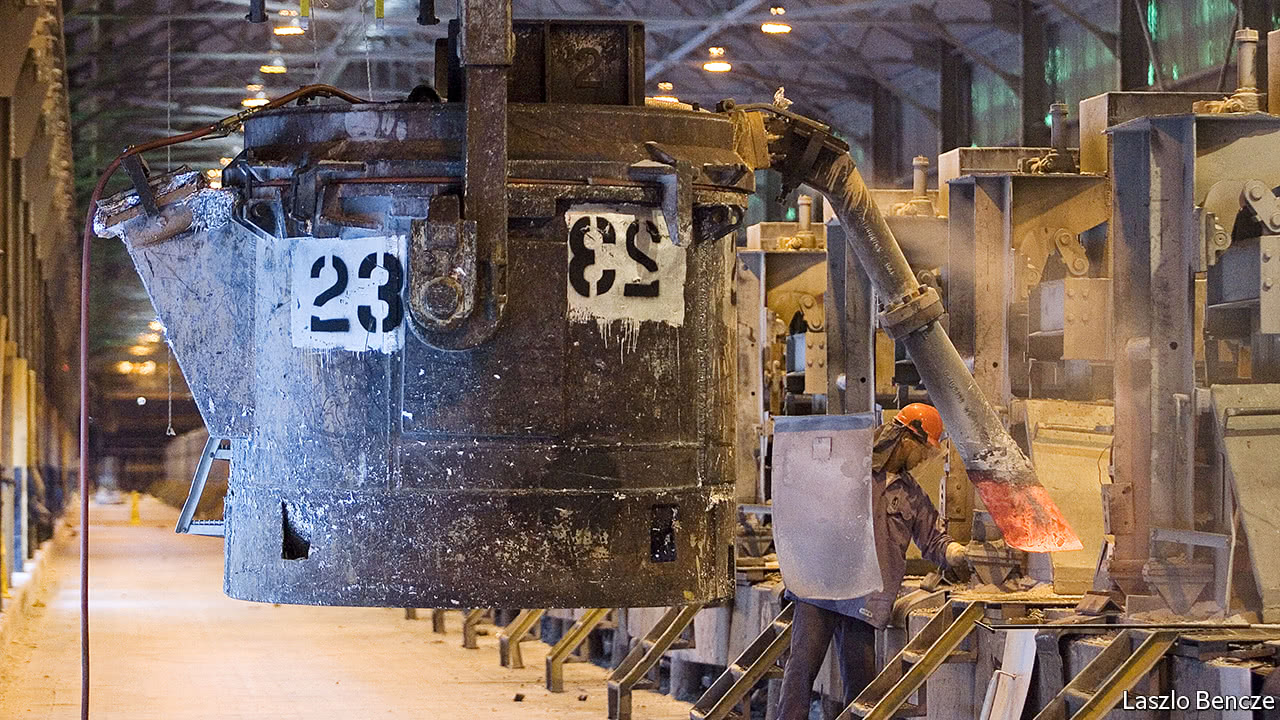
BRIAN AUNSPACH thought he had a job for life. After six years at a smelter owned by Alcoa, America’s largest aluminium company, his work was hard but the benefits decent. Warning signs came with crashing aluminium prices in the summer of 2015 and murmurings about unfair Chinese competition. Then reality hit: in January 2016 Alcoa announced the smelter’s closure. Around 600 people lost their jobs.
The events of 2016, from Brexit to Donald Trump’s election, were widely seen as a backlash against globalisation. The Warrick smelter in Indiana, which shut amid “challenging market conditions”, was perceived to be a victim of free trade. And the likes of Mr Aunspach, an American displaced by trade, are the objects of keen attention from wonks as well as politicians.
His is an old problem, with old solutions. Since 1962 America has earmarked funding to help people adjust to trade-related shocks. Trade-Adjustment Assistance (TAA)…Continue reading
The infant Islamic-bond industry faces a crisis
DANA GAS, an exploration business listed in Abu Dhabi, seems in a spot of bother. Ten years after sealing a landmark production deal with Iraqi Kurdistan, it is struggling to recover $900m it is owed by the autonomous region and the Egyptian government. So it faces a liquidity squeeze. That is not, however, why it says it wants to restructure $700m-worth of Islamic bonds maturing in October 2017. Rather, it says it has received legal advice that the bonds are no longer compliant with sharia—rules based on Islamic scripture.
The bonds were deemed compliant in 2013, but Dana cites evolution in the “interpretation” of Islamic financial instruments. It is seeking to have them declared invalid in a United Arab Emirates court. Its domestic assets are shielded from creditors under UAE law; it has also obtained injunctions in Britain and the British Virgin Islands protecting it from claims until the case is settled. Hearings are not due to start before December, months after the bond’s next payment-due dates.
Islamic law forbids the generation of money from money—interest. Sukuk, or Islamic bonds, thus differ from their conventional peers. They are backed by assets and instead of lending the issuer money, the holder owns a nominal share of what the cash was spent on and receives an agreed ratio of the…Continue reading
Flyers may soon have their books and magazines screened

TO THE many invasions of privacy that have become commonplace in air travel—the pat-downs, the hand swabs, the shoe removal, the endless rummaging through luggage by security agents—one more may soon need to be added: the examination of reading material.
Last month, America’s Transportation Security Administration (TSA) ran tests at airports in California and Missouri that required passengers to remove all books and magazines from their carry-on bags and put them in plastic bins to be x-rayed. John Kelly, the homeland security secretary, said that the agency “might and likely will” impose that requirement at all airports. “What we’re doing now is working out the tactics, techniques, and procedures, if you will, in a few airports, to find out exactly how to do that with the least amount of inconvenience to the traveller,” he said.
The agency’s concern is that dense papers can block x-ray scanners, or could potentially be used to conceal weapons. A TSA spokeswoman
Podcast: The Italian bailout job
Italy has been forced to bail out two banks at a cost of as much €17bn euros ($19 bn). Is that the end of the bleeding in Italy’s financial sector? Also, as the iPhone turns ten, we look at how Apple is evolving. And Catherine Mann, Chief Economist at the OECD, tells us how to government can help workers made jobless by globalisation. Hosted by Simon Long.
Can the fund management industry deliver a better deal for investors?
IMAGINE an industry where the average profit margins were 36%, where the regulator found little evidence of price competition and where the average person did not get the benefit of the lower charges available to the wealthiest customers. You would probably expect the regulator to throw a book the size of Thomas Piketty’s “Capital” at it. The industry’s executives ought to be as nervous as a very small nun at a penguin shoot.
But that has not happened with the report of the Financial Conduct Authority (FCA), Britain’s regulator, into the fund management industry. What the FCA proposes in terms of greater transparency of fees and better governance standards is fair enough. But one wonders how much difference it will make. The industry has reacted to the findings with equanimity.
Perhaps the most damning of the report’s findings is point 1.9
We find weak price competition in a number of…Continue reading