
Tag: Business and finance
Finland tests a new form of welfare

JUHA JARVINEN, an unemployed young father in a village near Jurva, in western Finland, brims with ideas for earning a living. He has just agreed to paint the roofs of two neighbours’ houses. His old business, making decorative window frames, went bust a few years ago. Having paid off debts, he recently registered another, to produce videos for clients.
Mr Jarvinen says that for six years he hoped to start a new business but it was impossible. The family got by on his wife’s wages as a nurse, plus unemployment and child benefits. He had a few job offers from local businesses, which are mainly in forestry, furniture and metalwork. But anything less than a permanent, well-paid post made no sense, since it would jeopardise his welfare payments. To re-enroll for benefits later would be painfully slow.
Mr Jarvinen’s luck turned in January, when he was picked at random from Finland’s unemployed (10% of the…Continue reading
“Basic economy” class is winning over flyers
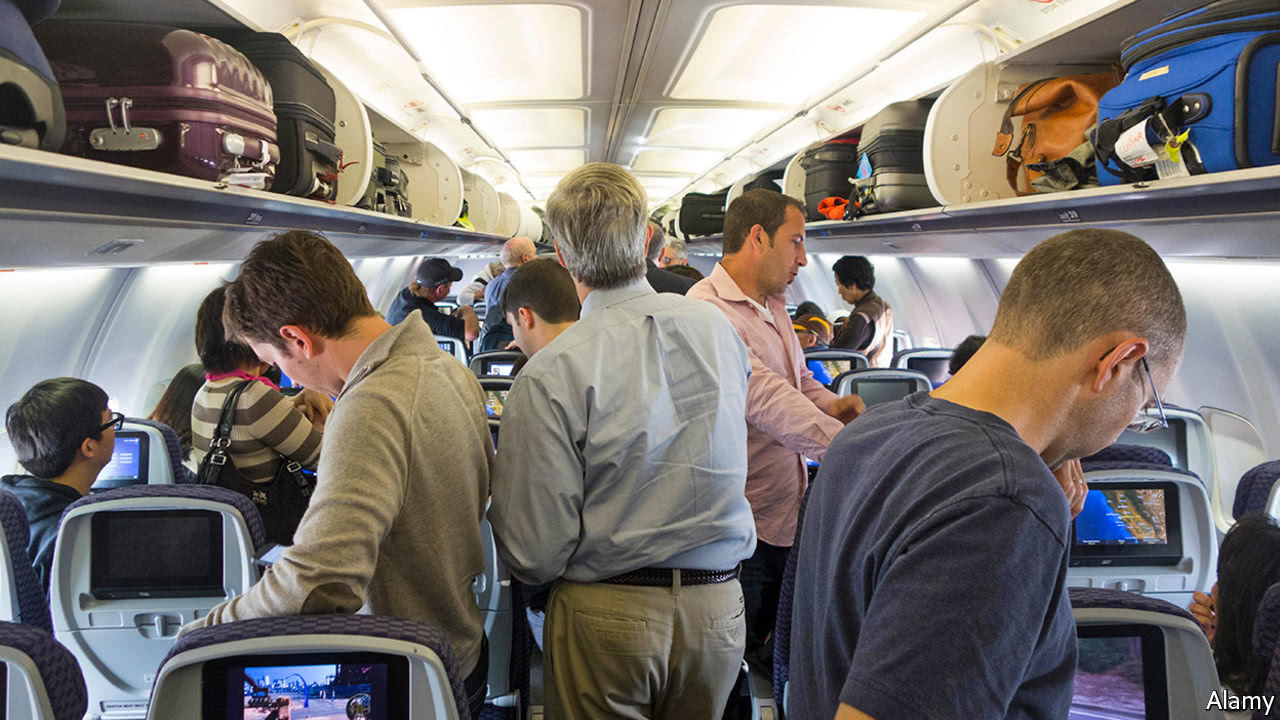
GULLIVER wrote last week about American Airlines handing indignant flyers a notable victory. The carrier rescinded a plan to take away an inch of legroom from economy-class seats on new planes, following a public outcry. Such concessions are rare. Airlines generally worry about how customers vote with their wallets not how they grumble with their words. Hence, they cut comforts to offer the low fares that people demand.
Anyone hoping that American Airlines’ climbdown might signal a reversal of that trend should think again. Earlier this year, United Airlines introduced a new class of fare, “basic economy”. Such tickets, which strip out those few remaining comforts that economy passengers enjoy, have been derided as “last class”. But, like it or not, cost-conscious passengers are showing their approval.
The airline expanded the programme to all domestic markets last month. Andrew Levy, United’s CFO, said last week that about…Continue reading
Complaints against America’s airlines are rising

LAST year, Bob Fornaro, the boss of Spirit Airlines, talked of the effort his firm had made to reduce the number of customer complaints. The ultra-low-cost carrier, dubbed the most hated airline in America by Bloomberg, had long been ranked as a primary purveyor of passenger pain, regularly propping up lists that rate airline service. Alas, Mr Fornaro’s efforts seem to have gone unrewarded. Complaints per passenger remain easily the highest of any of the big American operators. In fact, as our chart shows, things seem to be getting worse.
 Continue reading
An industry shudders as Amazon buys Whole Foods for $13.7bn
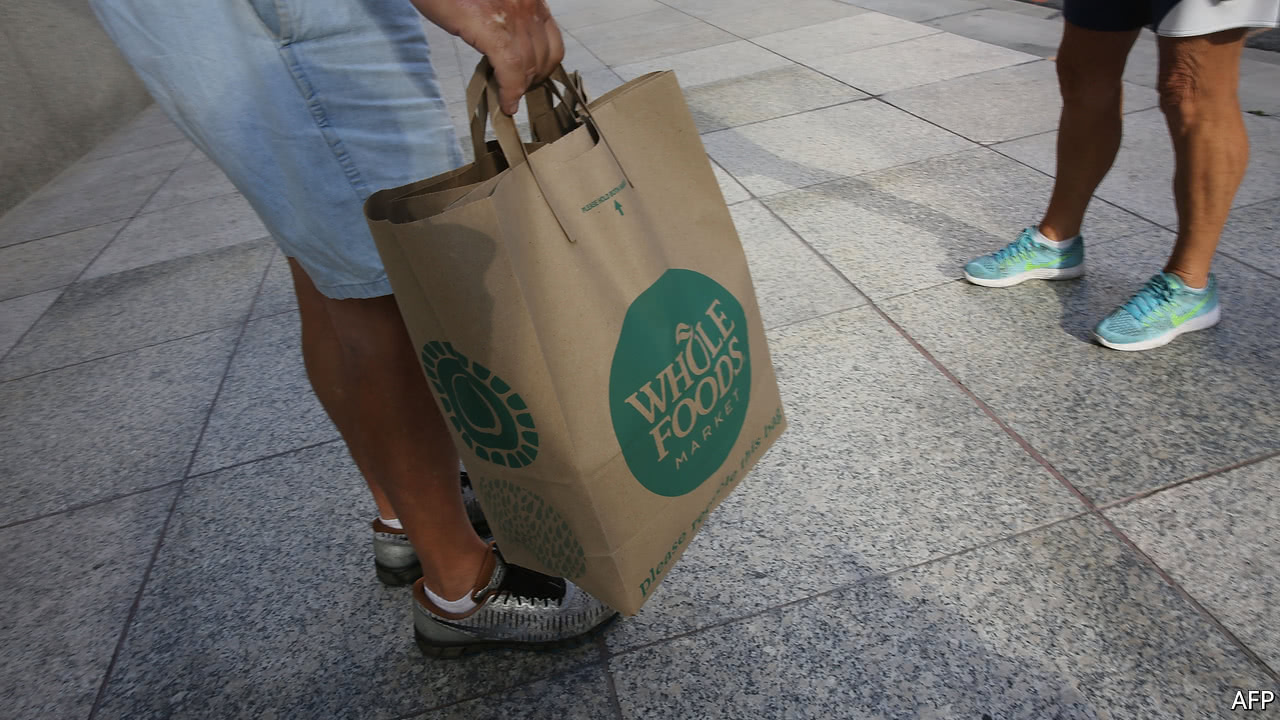
AMAZON announced on June 16th that it would pay $13.7bn to buy Whole Foods, a grocer known for its organic produce. On the face of it, the purchase might not seem to upset the grocery cart, either for Amazon or for the supermarket business. Amazon controls a measly 0.2% of America’s grocery market; Whole Foods has just 1.2%, according to GlobalData, a research firm and consultancy. By Chinese standards, Amazon looks slow: Alibaba, another e-commerce titan, bought a 32% stake in a Chinese grocer last year.
Nor is Whole Foods a juggernaut. It has about 450 stores in America, Britain and Canada, but American shoppers are now buying a wide range of organic foods at other grocers, without having to put up with Whole Foods’s steep prices or its hipster clientele.
Nevertheless, the deal marks a new era for Amazon. It has run a few experiments in physical retail, including bookstores in Chicago and in New York. In Seattle it is testing a small grocer, Amazon Go, where…Continue reading
German deep discounters go big in America

AMERICA’S economy is enjoying its third-longest period of uninterrupted expansion since the 1850s. So it is at first glance puzzling that Lidl, a German deep-discount chain whose sales soar when times are hard, is entering the market now. On June 15th Lidl opened nine stores in Virginia, North Carolina and South Carolina. Up to 90 more stores across the country are to follow within a year.
The move may be far-sighted, however. Lidl’s arch-rival, fellow-German discounter, Aldi, has been in America for four decades and has 1,600 stores across 35 states. It has had success not just among poor Americans but, increasingly, among the middle class, according to Bain, a consultancy. Aldi is preparing for an expansion: on June 12th it said it would add 900 more in the next five years, putting it third in the country by store count, behind Kroger and Walmart, America’s biggest retailer.
Unlike conventional supermarkets, which usually carry…Continue reading
Canadian banks don’t face a crisis. They do face a strategic trilemma
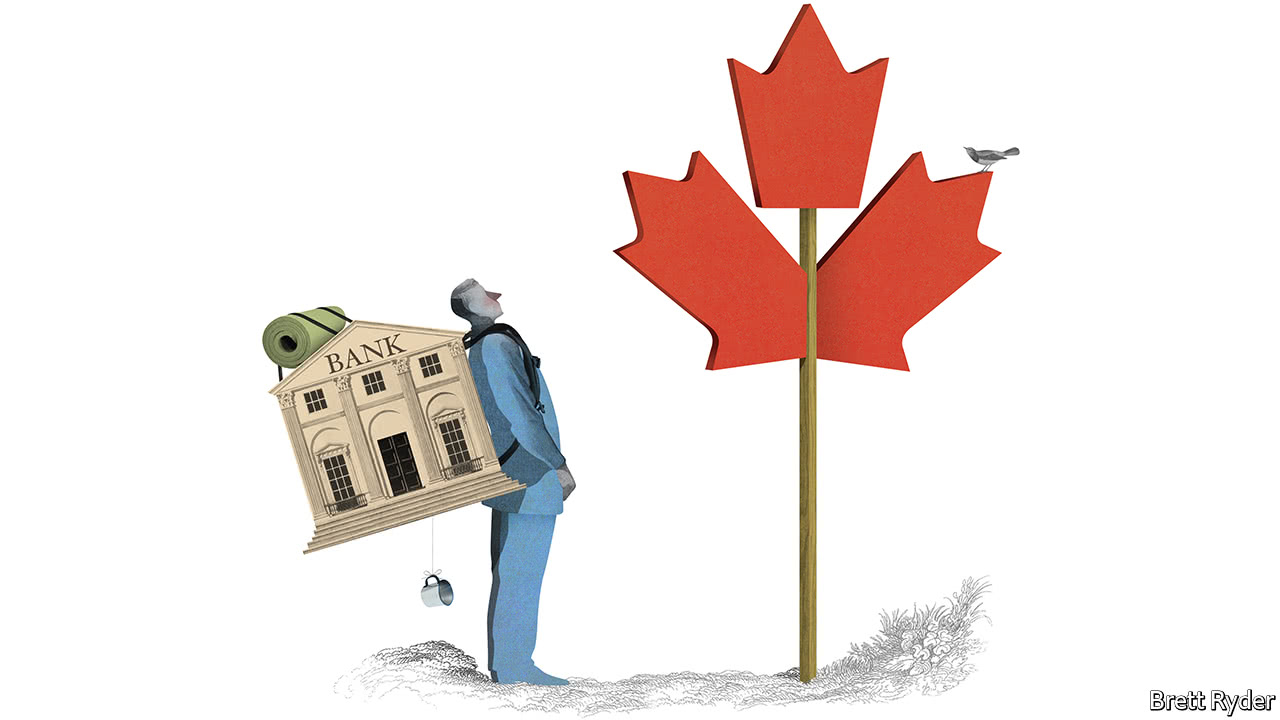
AS the global financial system was engulfed in crisis in 2008-10, only one set of banks in Europe and North America stayed serene and safe: Canada’s big five lenders. They were largely untouched by the madness south of the border and across the pond and kept churning out profits. After the crisis experts went on pilgrimages to Toronto and Ottawa to study the Canadian way. The country’s central-bank governor, Mark Carney, became a financial celebrity who was headhunted to run the Bank of England.
Canada’s banks quickly joined the select ranks of the industry’s superpowers, shooting up the global league tables in the aftermath of the crisis. Today three of them are on the list of the 20 biggest banks globally, measured by market value: Royal Bank of Canada (RBC), Scotia and Toronto Dominion (TD). RBC is worth more than Spain’s Santander, the euro zone’s biggest bank.
It has taken nearly a decade but Canadian lenders are back in the spotlight, this time accused of…Continue reading
Corporate Europe is giddy with optimism

IT IS remarkable what a difference a single election can make. “The way Europe is regarded by the rest of the world has changed in a few months,” says Gérard Mestrallet, chairman of both Engie and SUEZ, two big French energy firms, and a board member at Siemens of Germany, the region’s biggest engineering firm. The arrival of Emmanuel Macron as France’s reform-minded new president—his party is set for a giant victory in parliamentary elections this week—is helping to transform attitudes from gloom to cheer.
Mr Mestrallet echoes many corporate leaders in describing “real hope and enthusiasm”, amid expectations that the new president will, within months, “de-block” the euro zone’s second-largest economy. Mr Macron will start freeing business activities, he says, first with legislative reform of a rigid labour market to simplify rules on hiring and firing, and then by cutting tax rates (the corporate kind will fall from 34.4% to 25%). Measures to boost entrepreneurship…Continue reading
Inflation has not yet followed lower unemployment in America

THAT central banks cannot endlessly reduce unemployment without sparking inflation is economic gospel. It follows from “a substantial body of theory, informed by considerable historical evidence”, according to Janet Yellen, chair of the Federal Reserve. Her conviction explains why, on June 14th, the Fed raised interest rates by a quarter of a percentage point, to a range of 1-1.25%.
Excluding food and energy, prices are only 1.5% higher than a year ago; the Fed’s inflation target is 2%. But Ms Yellen thinks unemployment is below its so-called “natural” rate, so inflation should soon rise. Is she right? Or has the relationship between unemployment and inflation, dubbed the Phillips curve, gone missing?
It is not the first time the theory has failed. After the financial crisis unemployment soared to 10%. This surfeit of workers should have sent inflation tumbling. But prices held up well; in October 2009, when unemployment peaked, underlying inflation was 1.3%, only a little…Continue reading
American energy firms are enjoying a bonanza south of the border
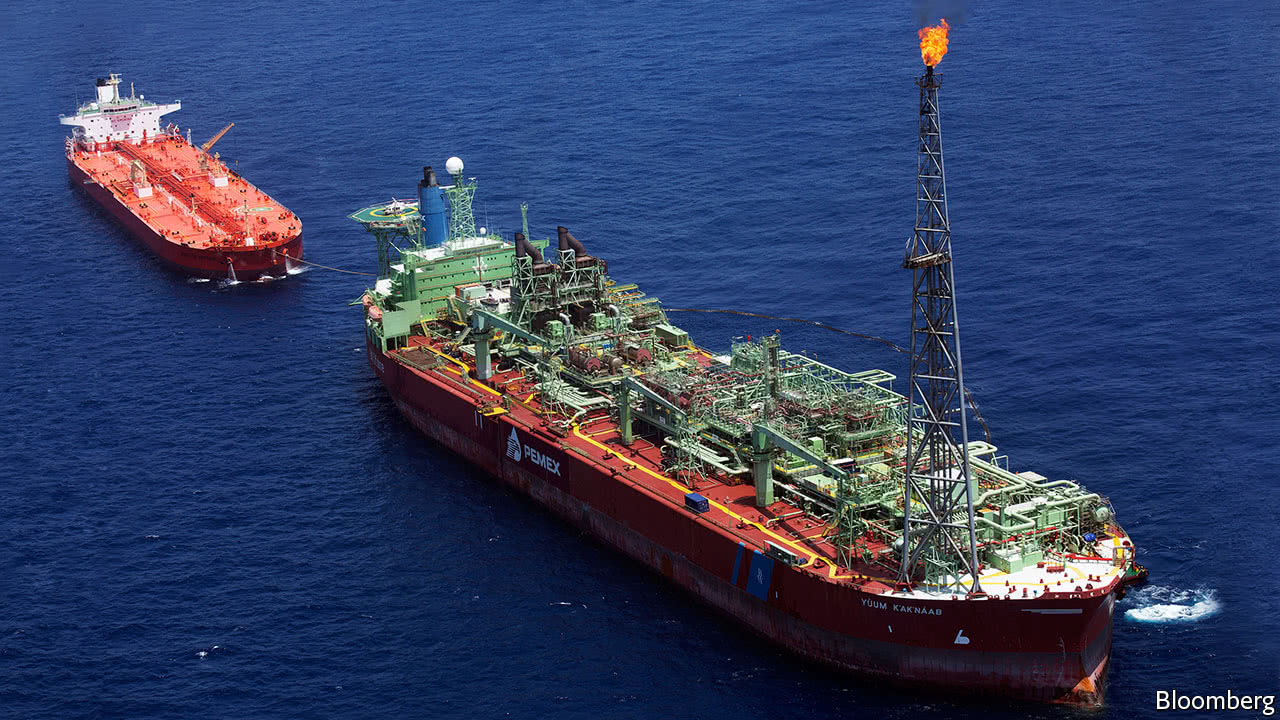
A CHEMICAL engineer at Pemex, Mexico’s state-owned oil company, opens a tap atop a maritime platform in this offshore oilfield in the southern part of the Gulf of Mexico. She decants a jar of heavy Mexican crude that comes, hot to the touch, from 3,500 metres below the seabed. It looks like a succulent chocolate sauce, but smells like the back end of a cow. “Taste it,” she laughs.
The crude that she is testing is pumped a short distance across the sea to a vast floating storage tank, known as an FPSO, where it is blended with lighter crude for export. The FPSO stores about 2m barrels—roughly the equivalent of a day’s worth of Mexican oil production. A quarter of that is fed into a supertanker tied alongside, contracted by Chevron, America’s second-largest oil firm. It then sails north across the maritime border to Texas or Louisiana where the crude runs through refineries. The refined petrol or diesel often then returns to…Continue reading
One year before the World Cup, FIFA is shunned by sponsors

AT THE World Football Museum in Zurich, run by FIFA, football’s global governing body, visitors take their photo with the World Cup trophy, try their hand at match commentary and gawk at artefacts ranging from the original handwritten set of the rules of the game to the yellow card famously shown to Paul Gascoigne, a lachrymose English footballer, in 1990. Those wanting a glimpse of the luxurious bedsheets that were used to shield FIFA officials as they were hustled out of a ritzy Swiss hotel in 2015 having been arrested on corruption charges may feel cheated—they are not on display.
If FIFA’s shrine to itself ignores this squalid period of its history, its balance-sheet bears the traces. FIFA lost $369m in 2016, triple the losses of the year before, and forecasts a loss of $489m in 2017. Reserves, which have been above $1bn since 2008, are predicted to fall to $605m next year.
The latest loss is partly because of higher development funding for member…Continue reading