
Tag: Business and finance
The IMF is back in Africa
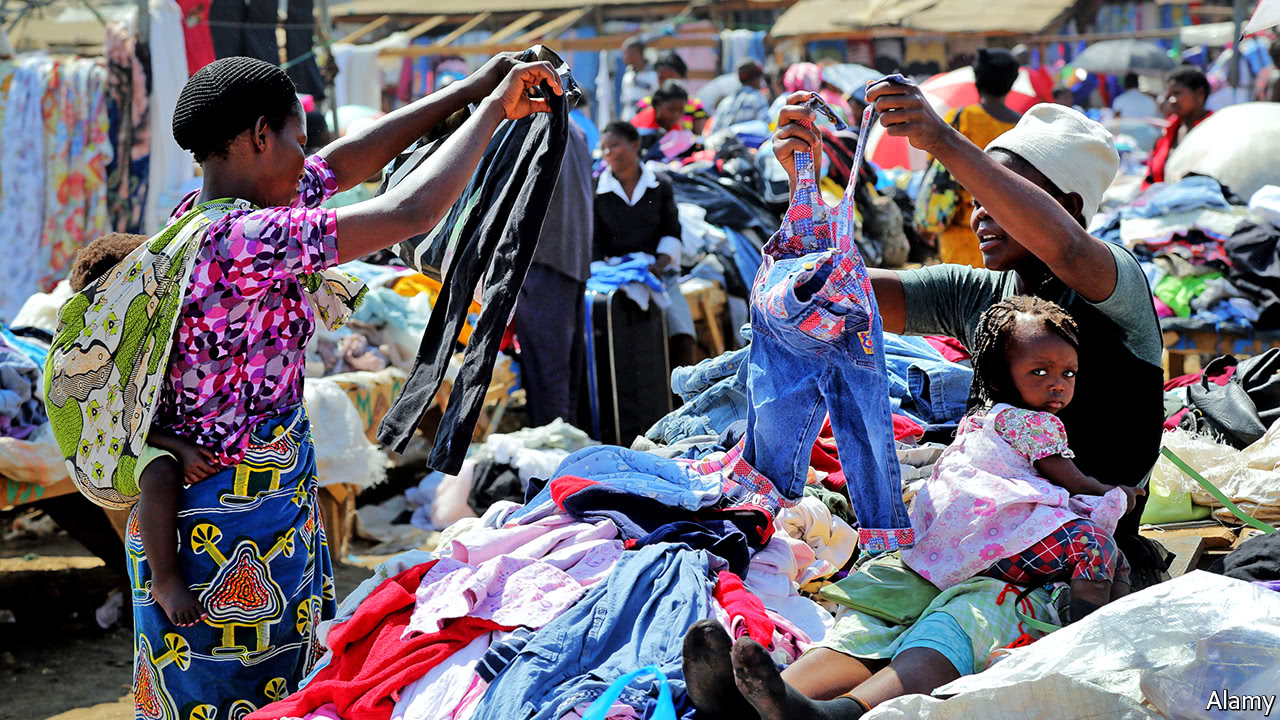
ZAMBIANS have good reason to distrust the IMF. In the 1990s, under the fund’s guidance, their government cut spending, scrapped subsidies, liberalised the exchange rate and privatised over 200 state-run firms. This “structural adjustment” was painful: employment shrivelled and, by the end of the decade, income per person had shrunk by 8%. In the words of Binwell Sinyangwe, a novelist, “they were the years of money first or else no friendship”.
So it was with some trepidation that Zambia welcomed an IMF mission, which concluded on June 10th. As in the 1990s, Zambia has been hit by plummeting prices for copper, its main export. The proposed package, which is likely to be finalised over the coming months, could be worth $1.3bn, which would be the country’s biggest with the fund in two decades.
The retro feel extends across Africa, where GDP grew last year by 1.4%, the slowest rate this century. Ghana agreed on a…Continue reading
American Airlines reverses a pledge to squeeze legroom further

SOME rare good news for anyone planning to fly economy class on American Airlines: the carrier has scrapped plans to shrink the distance between rows on new planes it is purchasing. The Texas-based airline had said it would reduce the seat pitch on its new Boeing 737 Max planes to a knee-aching 29 inches in certain rows, down from its typical 30 inches (or 31 inches on its current 737-800 fleet). Now it says it will install those rows 30 inches apart.
An inch may not sound like much, but its significance is broader. The airline made the change in response to public outcry. American said it received copious feedback from customers and employees and that “it is clear that today, airline customers feel increasingly frustrated by their experiences and less valued when they fly.” People complained, and American listened.
In fact, the pressure came from more than just ordinary Joes. A member of Congress, bemoaning the ever-shrinking seat pitch, introduced
Sanctions in the Middle East are bad for airlines, worse for travellers
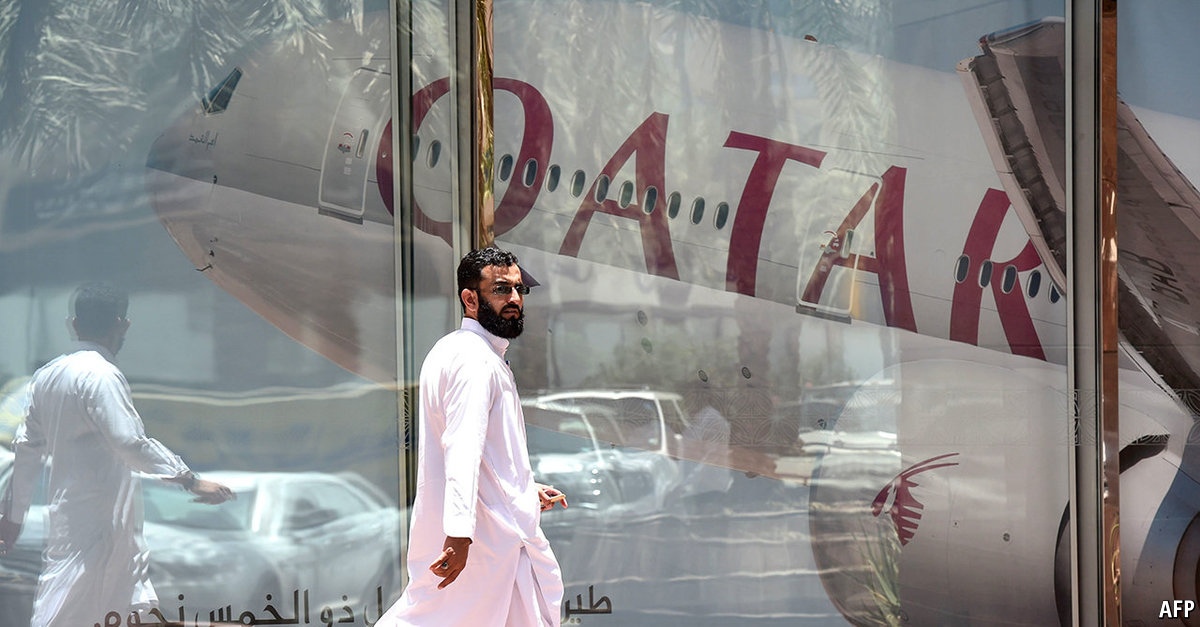
PEACE in the Middle East, Donald Trump announced last month, is “not as difficult as people have thought over the years”. History will have to judge the president’s geopolitical impact on the region, but when it comes to air travel his influence is already being felt. And many business travellers might find themselves flying on inferior airlines as a result.
Mr Trump recently took credit for efforts to isolate Qatar. Last week, Saudi Arabia and five other countries in the region cut diplomatic ties with the tiny nation, which wields disproportionate influence through its oil wealth and international aviation. As a result of the sanctions, much of the airspace surrounding Qatar was closed. That blow follows the Trump administration’s earlier actions to ban nationals of several majority-Muslim countries from entering the United States—an order that has been put on hold by the courts—and to prevent…Continue reading
Podcast: A poison chalice for GE’s new boss
Patrick Foulis asks if a break-up is on the cards as General Electric appoints a new CEO. Also, Uber is on a collision course as it grapples with management problems. Why confidence among European companies is sky high. And tension in global trade in aluminium. Hosted by Philip Coggan.
The globalisation counter-reaction

WHEN the Archduke Franz Ferdinand (pictured right) was assassinated in 1914, there were few initial indications that world war would follow. In retrospect, many people have argued that the killing was a freak event that should not have resulted in the folly of war.
But was the subsequent war really an exogenous event? Or was it the near-inevitable consequence of the tensions resulting from the first great era of globalisation? If Franz Ferdinand had survived, maybe something else would have triggered the conflict. If the latter possibility is right, that may be a warning sign for the current era.
From 1870 to 1914, the first great era of globalisation saw rapid economic growth, trade that grew faster than GDP, mass migration from Europe to the
Younger business travellers are more likely to extend trips for fun
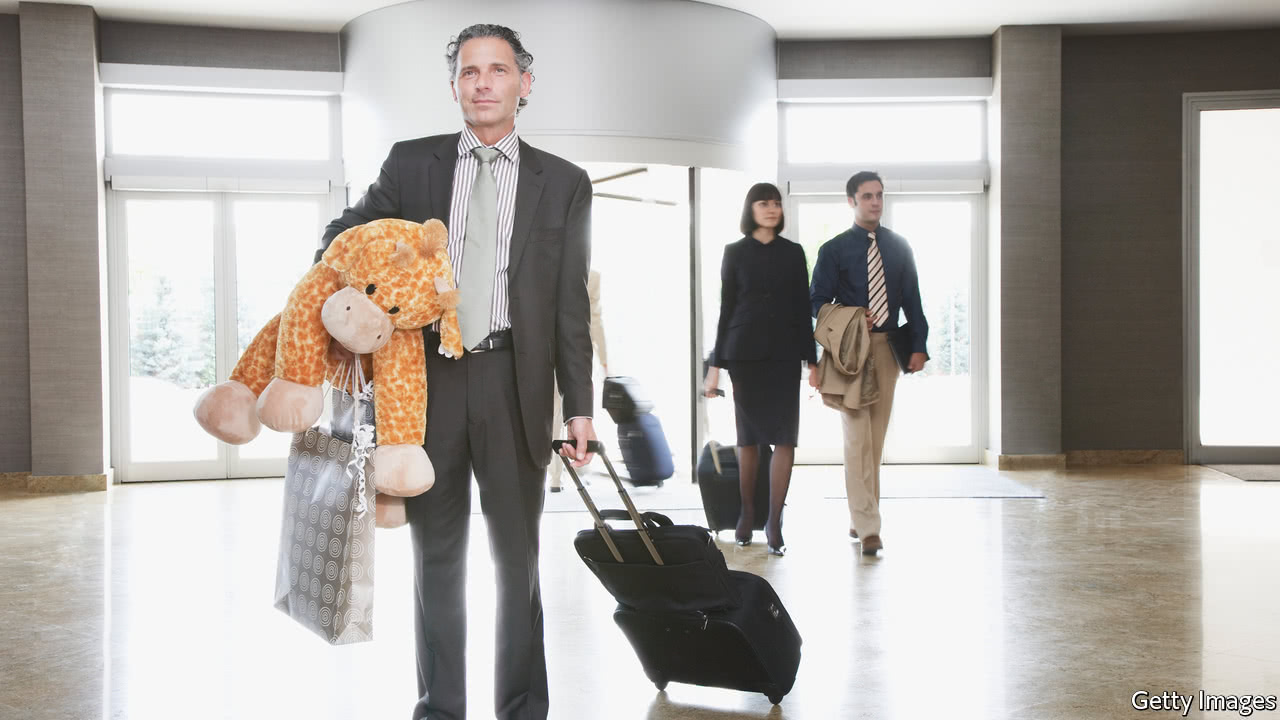
ACCENTURE, advertorial, jeggings. The competition for ugliest portmanteau is fierce. Few constructions, though, can match “bleisure” for barbarousness. For the uninitiated, the word is a blend of business and leisure. But ugly as it is, it exists for a reason: the practice of adding a few days of pleasure to a work trip is becoming increasingly popular.
The latest research to bear this out was released this week by the Global Business Travel Association. Its survey of North American business travellers found that 37% had extended a work trip to include some leisure within the past year. This, typically, might mean stetching a break in a city into the weekend, possibly shipping in the family to join the fun. Often, such travellers will stay in the same hotel for the duration, making up the extra cost themselves.
Interestingly, the older the travellers…Continue reading
General Electric picks a new boss

JEFF IMMELT looks like he was born to be a chief executive. Tall, affable and energetic, he was selected to run General Electric (GE) in 2001 after an interminable and mildly sadistic selection process run by GE’s then CEO Jack Welch, at the time America’s most celebrated boss. After 16 years at the top, on June 12th Mr Immelt said he would retire, to be replaced by John Flannery, who runs the firm’s health-care arm. The departing boss has reshaped GE radically but his legacy as the boss of the world’s most important industrial company is a mixed one.
Part of that reflects what he inherited. GE was not in nearly as good shape as Mr Welch liked to pretend. Its share price was significantly overvalued, pumped up by hype about Mr Welch’s talents, while its profits were inflated by gains from its pension scheme and its financial arm,…Continue reading
A new paper rekindles a tiresome debate on immigration and wages
WHAT effect do immigrants have on native wages? It’s perhaps one of the most important questions of labour economics. It’s also one that is largely unanswerable. The problem is that it’s almost impossible to separate cause and effect. If a country with high rates of immigration also sees strong wage growth, we can’t assume that immigrants are boosting wages—it may well be the case that the migrants are choosing to move to places with stronger economies.
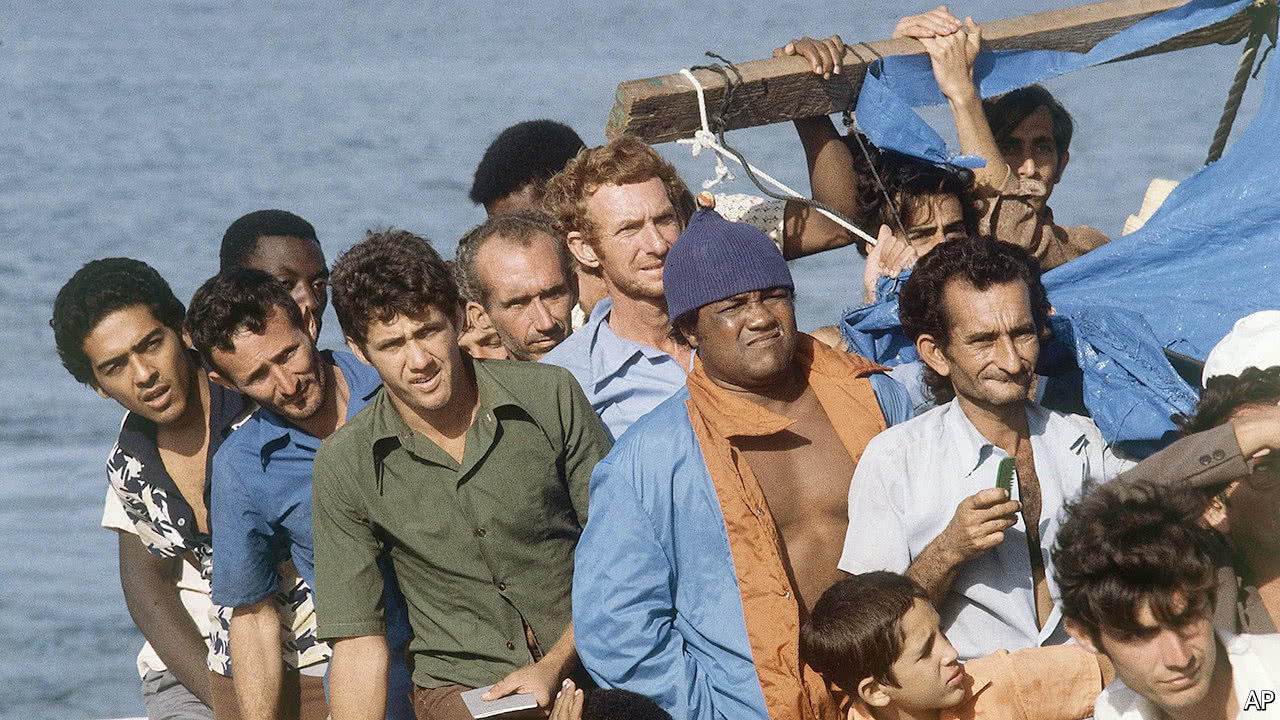
One approach to getting around this problem is to find a natural experiment in which either the supply of or demand for labour changes exogenously. Perhaps the most famous example of such an event in labour economics is the Mariel Boatlift. In 1980, Fidel Castro, then president of Cuba, eased emmigration restrictions. Some 125,000 Cubans moved to the United States that year. Almost instantaneously, the labour supply of Miami increased by 55,000.
The Mariel migrants were overwhelmingly low-skilled workers—less than half had high-school degrees. In 1990, David Card, now an…Continue reading
Britain’s political outlook seems toxic to investors

SUDDENLY Britain looks a lot less attractive as a home for international investors. The Conservative party under Theresa May gambled on a snap election to deliver a «mandate for Brexit». It unveiled a muddled manifesto that alienated voters and was out-campaigned by the veteran left-winger Jeremy Corbyn. The party lost its overall majority and will now be propped up by the very odd ducks in Ulster’s Democratic Unionist party.
The markets reacted less severely than might have been expected. That seems to be based on the view that a «soft Brexit» looks more likely. But it is far from clear that this is the case. David Davis, Britain’s Brexit minister, seems to be ploughing ahead with plans to leave the single market and the
Should animals be allowed to roam freely on jets?

FLYING can be a stressful and nerve-wracking experience. For those with mental-health issues it must be doubly so. One way in which vulnerable travellers deal with their anxiety on a plane is to take on board an “emotional support animal” (ESA). Such creatures provide succour for their owners. Unlike guide dogs, they “do not require any kind of specialised training,” according to CertaPet, an organisation that provides such services. “In fact,” reckons CertaPet, “very little training is required at all, provided that the animal in question is reasonably well behaved by normal standards.”
That sounds like an easy and effective way to help sufferers. It was distressing to read, therefore, of the emotional support dog that mauled a passenger on Delta flight from Atlanta to San Diego earlier this week. Reports suggest that the dog, a labrador-pointer cross-breed, was accompanying a military…Continue reading