
Tag: Business and finance
Markets struggle to make sense of the election chaos

THERESA MAY decided to call a snap election on a walking holiday in Wales. History will regard it as the most disastrous ramble since Captain Oates wandered out of the Antarctic tent in 1912. Having failed to anticipate the result, investors (like everybody else) are struggling to understand what will happen next.
It looks as if the Conservatives can carry on in power, with the support of the Democratic Unionists in Northern Ireland. This would give them a bare majority. But Mrs May’s position has been severely weakened ahead of Brexit negotiations. Another election later this year is possible.
For the markets, two factors are offsetting each other. On the one hand, there is uncertainty and the possibility that a left-wing Corbyn government could still take power in the near future. On the other hand, this result may change calculations about a hard Brexit. The Unionists backed Brexit but they will not want a hard border with the rest of Ireland; something that may require Britain to make concessions to the EU….Continue reading
Markets struggle to make sense of Britain’s election chaos
THERESA MAY decided to call a snap election on a walking holiday in Wales. History will regard it as the most disastrous ramble since Captain Oates wandered out of the Antarctic tent in 1912. Having failed to anticipate the result, investors (like everybody else) are struggling to understand what will happen next.
It looks as if the Conservatives can carry on in power, with the support of the Democratic Unionists in Northern Ireland. This would give them a bare majority. But Mrs May’s position has been severely weakened ahead of Brexit negotiations. Another election later this year is possible.
For the markets, two factors are offsetting each other. On the one hand, there is uncertainty and the possibility that a left-wing Corbyn government could still take power in the near future. On the other hand, this result may change calculations about a hard Brexit. The Unionists backed Brexit but they will not want a hard border with the rest of Ireland; something that may require Britain to make concessions to the EU….Continue reading
Britain’s vote catches out the markets—again

SO AN election that was called to give Theresa May a mandate to negotiate Brexit looks like it has done anything but. The exit poll suggested that the Conservatives would have the most seats, but short of a majority with 314. Add in the Ulster Unionists and allow for the fact that Sinn Fein MPs don’t take their seats and Parliament would be a virtual tie.
This would lead to enormous uncertainty. Just before the polls closed, the pound was trading at $1.2950, while the euro was worth £0.866. Within minutes of the exit poll, the pound had dropped nearly two cents to $1.2768, while the euro was up to £0.8791.
If this poll is borne out by the results (and it was pretty close to the mark in 2015), there will be turmoil in the markets in the morning. The FTSE 100 index closed on Thursday down 0.3% at 7,449.98. Ten-year gilt yields rose three basis points to 1.03%. That left share prices close to a record high, and gilt yields close to a record low. That leaves plenty of scope for disappointment.
On the plus side, this…Continue reading
Big business sees the promise of clean energy
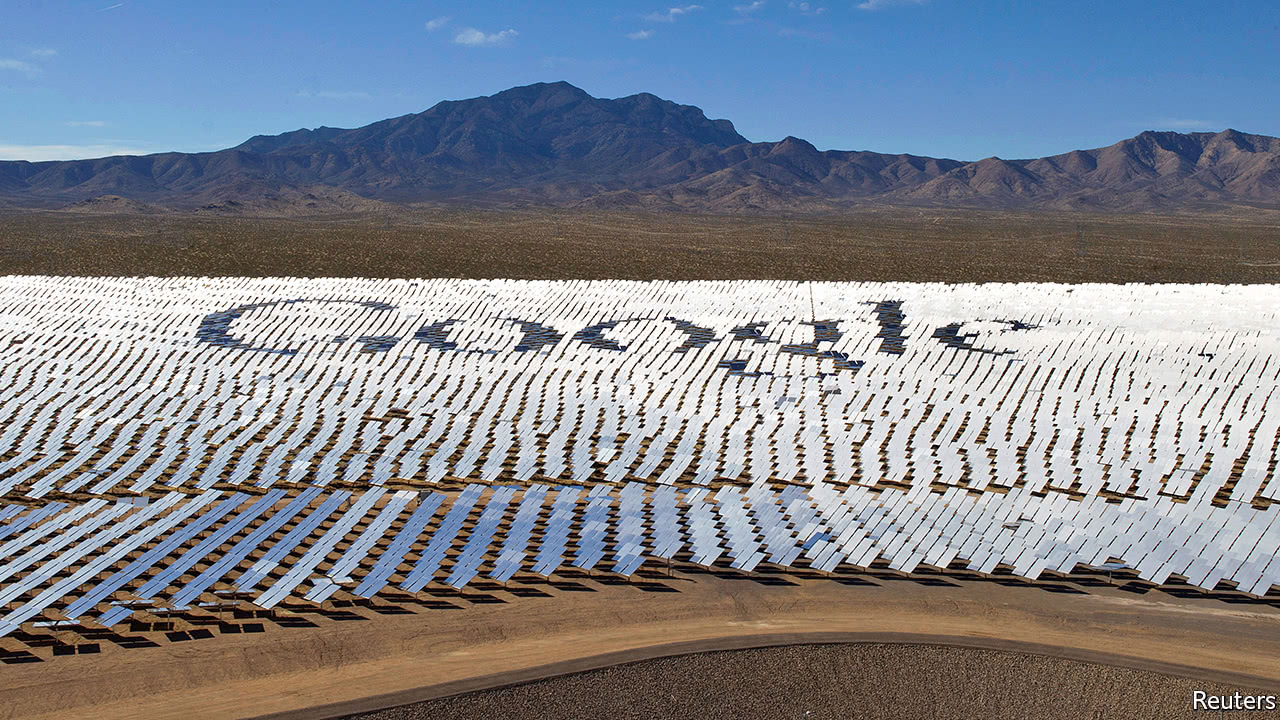
PITY America’s big businesses. For years their efforts to reduce their carbon footprint were dismissed by environmentalists as “greenwashing”. Now, after months trying to persuade a supposedly pro-business new president, Donald Trump, of the merits of staying in the Paris climate accord, he practically laughed in their faces by withdrawing on June 1st.
Executives fear the exit will do no good to America’s—and by implication their—reputation. Not for nothing have more than 900 American firms and investors, including Amazon, Twitter, Target and Nike, put their names this week to a “We are still in” open letter to the UN. Its signatories pledge to help reduce the country’s carbon emissions by 26% by 2025, in keeping with America’s Paris pledge. That may be quixotic but is a rallying cry nonetheless.
Indeed, some American firms are taking climate change so seriously that they are surprising even former critics. Alongside energy-efficiency measures, the…Continue reading
Banco Popular fails and is bought by Santander

EVEN a bank failure can be presented as a triumph. This week Banco Popular, a big Spanish lender, endured a run. Depositors were said to be withdrawing €2bn ($2.2bn) a day. The bank lost half its stockmarket value in four days, as a self-imposed deadline to find a saviour loomed. On June 6th, it was declared by the Single Resolution Board (SRB), an independent agency of the European Central Bank formed in 2015 and charged with winding down banks, to be “failing or likely to fail”. The next morning, Santander, Spain’s biggest bank, announced its purchase for the symbolic sum of €1 ($1.10). It is to raise €7bn in capital to help absorb Popular’s property-related losses.
Spain’s government, the European Commission and Santander all cheered the outcome as a model European response to a bank crisis. Shareholders and junior bondholders in Popular have been wiped out. Spanish ministers pointed out that taxpayers would not have to pay for a rescue of the sort arranged for Bankia, a giant savings bank nearing collapse, when…Continue reading
The battle for territory in digital cartography

IN THE 1940s Jorge Luis Borges, an Argentine writer, wrote a short story about mapping. It imagines an empire which surveys itself in such exhaustive detail that when unfolded, the perfectly complete 1:1 paper map covers the entire kingdom. Because it is unwieldy and thus largely useless, subsequent generations allow it to decay into tatters. Great scraps are left carpeting the deserts.
In their capacity for up-to-the-minute detail, modern maps surpass even Borges’s creation. By using networks of sensors, computing power and data-crunching expertise, digital cartographers can produce what are in effect real-time simulations of the physical world, on which both humans and machines can base decisions. These maps show where roadworks are blocking traffic or which street corners are the most polluted. Innovative products will make new demands of them. Drones need to know how to fly through cities; an augmented-reality game might need to know the exact position in London of Nelson’s…Continue reading
A state bail-out of Monte dei Paschi draws near

HELP is at hand for the world’s oldest bank. On June 1st the European Commission said it had agreed in principle to a bail-out by the Italian government of Monte dei Paschi di Siena, founded in 1472. For years Monte dei Paschi, Italy’s fourth-biggest bank by assets, has lurched from crisis to crisis. Last July it flunked a test by European supervisors of its capital strength. In December a private-sector restructuring scheme came to naught and the state decided to step in.
The details, including the size of the bail-out, have yet to be hammered out. In December the European Central Bank (ECB) estimated that Monte dei Paschi would need €8.8bn ($9.2bn) in capital to withstand the “adverse scenario” in last summer’s test. The Bank of Italy reckoned that the state’s share would be €6.6bn.
That included €2bn to compensate retail investors in the bank’s junior bonds, many of them ordinary customers….Continue reading
Bangladesh worries about falling remittances
IT IS a mystery. Last year Bangladesh’s army of migrant workers abroad increased by a record 750,000, to reach 8m-odd. They travel to earn money for their families. Yet the statistics suggest they are sending less money home. In the fiscal year that ends this month, recorded remittances will have fallen for the second consecutive year, this time by more than 10%, to $12bn (see chart). To explain the puzzle, look to the places they work, to technology and to the growing popularity of a fiddle used by Bangladeshi importers.
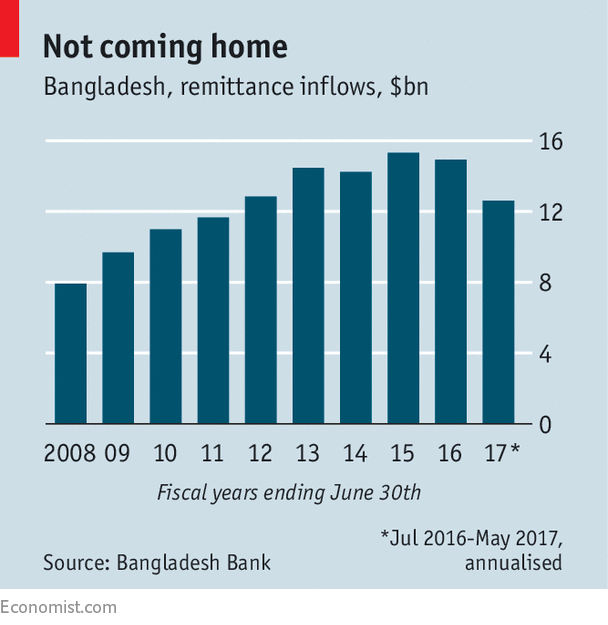
The abrupt cancellation last November by the Indian government of most banknotes by value was one factor: monthly inflows crashed, as the millions of Bangladeshis working in India were strapped for cash. In the Gulf, the source of 60% of Bangladesh’s remittances, the economy has been relatively sluggish.
But even without these shocks, remittances were falling—and fewer were being counted. Bangladesh is not unique in suffering such a downturn: for the first…Continue reading
America’s number two ride-hailing firm
ONE firm’s bad news is often another’s good fortune. For years Lyft, an app that offers on-demand rides, was outdone by its seemingly unstoppable rival, Uber, which zoomed into new markets and grabbed a near-$70bn valuation, the largest of any private American tech firm in history. Uber does not report a share price that would register its recent troubles, which include one investigation into alleged intellectual-property theft and another into its workplace culture. But that Lyft’s market share in America has risen from 18% five months ago to 25% now (according to TXN Solutions, a data provider) is a gauge of the larger firm’s crisis.
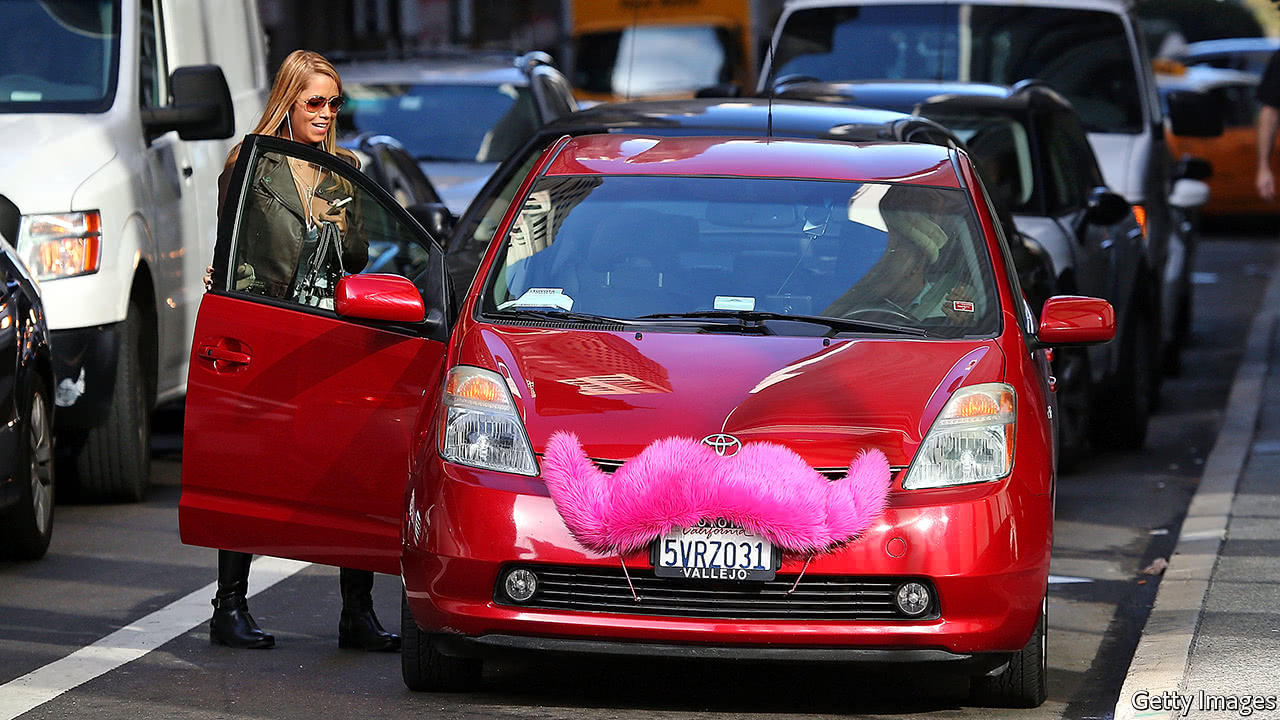
Lyft is far from a typical Silicon Valley company. Unlike Uber, it does not lust for world domination and it operates only in America. Nor does it take itself especially seriously. For years it identified its drivers by pink, fuzzy moustaches fastened to the front of cars, and encouraged riders to fist-bump their drivers and sit in the front seat…Continue reading
A wind pioneer is sceptical about batteries

ONE of Ignacio Galán’s early jobs as an engineer was to design lead-acid batteries for the milk floats that used to trundle around Britain’s streets. So the 66-year-old Spaniard, who heads Iberdrola, one of the world’s largest utilities, claims he has been thinking about the storage of electricity for his whole career. That is useful, because for the second time since he took over Iberdrola in 2001, the industry faces a fork in the road. This time round, the big debate in energy is about batteries and storage.
The first time, Mr Galán blazed the right trail. He made a prescient bet on renewable energy, turning Iberdrola into one of the world’s biggest providers of onshore wind while at the same time underpinning returns with relatively safe, regulated electricity networks in America (Avangrid) and Britain (ScottishPower). Some European peers, such as Germany’s E.ON and RWE, took the opposite approach, prioritising…Continue reading