
Tag: Business
The release of Samsung’s boss leaves South Koreans exasperated
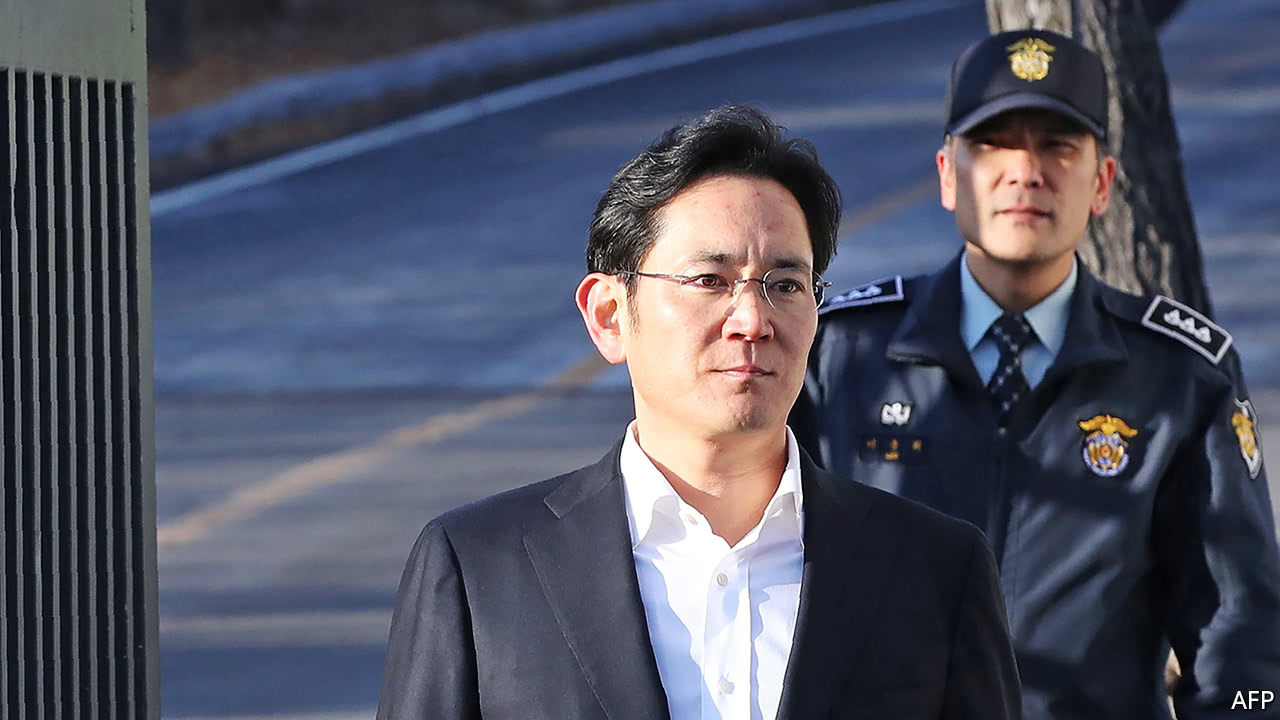
“INNOCENT if rich, guilty if poor” is a well-known adage in South Korea. It has been trending anew on social media since February 5th, when Lee Jae-yong, the vice-chairman of Samsung Electronics, was released from prison. The 49-year-old heir to South Korea’s biggest chaebol, or family-run conglomerate, had been found guilty of bribing a former president, Park Geun-hye, and her confidante, Choi Soon-sil. But Mr Lee’s initial five-year prison sentence was cut in half and suspended by an appeals court, allowing him to walk free after 353 days in jail. Other executives were also released on suspended sentences.
The ruling largely upheld Mr Lee’s insistence that he had been coerced by Ms Park into handing over the bribe. Prosecutors had charged him with paying 43bn won ($38m), which included buying horses for Ms Choi’s daughter and various donations to her sports foundations. In the end, only use of the horses was recognised as bribery, slashing the sum to 3.6bn won. Although Mr Lee…Continue reading
Sexual misconduct allegations against Steve Wynn hurt his empire
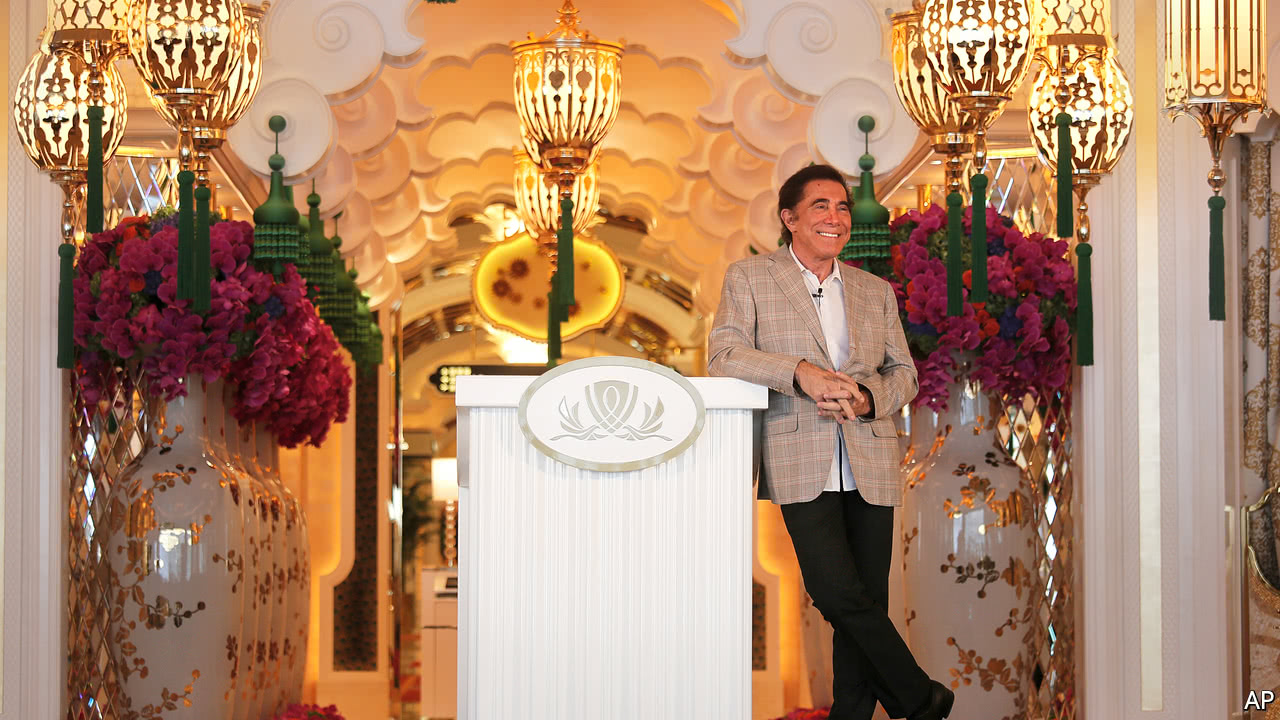
EVEN in a business where the house always wins, Steve Wynn is used to winning more than anyone else. The casinos that the billionaire has built, from The Mirage and Bellagio to Wynn Macau and Wynn Palace, helped transform Las Vegas and Macau from seedy gambling joints into luxury high-roller destinations. His fiercest rivals heaped praise on him as a visionary and perfectionist. His company, Wynn Resorts, enjoyed a “Wynn premium” from analysts and investors.
Now he could lose control of his empire. On January 26th the Wall Street Journal published an investigation detailing numerous allegations that would amount to a decades-long pattern of sexual misconduct by Mr Wynn. The board of Wynn Resorts has announced an inquiry by a special committee into the reports, the veracity of which Mr Wynn denies.
He has resigned as finance chairman of the Republican National Committee. Gaming commissioners in Nevada, Macau and…Continue reading
A new sort of health app can do the job of drugs
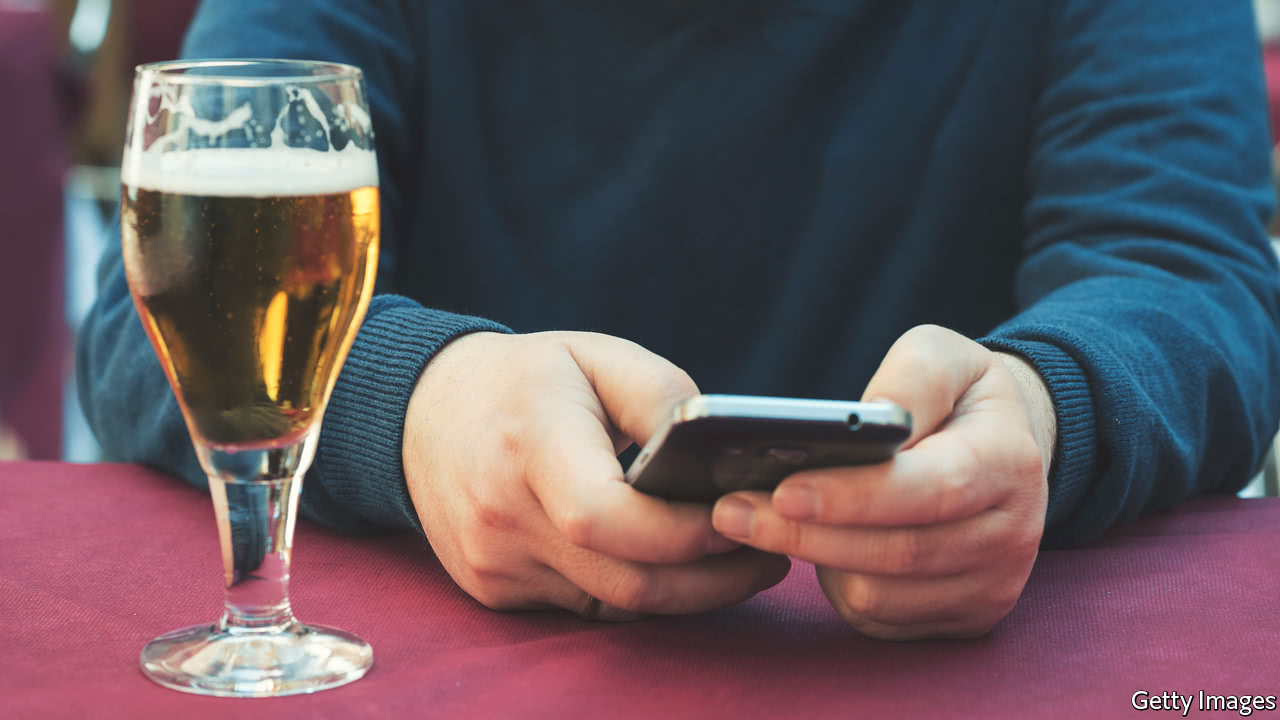
LUANN STOTTLEMYER has had diabetes for 23 years, but it was only in 2016 that her doctor prescribed a treatment that changed her life. It has allowed her to bring her blood-sugar levels under control and lose weight. Yet this miracle of modern science is not a new pill. It is a smartphone app called BlueStar.
The program is one of a growing number of apps that America’s Food and Drug Administration (FDA) has approved to treat everything from diabetes to substance abuse. The FDA has encouraged firms to join a scheme that aims to streamline the regulatory process for such treatments. There are many candidates: at least 150 firms globally are developing some form of “digital therapeutic” (“digiceutical” in the lingo), says Mark Sluijs, who advises Merck, a big American drugmaker.
Unlike other sorts of digital health apps, digiceuticals have been tested for efficacy, approved by regulatory agencies such as the FDA and are prescribed by a doctor. Most gather data, either by asking patients for information or by using sensors,…Continue reading
What a takeover of Dr Pepper says about a secretive family’s plans
EUROPE is home to some extraordinary wealth creators who often try to hide their success. Ingvar Kamprad, a Swedish farmer’s son, constructed IKEA, a seller of flat-pack furniture that became a global giant with annual revenues of €38bn ($47bn). He died at the age of 91 on January 27th, after a famously frugal life. Amancio Ortega, the Spanish son of a railway worker, founded Inditex, a fast-fashion giant, and shuns any media attention. Then there is the reclusive Reimann family of Germany, members of which reportedly take a vow at the age of 18 not to talk publicly about their business, JAB Holding, a Luxembourg-based investment group.
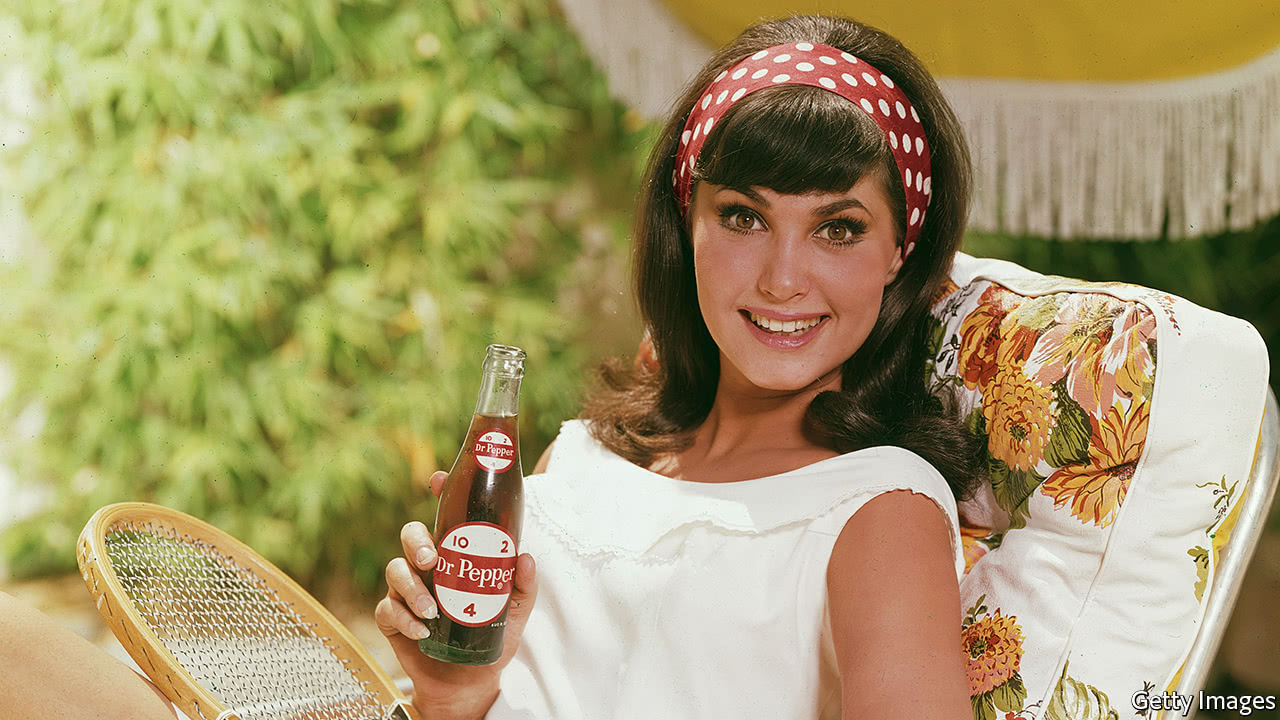
Yet JAB’s habit of gulping down big, famous firms at a frenetic pace is making it hard for it to stay in the shadows. On January 29th it said it will pay $18.7bn in cash (plus some shares) to buy Dr Pepper Snapple, the world’s fifth-biggest maker of soft drinks, which has roots dating back to 1885. It will be combined with Keurig Green Mountain, an American…Continue reading
Apple and Amazon’s moves in health signal a coming transformation

THE past decade has seen the smartphone become a portal for managing daily life. Consumers use their pocket computers to bank, buy and befriend. Now this array of activities is expanding into an even more vital sphere. Apple has spent three years preparing its devices and software to process medical data, offering products to researchers and clinical-care teams. On January 24th it announced the result. The next big software update for its iPhone will include a feature, Health Records, to allow users to view, manage and share their medical records. Embedded in Apple’s Health app, the new feature will bring together medical data from participating hospitals and clinics, as well as from the iPhone itself, giving millions of Americans direct digital control of their own health information for the first time.
Apple’s fellow tech giants are also on the march into medical services. On January 30th Amazon announced a partnership with Berkshire Hathaway and JPMorgan Chase to create a not-for-profit…Continue reading
Pakistan’s biggest private-sector firm bets on a fabled coal mine

PAKISTAN’s enormous mineral wealth has long lain untapped. Since a 1992 geological survey spotted one of the world’s largest coal reserves in Thar, a scrubby desert in the southern province of Sindh, prospectors have hardly dug up a lump. Among those to flounder is a national hero. Samar Mubarakmand, feted for his role in Pakistan’s nuclear-weapons programme, has just shut the coal-gasification company he founded in 2010, when he vowed on live television to crack Thar.
Environmentalists, many from abroad, argue the reserve’s 175bn-ton bounty should remain underground. They point out the coal is lignite—dirty, poor-quality stuff that, in adding to carbon emissions, increases the risk of climate change for Pakistan. Other critics note that by locking itself into coal, Pakistan may miss out on the plummeting price of solar energy.
To such qualms, the government offers three rejoinders. First, severe power shortages have long…Continue reading
Telegram’s initial coin offering is hot but controversial
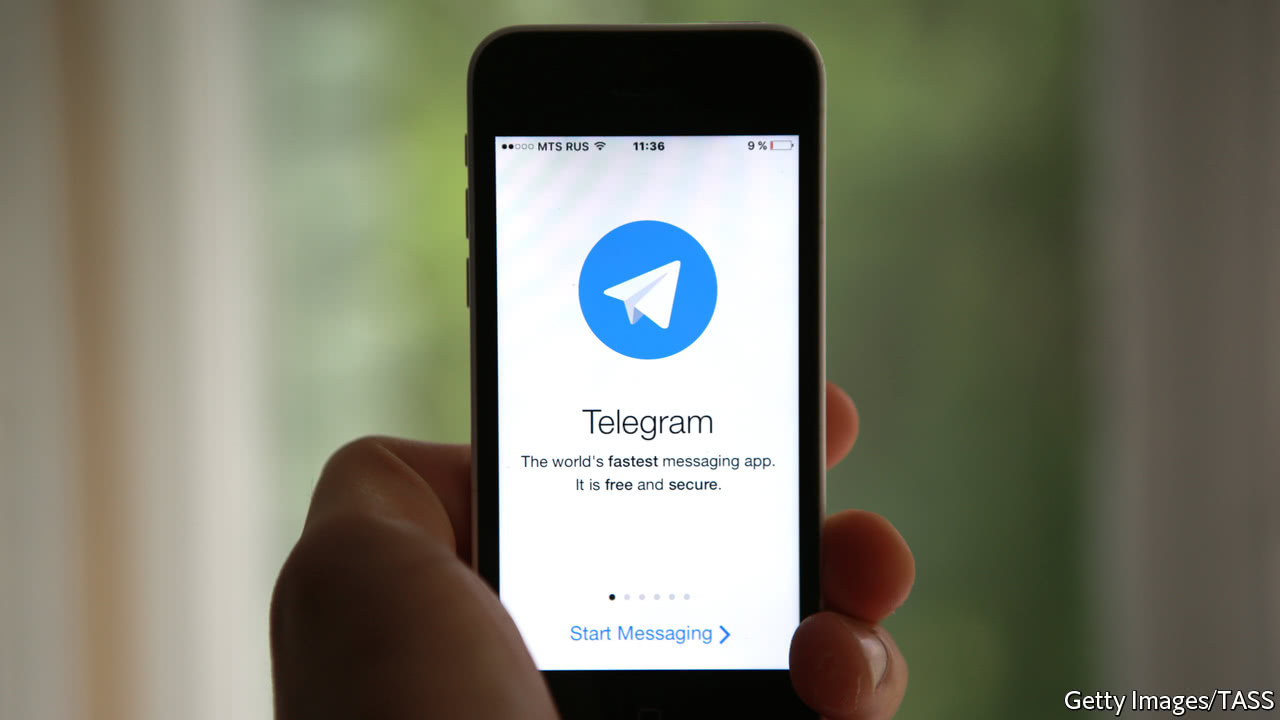
IN A few years, millions of people will use a messaging app to make instant payments to friends across the globe or in a digital marketplace. But instead of state-backed money, they will use a cryptocurrency, the Gram, denoted by a gemstone emoji. They will be able to pay to store data—and perhaps to view content—securely and away from governments’ prying eyes. All of this will take place on a single platform, TON, or “The Open Network”, built by Telegram.
This is the vision that Telegram’s founders, the brothers Pavel and Nikolai Durov, are flogging to investors ahead of their initial coin offering (ICO). A “presale” round to institutional investors is under way, with a wider sale of Grams to retail investors expected in a few weeks. Reports suggest the offering could raise as much as $1.2bn, making it by far the largest ICO.
Compared with other firms selling tokens on the back of vague promises, Telegram has lots going for it. Its encrypted messenger app, particularly popular with the global crypto crowd, is…Continue reading
Telegram’s initial coin offering is sought-after but controversial
IN A few years, millions of people will use a messaging app to make instant payments to friends across the globe or in a digital marketplace. But instead of state-backed money, they will use a cryptocurrency, the Gram, denoted by a gemstone emoji. They will be able to pay to store data—and perhaps to view content—securely and away from governments’ prying eyes. All of this will take place on a single platform, TON, or “The Open Network”, built by Telegram.
This is the vision that Telegram’s founders, the brothers Pavel and Nikolai Durov, are flogging to investors ahead of their initial coin offering (ICO). A “presale” round to institutional investors is under way, with a wider sale of Grams to retail investors expected in a few weeks. Reports suggest the offering could raise as much as $1.2bn, making it by far the largest ICO.
Compared with other firms selling tokens on the back of vague promises, Telegram has lots going for it. Its encrypted messenger app, particularly popular with the global crypto crowd, is…Continue reading
Collaborations are becoming more common in popular music
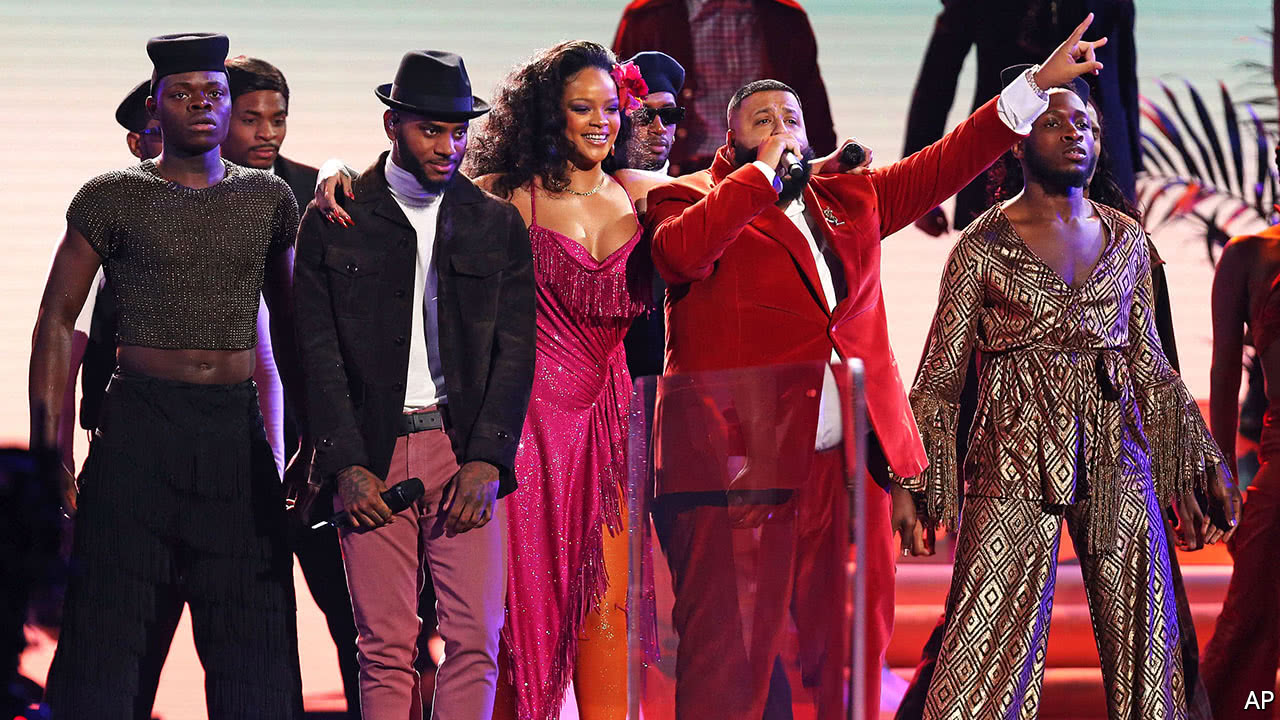
FEW who have given an address at Harvard Business School have a CV like that of Khaled Mohamed Khaled, who spoke there in 2016. The 42-year-old music producer began his career as a record-store clerk and radio host. Today DJ Khaled, as he is known to fans, is one of the world’s most successful hip-hop artists. Although critics may disagree on the merits of Mr Khaled’s music, his selling strategy—bringing together the hottest pop stars of the moment—is worthy of any business-school classroom. America’s music industry is increasingly following his formula.
Collaborations like those assembled by Mr Khaled are nothing new. Ever since the hip-hop group Run-DMC teamed up with Aerosmith, a rock band, to record “Walk This Way” in 1986, record labels have recognised that combining the fan bases of multiple artists can be a boon to record sales. The practice has spread. According to data from the Billboard…Continue reading
In popular music, collaborations rock
FEW who have given an address at Harvard Business School have a CV like that of Khaled Mohamed Khaled, who spoke there in 2016. The 42-year-old music producer began his career as a record-store clerk and radio host. Today DJ Khaled, as he is known to fans, is one of the world’s most successful hip-hop artists. Although critics may disagree on the merits of Mr Khaled’s music, his selling strategy—bringing together the hottest pop stars of the moment—is worthy of any business-school classroom. America’s music industry is increasingly following his formula.
Collaborations like those assembled by Mr Khaled are nothing new. Ever since the hip-hop group Run-DMC teamed up with Aerosmith, a rock band, to record “Walk This Way” in 1986, record labels have recognised that combining the fan bases of multiple artists can be a boon to record sales. The practice has spread. According to data from the Billboard…Continue reading