
Tag: Business
Opportunities are opening for electrified commercial vehicles

ELECTRIC commercial vehicles were once a common sight in Britain’s towns and cities. A fleet of 25,000 battery-powered milk floats roved the early-morning streets delivering a crucial part of the nation’s breakfast. Short ranges and low top speed were unimportant for a milk round but near-silent running meant customers could sleep. Their demise came as supermarkets expanded, but electrification of business vehicles is gathering pace anew.
Just as better battery technology is bringing down the cost and boosting the range of passenger electric vehicles (EVs), those advances are making electrification of commercial vehicles more appealing. The purchase price is still far higher than a comparable vehicle with an internal combustion engine (ICE). But businesses are more focused than ordinary motorists on the total costs of ownership, and on other reasons to shift to electric power.
Much attention has been paid to…Continue reading
The best—and worst—places to be a working woman
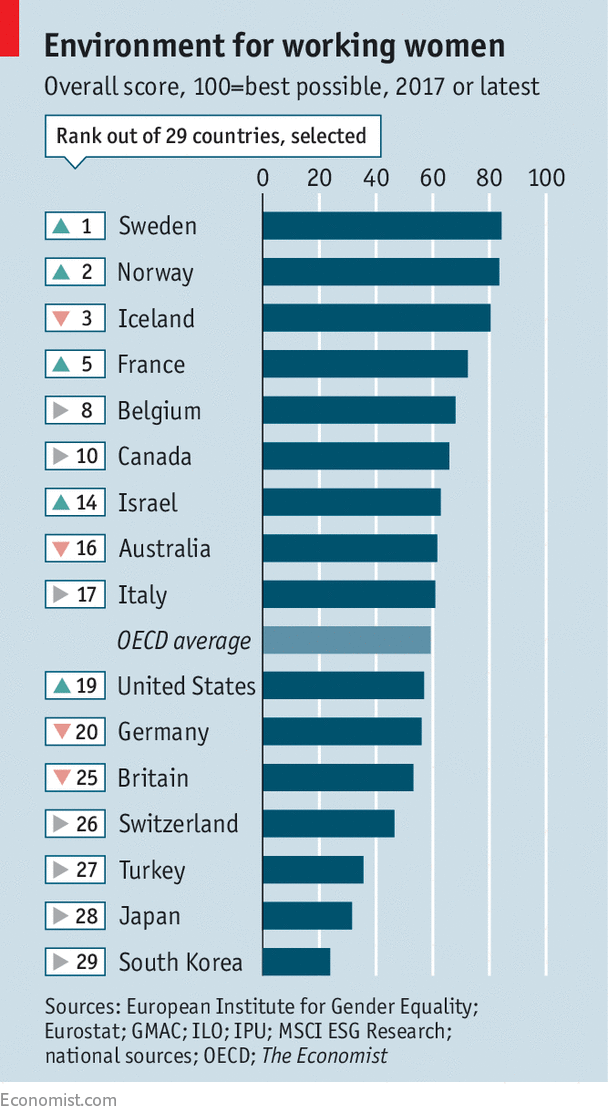
“PRESS for progress” is the theme of this year’s International Women’s Day on March 8th. As our sixth glass-ceiling index shows, disparity between countries remains wide. But women have made some progress towards equality in the workplace in the past year.
The index ranks the best and worst countries to be a working woman. Each score is based on average performance in ten indicators: educational attainment, labour-market attachment, pay, child-care costs, maternity and paternity rights, business-school applications and representation in senior jobs (in managerial positions, on company boards and in parliament).
Equality-conscious Nordics typically do well while workplace parity for women in Japan, South Korea and Turkey still lags badly. America under President Donald Trump rose from 20th to 19th place thanks in part to a higher female labour-force participation rate. This year Sweden ranks first, scoring well in female labour-force participation, which is over 80%, and the share of…Continue reading
Google embraces ad-blocking via Chrome

FROM quantum computing and smartphones to self-driving cars, home thermostats and delivering the internet by balloon, Google or, technically, Alphabet, the holding company that the firm established in 2015, has its fingers in many pies. But the company’s main business, which pays for all of its dabblings elsewhere, is digital advertising, which in 2017 accounted for more than 86% of its $111bn revenue. It may seem odd, then, that Google’s latest move is to aid ad-blocking. On February 15th Chrome, its web browser, which has a 59% market share, switched on code to block certain online advertisements. 9
In doing so it joins an established trend. By last year around 27% of American internet users had installed ad-blockers, according to eMarketer, a research firm (see chart). Third-party ad-blocking software is available already for Chrome but only for its desktop version. As well as being built in and thus on by default, the new blocker will work on smartphones.
Web publishers will not…Continue reading
Going out need no longer be a headache for teetotallers
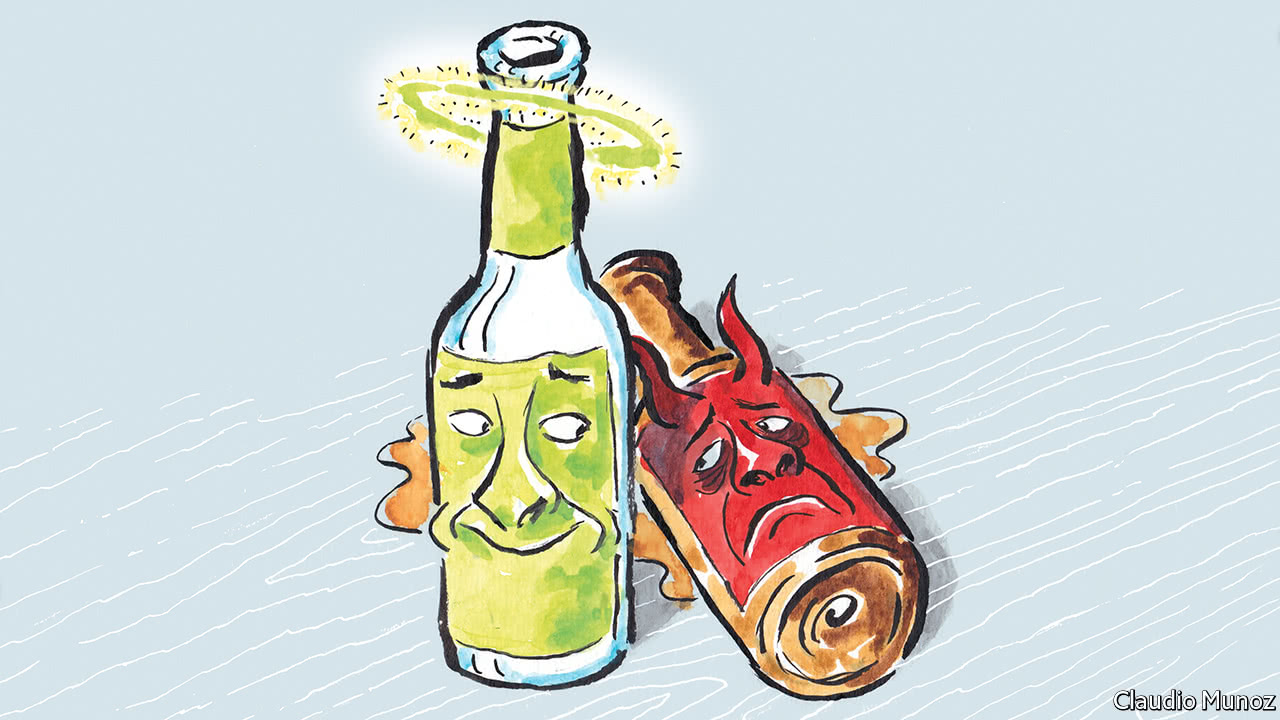
BARS and pubs have not usually been the non-drinker’s friend. Knocking back pint after pint of juice or fizzy drink quickly gets boring. But beverage manufacturers are now showing more sympathy for their plight. Many companies regard non-alcoholic drinks as the “biggest opportunity in the market”, says Frank Lampen, who runs Distill Ventures, which helps small producers with investment and advice, and is backed by Diageo, a British drinks giant.
One of the fund’s recent investments, for example, is in Seedlip, a British firm that makes distilled, non-alcoholic “spirits” flavoured with botanicals, and which last year launched in America. Low-alcohol beer, once maligned for its paucity of flavour, is also in fashion. Technological advances mean alcohol can be filtered out of the beer without ruining its taste; other breweries use “lazy” yeast, which produces less alcohol to start with. Over the past couple of years, non-alcoholic craft breweries, such as Nirvana Brewery in London, or…Continue reading
The next generation of wireless technology is ready for take-off
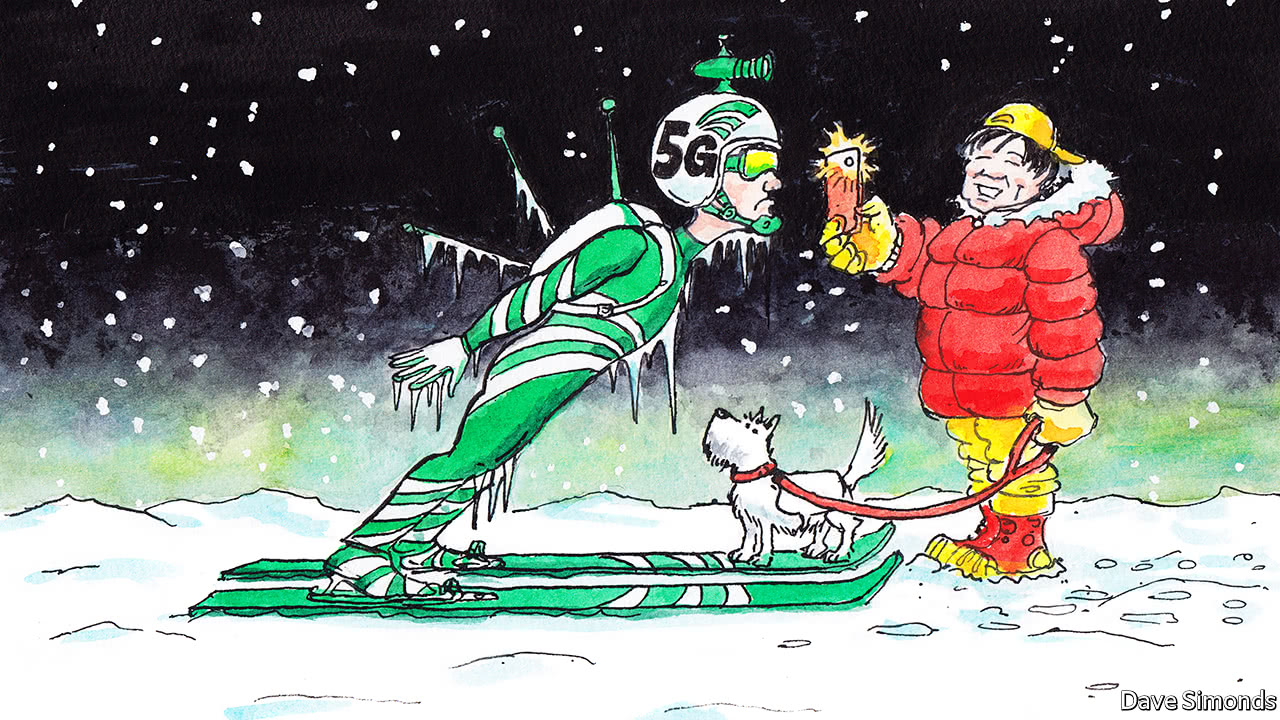
NORTH KOREAN athletes will not be the only unusual participants at the winter Olympics in Pyeongchang in South Korea, which begin on February 9th. Anyone can take part, at least virtually. Many contestants will be watched by 360-degree video cameras, able to stream footage via a wireless network. At certain venues around the country sports fans will be able to don virtual-reality, head-mounted displays to get right into the action. Flying alongside a ski jumper, for instance, will offer an adrenalin rush without any risk of a hard landing.
These virtual experiences will be offered by KT, South Korea’s largest telecoms firm. They are meant to showcase the latest generation of wireless technology, known as “5G”. But just as ski jumpers never know exactly how far they will leap after leaving the ramp, it is unclear where 5G will land.
On paper, the new technology should go far. The International Telecommunication Union (ITU), a UN body which helps develop technical standards, has…Continue reading
Mining firms are dismayed by a new Congolese mining law

ROBERT Friedland, the boss of Ivanhoe Mines, a large Canadian firm that digs out copper and zinc in Africa, is not one for pessimism. In his speech to an annual mining industry jamboree, Mining Indaba, in Cape Town, his promises about the potential of the business were as copious as the ore bodies his firm mines. But amid the hyperbole about electric cars, Chinese consumers and the “most disruptive copper discovery in the world” there was a note of panic. Money, he warned, is “a coward”, and may be about to flee.
The cause of fear is a new mining code that was passed by parliament in the Democratic Republic of Congo on January 24th. Congo is Africa’s biggest copper producer; its reserves, mostly in the southern copper belt, are among the world’s richest. As important, it has emerged recently as the world’s leading producer of cobalt, a by-product of copper smelting that is used in batteries for electric cars. It also produces gold, zinc, tin and diamonds.
The new law, which has yet to be signed by Joseph Kabila, the…Continue reading
What Natarajan Chandrasekaran must do next at Tata

FACED with complexity humans often resort to a heuristic, a rough mental template that gets the job done. That could come in handy at Tata Group, India’s largest business, whose dizzying mix of scale, palace politics and sense of moral purpose defy any categorisation. Tata’s boss, Natarajan Chandrasekaran, known as Chandra, has been in the job for a year. He spent 2017 pepping up morale and extinguishing fires. Now he must squeeze Tata into a new strategic framework that clarifies its structure and purpose.
Is it a 150-year-old national monument, a philanthropic vehicle or a conglomerate? In Schumpeter’s view Tata should instead be positioned as a holding company—like Berkshire Hathaway but minus the personality cult and with Indian characteristics.
Tata is a handful. It has 695,000 staff and is active in 17 industries. Its family of firms has a market value of $155bn. It mixes virtue with profits; Tata’s leaders are expected to exude decency and probity. The group was an…Continue reading
How a brothel owner created the world’s biggest industrial park

PAST the neon lights of Reno and the cookie-cutter homes of neighbouring Sparks, the I-80 highway winds through a thinly populated expanse of arid hills and lunar valleys in Storey County. On one side of the road flows the Truckee River; on the other bands of wild horses forage for parched grass. Signs of civilisation are restricted to electricity pylons and the odd rundown farmhouse. The Wild Horse Saloon, a dark and smoky room connected to a legal brothel, is the only sit-down restaurant for miles. It is not an area that immediately seems conducive to hosting a business park. Yet Storey County in Nevada is home to the world’s largest by some measures: the Reno Tahoe Industrial Centre (TRI). The park spans 104,000 acres in total—three times the size of San Francisco.
Near its eastern border hulks Tesla’s “gigafactory”, a gargantuan white structure where the company hopes to produce batteries for 500,000 electric cars a year….Continue reading
Airbus executives get swept away by a corruption investigation
“THE success of Airbus is intimately linked to the success of John,” says Eric Schulz, successor to John Leahy, who has been chief salesman for the planemaker since 1994. Mr Leahy’s aggressive strategy to gain orders expanded Airbus’s market share for civil jets from 18% in 1994 to over 50%. Salesmen at Boeing, Airbus’s rival, say they wish their bosses were as good. But this year’s Singapore Airshow, which began on February 6th, will be Mr Leahy’s last before retirement.
That is in itself a big change for Airbus, but staff turnover does not stop there. In December the firm said Tom Enders, its German-born chief executive, would step down in 2019; his French second-in-command, Fabrice Brégier, will leave this month. These changes follow the news that several countries, including Britain, France and America, are investigating allegations that in the past Airbus bribed officials to win contracts. That created divisions between French and German executives over how to respond.
The recent troubles began in 2014, when an internal review of supplier payments at Airbus exposed irregularities. It ended up reporting itself to Britain’s Serious Fraud Office and to France’s equivalent body for lying to export-credit agencies about bribes given by third-party consultants to secure sales. In October Airbus said it may have violated…Continue reading
Creditors call time on China’s HNA
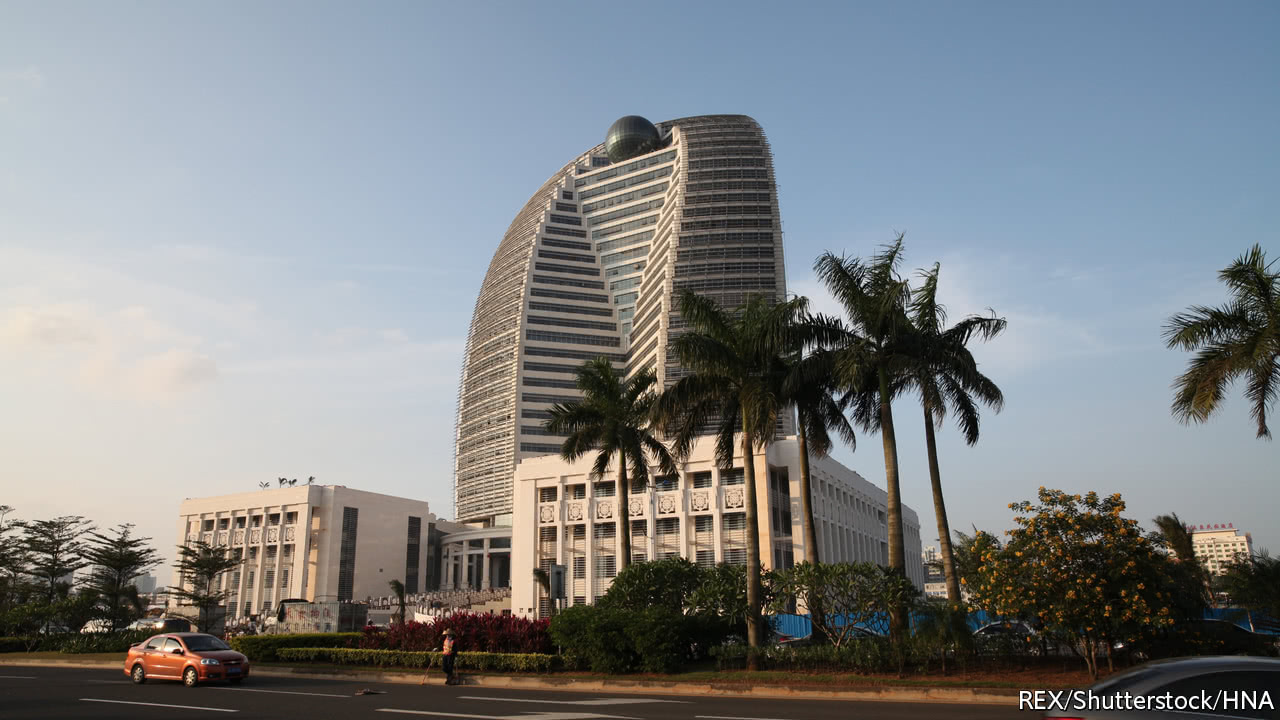
THE ascent of HNA, an aviation-to-financing giant, began on six wings and a prayer. It started out as Hainan Airlines, set up on China’s southern palm-fringed island in 1993 with three planes, in a joint venture between a Buddhist businessman, Chen Feng, and the local government of Hainan. In 2000 the firm became HNA Group and, from a Buddha-shaped headquarters, Mr Chen built his enterprise into an empire with more than $150bn in assets. Foreign trophies came next. The firm borrowed heavily to finance deals worth $50bn since 2015 over six continents, including a 25% stake in the Hilton hotel group and 9.92% of Deutsche Bank.
In recent weeks it has become clear that its gorging—which had continued apace even after HNA was among those firms singled out for scrutiny by China’s banking regulator last June for their risky debt-fuelled purchases—is over. In January HNA told creditors that it would face a probable cash shortfall of at least 15bn yuan ($2.4bn) in the first quarter of this year.
HNA has assured investors that this…Continue reading