
Tag: Business
As gyms hit peak season, the market does the splits
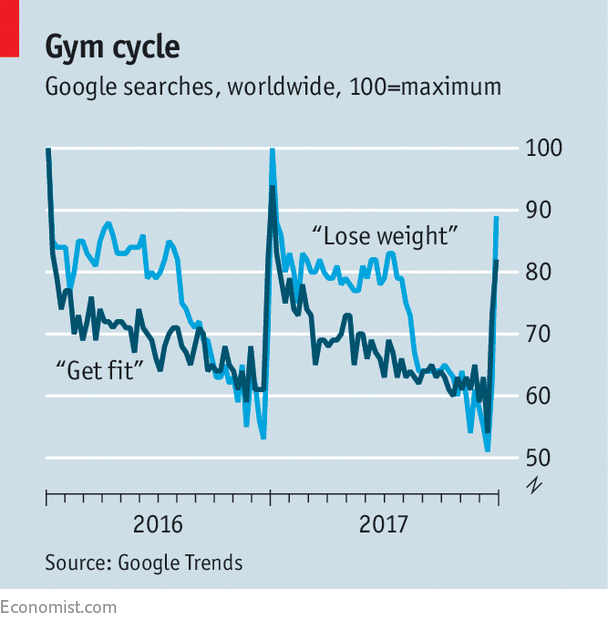
EVERY year, like clockwork, swathes of humanity go through the same routine. On December 26th and January 1st, as the fog of cheese, chocolate oranges and champagne lifts, remorse creeps in. Online searches for “get fit” and “lose weight” surge (see chart). Health clubs of all shapes and sizes stand ready to respond. “Intent typically takes seven to 14 days to turn into reality,” notes Humphrey Cobbold, chief executive of Pure Gym, Britain’s largest gym chain. So this week will be one of the busiest for the gym industry globally.
There will be other ripple effects, too. According to recent data from Cardlytics, which monitors spending in Britain, people spend 18% more in sports shops the week before joining a gym (compared with the week prior), and 16% more in speciality health shops. Spending on fashion items also increases around the time of joining a gym.
Many gym recruits will wear their new togs for an ordeal known as high-intensity interval training. In the basement of…Continue reading
BlackRock v Blackstone

THE two most successful entrepreneurs on Wall Street of the past two decades work on opposite sides of Park Avenue. Larry Fink, 65, is a Democrat whose hand is glued to a Starbucks cup and who runs BlackRock from 52nd Street. Stephen Schwarzman, 70, is a Republican who wears striped shirts with plain collars and runs Blackstone from between 51st and 52nd. The two are ex-colleagues, but have sharply opposing views on investment and management. Their trajectories illustrate how finance is changing. Mr Fink, once the underdog, is on top.
His firm, BlackRock, is the world’s largest asset manager, with $6trn of assets. It stands for computing power, low fees and scale, and is booming. Mr Schwarzman’s firm, Blackstone, is the largest “alternative” manager, focused on private equity and property, with $387bn of assets. It stands for a time-honoured formula of brain power, high fees and specialisation. Lately, it has trod water.
When Mr Fink was a securities trader in his 30s he joined…Continue reading
China’s Ant Financial is obliged to abandon an American acquisition

“THE geopolitical environment has changed considerably since…a year ago.” That was the explanation given this week by Alex Holmes, chief executive of MoneyGram International, a Dallas-based American money-transfer firm, for Ant Financial abandoning its $1.2bn deal to buy his firm. Ant, the online-payments affiliate of Alibaba Group, a Chinese e-commerce giant, had outbid Euronet, an American rival, in 2017 and secured the approval of MoneyGram’s board for the acquisition. In normal times, Ant would have secured the prize.
But it is up against a rising tide of anti-China sentiment in Washington, DC. Donald Trump has often argued that China does not play fair in global commerce. The sense that China and its companies are not to be trusted is spreading on Capitol Hill, too. Ant’s bid was blocked by the Committee on Foreign Investment in the United States (CFIUS), a government body reporting to the Treasury. It reviews such deals for…Continue reading
Masterful salesmanship has pushed Salesforce to ever-greater heights

VISIBLE from nearly every corner of San Francisco and from up to 30 miles away, the new skyscraper that will be the headquarters of Salesforce, a software giant, stands 1,100 feet (326 metres) tall, making it the highest building in America west of Chicago. On January 8th, after four years of building, workers will start moving in.
Those who know Salesforce’s founder, Marc Benioff, find his firm’s new digs fitting. As creator of a firm that caters to salespeople, he is himself a fiercely ambitious salesman. In its 2018 fiscal year, which ends on January 31st, Salesforce is expected to reach $10bn in annual revenue for the first time. It plans to more than double that figure over the next four years. Even that is not enough. In 20 years Mr Benioff’s “dream” is $100bn of revenue, he muses.
Can his towering expectations be met? Founded in 1999, Salesforce claims a combination of longevity and size that few tech companies…Continue reading
South Korea’s antitrust tsar has a good shot at taming the chaebol
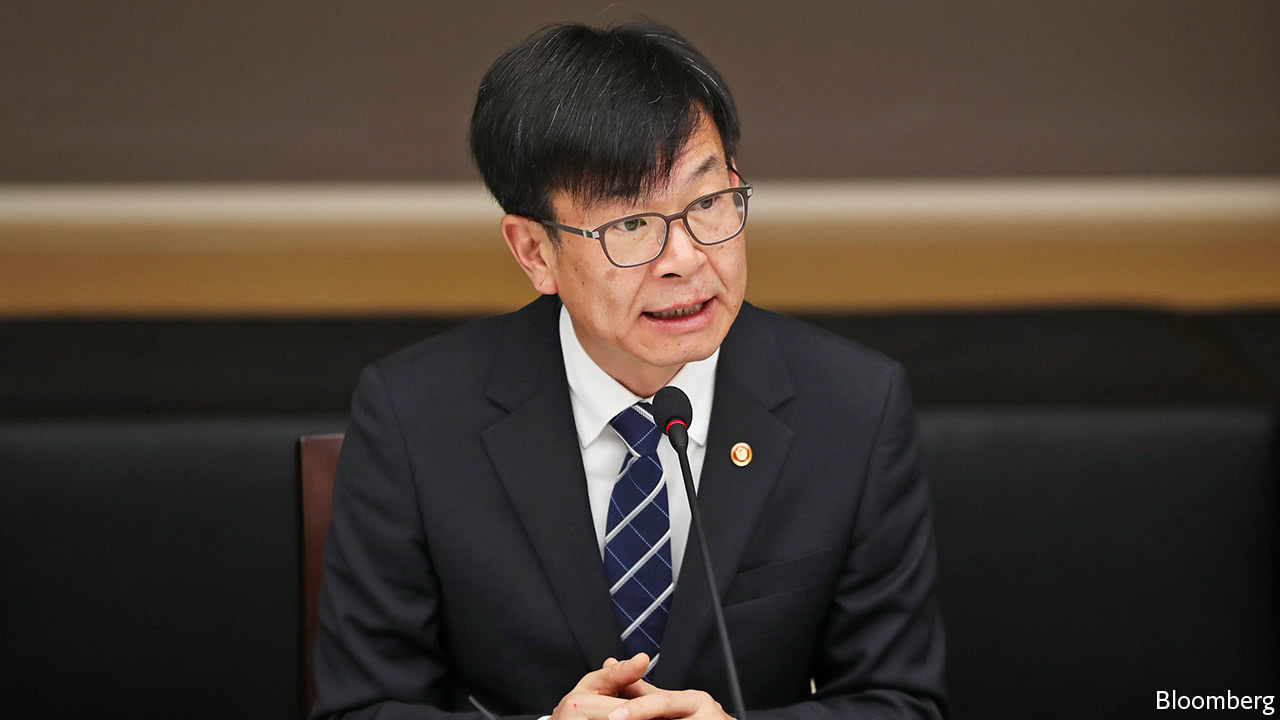
AS KIM SANG-JO was preparing last May to make the switch from snappy shareholder activist to a regulatory role as South Korea’s fair-trade commissioner, he had a simple message for the country’s big conglomerates: “Please do not break the law.” Not one to make bosses quake in their brogues, exactly. And yet the chaebol, as the country’s family-controlled empires are known, are responding to his call for reform. Addressing complaints about governance, a few have brought far-flung businesses into a simpler holding-company structure. Others have set up funds to provide support to suppliers, which have long accused the giants of treating them badly. Another group is paying out record dividends to once-disregarded shareholders.
Mr Kim was preaching, if not yet to the converted, then to the disconcerted. The chaebol have had a bruising couple of years. Nine of South Korea’s most powerful bosses, some rarely seen in public, were grilled on…Continue reading
Canada frets about anonymously owned firms

WHEN reports surfaced in 2016 of foreign students with no known income buying homes worth millions of dollars in Vancouver, locals said it was yet more evidence that foreigners were inflating prices in Canada’s dearest property market. It was also evidence of a home-grown problem. The students turned out to be figureheads for anonymous firms whose ultimate owners cannot be identified because the information is not legally required by the land registry. Canadian authorities are concerned about the abuses caused by such opacity. The property market may well be attracting foreign criminals and corrupt officials seeking to launder dirty money, notes David Eby, the attorney-general of British Columbia.
Other countries have taken steps to make sure that anonymous ownership of firms does not help criminals. In 2014 G20 leaders agreed to make the ultimate ownership of legal entities more transparent. Britain, for example, set up a searchable, public database of beneficial or ultimate owners of all firms,…Continue reading
2018 will be the year that large, incumbent companies take on big tech
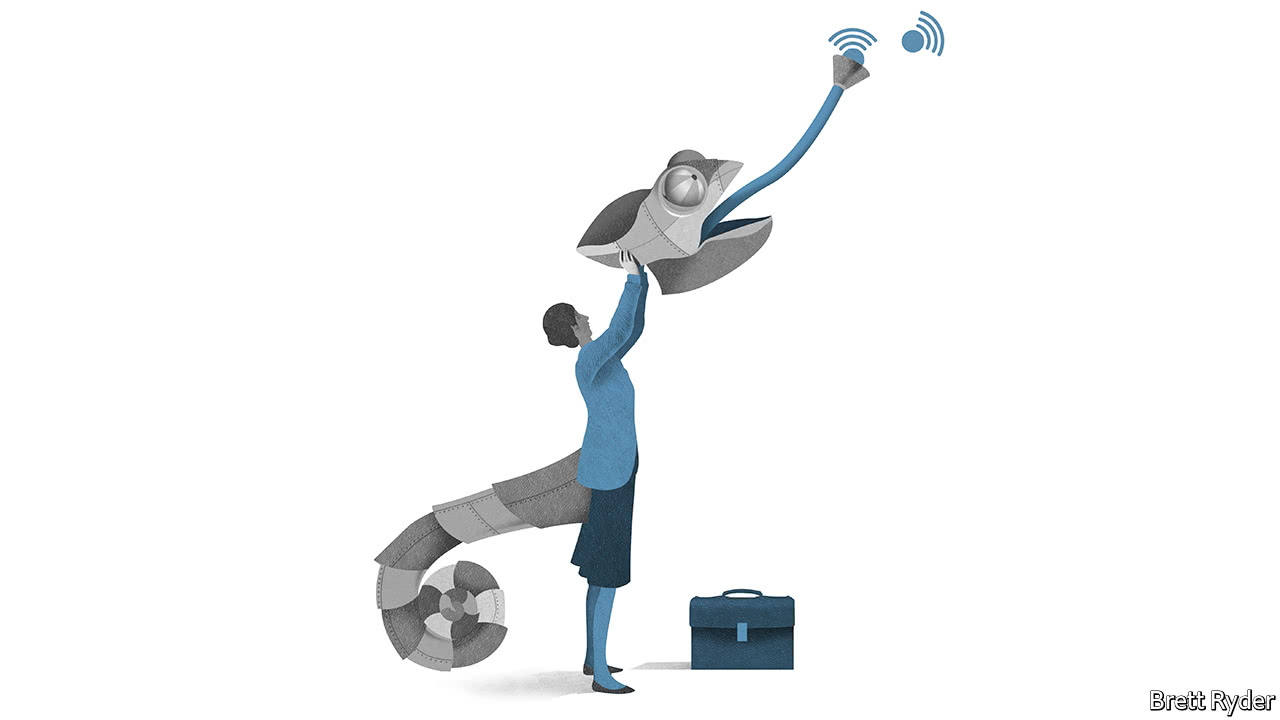
ACCORDING to Ginni Rometty, IBM’s boss, the digital revolution has two phases. In the first, Silicon Valley firms make all the running as they create new markets and eviscerate weak firms in sleepy industries. This has been the story until now. Tech firms have captured 42% of the rise in the value of America’s stockmarket since 2014 as investors forecast they will win an ever-bigger share of corporate profits. A new, terrifying phrase has entered the lexicon of business jargon: being “Amazoned”.
The second phase favours the incumbents, Ms Rometty believes, and is starting about now. They summon the will to adapt, innovate to create new, digital, products and increase efficiency. The schema is plainly self-serving. IBM is itself fighting for survival against cloud-based tech rivals and most of its clients are conventional firms. Yet she is correct that incumbents in many industries are at last getting their acts together on technology.
Enough time has elapsed for even…Continue reading
New research reveals simmering misunderstanding under the tree
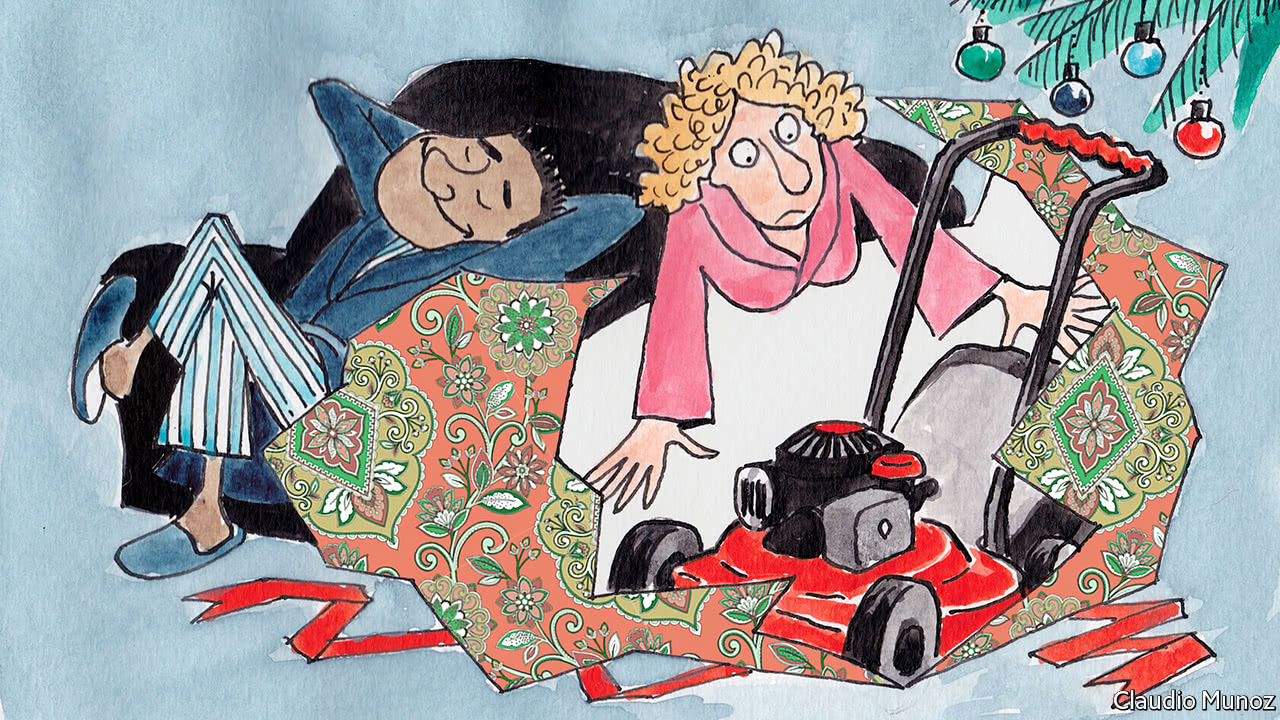
IS THERE any other time of year when good intentions and materialism converge so tightly? The caring, the artistic and the diligent spend their days before Christmas wrapping gifts. Whatever lies inside, their love for the recipients will also be expressed through paper, tape, bows and ribbon.
Then it all goes horribly wrong. New research* into the unwrapping of presents by two professors at the Yale School of Management and one at the University of Miami bravely applies rigour where sentimentality has long ruled. Their paper draws on a half-century of studies by scores of economists and psychologists as well as fresh field trials using hundreds of people from three universities.
The result is, for wrappers, a distressing discovery. Americans spend $3.2bn a year on wrapping paper. Yet their work not only fails to enhance joy, it creates unrealistic expectations that lead to discontent. Gift wrappers may think they are transforming the mundane into the magnificent; recipients seem…Continue reading
Russia’s dysfunctional funeral business gets a makeover

THE calls began shortly after Yulia’s grandmother died. The undertaker offered help arranging the funeral, for 47,000 roubles ($800) in cash. She then travelled to Moscow’s Khovanskoe Cemetery, where she was offered a discount on a gravesite—150,000 roubles off—if she could bring cash within three hours and sign a receipt saying she had paid half that amount. Yulia (whose name has been changed) and her family gave in. “We knew we were paying a bribe, but what else could we do?”
To bury a loved one in Russia often means entering an underworld of corruption and red tape. The myriad goods and services needed, from preparing the body for burial to funeral arrangements to carving a headstone, all represent opportunities for extortion in a largely informal market. “Instead of a funeral as a commercial service, the consumer is offered a strange sort of quest,” writes Sergei Mokhov, editor of The Archaeology of…Continue reading
An experiment with in-home deliveries is under way

AFTER staying at home one afternoon for a delivery of discounted toilet disinfectant that never came, Valentin Romanov, a Stockholm IT manager, installed a special lock on his flat’s entrance. When no one is in, deliverymen unlock the door and slip packages inside. Four months on, Mr Romanov has doubled his spending online and says he cannot imagine life without in-home deliveries. These are sweet words for delivery firms and online retailers, Amazon included, that are setting up partnerships with lock manufacturers to overcome a big hurdle for e-commerce.
Conventional deliveries fail so often that a parcel is driven to a home an average of 1.5 times in the Nordic region, says Kenneth Verlage, head of business development at PostNord, a logistics giant operating in Denmark, Finland, Norway and Sweden. It is an expensive inefficiency made worse, he says, by the fact that recipients have still often had to wait for a failed delivery. Some couriers leave packages on doorsteps, but this invites theft….Continue reading