
Tag: Business
Combustible cigarettes kill millions a year. Can Big Tobacco save them?

BESIDE a serene lake in Switzerland sits a modern glass building called the Cube. Wide-leafed tobacco plants grow in the lobby. In one room machines that can “smoke” more than a dozen cigarettes at a time dutifully puff away, measuring the chemicals that consumers would inhale. The research centre is run by Philip Morris International (PMI), which sells Marlboro and other brands around the world. The facility’s purpose is not to assess the risks of smoking, but to determine whether this huge cigarette-maker might get out of selling cigarettes altogether.
André Calantzopoulos, PMI’s chief executive, talks about moving to a “smoke-free future”, with the firm’s business comprised entirely of alternatives to cigarettes. “We are crystal clear where we are going as a company: we want to move out of cigarettes as soon as possible,” he says. Mr Calantzopoulos has the boldest goals in this regard, but he is not the only tobacco executive to tout a new direction. Nicandro Durante, chief…Continue reading
A vote on “net neutrality” has intensified a battle over the internet’s future
A DAY before the Federal Communications Commission (FCC) voted to rescind “net neutrality” regulations designed to ensure that internet-service providers do nothing to favour some types of online content over others, Ajit Pai, its chairman, tweeted a short video reassuring Americans. “You can still post photos of cute animals,” he says in it, posing with a dog. He also wields a light sabre, which prompted Mark Hamill, the actor who portrays Luke Skywalker in the “Star Wars” films, to criticise Mr Pai on Twitter for siding with giant corporations. Ted Cruz, a Republican senator, then asserted in Mr Pai’s defence that Darth Vader supported government regulation of the web; further jabs followed.
It made for a silly treatment of an arcane subject. But net neutrality is a serious business. The state of New York’s attorney-general said he would lead a multi-state suit against the FCC; in Congress Democrats and Republicans are expected to propose competing bills on the subject in 2018. Broadband and wireless companies such as AT&T responded to fears about their increased power by questioning whether internet firms like Google have too much. Google, Facebook, Amazon and other platform companies in turn put out statements in support of an open internet. So rather than end the struggle over how the internet is regulated in America, the FCC’s vote has…Continue reading
How leading American newspapers got people to pay for news
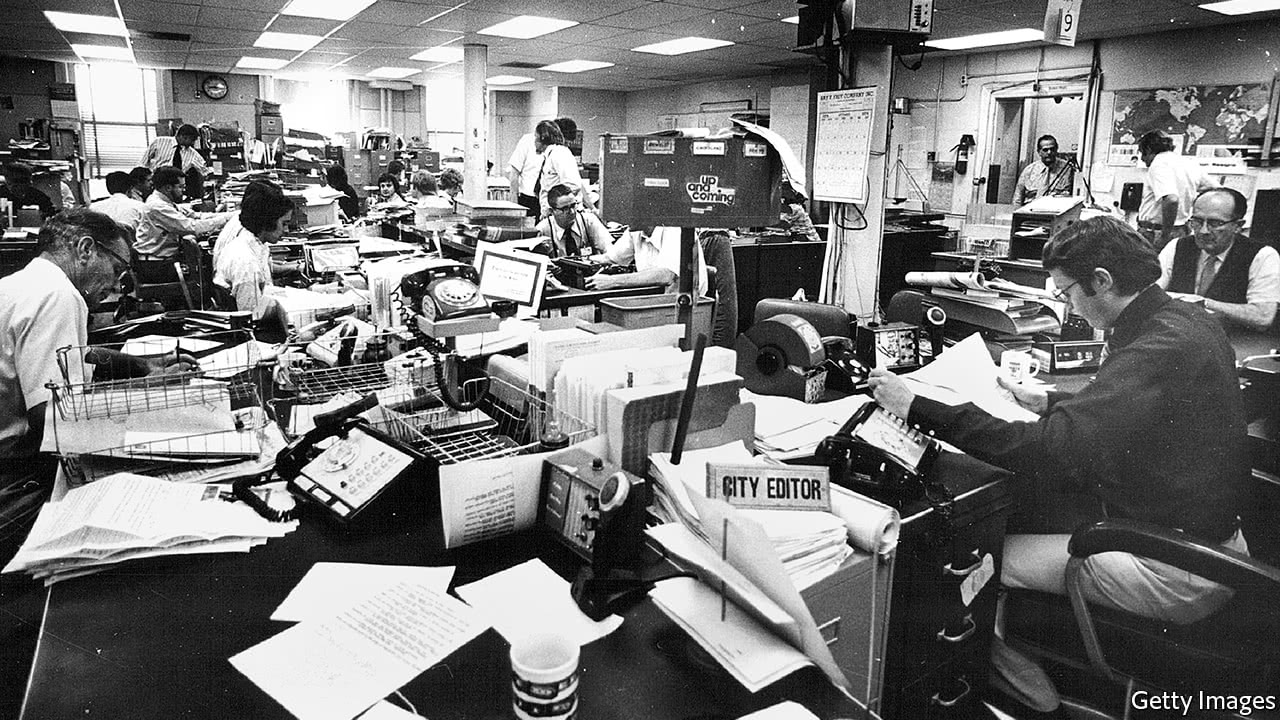
SOMETIMES it feels like the 1970s in the New York Times and Washington Post newsrooms: reporters battling each other to break news about scandals that threaten to envelop the White House and the presidency of Donald Trump. Only now their scoops come not in the morning edition but in a tweet or iPhone alert near the end of the day.
It is like old times in another way: both newspapers are getting readers to pay, offsetting advertising revenue relinquished to the internet. After years of giving away scoops for nothing online, and cutting staff, the Times and Post are focusing on subscriptions—mostly digital ones—which now rake in more money than ads do.
Their experiences offer lessons for the industry in America, although only a handful of newspapers have a chance at matching their success. A subscription-first approach relies on tapping a…Continue reading
Reports of the MBA’s demise are exaggerated

THE MBA is both revered and reviled. To boosters it has advanced the science of management and helped firms, and countries, to grow. Detractors say it offers little of practical value and instils in students a sense of infallibility that can sink companies, and knock economies sideways. The critics are currently the louder of the two, claiming that particularly the full-time, campus-based MBAs have reached saturation point, with too many mediocre courses chasing too few candidates. The Financial Times recently likened them to “the Grand Tour of business education in an age of Airbnb”.
There is a widespread feeling that full-time MBAs are on their last legs, concedes Sangeet Chowfla, the president of the Graduate Management Admission Council (GMAC), a business-school association. Decline is allegedly hastened by competing qualifications, such as the Masters in Management. MiMs have much the same syllabus as MBAs, but unlike them, take students…Continue reading
Aldi and Lidl grow despite ignoring the internet

THE aisles are wide, the lights bright and shelves low. Most obviously, however, the apples shine and the broccoli beckons. For those used to the cramped, dimly lit Aldi stores of yore, all expense spared, the new supermarket in Herten, Germany, is almost shocking.
Opened in April this is the prototype for a vast new renovation and expansion programme across Europe, Britain and America. It is the discount giant’s big bet on the future of shopping, all the more daring as the money is going almost entirely on bricks and mortar. Defying the conventional wisdom that customers want both in-store and online shopping (“omnichannel” in the jargon) Aldi wants to conquer the retail world by ignoring the internet. As too, to a lesser extent, does its great German rival Lidl. Plenty of other grocers reckon this may be the miscalculation that eventually brings them down.
Founded in 1945 and 1973 respectively, Aldi (split into two legally separate companies, Aldi Nord and Aldi Süd)…Continue reading
American business schools dominate our MBA ranking
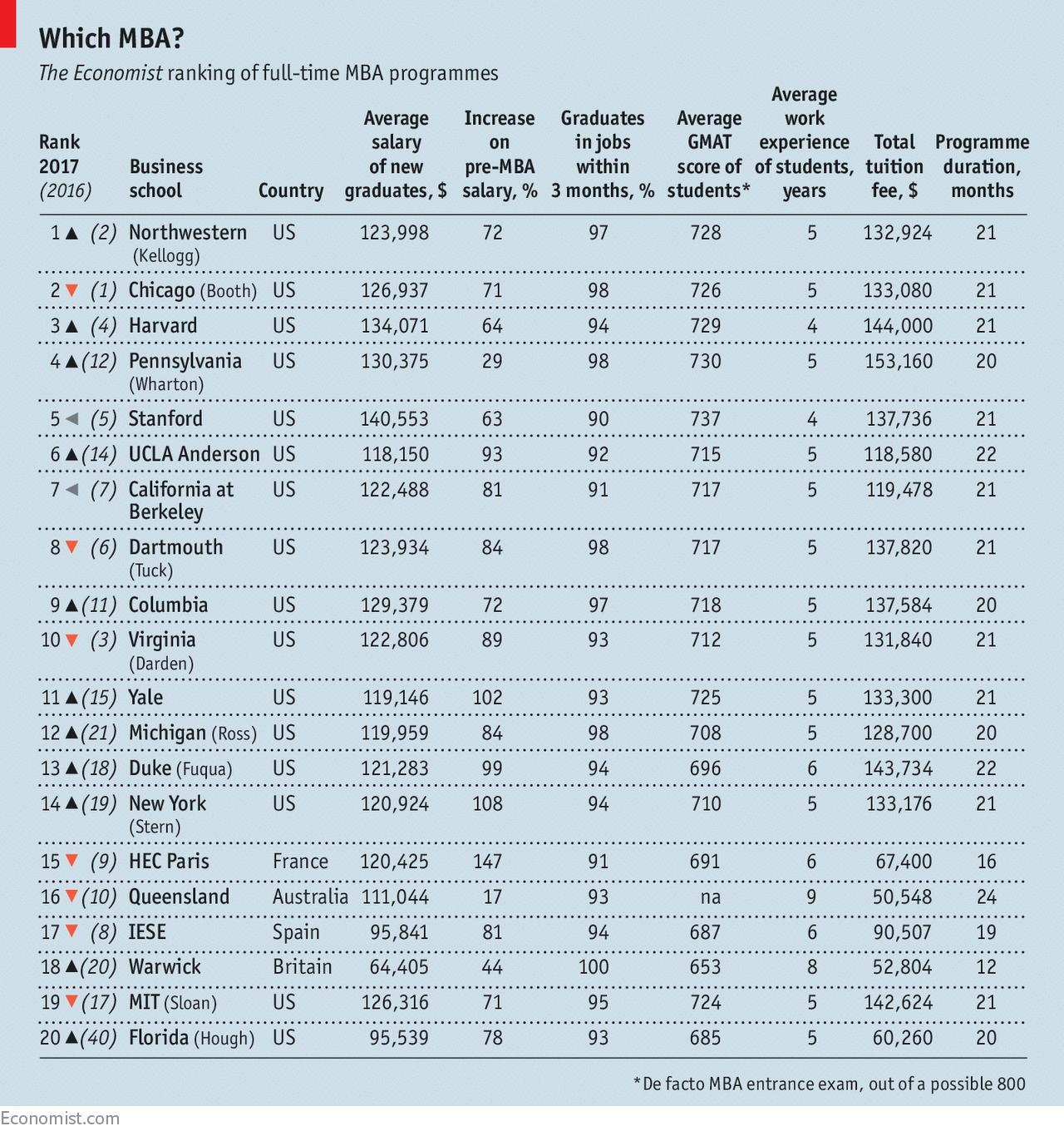
American business schools dominate The Economist’s 2017 Which MBA? ranking, taking 16 of the top 20 places. Northwestern University’s Kellogg School of Management returns to the top spot for the first time since 2004. Kellogg students praise its facilities and collaborative culture. Their career opportunities are among the best, thanks in part to one of the largest alumni networks in the world; 97% of students find a job within three months of graduation, pocketing a 72% pay bump. All of the top ten slots in the ranking are now occupied by large, prestigious American schools, for which students are happy to pay extra. Their average tuition fee is $134,600, and has risen quickly in recent years. Employers, too, are willing to shell out for the best students. Their average basic salary was $127,300, a 70% increase on their pre-MBA pay cheques. But life, like rankings, isn’t just about money. So we weight data according to what students tell us is important. The four categories covered are: opening new career…Continue reading
Apple should shrink its finance arm before it goes bananas
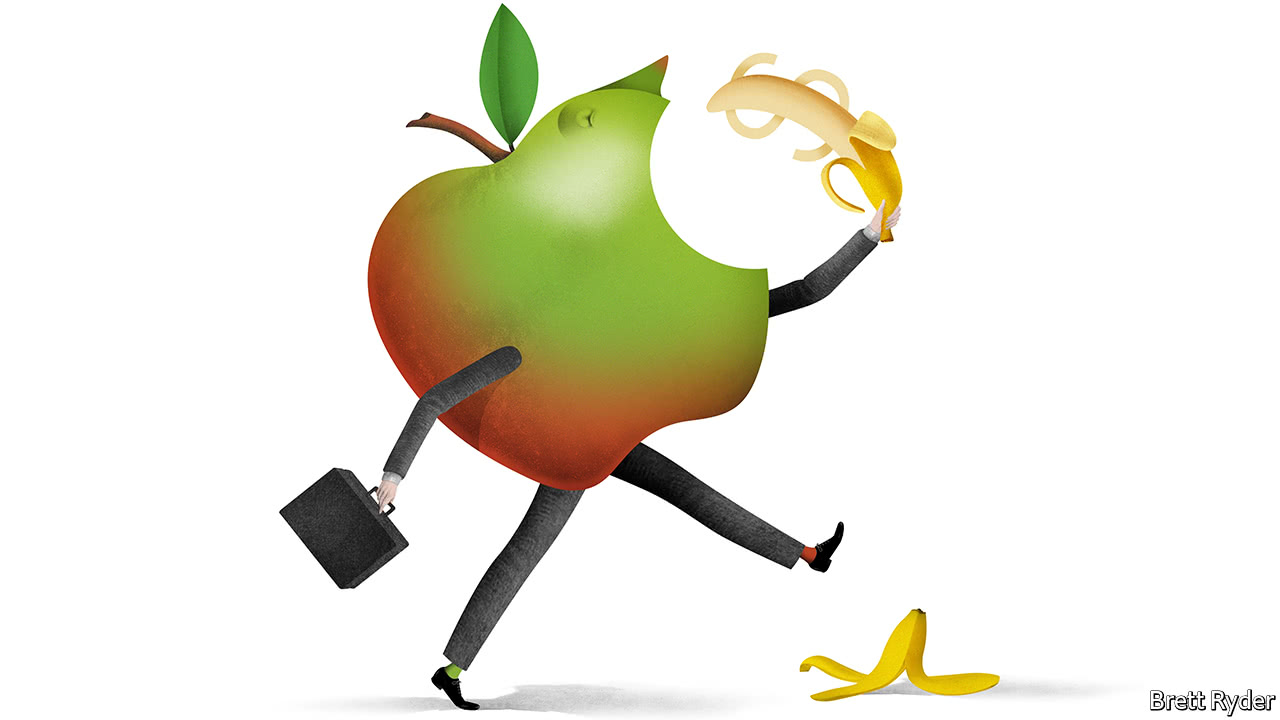
IT IS fashionable to say that tech firms will conquer the financial services industry. Yet in the case of Apple, it seems that the opposite is happening and finance is taking over tech by stealth. Since the death of Steve Jobs, its co-founder, in 2011, the world’s biggest firm by market value has sold hundreds of millions of phones with bionic chips and know-it-all digital assistants. But it has also grown a financial operation that is already, on some measures, roughly half the size of Goldman Sachs.
Apple does not organise its financial activities into one subsidiary, but Schumpeter has lumped them together. The result—call it “Apple Capital”—has $262bn of assets, $108bn of debt, and has traded $1.6trn of securities since 2011. It appears to be run fairly cautiously and is part of a thriving firm, but it still deserves scrutiny. Companies have a history of being hurt by their financial arms; think General Electric (GE) or General Motors (GM).
Apple Capital has lots…Continue reading
Fears that Xi Jinping is bad for private enterprise are overblown

FOR a moment it seemed China was reverting to Maoist economic management. On the sidelines of the Communist Party congress this month, an official told Xi Jinping that her village distillery sells baijiu, a potent spirit, for 99 yuan ($15) a bottle. Mr Xi, China’s most powerful leader since Mao, remarked that this seemed a bit dear. The chastened official thanked him and pledged to follow his guidance. But Mr Xi gestured her to stop. “This is a market decision,” he chuckled. “Don’t cut the price to 30 yuan just because I said so.” The audience, perhaps relieved that Mr Xi had no intention of dictating the price of booze, broke into laughter.
This rare spot of levity at the dreary five-yearly congress was telling. The occasion cemented Mr Xi’s unrivalled position at China’s apex. For companies, the question is what he will do with it. His vision can seem ominous. “North, south, east and west—the party is leader of all,” he intoned in a speech laying out his…Continue reading
A geopolitical row with China damages South Korean business further

IN A cosmetics emporium in central Seoul, rows of snail-slime face-masks sit untouched. Not long ago, visiting Chinese tourists would snap these up as avidly as a designer handbag in New York or anything from London featuring the Queen. Yet now their rejuvenating properties are failing to lure the country’s shoppers. Seo Sung-hae, a salesman, says business has slowed to a snail’s pace, because of a drop in the number of Chinese visitors. “We used to have 100 customers a day, but after THAAD, there are almost none,” he says.
THAAD, or Terminal High Altitude Area Defence, is an American missile-defence system designed to guard against North Korea that was installed in South Korea starting in March. Chinese authorities protest that its radar could be used to spy on its territory. Chinese newspapers have encouraged consumers to boycott South Korean goods. The plan was to “bully” Korea into ditching…Continue reading
A property billionaire rescues Harvey Weinstein’s studio
AS DISTRESSED assets go, the Weinstein Company (TWC) is uniquely distressing. Much of its value was bound up in the brands of its eponymous founding brothers, one of whom, Harvey Weinstein, has been accused of sexual harassment and of assault by dozens of women in the film industry in America and elsewhere. Amazon Studios, Apple and some television networks have hastened to cut ties with the studio, unwind production deals and remove Mr Weinstein’s name from credits. Mr Weinstein’s accusers may well sue the company. It was already heavily indebted after a recent string of box-office flops.
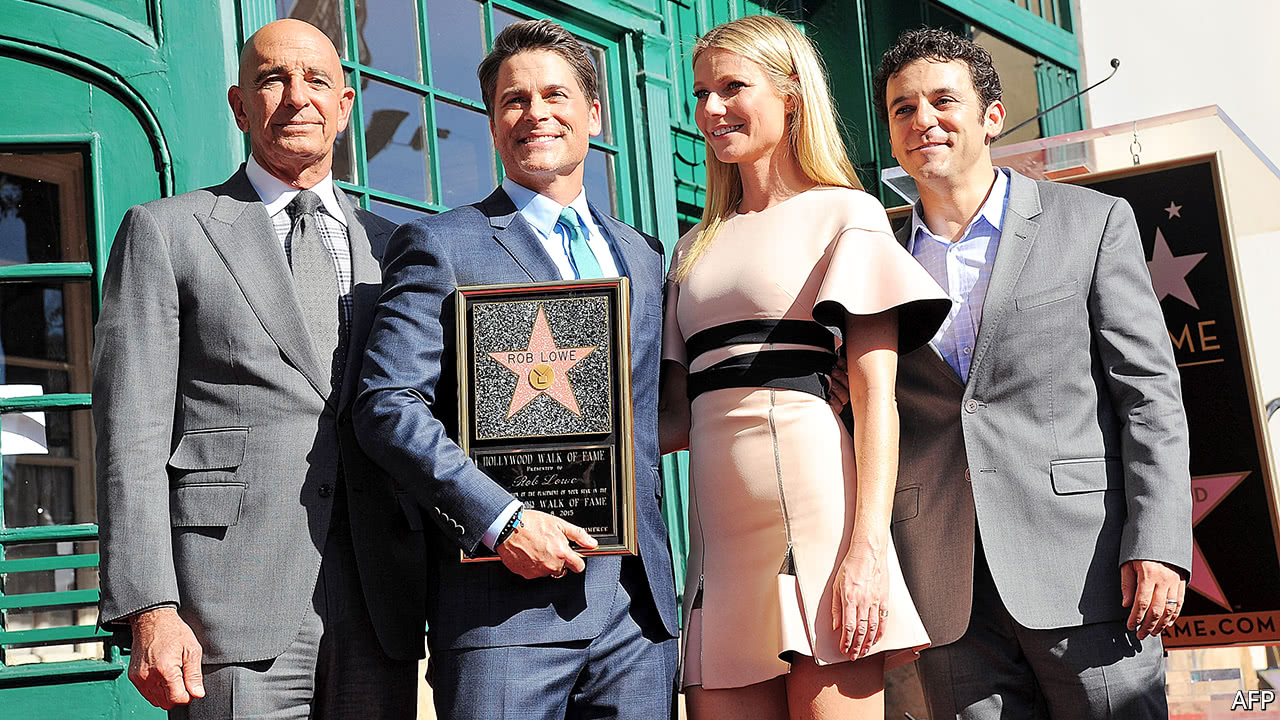
Who would see an opportunity? Aside from TWC’s particular troubles, independent films are a tough business, and the studio has had to haggle with creditors. But for a vulture investor some of the studio’s assets hold value. On October 16th Thomas Barrack (pictured above), chairman of Colony Capital, a private-equity firm, said he would immediately put an undisclosed sum of cash into TWC and look…Continue reading