
Tag: Business
An assessment of the White House’s progress on deregulation

DEREGULATION, along with tax cuts and trade reform, is one of the three pillars of President Donald Trump’s economic agenda. Republicans promise that, freed of red tape, American firms will invest more and unleash faster economic growth. And while Mr Trump has yet to unite his party around a major piece of legislation, the White House has plenty of sway over regulatory policy. For a start, the government agencies Mr Trump commands can regulate and deregulate on their own (subject only to the instructions that Congress has given them in the past). How much red tape have they managed to tear down since Mr Trump took office?
Regulation is difficult to measure precisely, but the long-term trend towards excessive rulemaking has been obvious. In 1970 there were about 400,000 prescriptive words such as “shall” or “must” in the code of federal regulations, according to the Mercatus Centre, a libertarian-leaning think-tank. Today there are 1.1m (see chart). Wonks of many stripes agree…Continue reading
American efforts to control Chinese firms abroad are dangerous
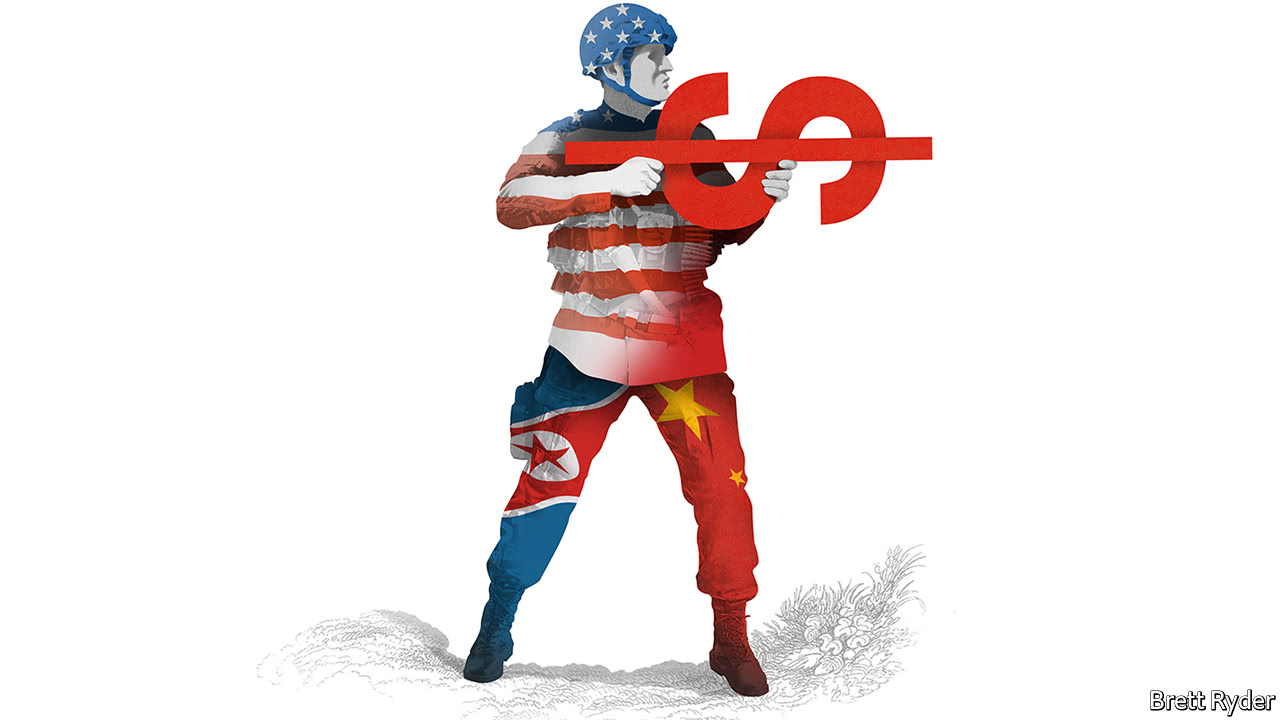
WARS are fought with weapons, but also with money. To understand the global balance of power in the coming decades, it helps to pay attention to the commercial subplot of the North Korean crisis. For the first time, America is attempting to use its full legal and financial might to change the behaviour of Chinese companies and banks, which it believes are propping up North Korea by breaking UN and American sanctions. Some American politicians have concluded that, as China’s firms have integrated with the global economy, they have become more vulnerable to Uncle Sam’s wrath. America has potent weapons, but the trouble is that China can retaliate in devastating fashion.
North Korea is highly dependent on China. Some 60-90% of its trade is with its northern neighbour. China’s state-run energy giant, CNPC, is thought to have sold it oil in recent years—and is the parent of PetroChina, which has depositary receipts listed in New York. North Korean banks and firms operate in China, and…Continue reading
Tech giants are building their own undersea fibre-optic networks

WHEN Cyrus Field, an American businessman, laid the first trans-Atlantic cable in 1858, it was hailed as one of the great technological achievements of its time and celebrated with bonfires, fireworks and 100-gun salutes. Alas, the reason for the festivities soon went away. Within weeks the cable failed.
On September 21st the completion of another trans-Atlantic cable was welcomed with much less ado. But it is remarkable nevertheless: dubbed Marea, Spanish for “tide”, the 6,600km bundle of eight fibre-optic threads, roughly the size of a garden hose, is the highest-capacity connection across the ocean. Stretching from Virginia Beach, Virginia, to Bilbao, Spain, it is capable of transferring 160 terabits of data every second, the equivalent of more than 5,000 high-resolution movies. It is jointly owned by Facebook and Microsoft.
Such ultra-fast fibre networks are needed to keep up with the torrent of…Continue reading
Ford has a clear plan to fix its present failings
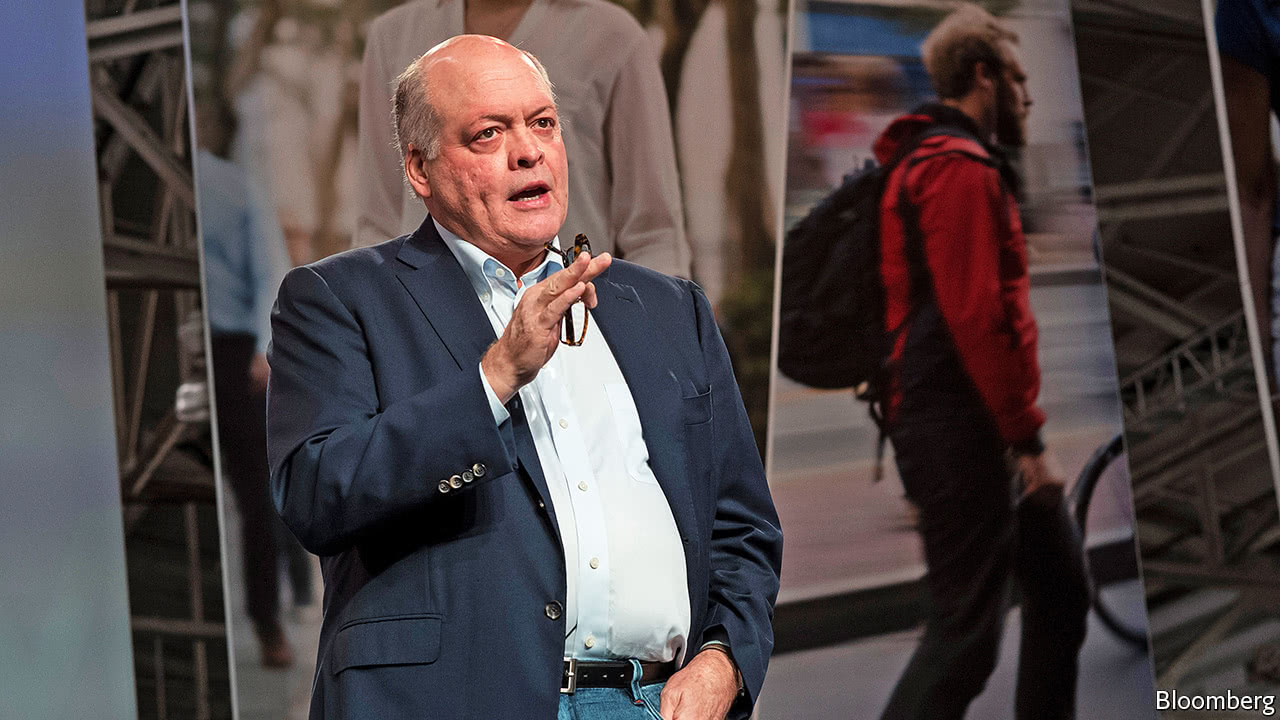
LIKE any mechanic with a misfiring car, Ford’s new boss has had his head under the bonnet working out what needs attention. Jim Hackett emerged on October 3rd with a checklist of repairs to present to investors, who have been awaiting his diagnosis since he took over in May. The list is short but the engineering is complicated: restore Ford’s competitiveness while preparing for a future of electric vehicles (EVs), self-driving cars and transport services. But those expecting a radical overhaul were probably disappointed.
Mr Hackett’s predecessor, Mark Fields, was shown the door by Bill Ford, the firm’s chairman, for failing to make a persuasive case that he was reinventing Ford as a mobility firm at the forefront of automotive technology. Despite acknowledging to investors that he and Mr Ford agreed that his new job was “about the future not the past”, Mr Hackett was clearest about how to make Ford fit for the…Continue reading
The bosses of two famous French firms struggle to keep customers

ALEXANDRE RICARD wants to talk boxing. He runs Pernod Ricard, a firm that sells Chivas whisky and Absolut vodka, among other drinks. Formed by his grandfather in 1975, with roots in a Pernod distiller set up in 1805, it is the world’s second-largest seller of wine and spirits, with a market capitalisation of €32bn ($37bn). He brags that Floyd Mayweather, an American pugilist with 19m Instagram followers, recently endorsed one of the company’s tequila brands. Such a “key influencer” on a digital channel “gives us speed and scale”, says Mr Ricard.
Celebrity endorsements are an old ploy: French singers, actors and racing drivers used to push Pernod Ricard’s liquor. But with 90% of sales in markets outside of France, punchier efforts are needed. Two years ago the firm commissioned a global study of boozing habits, which totted up all “moments of consumption” for drinkers, identifying 20 important ones in…Continue reading
Dara Khosrowshahi is off to a strong start but there are miles to go
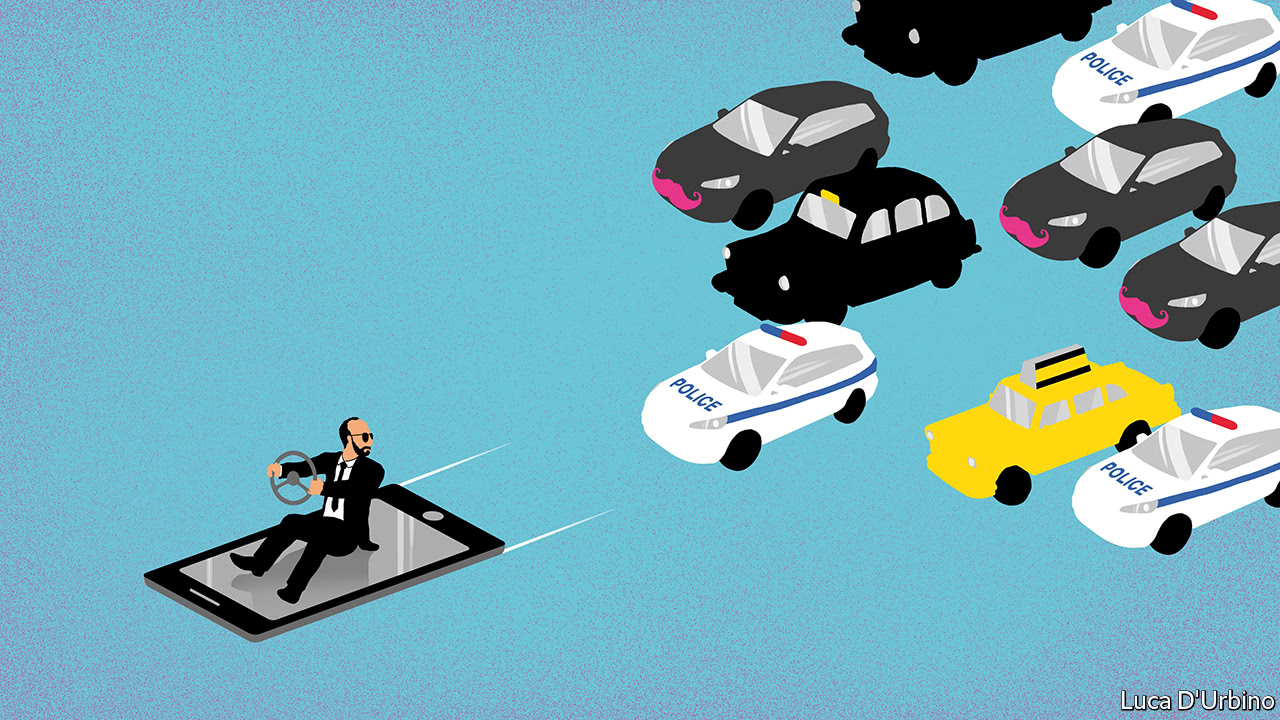
HERE’S the job spec. Unite a deeply divided board. Keep a strong-willed founder under control. Immediately recruit a new chief financial officer. Negotiate with angry local regulators intent on closing down the business in their city. Convince courts that the company does not have to provide its contract workers with the benefits due to full-time employees. Change a cut-throat culture without curbing employees’ drive. On top of all this, deal not only with an intellectual-property (IP) lawsuit that could cost the firm nearly $2bn, but also cope with a criminal investigation by the FBI that could see some managers end up in prison.
No one sane, you would think, would even apply for such misery. But after some hesitation Dara Khosrowshahi (pronounced cause-ro-SHAH-hee), until recently the chief executive of Expedia, an online travel agency, returned the headhunter’s call. Now he is boss of Uber, which, at $68bn, is the world’s most highly valued privately-held company. Can he…Continue reading
Dirt-cheap mobile data is a thrill for Indian consumers
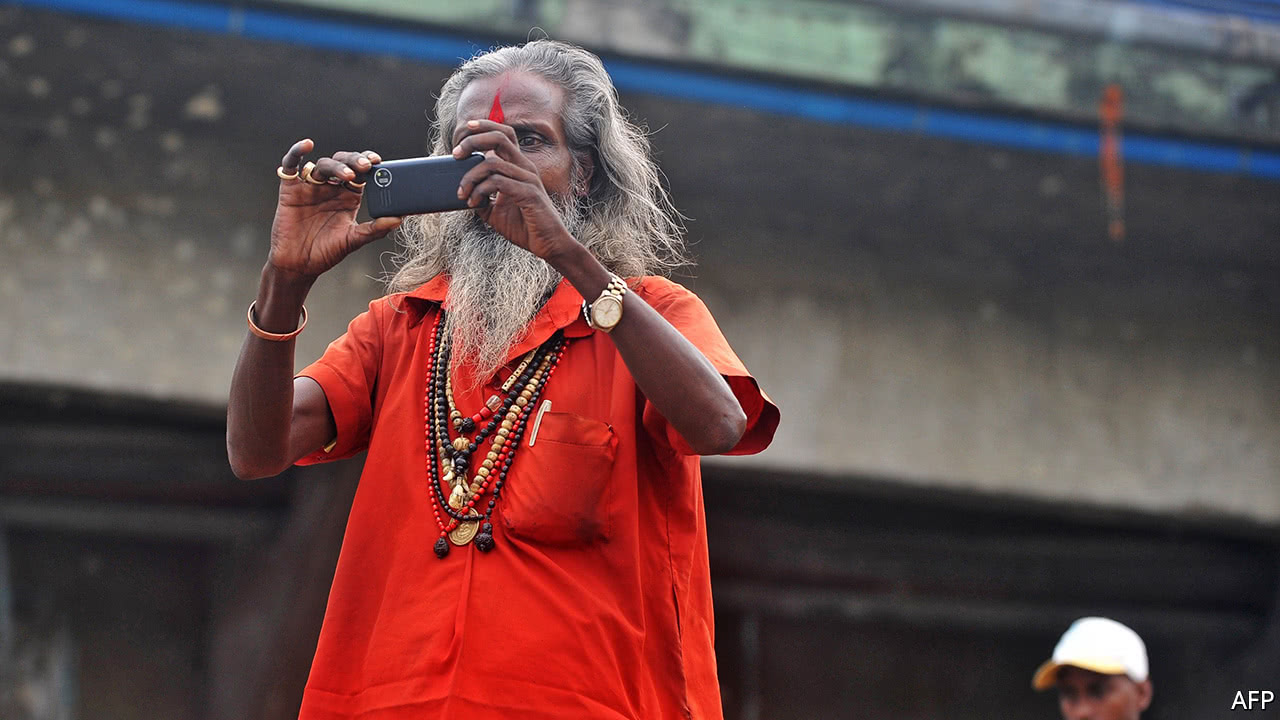
THE security guards at the foot of Antilia, a 27-floor private residence in Mumbai, while away the days just as all bored Indians have been doing in recent months—watching movies on their phone. Using a mobile network to stream endless Bollywood epics would until recently have been an unthinkable luxury, even in the rich world. In India it now costs less than a cup of street-side chai.
Thank the tycoon lording it in the skyscraper’s upper reaches. As boss of Reliance Industries, Mukesh Ambani, India’s richest man, has spent more than $25bn on building Jio, a state-of-the-art mobile-telecoms network. The delight of the guards at Antilia, and of the roughly 130m Indians who have signed up to the service since it launched in September 2016, is matched only by the misery of Mr Ambani’s rivals.
Jio’s rise is nothing short of spectacular. It took less than a year for it to be delivering more data than any other mobile…Continue reading
After a bite of Apple, Margrethe Vestager targets another tech giant

MARGRETHE VESTAGER’S assault on technology firms she deems to have improperly massaged down their tax bills continued this week with a tilt at Amazon. The internet retailer faces a bill of €250m ($293m) for back taxes over what the European Union’s competition commissioner considers to have been an illegal sweetheart deal with Luxembourg.
The order requiring the Grand Duchy to recover the money follows a well-publicised three-year investigation. It is the latest in a series of tax-avoidance cases brought by the European Commission against multinationals, most of them American. Last year, Ireland was ordered to recover €13bn from Apple—smashing all past records for EU corporate-tax cases.
As with Apple, the commission concluded that Amazon received illegal state aid—in the retailer’s case between 2006 and 2014—through a tax-cutting arrangement that was unavailable to its rivals. This came in the form of a ruling from Luxembourg’s tax authority,…Continue reading
Facebook and the meaning of share ownership

ONE group of Facebook friends that Mark Zuckerberg recently decided were not worth hanging out with were its public shareholders, who expected to cross-examine him (via a lawyer) on September 26th in a Delaware court. At issue would have been Mr Zuckerberg’s plans to refashion the social-media firm’s share-ownership structure more in his favour.
There is not a scintilla of doubt over who controls Facebook. Not only does Mr Zuckerberg, its founder, serve as its CEO and chairman; owning 16% of its shares, he controls 60% of the voting authority through a special class of stock with ten times normal voting rights. A year ago, Mr Zuckerberg decided he would like to sell a large slug of his holdings (worth $74bn) without diluting control. The firm made a plan to distribute non-voting shares enabling him to reduce his economic interest to 3% without affecting control.
That prompted litigation. Shareholder votes can be directly meaningful on many issues, including management pay…Continue reading
Rivigo is helping the Indian truck-driving industry out of a jam

THERE are 36 gradations in India’s archaic caste system, from the priestly to the supposedly untouchable. And then, somewhere below that, are the long-haul truck-drivers. Plying the subcontinent’s potholed highways for weeks at a time, few can settle into anything like a home life. Their marriage prospects are grim; venereal diseases and sore backs from sleeping in cramped cabs are but two occupational hazards. Despite an oversupplied national job market, the industry has struggled to attract the roughly 1m new drivers it needs each year to keep everything from Amazon packages to car parts moving. Can technology help?
To fend off shortages, most truck owners have done precisely what economists suggest, which is to increase pay. Drivers can now command nearly 40,000 rupees ($610) a month, a decent white-collar wage—and not far from double the level of trucker pay just three years ago. Rivigo, a startup based in Gurgaon, an…Continue reading