
Tag: Business
A shareholder pact is rocked by Liliane Bettencourt’s death

DEATH does not end all uncertainties. News that Liliane Bettencourt, a glamorous 94-year-old Parisian heiress, died on September 20th has provoked a flurry of investor speculation over L’Oréal, the world’s biggest cosmetics company. She had held a controlling stake in the firm her father, an inventor of hair dyes, founded in 1909. Its market value has since grown to be a whisker short of €100bn ($117bn).
Her death brings few immediate consequences. An Alzheimer’s sufferer, she had been declared legally unfit to manage her concerns. That followed a scandal, made public in 2010 after her butler secretly recorded politicians, lawyers and friends as they bilked her for millions of euros. The case still haunts Nicolas Sarkozy, an ex-president. He seethed in October that opponents had stymied his return to politics by repeating allegations he profited from the “sordid Bettencourt affair” (he was cleared of charges over it in…Continue reading
McDonald’s wages a food fight in India

IN MOST ways the McDonald’s outlet in Jangpura, a gentrifying neighbourhood in south Delhi, looks like one anywhere else, with bright displays, plastic seating and a familiar menu. But this week a disconcerting sign warns that “unpredictable” conditions have affected tomato supplies; none are available. Not bad though for a store that McDonald’s has been trying to close since September 6th. Over a third of its 400 or so outlets in India were supposed to shut their doors then—yet nearly all are still slinging McSpicy Paneers to customers.
War rages between McDonald’s India and Vikram Bakshi of Connaught Place Restaurants Limited (CPRL), who first brought the American chain to India in 1996 as a local partner in a 50-50 joint venture, starting in Delhi (along with another franchisee, Hardcastle Restaurants, which went into the southern and western states). Over the next two decades, Mr Bakshi expanded in the north…Continue reading
American entrepreneurship is flourishing, if you know where to look

AT FIRST glance, it seems that America’s economy is losing its mojo. Many economists, most notably Robert Gordon of Northwestern University, have lamented that productivity growth seems to be anaemic when compared with earlier golden eras (see Free exchange). A gloomy chorus of business leaders has echoed what media outlets have by now turned into a mantra, that American entrepreneurship is in steady decline. Surely America’s overall competitiveness, then, is plummeting?
The answer from one influential think-tank, the World Economic Forum (WEF), is no. In its latest update to its long-running annual ranking of global economic competitiveness, published on September 27th, America rose from third place to second, ranking below only Switzerland.
This is partly…Continue reading
Yandex, Russia’s biggest technology company, celebrates 20 years
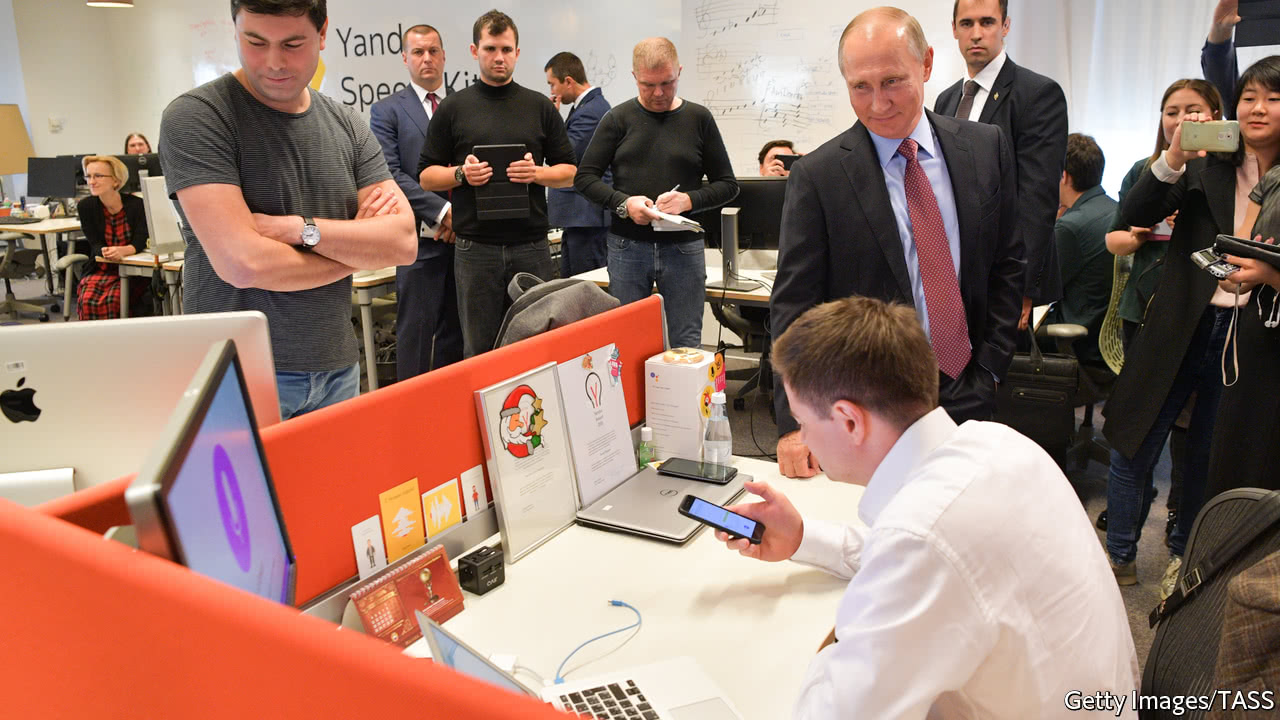
ARKADY VOLOZH, the bearded co-founder of Yandex, Russia’s largest search engine, bristles at his company being branded the “Google of Russia”. Far from emulating the American firm, Yandex launched in 1997, a full year before Google, he points out. More crucially, the moniker poorly describes what Yandex offers today, which is a group of products and services that includes taxis, shopping, payments, music and education. “Really we’re the Silicon Valley of Russia,” says Mikhail Parakhin, Yandex’s chief technology officer.
That may only be a slight overstatement. Yandex’s Russian presence is immense; it accounts for just over half of the search market and 61% of online advertising, and its sites attract over 60m visitors each month. Like American tech giants, it is also expanding its offline logistical capabilities, signing recent deals with Uber, a ride-hailing firm, and with Sberbank, Russia’s largest bank, to build out its transportation and e-commerce…Continue reading
Who’s afraid of disruption?
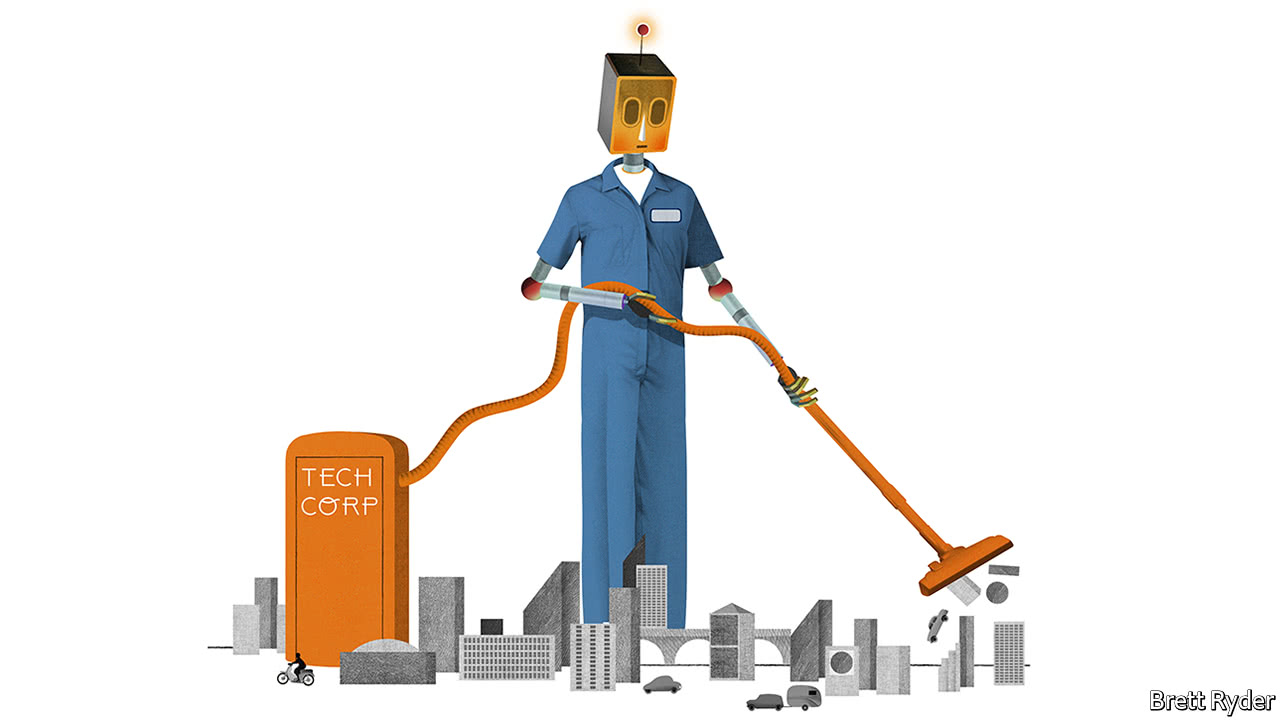
LAST week Schumpeter met two tech tycoons who control businesses in total worth $600bn. In both cases the mayhem around them was what you would expect if Beyoncé hit town, minus the musical talent and looks. Hotel floors were locked down by the official secret service; the corridors were crammed with lines of petitioners and in one case a Wall Street boss gatecrashed the room in order to hug his idol.
The message from both titans—you ain’t seen nothing yet—was imperious. Over the next decade, they say, conventional industries will face an onslaught from tech competitors wielding vast financial resources, new technologies and massive reserves of data. It is a view that has swept through traditional firms’ boardrooms, too, where enthusing about virtual reality and singing the praises of Jeff Bezos, Amazon’s boss, is almost obligatory. The notion of disruption, with its promise to destroy the status quo and then renew it, is the most fashionable idea in global business since the…Continue reading
Streaming has pushed Latin music into the mainstream

“MI GENTE” lures listeners with a mesmerising hook, a thumping beat and lyrics about breaking down barriers. A collaboration between J Balvin, a Colombian reggaeton star (pictured), and Willy William, a French producer, the latest product of this summer’s Latin craze is crooned almost entirely in Spanish. (The title means “My People”; reggaeton borrows from hip hop, reggae and rap.) The song topped the charts on Spotify, a streaming service, for weeks. “To be a crossover artist, you used to have to sing in English,” said John Reilly, Mr Balvin’s publicist. Now six of YouTube’s top ten music videos are predominantly in Spanish. In August the Billboard Hot 100, which tracks streams, sales and radio plays, sported seven Latin hits. Just five graced the chart in all of 2016.
Latin music is helping the music industry to arrest years of decline. Its growth is far outpacing that of other genres. Last year Latin America yielded just $598m out of total global recorded-music…Continue reading
Online matchmaking businesses in India have many ways to woo

“IT WAS 2012…I was number 37,” says Ashwini, referring to the badge that was pinned on her shirt pocket. Her task was to go onto the stage and introduce herself to around 70 eligible bachelors and their parents. Families then conferred and, provided caste and religious background proved no obstacle, would approach the event’s moderator asking to meet number 37. At midday girls would wait for prospects to swing by, again with parents on either side. A brief exchange might establish the potential bride’s cooking skills or her intention to work after marriage. If the two sides hit it off, they would exchange copies of their horoscopes. Nearly 50 men lined up to meet Ashwini that day, speed-dating style. No one made the cut. She later married a colleague.
Such gatherings form an important part of the wedding industry, worth around $50bn a year, in a country where arranged marriages continue to be the norm. India has 440m…Continue reading
What if large tech firms were regulated like sewage companies?

THREE-QUARTERS of Americans admit that they search the web, send e-mails and check their social-media accounts in the bathroom. That is not the only connection between tech and plumbing. The water and sewage industry offers clues to the vexed question of how to regulate the Silicon Valley “platform” firms, such as Alphabet, Amazon and Facebook. The implications are mildly terrifying for the companies, so any tech tycoons reading this column might want to secure a spare pair of trousers.
In America and in Europe a consensus is emerging that big tech firms must be tamed. Their dominance of services such as search and social media gives them huge economic and political clout. The $3trn total market value of America’s five biggest tech firms (Apple and Microsoft are the other two) suggests that investors believe they are among the most powerful firms in history, up there with the East India Company and Standard Oil.
Trustbusters in need of instant gratification want to break…Continue reading
Behind the veil of Saudi Aramco
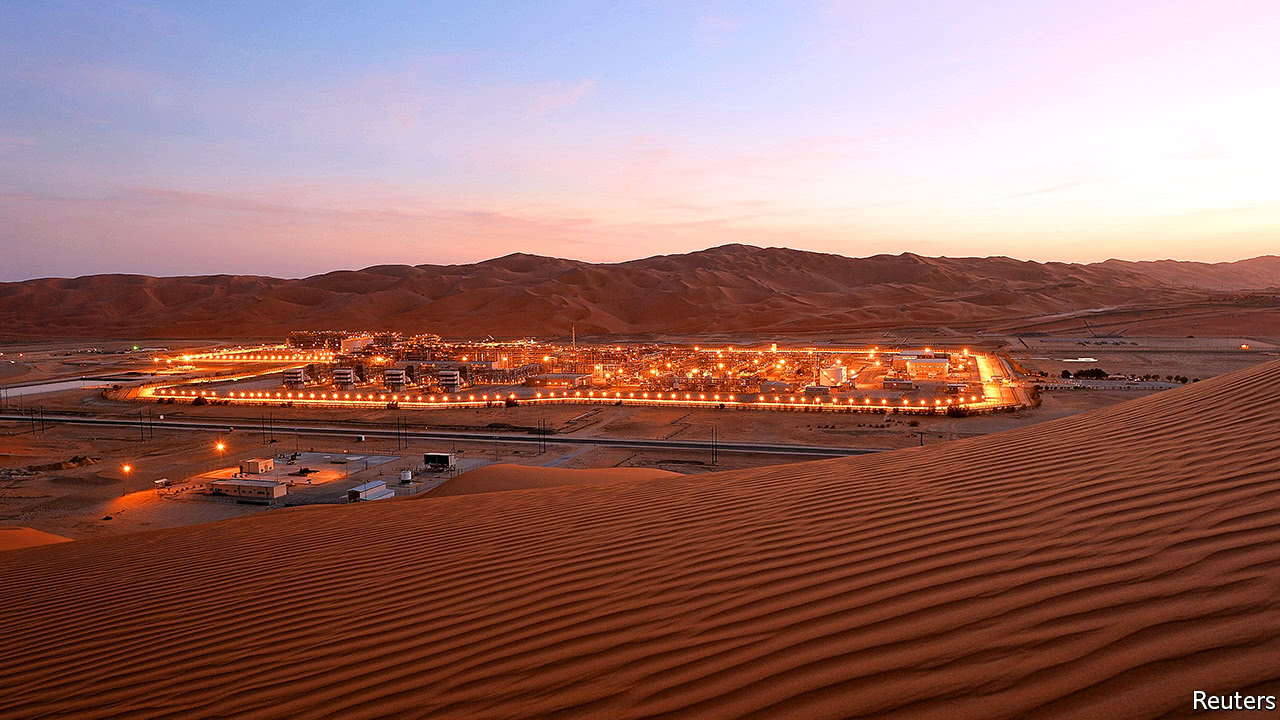
IF SAUDI ARAMCO is a state within a state in Saudi Arabia, then the blandly named Oil Supply Planning and Scheduling (OSPAS) is its deep state. To enter it, you pass tight security at Aramco’s suburban-style headquarters in Dhahran, in the east of the kingdom. The transition is eye-opening. Suddenly, English is the common tongue even among Saudi “Aramcons”, as its workers are known. Female employees, their faces uncovered, lead meetings of male colleagues. The crisp banter is common to engineers everywhere. A toilet break is called a “pressure-relief” exercise.
Deep within, OSPAS is even further removed from the kingdom outside. The few executives with clearance to enter call it the “nerve centre” of the world’s largest oil company. Using 100,000 sensors and data points on wells, pipelines, plants and terminals, it directs every drop of oil and cubic foot of gas that comes out of the kingdom (10% of the world’s oil supply), monitors it on giant screens as it heads to…Continue reading
Ryanair cancels more than 2,000 flights over the next six weeks

RYANAIR, an Irish airline, is known for three things: low fares, the brash way in which Michael O’Leary, its chief executive, advertises them, and its record for sticking to its flight schedules. The last of these is key to its appeal: many businessmen chose Ryanair more for its punctuality than its cheapness. And so the announcement on September 15th that it is cancelling over 2,000 flights between now and the end of October—around 2% of its capacity over the period—is more serious than it may at first seem. Ryanair’s share price fell by more than 5% in the aftermath.
The problems began in early September when Ryanair’s on-time record plunged, owing to a pilot shortage. To restore punctuality, it cancelled many flights at short notice; passengers were marooned around Europe. Up to 400,000 people booked on the 2,000 scrapped flights risk missing business trips and holidays.
Mr O’Leary says the…Continue reading