
Tag: Business
Why do European companies bother to hire ex-politicians?

THIS month Gerhard Schröder starts a new job. Shareholders in Rosneft, a Russian energy giant with a market value of nearly $60bn, are set to appoint Germany’s ex-chancellor as a board director on September 29th. Russia’s government, Rosneft’s majority-owner, nominated Mr Schröder, who is pals with Vladimir Putin. Despite Western sanctions imposed on the firm after Russia’s invasion of Ukraine in 2014, Mr Schröder’s move is no surprise. He has worked for years with Gazprom, another energy arm of the Russian state, to promote a gas pipeline to western Europe.
His ties to Russia win him few friends at home. His successor as Germany’s leader, Angela Merkel, calls his behaviour “not OK”. She also vows to reject offers of “any posts in industry once I am no longer chancellor”. Other politicians are happier to follow Mr Schröder’s example. It emerged last month that a former German president, Christian Wulff (pictured), is also employed by a foreign company. He advises…Continue reading
America’s utilities prepare for a nuclear threat to the grid

WHEN North Korea said on September 3rd that it had developed a hydrogen bomb, adding that it could be used for a “super-powerful” high-altitude electromagnetic pulse (HEMP) attack, America’s electricity industry was already on alert. Sceptics tend to dismiss as far-fetched the idea that the rogue regime would knock out the electricity grid by detonating a nuclear bomb high in the atmosphere. Regulators have not mandated safety measures. But the utilities are taking it seriously enough.
They are more than a year into a three-year programme, funded by about 60 electricity firms, to understand the potential impact of a HEMP attack on the generation and transmission of electricity, and to find ways to shield the network. Such concerns are not new. In 1962, when America exploded nuclear devices high above the Pacific, electrical damage was found in Hawaii. The industry has also studied analogous space-weather effects on power systems,…Continue reading
Mobile technology is revamping loyalty schemes
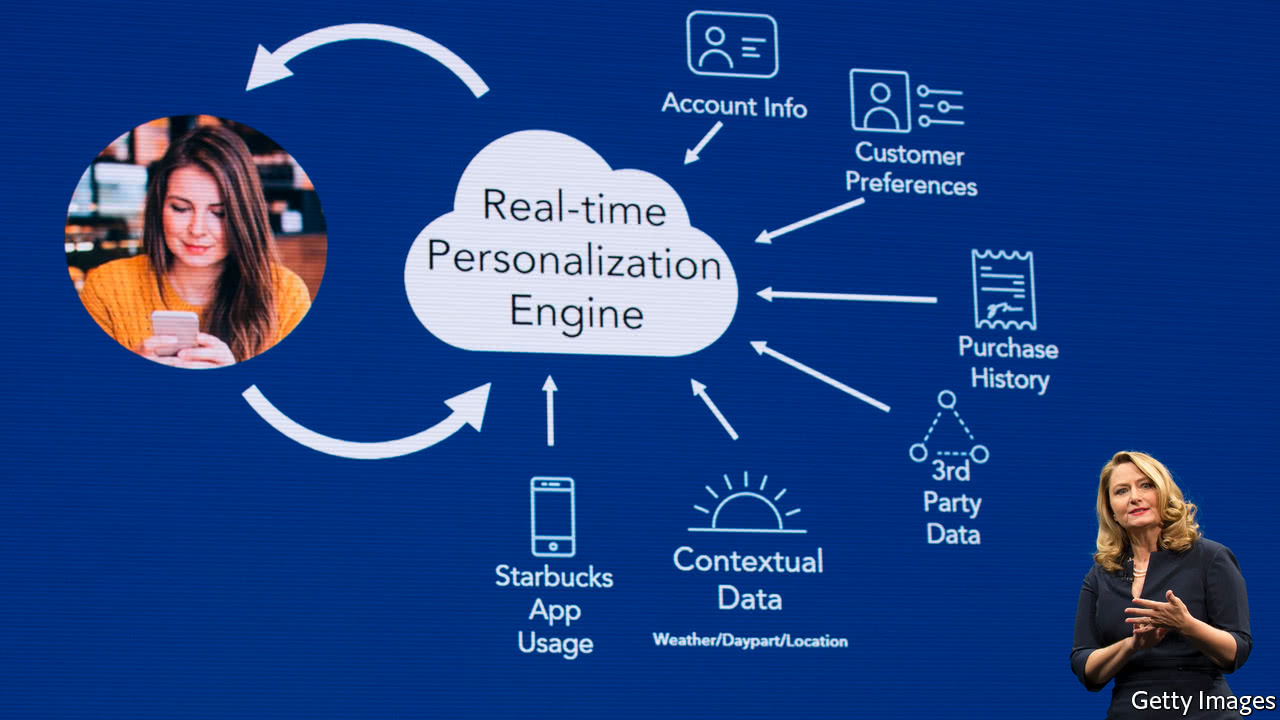
THOSE of a cynical bent might think Tom Stuker a glutton for punishment. Over the years, Mr Stuker has flown more than 18m miles (29m kilometres) on United Airlines, a carrier not always renowned for treating its passengers tenderly. Mr Stuker may possess the world’s most impressive frequent-flyer account. Over the past half-decade he has averaged over 1m miles a year with United.
Mr Stuker is extreme in his devotion. But engendering customer loyalty is something that nearly all firms strive for. Most fail. The average American household belongs to 28 loyalty schemes. The country is home to 3.8bn scheme memberships in total, according to Colloquy, a research firm, up from 2.6bn in 2012. More than half of these accounts go unused.
Frequent-flyer programmes, introduced in the 1970s, were the first examples of modern loyalty schemes. They proved to be a clever bit of marketing. Flyers value plane seats highly, so a free one feels like a substantial reward. But…Continue reading
A craft-beer boom with Chinese characteristics

EVIDENCE unearthed at Mijiaya in Shaanxi province proved that the Chinese have an ancient tradition of making beer. Brewers were operating 5,000 years ago, using grains such as millet and Job’s tears (a kind of pearl barley). This year a couple of small-scale brewers lovingly recreated that Neolithic ale. The cloudy, hop-free beverage would challenge even the bravest microbrew devotee. Ladislao Raphael of Moonzen Brewery in Hong Kong describes it as “sour and funky”.
Yet Mr Raphael and his fellow craft-beer evangelists are winning converts. The Chinese market, which is the world’s largest, is dominated by mass-produced lager. But craft breweries are sprouting up around the country—by 2016 there were around 150, up threefold from 2015. Consumption of their brews has surged by two-thirds over the past five years, figures from GlobalData show, even as overall beer-swilling declines. This mirrors a global pattern: consumers often crave better beers as they get richer. Trend-setters…Continue reading
An infrastructure for charging electric vehicles takes shape

A NEW phrase, “range anxiety”—the fear that an electric vehicle (EV) will run out of power before it reaches a charging-point—entered the Oxford English Dictionary in 2013. At the time a Nissan LEAF, the world’s best-selling EV, could travel only 120km between charges. A car with a full tank of fuel will travel 650-800km between refills. A motorist relying on batteries has to find a public charger, a rare sight in 2013, or plug in at home to cover the same distance. Range anxiety has not gone away as EVs have advanced. But the problem now feels much more soluble.
Many governments are pushing hard to replace the internal combustion engine (ICE) with cleaner EVs—this summer both Britain and France said that by 2040 new cars completely reliant on petrol or diesel will be illegal. By 2050, half the cars on the road globally, a billion in total, will be battery-powered, reckons Morgan Stanley, a bank. Falling battery costs mean that the total cost of EV ownership will soon hit…Continue reading
Panipat, the global centre for recycling textiles, is fading

WHEN the doors open to the warehouse at Ambey Spinning Mills in Panipat, a city 90km from Delhi, it seems as if its contents might tumble out like those of an overstuffed cupboard. Heaps of clothes are piled to the ceiling. Ten women meticulously extract zips, chains and buttons from T-shirts, winter jackets and denims using long blades usually used to chop vegetables. Outside, a teenage boy wields a knife to bash synthetic fibre against a tree stump. In another workshop clothes are shredded, spun into yarn and woven by power looms into blankets. Bullock carts take them for further processing; they are then sent off for sale in India and beyond.
Known as the “cast-off capital”, Panipat is home to 150-200 such mills, which take in discarded clothes from Western countries and turn them into recycled cloth. The industry employs around 20,000 people and brings in annual revenues of $62m, according to Pawan Garg of All India Woollen and…Continue reading
United Technology merges with Rockwell Collins

WHEN passengers board an aircraft, only a few care whether it was built by Airbus or Boeing, two giants that make all the world’s big airliners. Fewer still would recognise the names of the thousands of suppliers that produce the 2m or so parts that go into a modern jet. Surprisingly little of the work is done by Boeing and Airbus. Boeing has outsourced 70% of the parts for its 787 aircraft. The job of assembling Airbus’s A380 superjumbo in its Toulouse factory accounts for only 4% of the work required to make it. The balance of power between aerospace firms and their suppliers is causing ructions.
Near hostilities have broken out due to a run of big mergers among parts-makers. On September 4th, United Technologies (UTC), an American conglomerate that makes Pratt & Whitney engines and other aerospace parts, announced that it had agreed to buy Rockwell Collins, an avionics firm, for $30bn. Although it is one of the biggest-ever mergers in the aerospace business, the deal…Continue reading
United Technologies merges with Rockwell Collins
WHEN passengers board an aircraft, only a few care whether it was built by Airbus or Boeing, two giants that make all the world’s big airliners. Fewer still would recognise the names of the thousands of suppliers that produce the 2m or so parts that go into a modern jet. Surprisingly little of the work is done by Boeing and Airbus. Boeing has outsourced 70% of the parts for its 787 aircraft. The job of assembling Airbus’s A380 superjumbo in its Toulouse factory accounts for only 4% of the work required to make it. The balance of power between aerospace firms and their suppliers is causing ructions.
Near hostilities have broken out due to a run of big mergers among parts-makers. On September 4th, United Technologies (UTC), an American conglomerate that makes Pratt & Whitney engines and other aerospace parts, announced that it had agreed to buy Rockwell Collins, an avionics firm, for $30bn. Although it is one of the biggest-ever mergers in the aerospace business, the deal…Continue reading
Ever better and cheaper, face-recognition technology is spreading

TOURING the headquarters of Megvii in Beijing is like visiting Big Brother’s engine room. A video camera in the firm’s lobby recognises visitors in the blink of an eye. Other such devices are deployed around the office. Some of the images they capture are shown on a wall of video called “Skynet”, after the artificial-intelligence (AI) system in the “Terminator” films. One feed shows a group of employees waiting in front of an elevator with a white frame around every face and the name of each person next to it. Quizzed on the Orwellian overtones of the set-up, Yin Qi, the startup’s chief executive, simply remarks that “this helps catch bad guys.”
Even if Mr Yin wanted to ponder the implications of the technology, he would not have the time. Megvii is busy building what he describes as a “brain” for visual computing. The firm has come a long way since its founding in 2011 (its name stands for “mega vision”). More than 300,000 companies and individuals around the…Continue reading
The lessons of fidget spinners

YOU can spin it on your nose, chin, finger or tongue. Some include LED lights, others resemble a ship’s wheel, or even a skull and crossbones. The fidget spinner has three paddle-shaped blades attached to a central, weighted disc containing ball bearings. Flick a blade and it spins, for anything up to 12 minutes in an advanced version from Japan. It was originally designed to help calm children with attention-deficit hyperactivity disorder or autism, but swept the world earlier this year as a toy that everyone can play with.
Retail sales have undoubtedly slowed recently, says Mark Austin of ToyWorld, a trade publication—good news for the schools that have banned it as too distracting for pupils. But the spinner has created a new “fidget” category of toys. And the global toy industry, which was surprised by its success, has learned lessons.
The fad started in America in February. By May, all 20 of the top-selling toys on Amazon, an online retailer,…Continue reading