
Tag: Business
Investor activism is surging in continental Europe
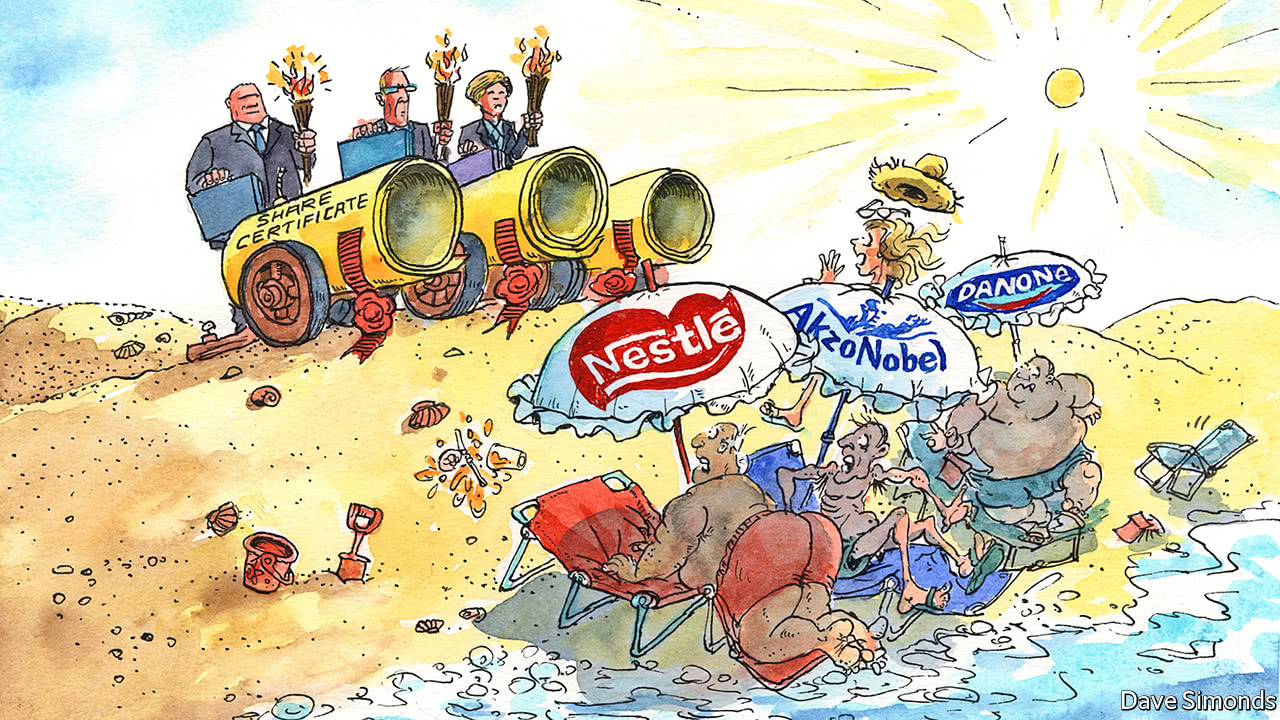
LEAVE it to the Americans to besiege European companies in August, when the entire continent is on holiday. It emerged this month that Corvex Management, an American hedge fund, had built up a $400m position in Danone, a French food giant. AkzoNobel, a Dutch paints-and-chemicals firm which has been under heavy fire from Elliott Advisors, a subsidiary of another American activist fund, agreed to appoint three new directors to its board. An even bigger skirmish is under way in Switzerland, where Third Point, an American fund run by Daniel Loeb, is seeking to shake up Nestlé, the world’s biggest food company. Ulf Mark Schneider, Nestlé’s new boss, is under pressure to present bold plans to investors in September.
Such tussles used to be relatively rare in Europe. But shareholder activism is on the rise, with restive investors demanding corporate overhauls. Armand Grumberg, a mergers lawyer in Paris, last year counted 70 such campaigns in continental Europe. He expects this year to be…Continue reading
Computer-game tournaments go mainstream

FIREWORKS detonated, smoke wafted over the stage and confetti began to fall. Seventeen thousand fans cheered the European players of Team Liquid, with monikers like “MinD_ContRoL” and “MATUMBAMAN”, who had just triumphed over a Chinese side to win The International, a tournament held in Seattle’s KeyArena on August 7th-12th. In the stands Max Martinez, a 25-year-old bartender from Phoenix, was in a state of nirvana. “This is like my Super Bowl,” he said.
But the players in this tournament had no need to catch, throw or run. Their most important muscles are those in their fingers. MinD_ContRoL, a bespectacled Bulgarian named Ivan Ivanov, excels at a computer game called “Dota 2”. Valve Corporation is the producer of “Dota 2”. It has put on The International since 2011, offering more than $10m to this year’s winners. The prize money is particularly rich, but the tournament itself is not unusual. E-sports, in which computer…Continue reading
A trade dispute threatens America’s booming solar industry

LAST year California Solar Systems (CSS), a small installer of residential solar panels, decided to “Buy American”. It turned to Suniva, a Chinese-owned firm that makes photovoltaic panels in Georgia and Michigan, rather than use cheap imports. But according to CSS’s boss, Bastel Wardak, Suniva was unable to deliver what it promised, leading to unacceptable delays. He then tried SolarWorld, a more expensive producer in Oregon whose panels could also be marketed as “Made in the USA”. But troubles at SolarWorld’s German parent put a stop to that. Now Suniva and SolarWorld are seeking new protections from America’s International Trade Commission (ITC). On August 15th Mr Wardak was one of many to testify that the two firms did not deserve them.
The case pits American solar-cell makers against solar-panel installers. It could have big implications. Solar was the biggest source of power-generating capacity built in America last year, thanks to falling prices (see…Continue reading
Marine contractors have made huge leaps in productivity
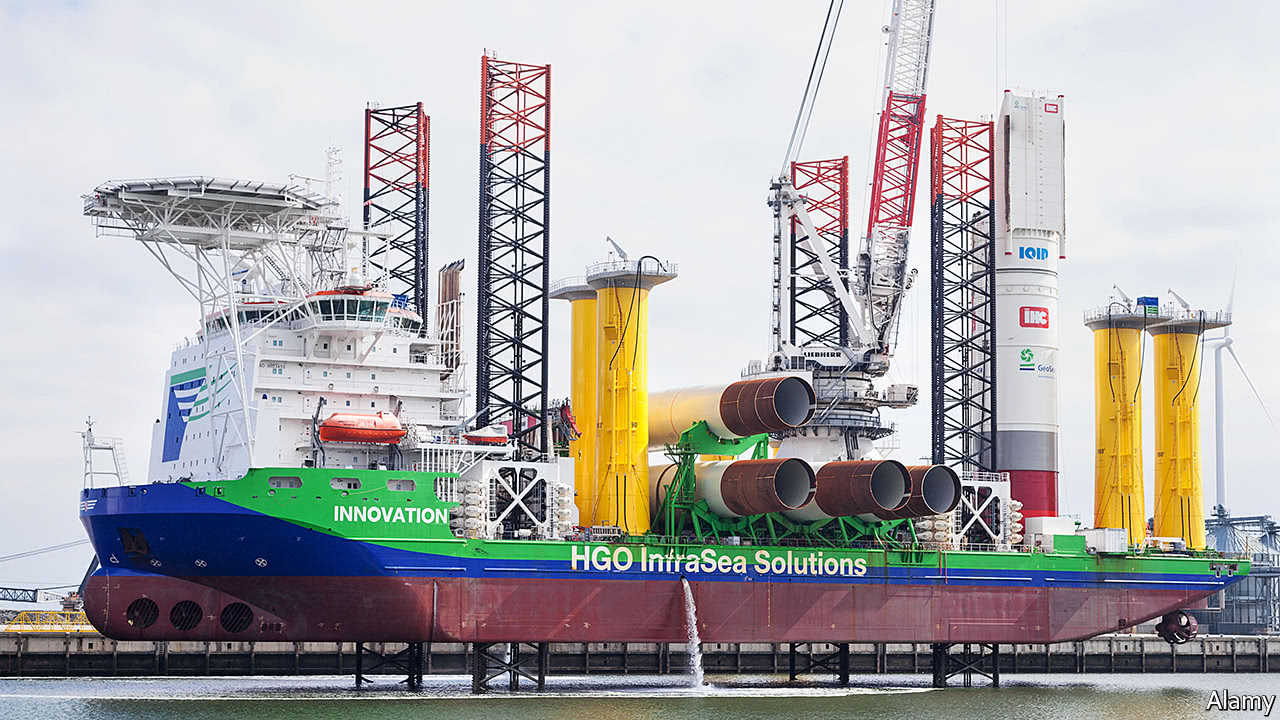
THE Innovation, a 147-metre ship docked in Rotterdam, looks like a cross between an oil rig and a robot from a “Transformers” film. Her crane has been loading on giant pipes throughout the night. Soon the ship will travel to sea, where an automated hammer will drive the pipes into the ocean floor to support wind turbines. “Everything in our industry has become larger,” says Koen Vanderbeke of DEME, a Belgian dredging firm that owns the ship. “But we’ve become smarter, too.”
Unlike their counterparts on dry land, marine contractors have made big leaps in productivity in recent years. From dredging and land reclamation to offshore construction of oil platforms, costs have dropped even as the speed and quality of work have increased. In Belgium, home to two of the world’s five biggest dredgers, efficiency gains have been so large that they have skewed productivity figures for the entire building…Continue reading
Efficiency eludes the construction industry
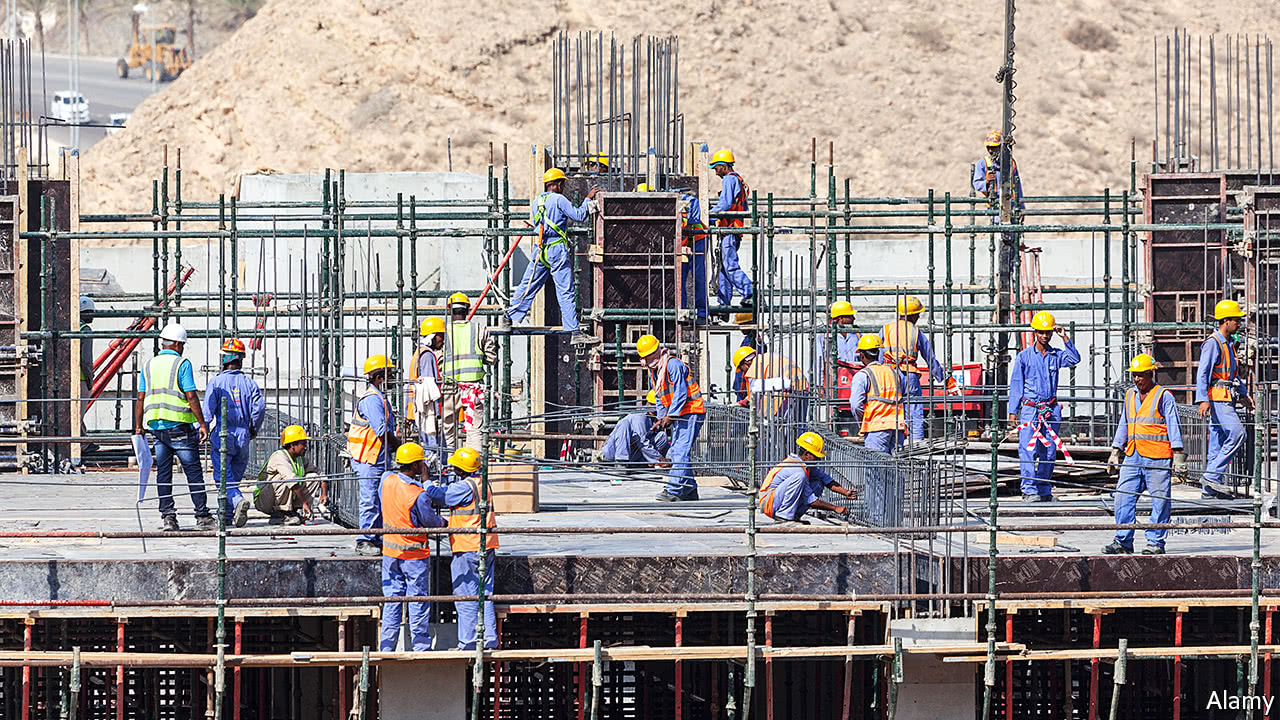
NINE years ago the first concrete was poured for Berlin Brandenburg airport. It was expected to open in 2012, to cost €1.2bn ($1.8bn) and to welcome 34m passengers each year. Today the only people in its terminals are those with hard hats. Six times over budget, the project has had 66,500 building errors in need of fixing. Last year its spokesman was sacked after calling the project a “shit-show” and saying no manager who was not “addicted to pills” could guarantee an opening date.
Berlin’s airport is an extreme example of a broader problem. Superficially, the construction industry would seem healthy enough. The global market is worth $10trn. Euler Hermes, an insurer, expects 3.5% growth this year. Yet more than 90% of the world’s infrastructure projects are either late or over-budget, says Bent Flyvbjerg of Saïd Business School at Oxford University. Even the sharpest of tech firms suffer. Apple’s new headquarters in Silicon Valley opened two years behind schedule and cost…Continue reading
China’s digital-payments giant keeps bank chiefs up at night

IN WESTERN countries it is common to talk about American technology being dominant. From an Asian perspective that seems off. Fresh from visiting the region, where buskers and kerbside fishmongers can be paid by presenting a phone, Schumpeter has found it a shock being back in New York. There, buying most things involves signing bits of paper and PIN numbers are viewed as dangerously transgressive. Only 2% of credit- and debit-card transactions in America are authenticated with PIN numbers; 19bn cheques are written in the country every year.
Asian firms have leapfrogged ahead, offering a new model of financial technology. Exhibit A is Ant Financial, a payments company affiliated with Alibaba, one of China’s two giant internet firms (the other is Tencent, whose WeChat messaging app is ubiquitous and supports payments). Ant is popular in China and has ambitions outside it. Already the world’s most valuable “fintech” firm, worth $60bn, it has 520m payments customers at home and its…Continue reading
American business leaders break with Donald Trump
“I’VE never known it to be an embarrassment for a business leader to be associated with an American president,” declares Max Bazerman of Harvard Business School. Donald Trump, in particular, has positioned himself as a businessman-president, whose corporate acumen would unleash a new era for American business. Investors seemed to believe him—his election prompted a giddy “Trump bump” in the stockmarket—and corporate bosses flocked to his side. This week they fled. For many, it seems as much a clear-eyed business calculation as a moral awakening.
Some distanced themselves more quickly than others. The trigger was Mr Trump’s reluctance to condemn neo-Nazis and white supremacists who staged violent protests in Virginia on August 12th. Kenneth Frazier (pictured), chief executive of Merck, a big pharmaceutical firm, was the first to leave Mr Trump’s advisory council on manufacturing. On August 14th Mr Trump denounced racist groups in a scripted statement. But the bosses of Under Armour, a sporting-goods outfit, and Intel, a computer-chip giant, defected, too.
On August 15th Mr Trump appeared once again to equate white supremacists with demonstrators opposing them. As word leaked the next day that chief executives might resign en masse, Mr Trump swiftly tweeted that he was disbanding his manufacturing council and his strategic and policy forum,…Continue reading
Airline profits: ready to depart
WHEN Heathrow airport opened, in 1946, the only retail facilities were a bar with chintz armchairs and a small newsagent’s. The first terminal was a tent, a far cry from the four halls, resembling vast shopping malls, at the London airport today. Retail spending per passenger is the highest of any airport. This summer’s consumer crazes include Harry Potter wands and cactus-shaped lilos.
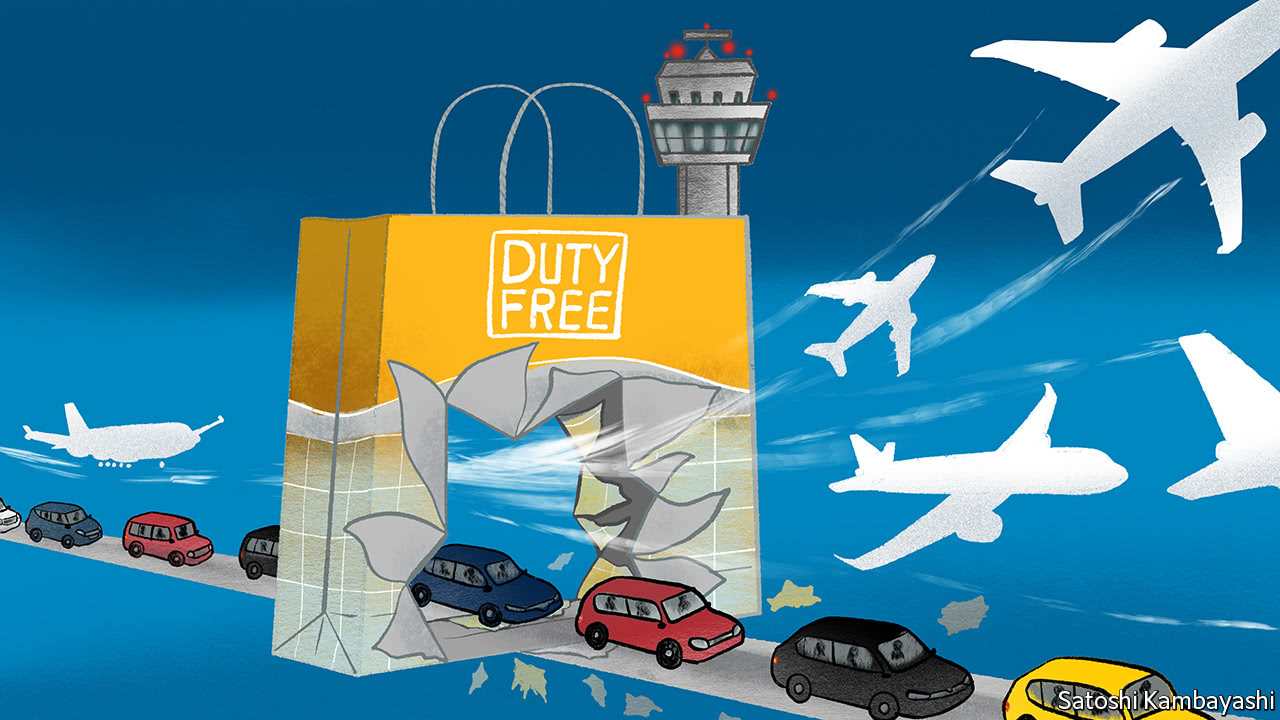
Heathrow’s journey from waiting room to retail paradise is the story of many airports. Before the 1980s, most income came from airlines’ landing and passenger-handling charges. Then “non-aeronautical” revenue—from shops, airport parking, car rental and so on—rose to around two-fifths of their revenues, of $152bn worldwide in 2015. But amid signs that non-aeronautical income is peaking, especially in mature aviation markets such as North America and Europe, the industry fears for its business model.
When airports were state-owned, and run not for profit but for the benefit of the…Continue reading
An Israeli pharma champion sickens

THE headlong plunge of shares in Teva, a pharmaceutical giant—down by over 40% since August 2nd—is causing consternation beyond the firm’s shareholders and employees. The company was founded in Jerusalem in 1901, is the largest in Israel and is the country’s only multinational with its headquarters still at home. Since beginning its rapid expansion abroad in the early 1980s it has been called “the nation’s share” by Israelis, whose pension funds have invested heavily in its success.
That prosperity came chiefly thanks to the firm’s most popular proprietary drug, a bestselling medication for multiple sclerosis called Copaxone. Over the past two decades its sales paid for a global spree of buying generic-drugs competitors. Last year Teva completed its most ambitious purchase, of Actavis Generics, an American generics manufacturer, for $40.5bn; financing the deal took its debt to $35bn. But Teva’s transformation into the…Continue reading
Rupert Murdoch’s bid for Sky hits more obstacles

RUPERT MURDOCH’S penchant for mass-market media has made him billions of dollars. It also gets in the way of empire-building. In 2011 News Corp’s bid to take full ownership of Sky, a European pay-TV giant, fell apart amid public rancour over phone hacking by journalists at the News of the World, one of his tabloids (since closed). Now a renewed Murdoch family takeover attempt for Sky, a bid of £11.7bn ($15.2bn) by 21st Century Fox, faces yet more scrutiny over concerns about alleged scurrilous reporting at Fox News, Mr Murdoch’s American cable-news channel.
On August 8th Karen Bradley, Britain’s culture secretary, asked Ofcom, the media regulator which had already reviewed the bid, to take another look to determine whether 21st Century Fox meets Britain’s broadcasting standards. Ms Bradley’s request followed fresh complaints about Fox News from members of parliament, including Ed Miliband, the former leader of the opposition Labour Party, and from…Continue reading