
Tag: Business
Hong Kong, the global capital of hustle, is gripped by self doubt
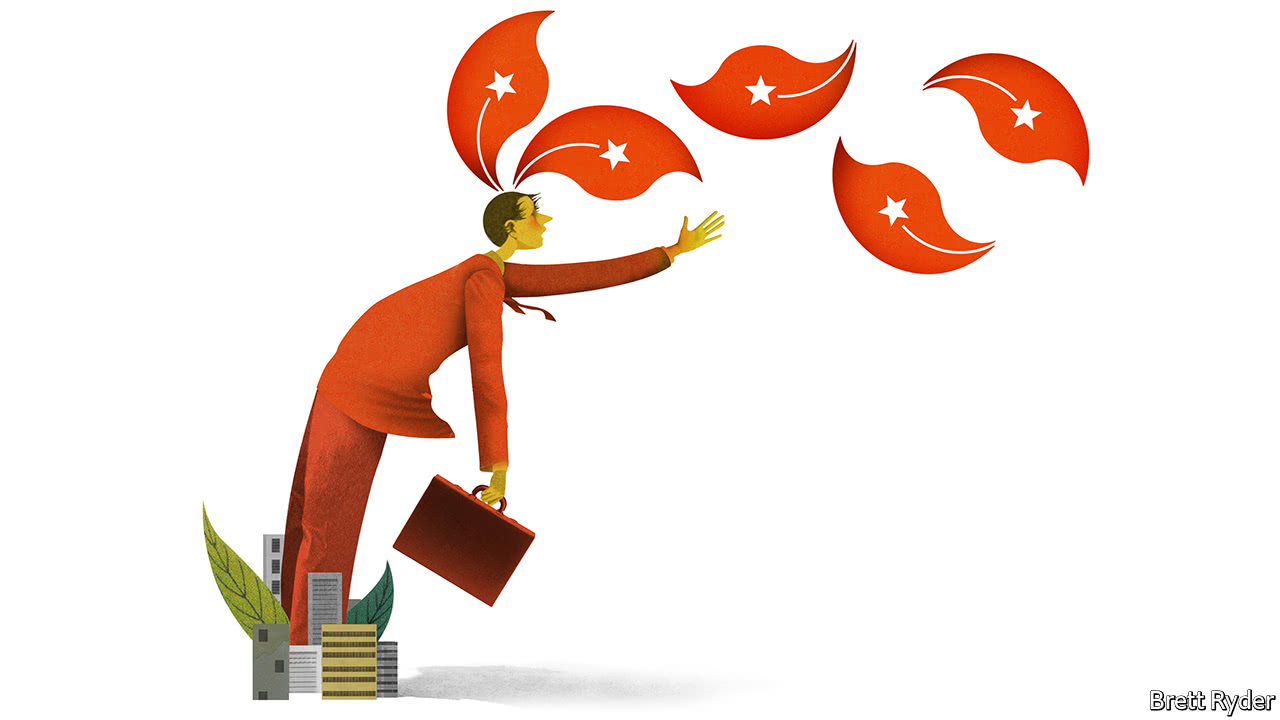
OF THE world’s three great commercial centres—New York, London and Hong Kong—two are on the defensive. London faces a rupture with the European Union, which wants to seize the City’s euro-related activities and shift them inside the currency zone. In Hong Kong the fear is of deeper assimilation by mainland China, followed by irrelevance.
Entrepots, after all, can become obsolete. Venice once teemed with merchants, not tourists. Yet while London’s problem is complacency, Hong Kong’s pessimism seems overdone. It remains vital both to China and to the country’s trading partners—the adaptor that converts the mainland’s financial and legal voltage into the one used by the rest of the world.
Today’s gloom partly reflects a fear of Chinese autocracy. During Schumpeter’s recent visit, Xi Jinping, China’s president, in town for the 20th anniversary of the resumption of mainland rule, warned that, while the constitutional structure of “one country, two…Continue reading
Can data predict fashion trends?

IN THE film “The Devil Wears Prada”, the character of Miranda Priestly, whose role is based on a feared Vogue editor, scolds her new assistant for not understanding fashion. Fashion, she tells her, is whatever a select group of designers and critics says it is. What she does not say, however, is that their judgments are themselves often influenced by another group: fashion forecasters, who predict what will be “in”. Might these seers of style in turn be undone by artificial intelligence (AI)?
Fashion forecasting has always been a peculiar profession. The business came into its own in Paris in the 1960s when agencies began releasing “trend books”, collections of fabrics and design ideas. Retailers use these books for inspiration as they put together designs.
The biggest of these forecasting firms is WGSN, with a market share of 50%. It employs 150 forecasters who scour the world’s catwalks, bars…Continue reading
The world’s largest online-travel company

NOT since the dotcom boom at the turn of the century have technology shares been on such a tear. On July 19th the S&P 500 index of information-technology stocks hit a record high, closing above its previous peak in March 2000 (see Buttonwood). As titans like Google, Facebook and Amazon hog the limelight, other firms can go unnoticed. One that deserves more attention is Priceline, the world’s largest online-travel company.
Those old enough to remember the dotcom boom may still associate Priceline, which was founded in 1997, with its “name your own price” feature, which let consumers bid for hotel rooms and flights. Today it is a Goliath. Its stable of online sites for booking hotels, cars, flights and restaurants spans the world and includes Booking.com, Kayak, Agoda and OpenTable. Over the past decade Priceline’s pre-tax earnings…Continue reading
A bad week for Germany’s carmakers
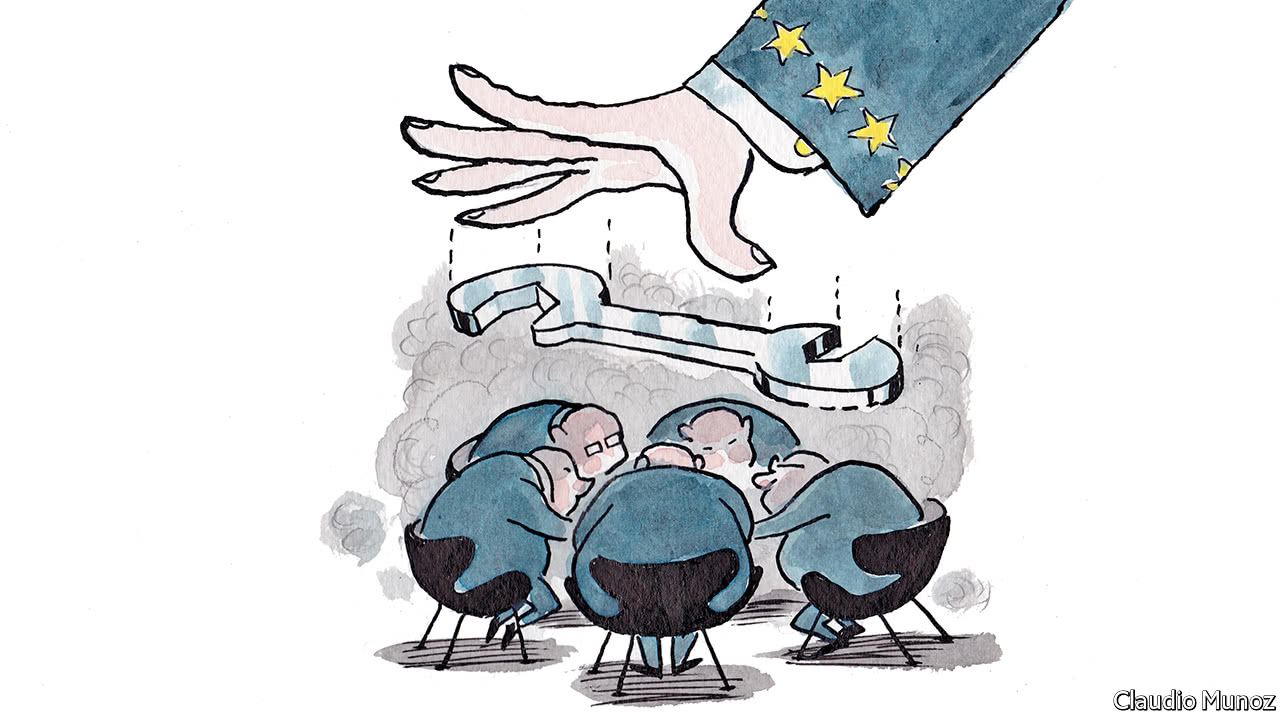
STRENGTH and reliability were once the watchwords of Germany’s carmakers. Tardiness and scheming seem more apt terms now. Nearly two years after Volkswagen (VW) was caught rigging emissions tests, the difficulties continue to pile up. Europe is turning against diesel, and even petrol. And German firms are facing accusations of collusive behaviour, including claims of more widespread rigging of emissions tests for diesel engines.
Diesel’s days look numbered. Sales in Europe are falling fast. Before VW’s misdemeanours came to light, they accounted for over half the market in large European countries. No longer: Morgan Stanley, a bank, notes that diesel passenger cars took less than 39% of sales in Germany in June. Another bank predicts that diesel’s share will soon drop to 30% across Europe.
Dismay over premature deaths caused by pollution is one reason. The European Environment Agency says smog causes nearly half a million early deaths in Europe annually. Diesel engines…Continue reading
The wage gap between men and women varies depending on job types
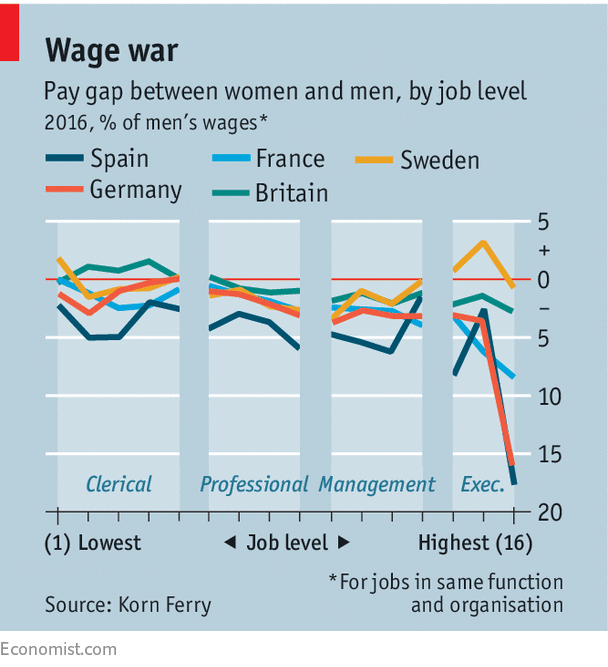
IT HAS been a turbulent few days for the BBC, Britain’s public broadcaster. On July 19th it published the names of those to whom it pays £150,000 ($195,000) or more a year. The ensuing furore was less over the level of pay, but the differences between men and women. Some female presenters discovered that they earned much less than their male peers. Of the 96 people listed, two-thirds are men; across the BBC, just over half are.
In a petition, female presenters said this was evidence that women at the BBC are paid less than men “for the same work”. Although this may be true for people on the BBC’s list, it is much less clear for the rest of its 9,000 female employees: a gender pay gap at the top of an organisation does not necessarily mean that similar gaps exist at lower levels.
In Britain, as in other European countries, the average gap in pay between men and women in exactly the same jobs is tiny or non-existent, according to data for 8.7m employees worldwide gathered by…Continue reading
Foreign executives need to get their feet dirty to succeed in Africa
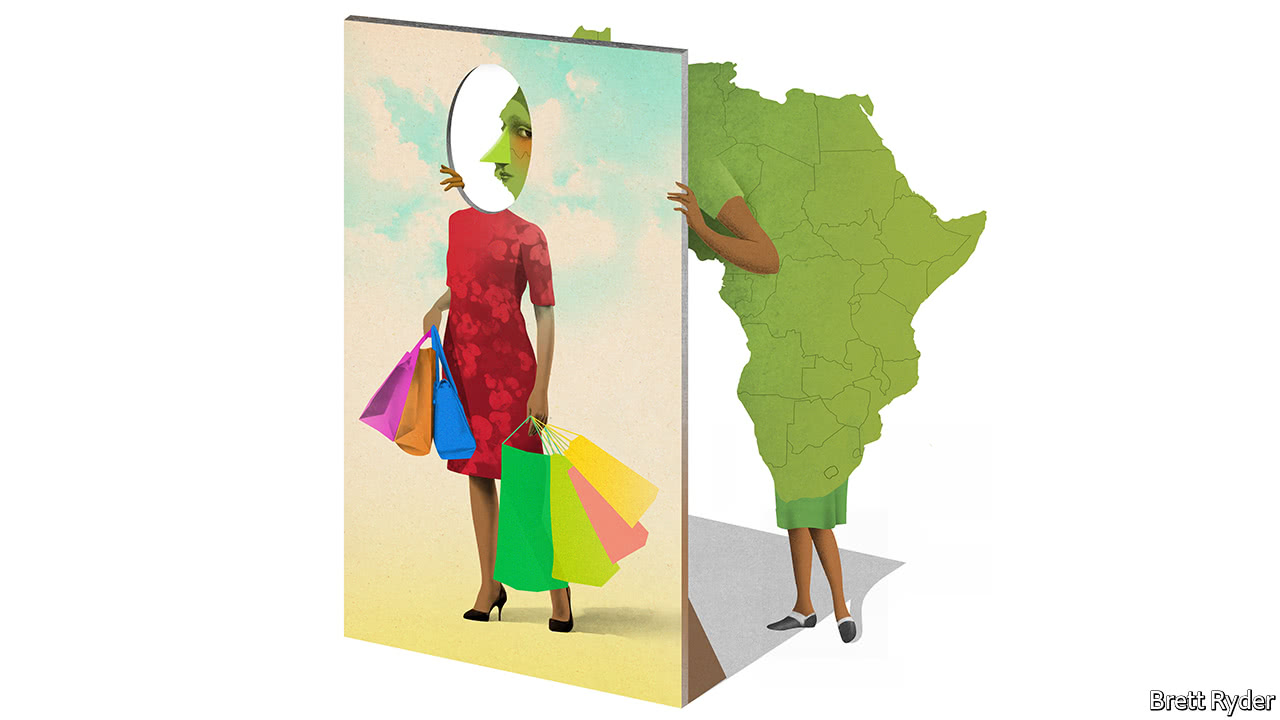
NAIROBI, Kenya’s capital, is also known as the “Green City in the Sun”. It might as well be called the city of malls: it has never had such a wide choice. The newest outlet, named Two Rivers, sits on a road near the American embassy and contains no less than three different malls in the space of a square mile or so. Here, you can scoff a Burger King before wandering around a huge new Carrefour supermarket to stock up on French cheese, British-made breakfast cereals and Turkish-made clothes. The owners proudly proclaim that it is sub-Saharan Africa’s biggest mall. It is certainly among the glitziest.
And yet walking into Two Rivers is an odd experience. The scale is huge, but the place is eerily quiet. More than a few shopfronts are empty, with hoardings instead of windows. Those that are occupied have a mere trickle of customers, and the goods they sell—furniture, clothes, electronics—are ambitiously priced. Two Rivers feels a bit like a Potemkin village, projecting an illusion…Continue reading
Thanks to streaming services, China’s consumers have begun paying for music

HONEST souls intent on paying full whack for the music they listen to used to have a hard time in China. In the era of compact discs, rare was the shop which did not sell counterfeits. The same held true when discs turned into downloads and online streams of songs: hardly any service charged money.
Slowly but surely, China is becoming a market where people pay for music. Over the past five years, digital-music revenues for the recording industry nearly quadrupled, to $195m; most of that amount comes from music streaming (see chart). That sum may still be a tiny fraction of the global total of $7.8bn, but streaming has clearly taken off in China.
 Continue reading
An overhaul of Brazilian labour law should spur job creation
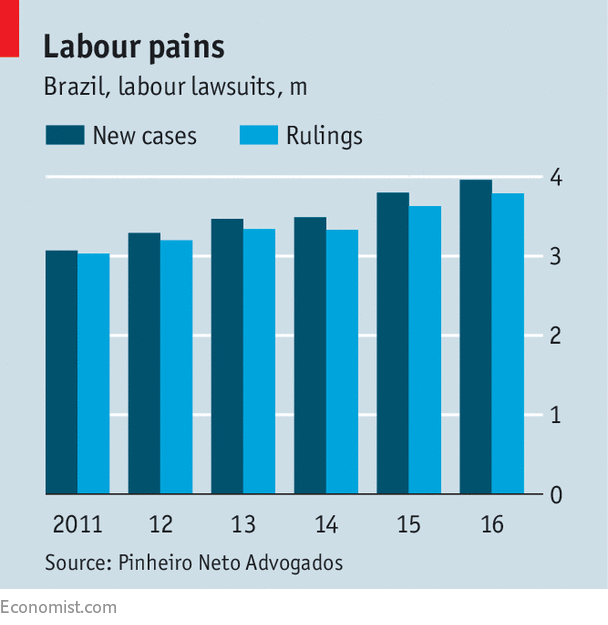
IN THE litany of bosses’ gripes about Brazil’s inclement business climate, rigid labour laws vie for pride of place with its convoluted tax laws and its licensing rules (on everything from health and safety to protection of cultural heritage). No wonder: Brazil ranks a miserable 117th out of 138 countries on labour-market efficiency, according to the World Economic Forum. Its rigid labour law was transplanted from Benito Mussolini’s Italy in 1943. Employers find it thoroughly unsuited to a modern economy and cheered on July 13th, when the president, Michel Temer, signed into law the biggest overhaul of the unwieldy statute in 50 years.
The reform is a big victory for the unpopular Mr Temer, who is under investigation in a corruption scandal (he denies wrongdoing). It introduces more flexible working hours, eases restrictions on part-time work, relaxes how workers can divvy up their holidays and cuts the statutory lunch hour to 30 minutes. It also scraps dues that all employees must pay to…Continue reading
An overhaul of Brazilian labour law should spur job creation
IN THE litany of bosses’ gripes about Brazil’s inclement business climate, rigid labour laws vie for pride of place with its convoluted tax laws and its licensing rules (on everything from health and safety to protection of cultural heritage). No wonder: Brazil ranks a miserable 117th out of 138 countries on labour-market efficiency, according to the World Economic Forum. Its rigid labour law was transplanted from Benito Mussolini’s Italy in 1943. Employers find it thoroughly unsuited to a modern economy and cheered on July 13th, when the president, Michel Temer, signed into law the biggest overhaul of the unwieldy statute in 50 years.
The reform is a big victory for the unpopular Mr Temer, who is under investigation in a corruption scandal (he denies wrongdoing). It introduces more flexible working hours, eases restrictions on part-time work, relaxes how workers can divvy up their holidays and cuts the statutory lunch hour to 30 minutes. It also scraps dues that all employees must pay to…Continue reading
Demand for exorcists is soaring in France
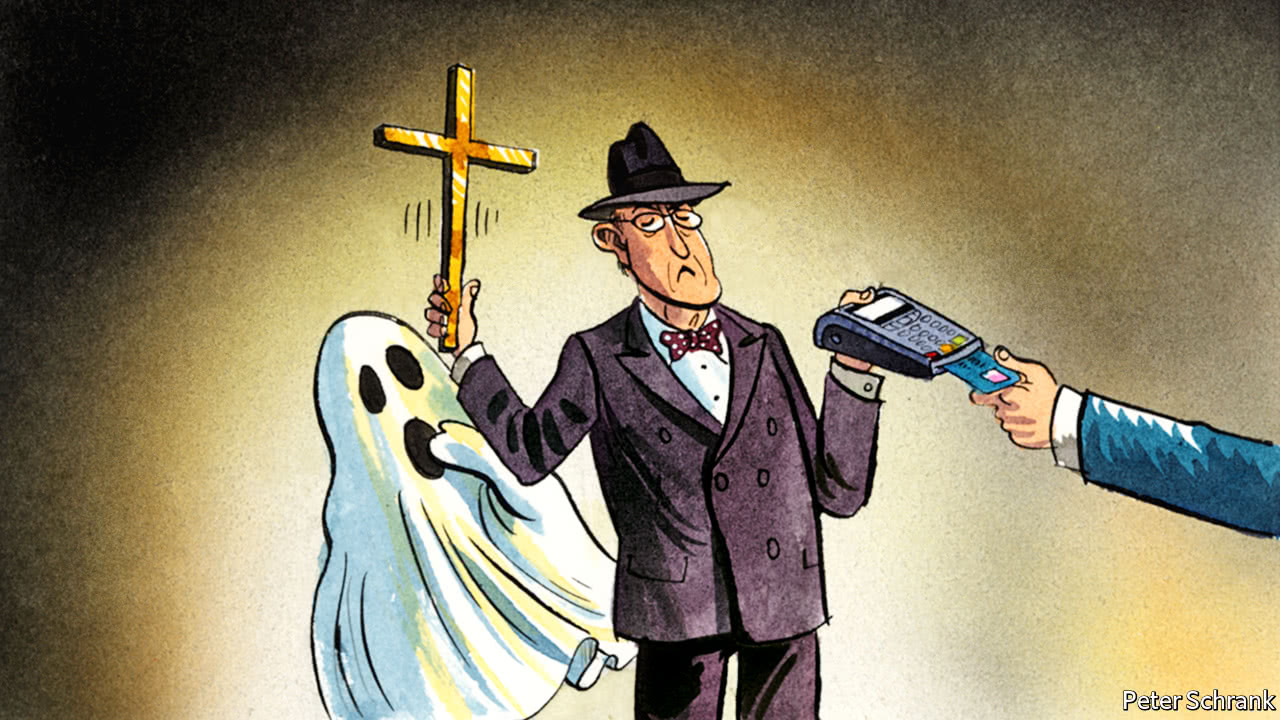
FOR A man poised for combat with evil spirits, Philippe Moscato looks remarkably at ease. In casual clothes and chatting about the tools of his trade—a “Vogel” crystal, compass, steel crucifix, pendulum and bag of salt from Jerusalem—he says he can deliver unreal results. Hired to exorcise an apartment in a wealthy district of central Paris, he predicts that the air will change. In the winter, he says, the owners will no longer need their central heating, the result of beneficial vibrations.
Mr Moscato’s work involves first waggling a pendulum, supposedly to assess the flat’s readiness, then lighting a candle, reciting from an exorcism manual, before blessing salty water that he splashes in every room. As he sprinkles, he delivers a flow of incantations. For an hour’s work he pockets €155 ($178). He has requests three or four times a week to de-spook property, and exorcises a person on average once a week. Paris, Lyon and the French Riviera are the areas most contaminated…Continue reading