
Tag: Business
A reality check for virtual headsets
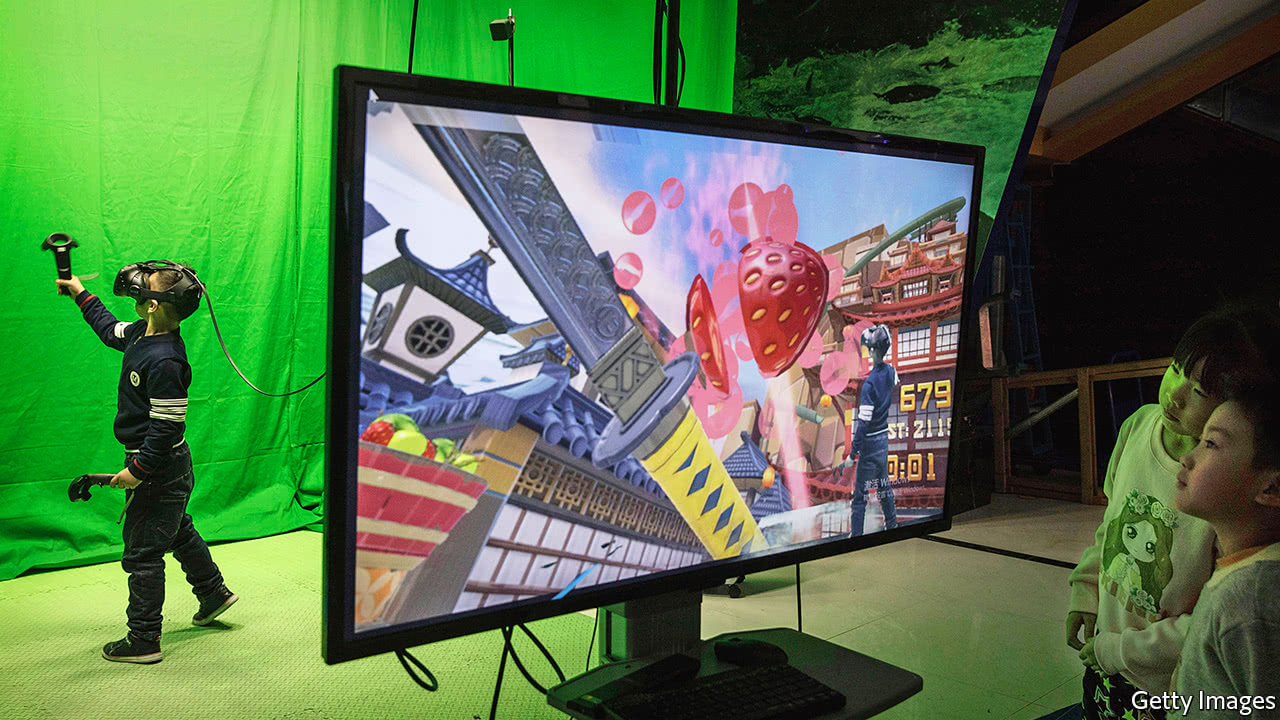
JUSTIN WILLIAMS takes off a virtual-reality (VR) headset and wobbles away from a demo area at E3, the world’s largest gaming convention, in Los Angeles. The bottoms of his feet and calves are “on fire,” he says. Mr Williams, a 32-year-old former marine, was playing “Sprint Vector”, a VR running game: players swing hand-held controllers to simulate motion. Though he has been standing in one place, his brain believes he has just run for several miles.
This sensation of complete immersion is called “presence”. Boosters of VR say it is what will drive the technology’s mass adoption, in time. When Facebook bought Oculus, a VR startup, for $2bn in 2014, and sent interest in the technology rocketing, it was this feeling of being present that Mark Zuckerberg, the social network’s boss, described as “incredible”.
Yet despite many pronouncements that 2016 was the year of VR, a more apt word for virtual reality might be absence. Of the 6.3m headsets that were…Continue reading
Russian oligarch Vladimir Yevtushenkov falls from grace, again
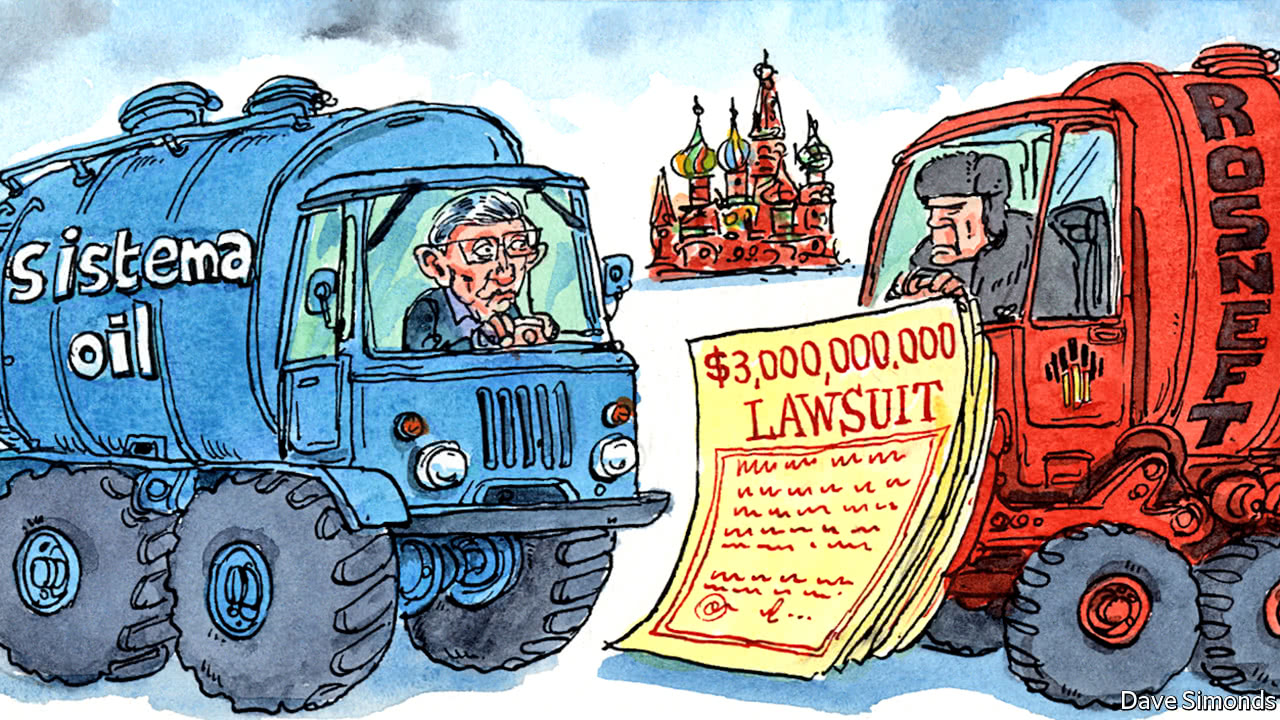
HE WAS back in favour, or so it appeared. After spending several months under house arrest in late 2014, Vladimir Yevtushenkov, a Russian oligarch, relinquished control of Bashneft, a midsized oil firm, to the state. “If you like another company tomorrow and want to take it, you are welcome,” he told Vladimir Putin at the time, he later recalled. The president publicly gave his approval to Sistema, Mr Yevtushenkov’s conglomerate, shares in which had plunged. Mr Yevtushenkov subsequently appeared at annual Kremlin receptions and late last year joined a presidential delegation to Crimea.
Now he is under pressure again, facing a lawsuit from Rosneft, a state-run oil giant, which is demanding 171bn roubles ($2.8bn) in damages. Rosneft’s boss is Igor Sechin, a Putin confidant, who many in Moscow reckon orchestrated the initial 2014 case against Mr Yevtushenkov as well. (Rosneft and Mr Sechin have denied any involvement in it.) Late last year, Rosneft purchased Bashneft from the state…Continue reading
Craft beer in America goes flat
JULY 4th is a day to celebrate American independence, first and foremost, but also to grill meat and swill beer. For American beer lovers in particular, the pint-glass runneth over in terms of choice. They had 5,000 breweries to pick from this year; 35 years ago there were under 100. Drinkers can enjoy time-honoured traditions, guzzling Budweiser to wash down all that sizzling beef, and newer ones such as sipping ale “finished with fennel, liquorice and anise” at Tørst, a Brooklyn bar.
For the producers of beer, the mood is darker. Though the number of brands has proliferated, the number of drinkers has not. Sales have been flat for a few years and 2017 has been especially slow so far. The volumes of beer sold at stores for the three months to June 17th were 1% lower than in the same period last year, according to Nielsen, a market-research firm. Brewers are now waiting with some anxiety for data about sales during the July 4th…Continue reading
Who would buy Air India?
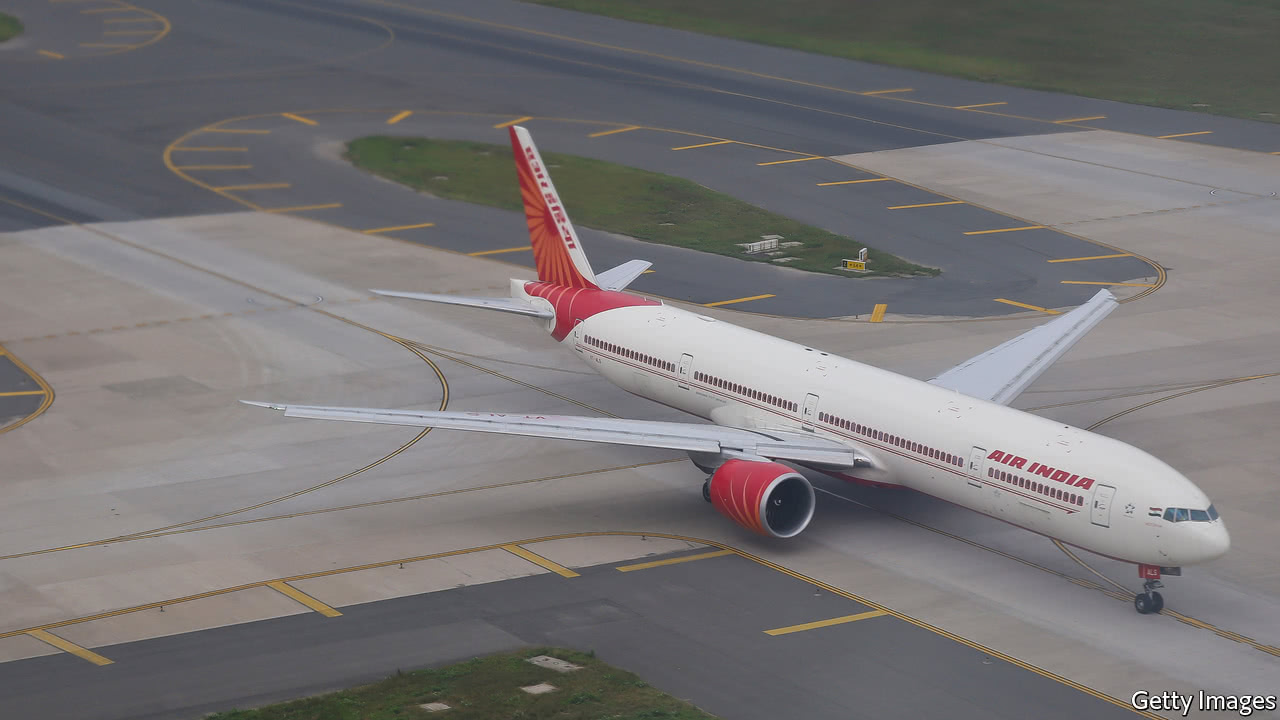
A FAMOUS brand in the world’s fastest-growing aviation market, sitting on valuable slots at international airports and able to borrow cheaply thanks to being state-owned: Air India ought to be hugely profitable. But under state ownership it has guzzled public funds as hungrily as its jets consume kerosene. Last week the authorities threw in the towelette and announced an “in principle” cabinet agreement to privatise it. The chances of that going ahead rose on June 30th when IndiGo, a well-run private low-cost carrier, said it wanted to bid.
Whoever seizes the controls can expect a hard task. Air India has struggled since private rivals were first allowed in 1994 to fly in India’s skies. Together with Indian Airlines, another state-owned carrier with which it merged in 2007, it has a domestic market share of just 13% and is shedding one percentage point or so every six months. A bail-out of 300bn rupees ($4.7bn) agreed in 2012 was meant to stop losses, but has…Continue reading
Hollywood studios dip their toes in virtual reality

OUTSIDE a squat grey building in Santa Monica, the California sun melts the tar. Inside, in a dark room roughly the size of a small shipping container, two men are exploring the world by means of virtual reality (VR). They squash spiders in an abandoned temple, hit a home run at Yankee Stadium and float through a Blade Runner-esque landscape, all in the span of eight minutes. It feels much longer than that, and also shorter—time is hard to grasp in VR.
The creator of the experience is Walter Parkes, a former boss of DreamWorks Pictures, a film studio, who last year co-founded Dreamscape Immersive. The startup plans a chain of VR multiplex cinemas offering ten-minute interactive experiences for around $15 each. The first will open at a shopping mall near Beverly Hills at the end of the year; another 14 are planned for 2018. Mr Parkes says it costs about $2m to make a ten-minute VR experience, compared with around $200m for a big-budget…Continue reading
Detroit’s car firms try to match Silicon Valley
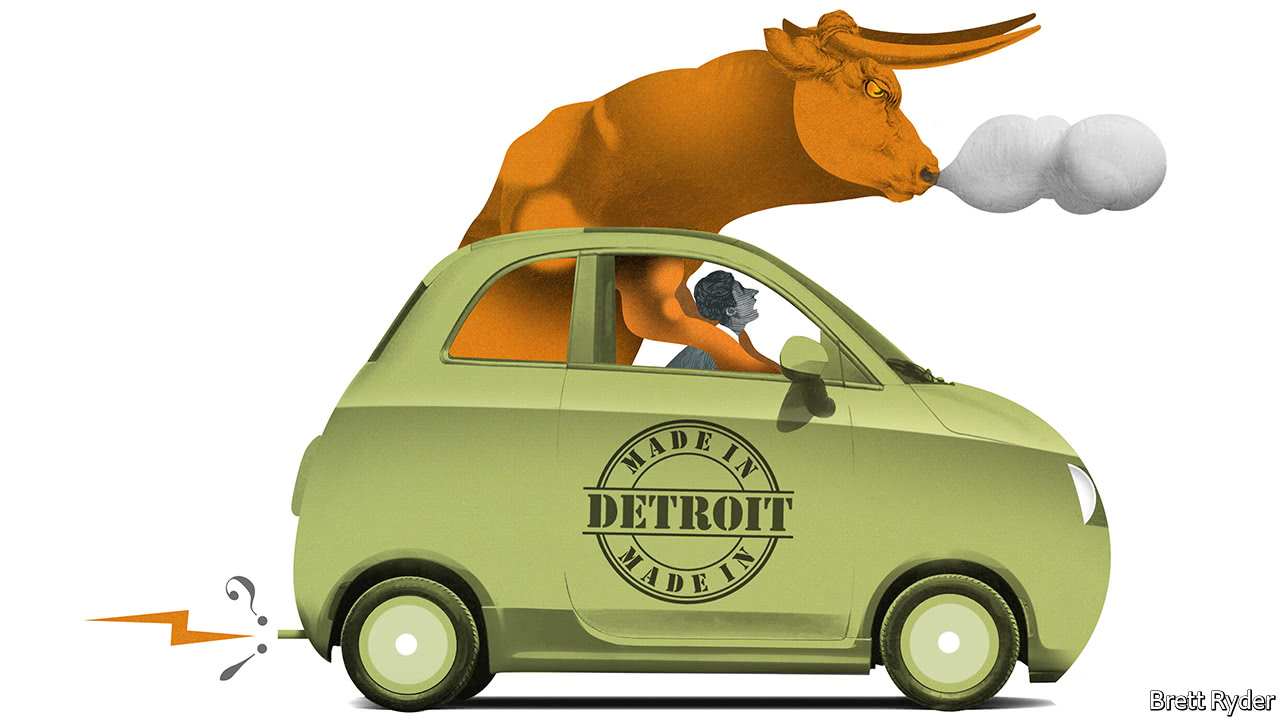
IT IS fashionable to say that the city of Detroit is on the up after decades of decline. Amid the derelict buildings there are signs of revival; art shops and trendy food trucks abound. But for a truer augury of the city’s possible future, consider the rock-bottom stockmarket valuations of Ford and General Motors (GM), Motor City’s two big domestic car firms. (A third, Chrysler, is owned by Fiat Chrysler Automobiles, whose chairman is a director of The Economist’s parent company.) If you put the members of the S&P 500 index in order of their price-earnings ratios, Ford and GM are at the bottom, among the walking dead.
For their investors, creditors and 426,000 staff, about 18% of whom are in Detroit, it is a terrifying signal. A low price-earnings ratio is the stockmarket’s way of telling you that business as you know it is over. GM and Ford together made $18bn of underlying profit last year but have a market value of $98bn. That ratio implies that their…Continue reading
The new old thing

APPLE has a new hit device, so popular that it has sold out across most of America and Britain. If you order it online it takes six weeks to arrive. “Best Apple product in a long time,” sings one online review. Useful and (of course) slickly designed, it enjoys the highest consumer satisfaction of any Apple product in history, according to a study by two firms, Creative Strategies and Experian.
Such enthusiasm must be bittersweet for Apple’s bosses. The gadget in question is AirPods, a set of wireless headphones that look a lot like Apple’s traditional ear buds, just without a wire. Priced at $159, AirPods could become a business worth billions of dollars, like the Apple Watch, a wearable device that Apple started selling in 2015. But headphones are hardly the transformative, vastly profitable innovation that many have been waiting for.
That wait started only a few years after its biggest blockbuster launched. On June…Continue reading
An activist investor bites into Nestlé
NESTLÉ is not easily rattled, to some investors’ chagrin. The world’s biggest food company accounts for about half of all sales of instant coffee, not to mention one quarter of grub for babies, dogs and cats. Thirty-four of its brands, including KitKat and Nespresso, earn over $1bn each. Yet many investors complain that Nestlé is falling behind, and this week Daniel Loeb, an American activist investor who runs Third Point, a hedge fund, gave voice to their concerns. On June 25th, in a letter, he attacked Nestlé’s “staid culture and tendency towards incrementalism”.
Third Point has acquired a small stake in Nestlé, less than 2% of the company. But it was enough to spark a jump of over 4% in the company’s share price on hopes that its bosses would respond. On June 27th Nestlé announced its own menu of changes—all unrelated, the company claimed, to the urging of any individual investor. Third Point will keep pushing for more.
The skirmish points to a basic question facing not just Nestlé but many of its peers: how should a consumer-goods giant operate? Big brands can no longer assert their dominance by securing spots on store shelves and spending millions on television ads. Now they must also succeed online and meet demand for “healthy” and “natural” fare. In rich countries, in particular, large companies are squeezed on one side…Continue reading
What Rosneft’s purchase of Essar’s oil refinery means
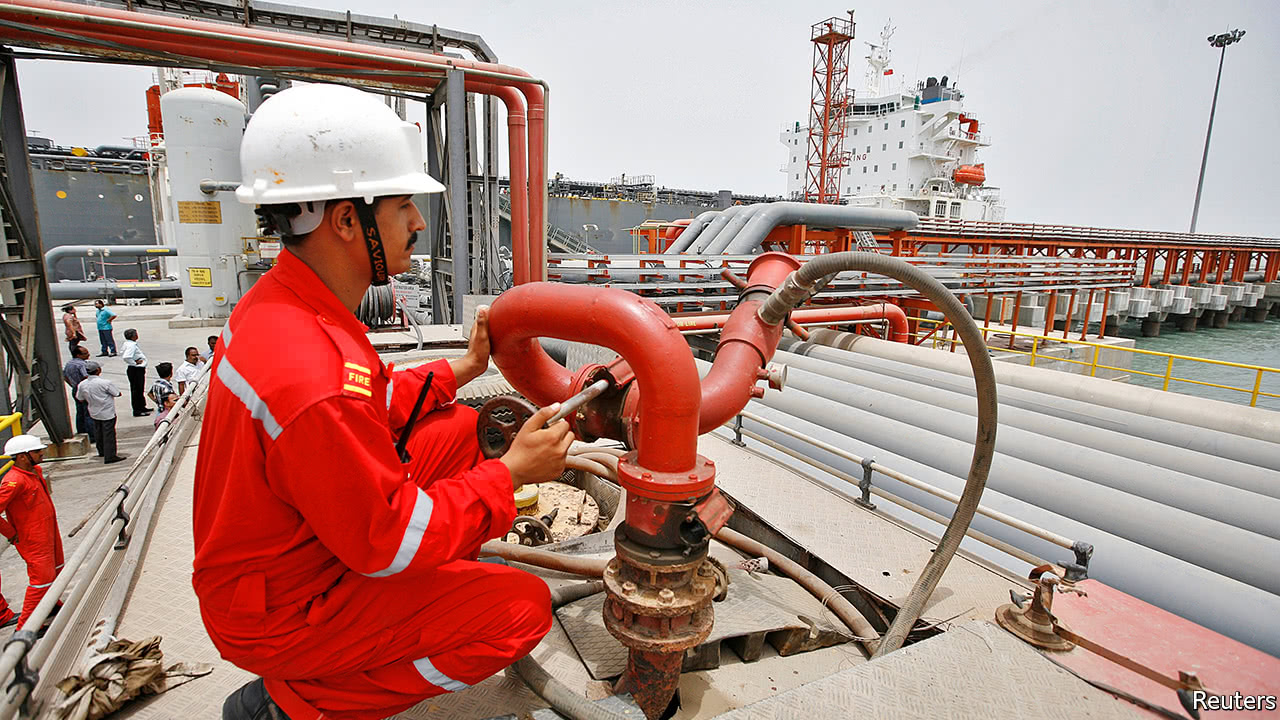
CONGLOMERATES sometimes sell their least promising units, thereby ginning up returns for the remaining empire. But groups saddled with huge debts do not have that luxury; only by disposing of the most profitable parts can they raise enough funds to satisfy creditors. Such is the story of the Essar Group, which is in the final stages of selling its crown jewel, India’s second-biggest private oil refinery, to a consortium led by Rosneft, a Russian oil titan. The slimming of what was once the country’s third-largest diversified corporate group is a welcome signal that an era of powerful industrialists running rings round their creditors is ending.
The purchase by Rosneft (along with a Russian investment fund and Trafigura, a trading firm) of the giant Vadinar refinery in the state of Gujarat for $12.9bn will be the largest-ever foreign investment in India. It has been a long time coming. It was first mooted over two years ago and…Continue reading
The European Commission levies a huge fine on Google
SHE was born to Lutheran ministers known to be both tough and principled. As a child, she thought it unfair that pupils were not allowed to sell fruit and milk in school and successfully lobbied for change. In her office in Brussels she keeps a statue of a raised middle finger, a gift from a trade union when she was deputy prime minister of Denmark, as a reminder that there will always be critics.
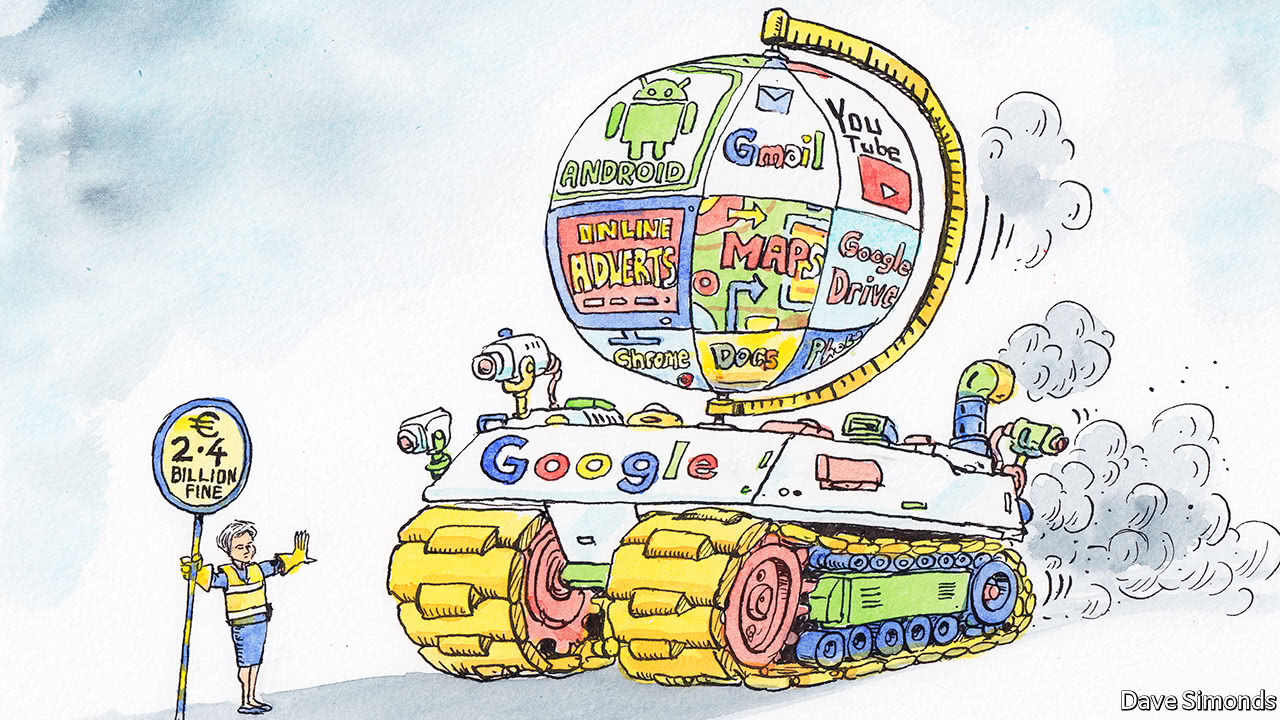
It shouldn’t have come as a surprise that Margrethe Vestager, the European Union’s competition commissioner, took a tough line against Google this week. The size of the fine the tech giant will have to pay for abusing its monopoly in online search, €2.4bn ($2.7bn), sets a record for European antitrust penalties (see chart). Yet more important than the amount is that she provided a rough guide to how the European Commission plans to deal with online firms which not only dominate a market, but essentially are the market.