
Tag: Business
An industry shudders as Amazon buys Whole Foods for $13.7bn
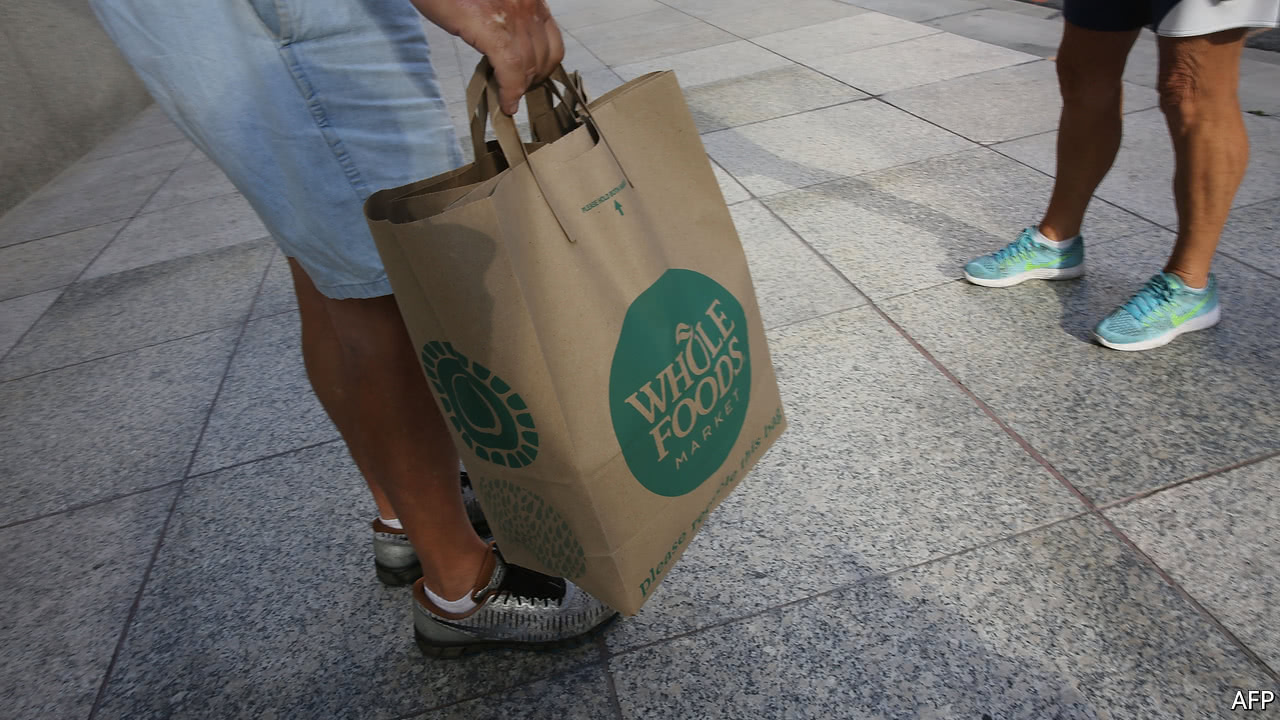
AMAZON announced on June 16th that it would pay $13.7bn to buy Whole Foods, a grocer known for its organic produce. On the face of it, the purchase might not seem to upset the grocery cart, either for Amazon or for the supermarket business. Amazon controls a measly 0.2% of America’s grocery market; Whole Foods has just 1.2%, according to GlobalData, a research firm and consultancy. By Chinese standards, Amazon looks slow: Alibaba, another e-commerce titan, bought a 32% stake in a Chinese grocer last year.
Nor is Whole Foods a juggernaut. It has about 450 stores in America, Britain and Canada, but American shoppers are now buying a wide range of organic foods at other grocers, without having to put up with Whole Foods’s steep prices or its hipster clientele.
Nevertheless, the deal marks a new era for Amazon. It has run a few experiments in physical retail, including bookstores in Chicago and in New York. In Seattle it is testing a small grocer, Amazon Go, where…Continue reading
German deep discounters go big in America

AMERICA’S economy is enjoying its third-longest period of uninterrupted expansion since the 1850s. So it is at first glance puzzling that Lidl, a German deep-discount chain whose sales soar when times are hard, is entering the market now. On June 15th Lidl opened nine stores in Virginia, North Carolina and South Carolina. Up to 90 more stores across the country are to follow within a year.
The move may be far-sighted, however. Lidl’s arch-rival, fellow-German discounter, Aldi, has been in America for four decades and has 1,600 stores across 35 states. It has had success not just among poor Americans but, increasingly, among the middle class, according to Bain, a consultancy. Aldi is preparing for an expansion: on June 12th it said it would add 900 more in the next five years, putting it third in the country by store count, behind Kroger and Walmart, America’s biggest retailer.
Unlike conventional supermarkets, which usually carry…Continue reading
Canadian banks don’t face a crisis. They do face a strategic trilemma
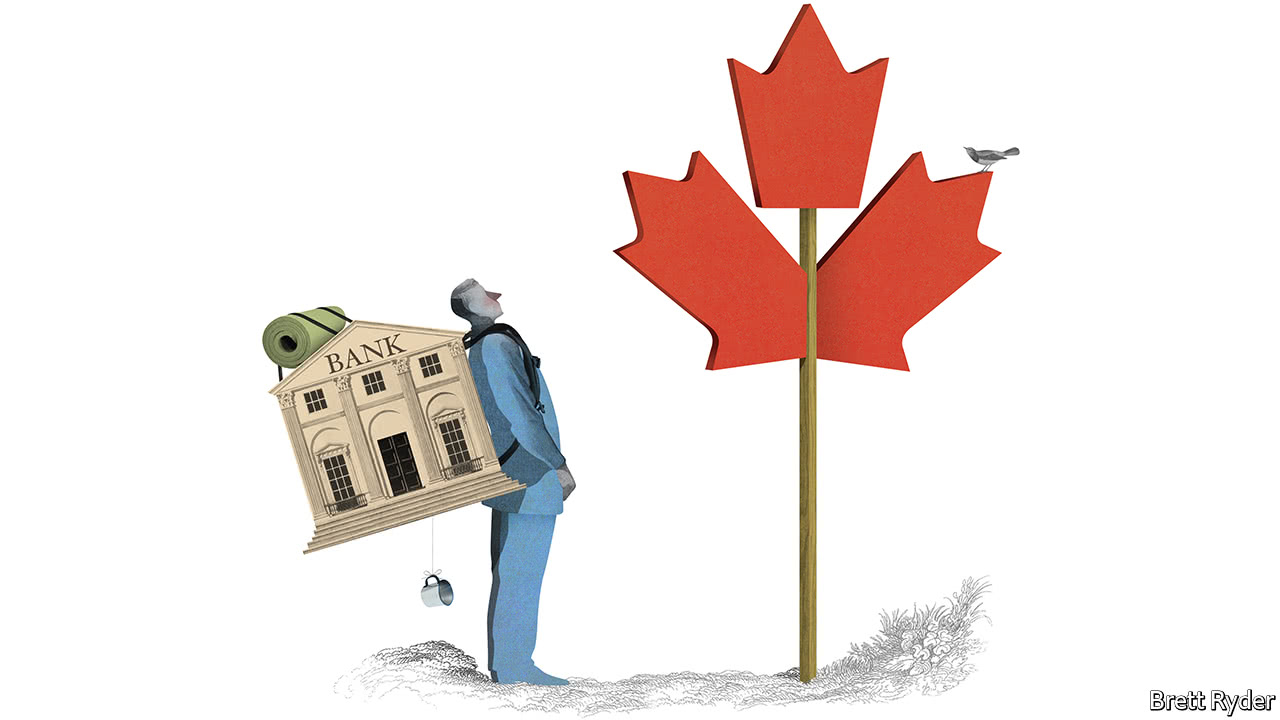
AS the global financial system was engulfed in crisis in 2008-10, only one set of banks in Europe and North America stayed serene and safe: Canada’s big five lenders. They were largely untouched by the madness south of the border and across the pond and kept churning out profits. After the crisis experts went on pilgrimages to Toronto and Ottawa to study the Canadian way. The country’s central-bank governor, Mark Carney, became a financial celebrity who was headhunted to run the Bank of England.
Canada’s banks quickly joined the select ranks of the industry’s superpowers, shooting up the global league tables in the aftermath of the crisis. Today three of them are on the list of the 20 biggest banks globally, measured by market value: Royal Bank of Canada (RBC), Scotia and Toronto Dominion (TD). RBC is worth more than Spain’s Santander, the euro zone’s biggest bank.
It has taken nearly a decade but Canadian lenders are back in the spotlight, this time accused of…Continue reading
Corporate Europe is giddy with optimism

IT IS remarkable what a difference a single election can make. “The way Europe is regarded by the rest of the world has changed in a few months,” says Gérard Mestrallet, chairman of both Engie and SUEZ, two big French energy firms, and a board member at Siemens of Germany, the region’s biggest engineering firm. The arrival of Emmanuel Macron as France’s reform-minded new president—his party is set for a giant victory in parliamentary elections this week—is helping to transform attitudes from gloom to cheer.
Mr Mestrallet echoes many corporate leaders in describing “real hope and enthusiasm”, amid expectations that the new president will, within months, “de-block” the euro zone’s second-largest economy. Mr Macron will start freeing business activities, he says, first with legislative reform of a rigid labour market to simplify rules on hiring and firing, and then by cutting tax rates (the corporate kind will fall from 34.4% to 25%). Measures to boost entrepreneurship…Continue reading
American energy firms are enjoying a bonanza south of the border
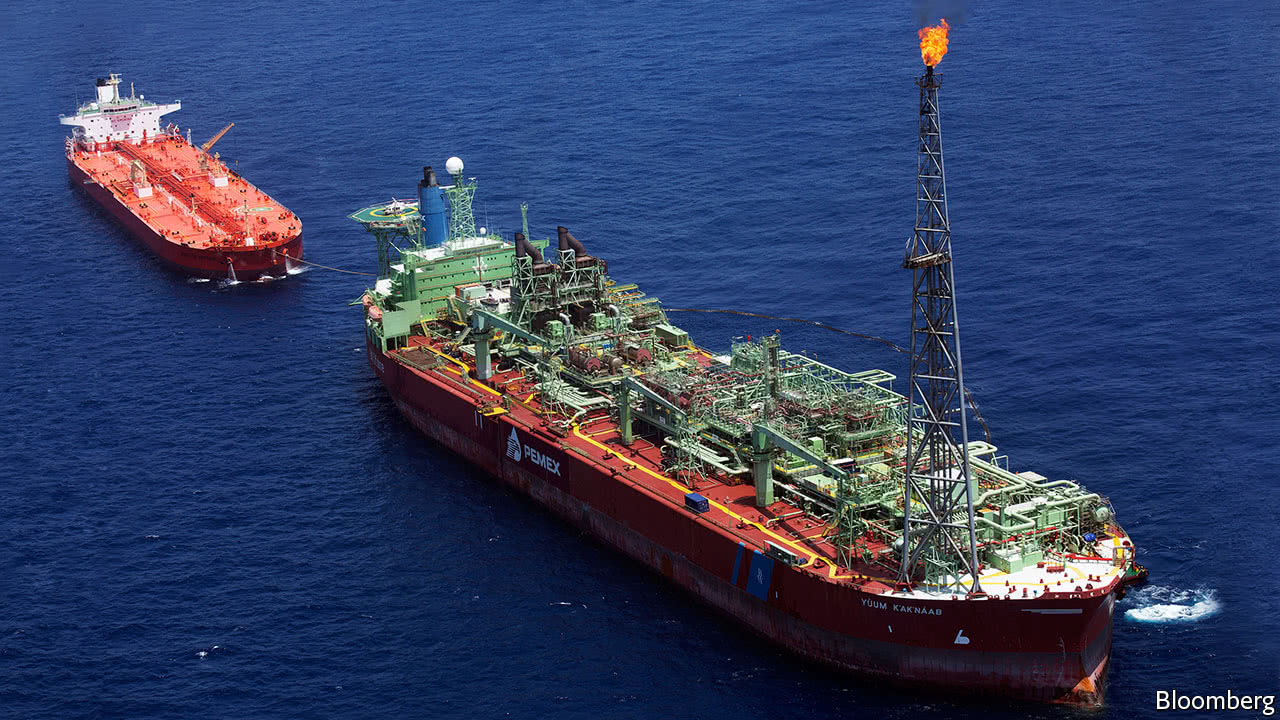
A CHEMICAL engineer at Pemex, Mexico’s state-owned oil company, opens a tap atop a maritime platform in this offshore oilfield in the southern part of the Gulf of Mexico. She decants a jar of heavy Mexican crude that comes, hot to the touch, from 3,500 metres below the seabed. It looks like a succulent chocolate sauce, but smells like the back end of a cow. “Taste it,” she laughs.
The crude that she is testing is pumped a short distance across the sea to a vast floating storage tank, known as an FPSO, where it is blended with lighter crude for export. The FPSO stores about 2m barrels—roughly the equivalent of a day’s worth of Mexican oil production. A quarter of that is fed into a supertanker tied alongside, contracted by Chevron, America’s second-largest oil firm. It then sails north across the maritime border to Texas or Louisiana where the crude runs through refineries. The refined petrol or diesel often then returns to…Continue reading
One year before the World Cup, FIFA is shunned by sponsors
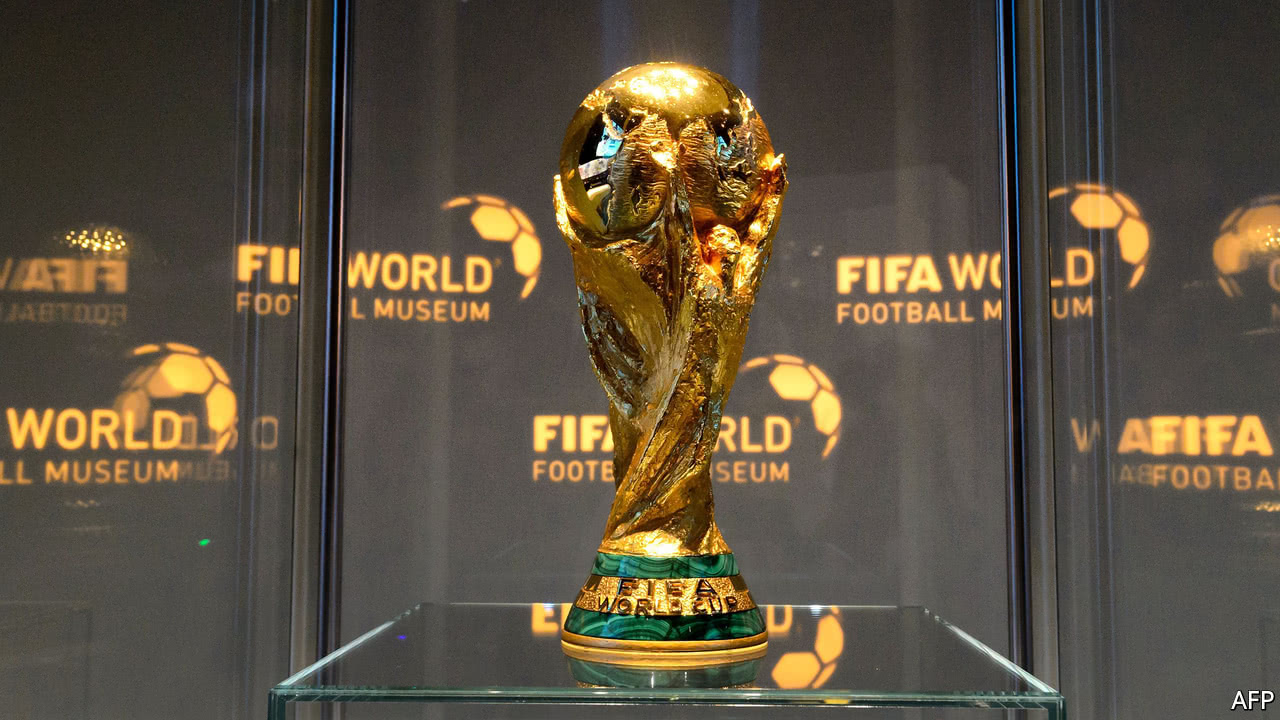
AT THE World Football Museum in Zurich, run by FIFA, football’s global governing body, visitors take their photo with the World Cup trophy, try their hand at match commentary and gawk at artefacts ranging from the original handwritten set of the rules of the game to the yellow card famously shown to Paul Gascoigne, a lachrymose English footballer, in 1990. Those wanting a glimpse of the luxurious bedsheets that were used to shield FIFA officials as they were hustled out of a ritzy Swiss hotel in 2015 having been arrested on corruption charges may feel cheated—they are not on display.
If FIFA’s shrine to itself ignores this squalid period of its history, its balance-sheet bears the traces. FIFA lost $369m in 2016, triple the losses of the year before, and forecasts a loss of $489m in 2017. Reserves, which have been above $1bn since 2008, are predicted to fall to $605m next year.
The latest loss is partly because of higher development funding for member…Continue reading
A high-flying Chinese dealmaker has his wings clipped
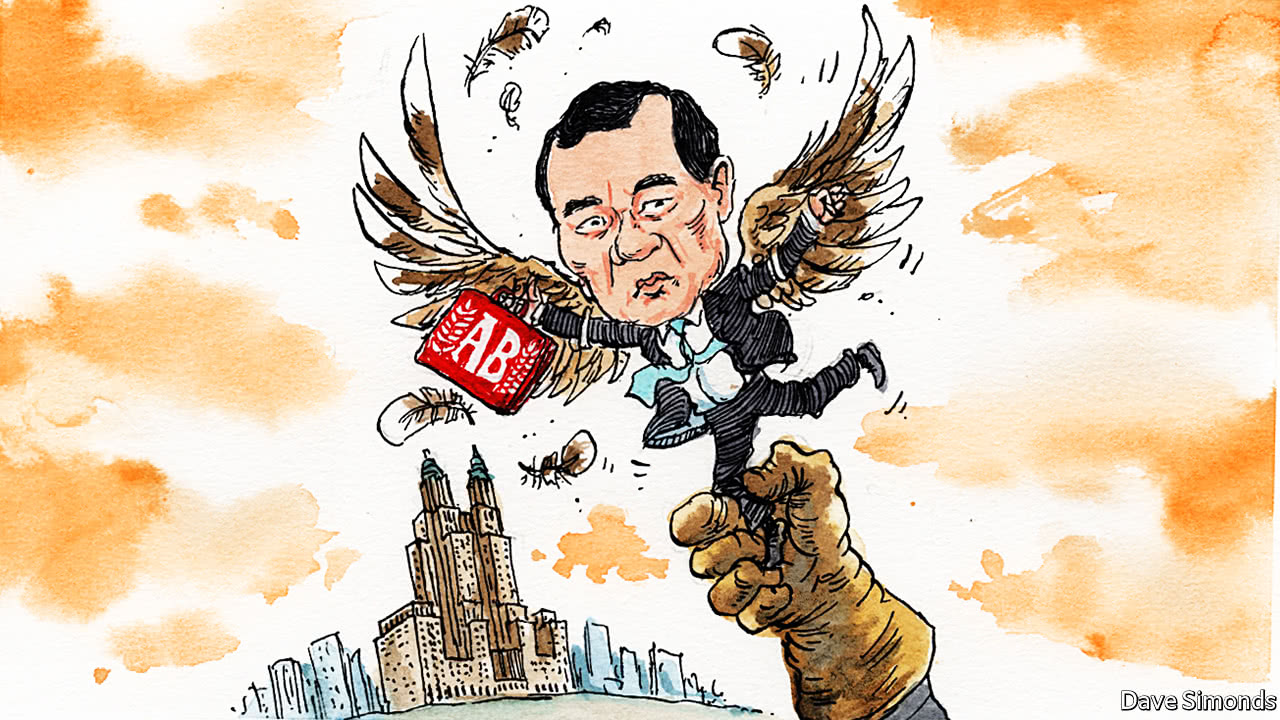
“THE total number of airline miles travelled by this team is equal to a round trip between Earth and the moon.” So bragged Wu Xiaohui at a recruiting event held at Harvard University in January 2015. The boss of Anbang, a big Chinese insurer, was dazzling potential hires with his plans to go global. Anbang had shot to prominence just weeks before with a deal worth $2bn to acquire the Waldorf Astoria hotel in New York from America’s Hilton.
Since then Mr Wu has attempted acquisitions around the world worth a total of some $38bn (see table). Political controversies have caused a number to unravel. One that recently fell apart was Anbang’s negotiation to take a $400m stake in a property in Manhattan, 666 5th Avenue, controlled by a firm owned by the family of Jared Kushner, President Donald Trump’s son-in-law. There were complaints about a potential conflict of interest on the part of Mr Kushner, who advises Mr Trump on relations with China.
A Swedish activist speaks softly and carries a big stick
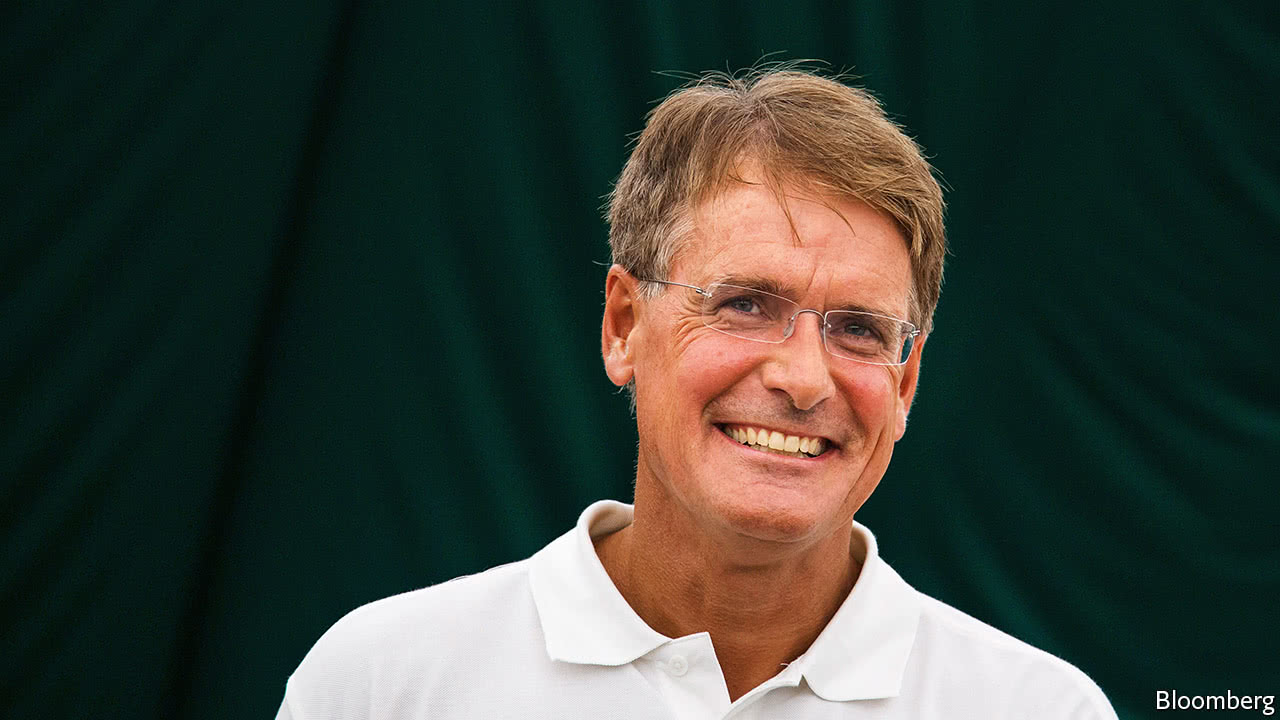
“SCLEROTIC companies abound in Europe,” says Christer Gardell, co-founder and managing partner of Cevian Capital, an activist hedge fund based in Sweden. That is an uncommonly pugnacious statement for a firm that operates behind the scenes and uses public pressure as a last resort. Unlike its louder American peers, such as Bill Ackman’s Pershing Square, Paul Singer’s Elliott Management or Dan Loeb’s Third Point, Cevian has never written a pointed open letter to a chief executive or waged a proxy battle (although Carl Icahn, an activist who has been known to call bosses “morons”, is one of its investors).
Its calm approach seems to suit corporate Europe. Cevian is the region’s largest activist fund, and one of the world’s biggest, with over $15.4bn in assets. It was founded by Mr Gardell and Lars Forberg in Stockholm in 2002; both still run it. Its “constructive” activism, focusing on only a dozen companies at a…Continue reading
Tanzania’s firebrand leader takes on its largest gold miner
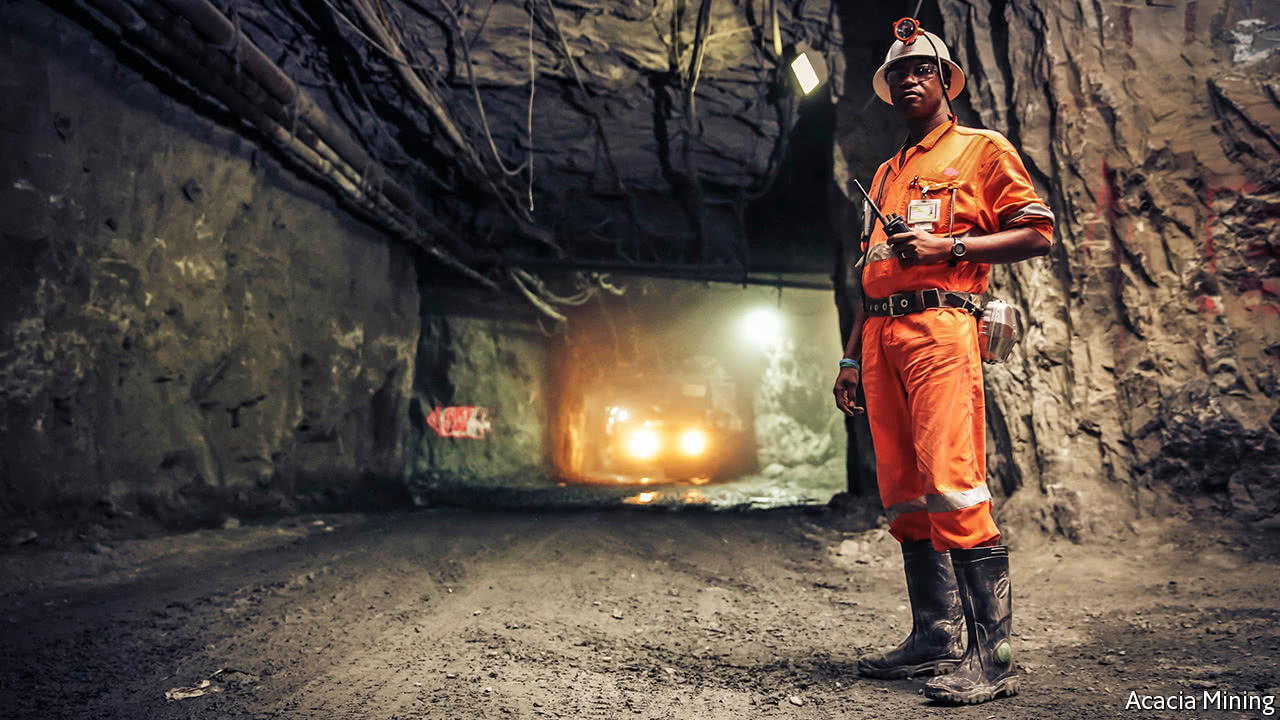
“IF THEY accept that they stole from us and seek forgiveness in front of God and the angels and all Tanzanians and enter into negotiations, we are ready to do business.” As conciliatory gestures go, that one by John Magufuli, Tanzania’s president, to Acacia Mining, the country’s largest foreign investor, could hardly have been more fork-tongued.
Nonetheless, two days later John Thornton, head of Barrick Gold, Acacia’s largest shareholder, met Mr Magufuli to start talks on ending a dispute that has halved Acacia’s market value since the government in March imposed a ban on the export of gold- and copper-concentrates. It is a mark of the seriousness of the stand-off that he is ready to negotiate on all points of contention between the two sides.
The context of the row is increasingly typical of Africa’s mining industry. The Tanzanian government is seeking more tax revenue from a foreign mining firm that was initially wooed into the country by generous tax…Continue reading
General Electric picks a new boss

JEFF IMMELT looks like he was born to be a chief executive. Tall, affable and energetic, he was selected to run General Electric (GE) in 2001 after an interminable and mildly sadistic selection process run by GE’s then CEO Jack Welch, at the time America’s most celebrated boss. After 16 years at the top, on June 12th Mr Immelt said he would retire, to be replaced by John Flannery, who runs the firm’s health-care arm. The departing boss has reshaped GE radically but his legacy as the boss of the world’s most important industrial company is a mixed one.
Part of that reflects what he inherited. GE was not in nearly as good shape as Mr Welch liked to pretend. Its share price was significantly overvalued, pumped up by hype about Mr Welch’s talents, while its profits were inflated by gains from its pension scheme and its financial arm,…Continue reading