
Tag: Business
Tech firms hoard huge cash piles
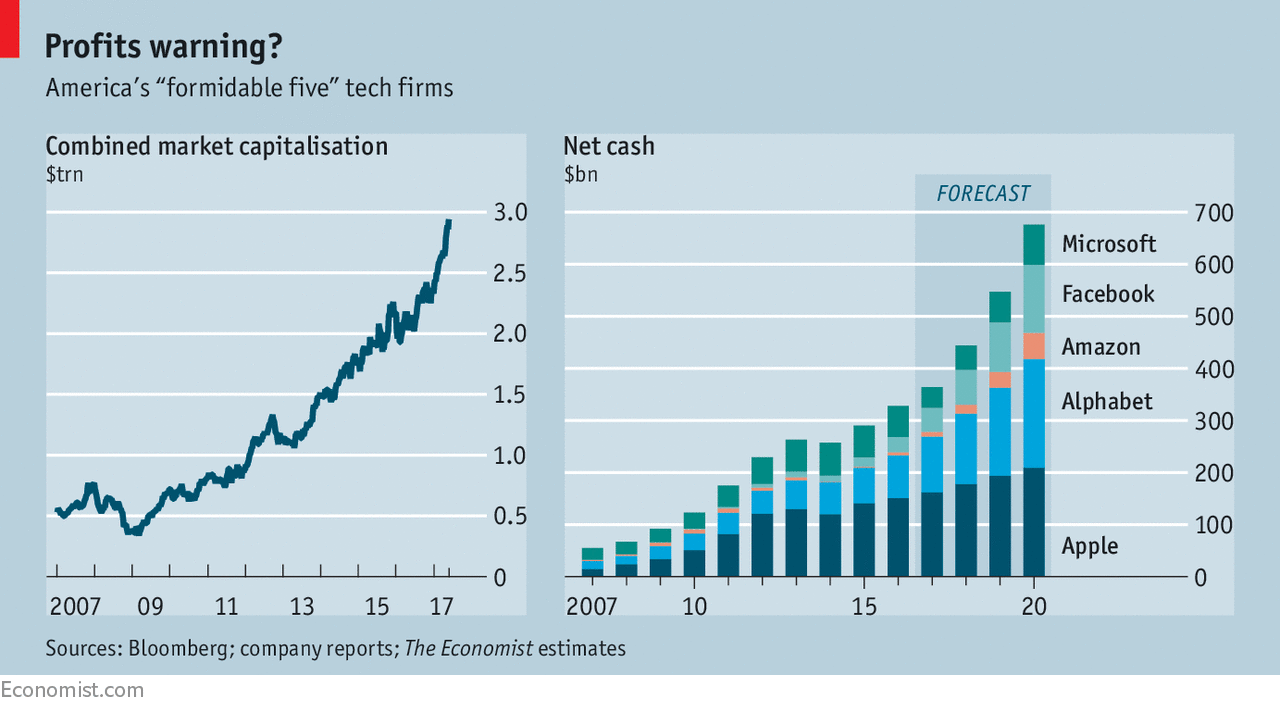
Elevated tech valuations used to be a sign of hysteria. Today’s investors believe they are making an ice-cold judgment that these firms are the dominant oligopolies of the 21st century and will extract a vast, rising, flow of profits. There is one gnawing doubt, however: the formidable five’s cash-rich balance-sheets, which are built as if they expect a crisis, not to dominate the world.
Netflix still gets booed at Cannes
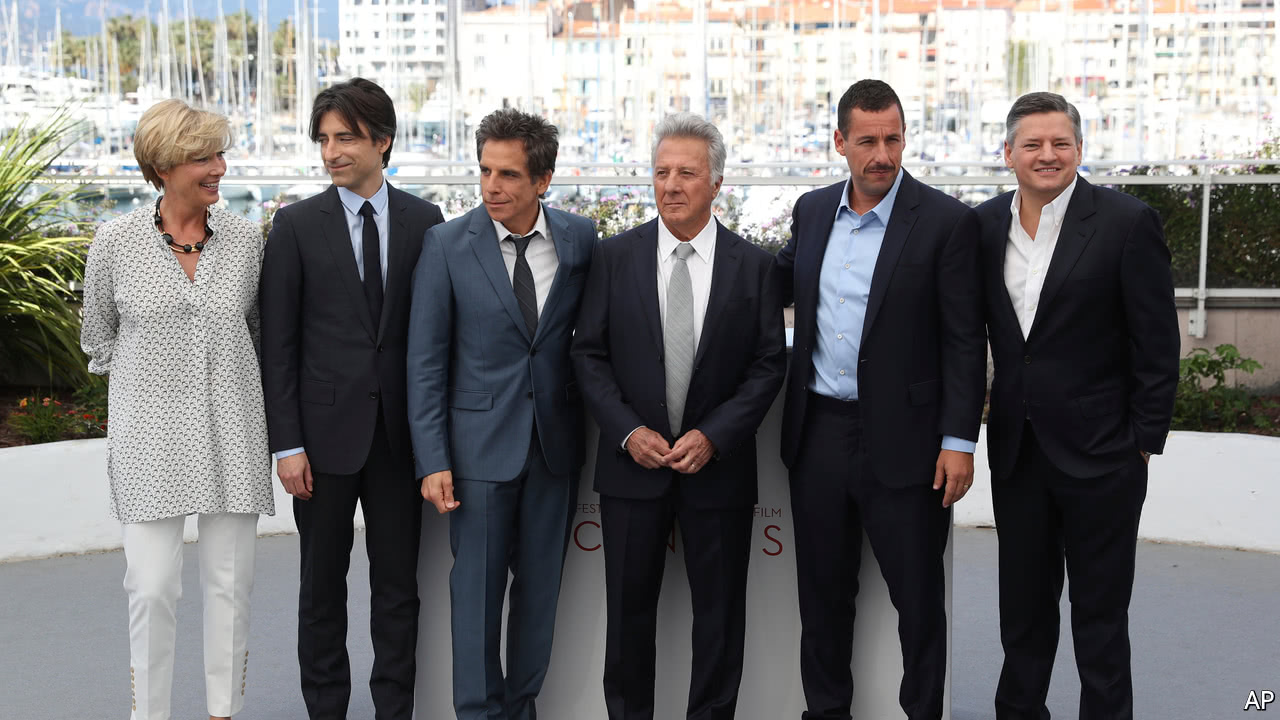
THE rise of Netflix has been greeted frostily by some of the old guard at the Cannes film festival, where the American streaming giant’s disregard for releasing films in cinemas wins it few friends. It looked a bit more at home on May 21st, as the lights went up at the Louis Lumière theatre. The stars of its own film, “The Meyerowitz Stories (New and Selected)”, a comedy drama, accepted a standing ovation from the audience. Ted Sarandos, Netflix’s head of content, stood alongside Dustin Hoffman, Ben Stiller and other cast members. Festival-goers jostled for a word with him at a swanky after-party.
This is the first year that Netflix has been admitted into the festival’s competition, with two films, “The Meyerowitz Stories” and “Okja”, directed by Bong Joon-ho of South Korea. Still, cries of protest from French film-industry executives prompted Thierry Frémaux, the festival director, to declare that, in future, only films guaranteed a theatrical release in…Continue reading
Why companies in the chemicals industry are mixing
AS SPRING arrives, the hills of Languedoc in southern France turn green with the leaves of grapevines. This is helped along by chemicals—lots of them, confides a winemaker based near the town of Thuir in the Pyrenees. In their absence, vineyards would need natural fertilisers and to be weeded by hand, both costly. French farmers use more chemicals than anyone else in Europe: 65,000 tonnes of pesticides alone each year.
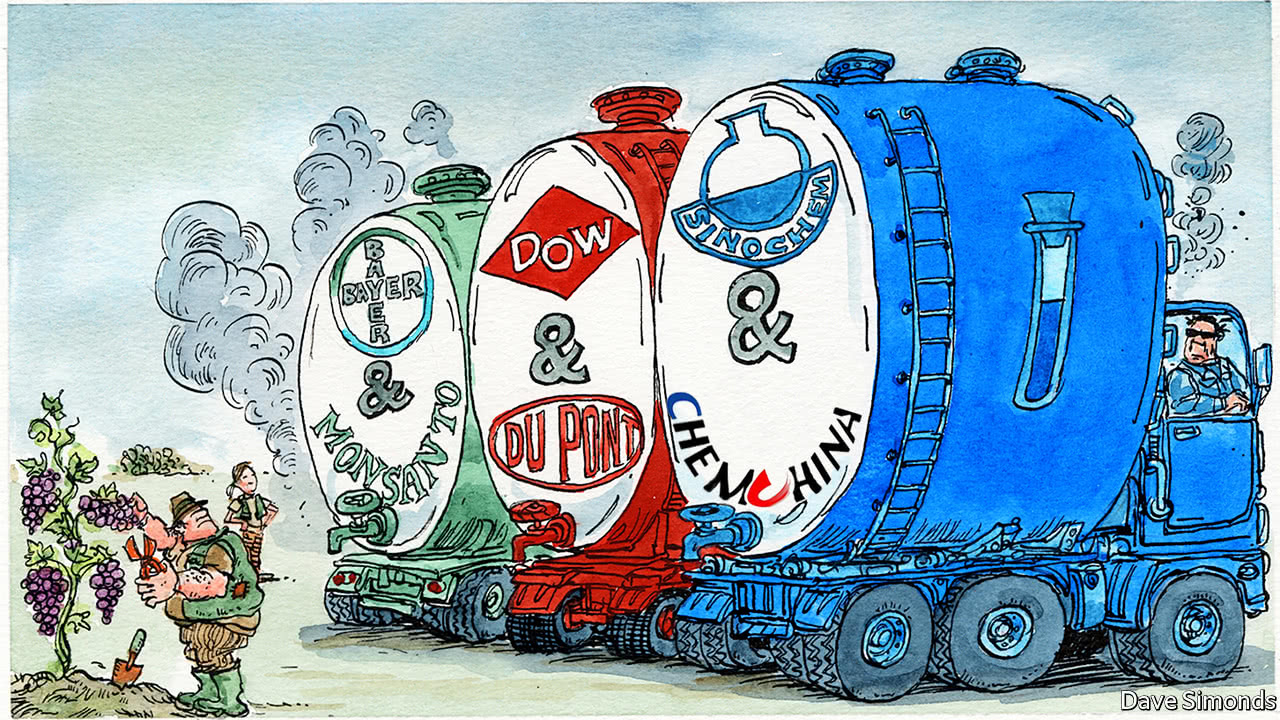
Even the smallest of vine-growers has an interest in a series of takeovers proposed between their chemicals suppliers. After a decade without any big deals, since 2015 three mega-mergers, collectively worth around $240bn, have been proposed. When they were first announced, many doubted that regulators would allow the mergers because of competition worries. If all three proceed, as now seems likely, four companies will produce 70% of the world’s pesticides instead of six today.
The first mega-merger, announced in December 2015, was between Dow Chemical and…Continue reading
An abrupt change at the top at Ford
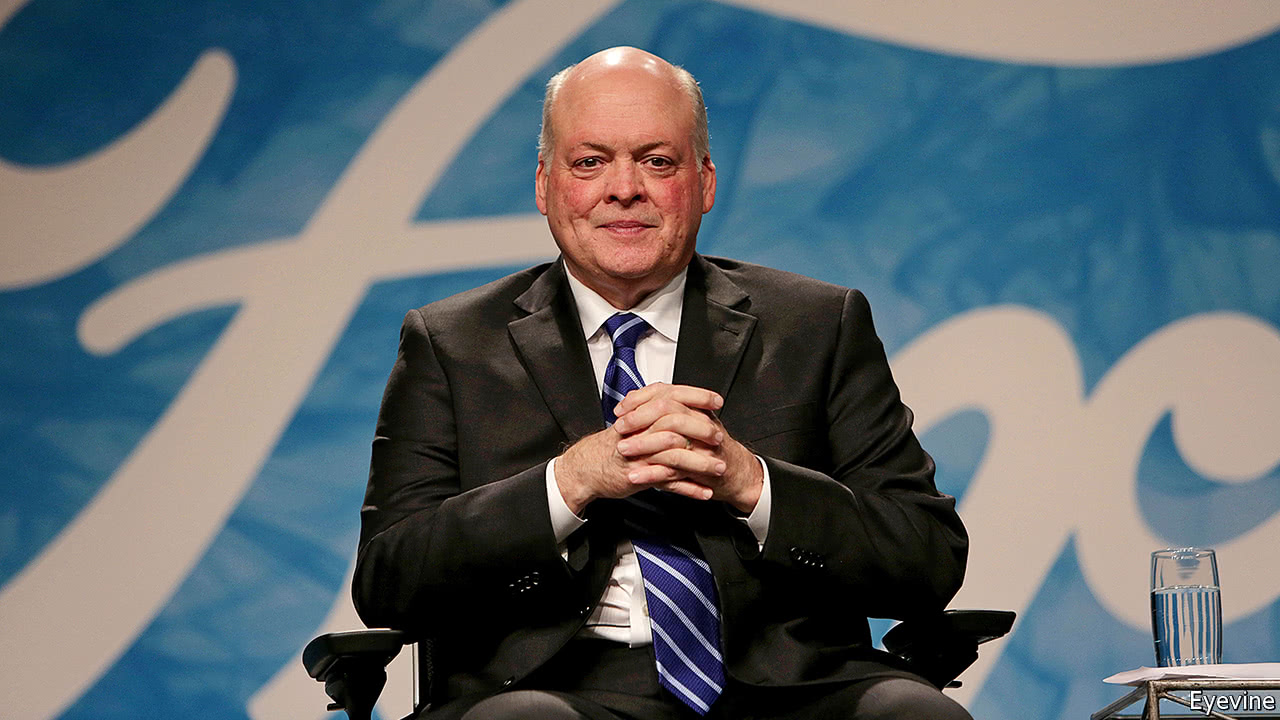
THE abrupt departure of Ford’s boss, Mark Fields, which the firm announced on May 22nd, has two explanations. Investors had become restive at its performance, particularly in the past year. But Mr Fields was also perceived to lack the drive of Alan Mulally, the man he succeeded. In replacing him with Jim Hackett (pictured), who ran an office-furniture company before joining Ford’s board in 2013 and more recently led the firm’s mobility unit, Ford hopes to conquer current problems and shore up its future strategy.
Ford’s shares have declined by nearly 40% since Mr Fields took over (see chart). Though it made record profits in 2015 and had strong results in 2016, investors reckoned a booming North American market, on which it relies for nearly two-thirds of revenues, would slow. They also disliked the fact that Mr Fields had to invest heavily in new technologies. Ford suffered the ignominy of its market capitalisation being…Continue reading
Among private tech firms, Airbnb has pursued a distinct strategy

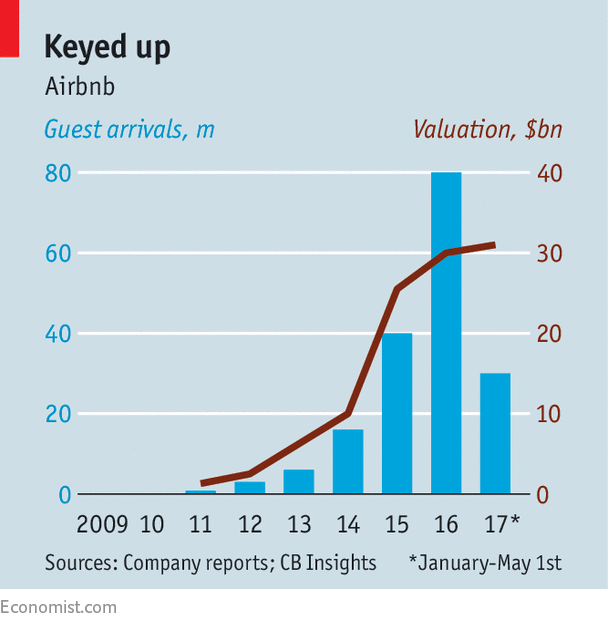
UNTIL recently “Uber envy” afflicted many top executives at Airbnb, a platform for booking overnight stays in other people’s homes. So admits a big investor in the firm. The two companies often raised money at the same time, and the ride-hailing giant reliably received more cash and closer attention. Uber is America’s most valuable private technology firm, with a valuation of close to $70bn at last count; Airbnb is still in second place with a value of around $30bn. But with Uber facing a series of setbacks, including allegations of intellectual-property theft, departures by senior executives and a consumer boycott, jealousy in Airbnb’s hallways has largely evaporated.
 Continue reading
Dow Chemical shows how American industrials and globalisation mix

WHAT does it take for an American industrial champion to succeed in an age of globalisation and impatient investors? Some observers argue that it has become impossible. The world is just too nasty and unfair, they bleat. Perhaps they should take a look at Dow Chemical, a firm born in Michigan in 1897 that has hustled hard enough to be at the top of its industry 120 years later.
When Dow completes its planned $130bn merger with DuPont, a longtime rival, probably at the end of this year, it will become the largest chemical company in the world by sales. This new colossus will keep changing—in 2018-19 the plan is for it to split into three specialised firms. “New Dow” will focus on selling chemicals to the automotive, construction and packaging industries. The other two smaller companies will concentrate mainly on the agricultural and electronics industries.
This is a good moment, before the three-way split, to take stock. Being in the chemicals business is like swimming in a…Continue reading
Embattled Toshiba tries to sell its flash-memory unit

ONCE an electronics and nuclear-power empire that was the pride of corporate Japan, Toshiba is threatened with a stockmarket delisting. It missed a deadline to file its annual results, on May 15th, for the third time this year. In earnings estimates (auditors are refusing to sign off on its results), it warned of a loss close to ¥1trn ($9bn) for the financial year that ended in March. That is the steepest loss on record for a Japanese manufacturer.
To make things worse, Western Digital, an American joint-venture partner in its semiconductor unit, last week took legal action to block Toshiba’s plan to shed their flash-memory business. The case could drag on, but Toshiba needs a sale. That would help cover a write-down of billions of dollars from Westinghouse Electric, its bankrupt American nuclear-power unit.
The group’s chip business accounted for almost one-fifth of revenue in the nine months to December 2016; together, Toshiba and SanDisk, a subsidiary of Western Digital,…Continue reading
Hunger for vinyl means a chronic shortage of pressing machines

FOR young hipsters and middle-aged sentimentalists alike, the resurgence of vinyl is cause for celebration. Since 2010 sales of vinyl records in America have tripled. Britain’s vinyl industry saw its biggest gains for 25 years in 2016. Big supermarkets are extending the amount of space that they allocate to the discs and even the turntables that twirl them have found a place on Amazon’s best-seller lists.
Meeting this demand has been tricky. Vinyl accounted for 76% of total album sales in 1973; by 1994 this had dropped to 1.5% as compact discs (CDs) took over. By then the bulk of the world’s vinyl-pressing plants had closed and most of their cumbersome machines had gone to the scrapyard. Only a very few plants that could diversify into new areas of printing and production stayed open. But they did so without any further investment in vinyl, so the few machines that kept on producing often date back to the 1960s.
GZ Media, a Czech…Continue reading
Coca-Cola’s new boss tries to move beyond its core product
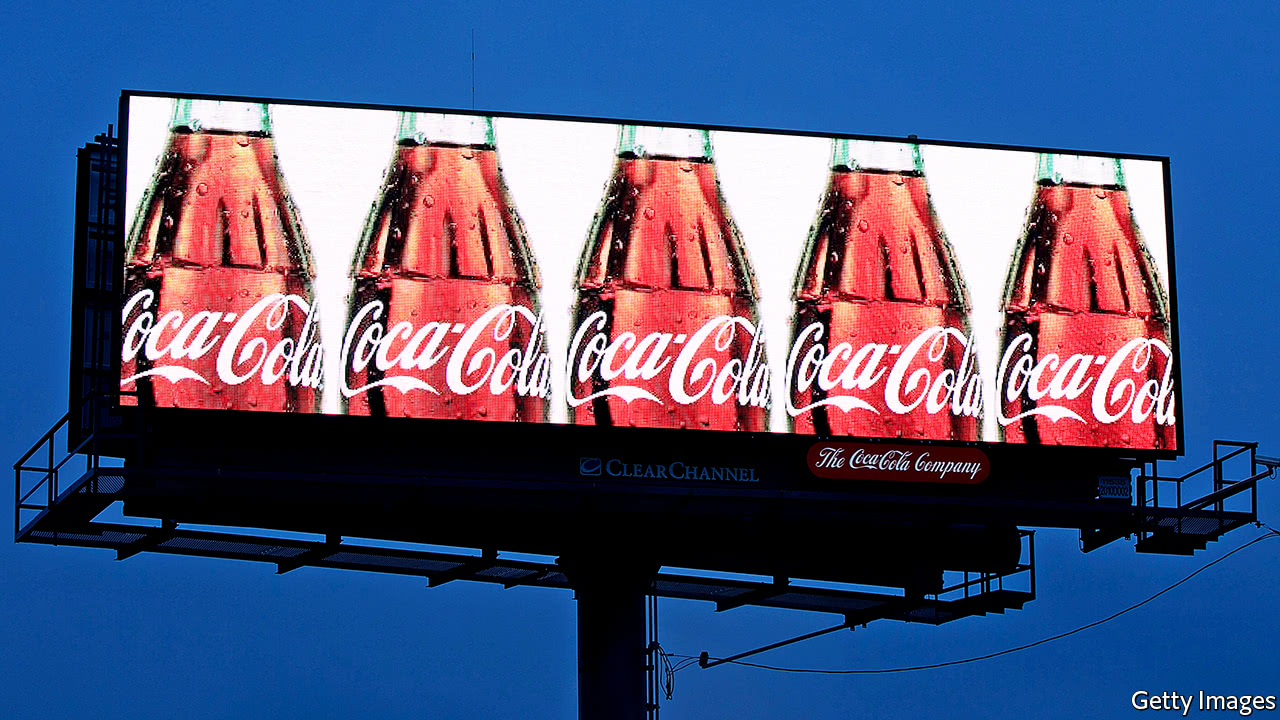
FEW companies are as defined by a single product as Coca-Cola. The firm has sold the sweet dark soda since 1886. At its headquarters in Atlanta, archives house the advertisements that sowed Coke in the world’s consciousness: posters urging consumers to “Have a Coke and a Smile”; Norman Rockwell’s 1935 painting of a boy fishing, Coke bottle in hand; a Coca-Cola record with tunes sung by Ray Charles, Aretha Franklin and The Who; advertisements with a red-coated, bearded Santa Claus—it was Coca-Cola that popularised the image of Santa in the 20th century.
Today Coca-Cola has $42bn in revenue and is available “within an arm’s reach of desire”, as the firm puts it, in every country but Cuba and North Korea. Its distribution is so broad, its marketing so expert that the Gates Foundation has urged vaccine campaigns to mimic its strategy. The question for James Quincey, an insider who took over as CEO this month, is whether Coca-Cola can move beyond Coke.
The company…Continue reading
Antoine Frérot is overhauling France’s water-and-waste champion

WALK along Sugar Road in Aubervilliers, north-east of Paris, and it is obvious how a formerly scruffy area is gentrifying. New office blocks, a shopping mall and bistros have appeared in recent years, filling spaces left after wrecking balls flattened warehouses. Along a canal previously used by barges, commuter ferries deliver workers from richer parts of the city. A district long known for slums, cheap housing and support for the Communist Party is becoming a business hub—Chanel, a fashion firm, as well as several film producers and studios, have moved in and big banks are expected next.
The district’s centrepiece is a U-shaped glass block, the headquarters of Veolia, the world’s largest water-and-waste group. The building opened in January, after the firm moved out of central Paris to save costs and concentrate 2,000 of its 163,000 staff in one spot. Moving to a rehabilitated area carries symbolism for Veolia, which is experiencing…Continue reading