
Tag: Business
Big business sees the promise of clean energy
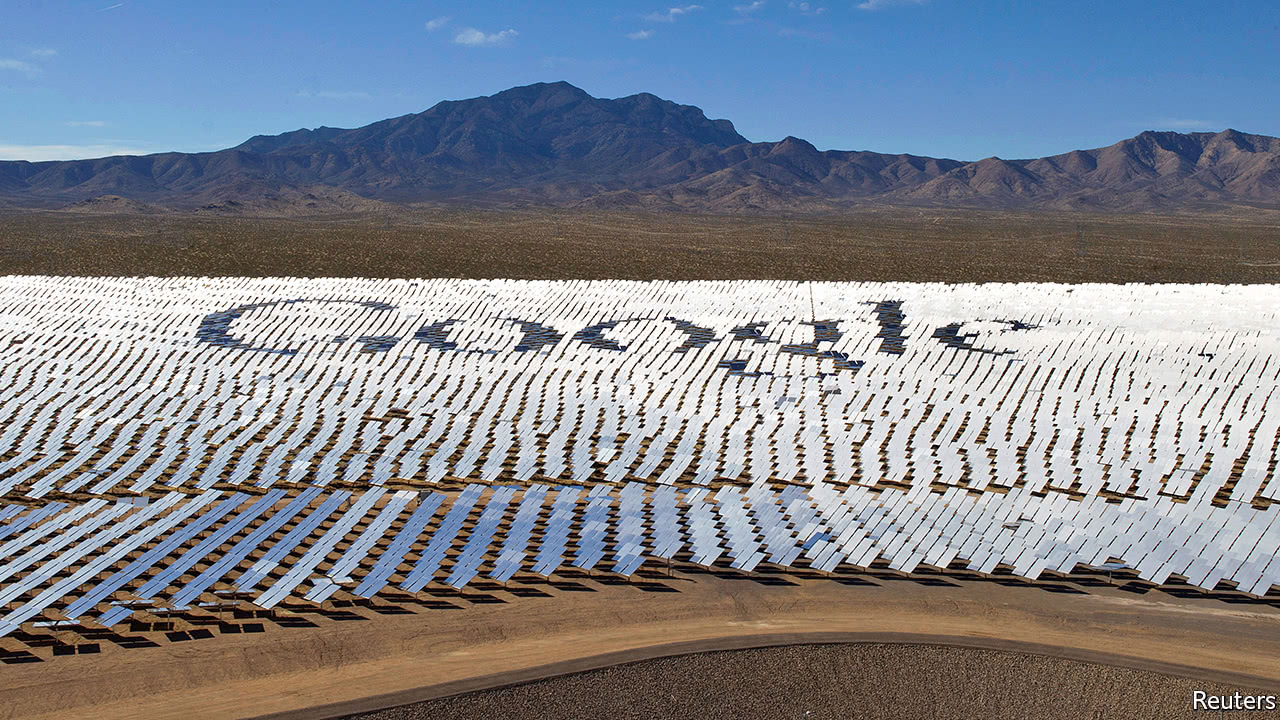
PITY America’s big businesses. For years their efforts to reduce their carbon footprint were dismissed by environmentalists as “greenwashing”. Now, after months trying to persuade a supposedly pro-business new president, Donald Trump, of the merits of staying in the Paris climate accord, he practically laughed in their faces by withdrawing on June 1st.
Executives fear the exit will do no good to America’s—and by implication their—reputation. Not for nothing have more than 900 American firms and investors, including Amazon, Twitter, Target and Nike, put their names this week to a “We are still in” open letter to the UN. Its signatories pledge to help reduce the country’s carbon emissions by 26% by 2025, in keeping with America’s Paris pledge. That may be quixotic but is a rallying cry nonetheless.
Indeed, some American firms are taking climate change so seriously that they are surprising even former critics. Alongside energy-efficiency measures, the…Continue reading
The battle for territory in digital cartography

IN THE 1940s Jorge Luis Borges, an Argentine writer, wrote a short story about mapping. It imagines an empire which surveys itself in such exhaustive detail that when unfolded, the perfectly complete 1:1 paper map covers the entire kingdom. Because it is unwieldy and thus largely useless, subsequent generations allow it to decay into tatters. Great scraps are left carpeting the deserts.
In their capacity for up-to-the-minute detail, modern maps surpass even Borges’s creation. By using networks of sensors, computing power and data-crunching expertise, digital cartographers can produce what are in effect real-time simulations of the physical world, on which both humans and machines can base decisions. These maps show where roadworks are blocking traffic or which street corners are the most polluted. Innovative products will make new demands of them. Drones need to know how to fly through cities; an augmented-reality game might need to know the exact position in London of Nelson’s…Continue reading
America’s number two ride-hailing firm
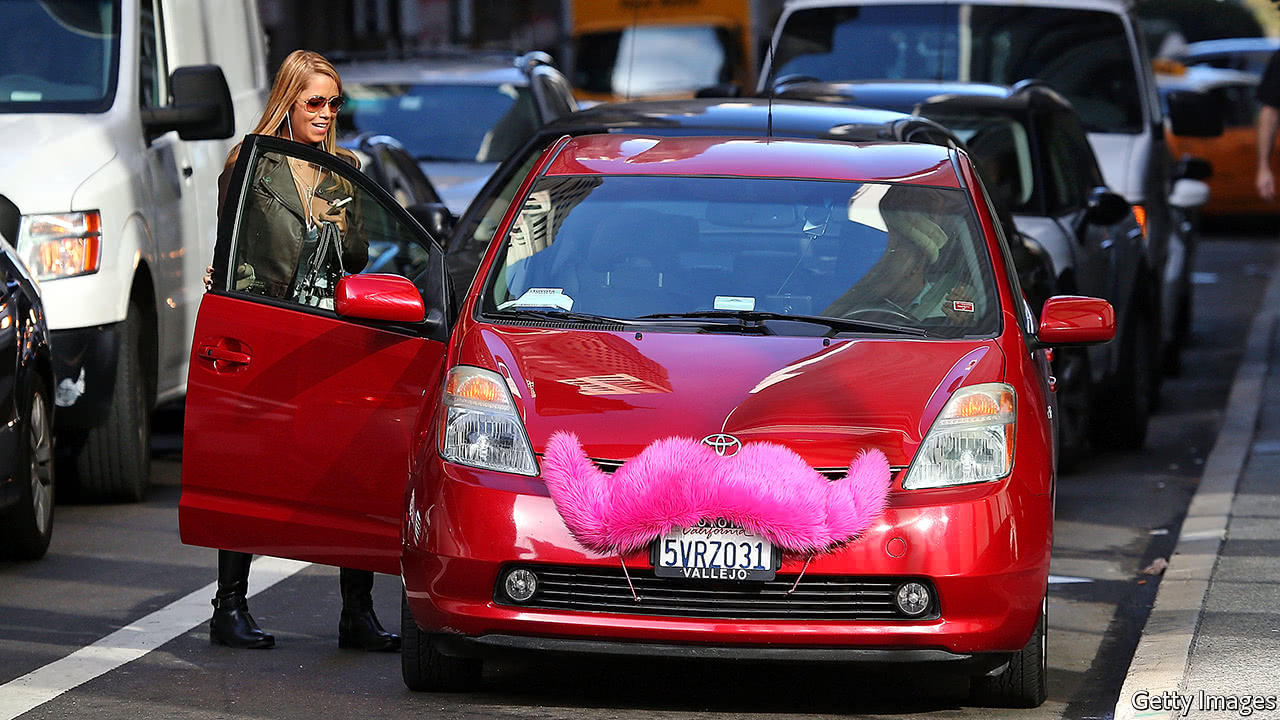
ONE firm’s bad news is often another’s good fortune. For years Lyft, an app that offers on-demand rides, was outdone by its seemingly unstoppable rival, Uber, which zoomed into new markets and grabbed a near-$70bn valuation, the largest of any private American tech firm in history. Uber does not report a share price that would register its recent troubles, which include one investigation into alleged intellectual-property theft and another into its workplace culture. But that Lyft’s market share in America has risen from 18% five months ago to 25% now (according to TXN Solutions, a data provider) is a gauge of the larger firm’s crisis.
Lyft is far from a typical Silicon Valley company. Unlike Uber, it does not lust for world domination and it operates only in America. Nor does it take itself especially seriously. For years it identified its drivers by pink, fuzzy moustaches fastened to the front of cars, and encouraged riders to fist-bump their drivers and sit in the front seat…Continue reading
A wind pioneer is sceptical about batteries

ONE of Ignacio Galán’s early jobs as an engineer was to design lead-acid batteries for the milk floats that used to trundle around Britain’s streets. So the 66-year-old Spaniard, who heads Iberdrola, one of the world’s largest utilities, claims he has been thinking about the storage of electricity for his whole career. That is useful, because for the second time since he took over Iberdrola in 2001, the industry faces a fork in the road. This time round, the big debate in energy is about batteries and storage.
The first time, Mr Galán blazed the right trail. He made a prescient bet on renewable energy, turning Iberdrola into one of the world’s biggest providers of onshore wind while at the same time underpinning returns with relatively safe, regulated electricity networks in America (Avangrid) and Britain (ScottishPower). Some European peers, such as Germany’s E.ON and RWE, took the opposite approach, prioritising…Continue reading
Chinese companies’ weak record on foreign deals

CONSIDERING the size of China’s economy, it seems inevitable that its firms will eventually play a huge role on the world stage. Yet China Inc’s adventures abroad in the past 15 years have been a mixed bag. Thousands of small deals have taken place, some of which will succeed. But of the mergers and acquisitions that have been worth $1bn or more, it is a different story. There have been 56 abandoned deals, 39 state-backed acquisitions of commodities firms at frothy prices, and, lately, wild sprees by tycoons scooping up trophies such as hotels and football clubs.
Some deals defy any conventional logic. Last month HNA, an airlines-and-tourism conglomerate from Hainan, said it had bought a 10% stake in Deutsche Bank, having earlier considered buying a Landesbank. The Chinese firm, which runs a beach-volleyball tournament in Beijing, appears to think it can consolidate Germany’s fragmented banking industry—the financial equivalent of bringing peace to the Middle East. If China Inc is…Continue reading
How sham food became big business in Japan

GUESTS to the factory of Tsuyoshi Iwasaki are presented with a rasher of bacon. The succulent marbled sliver is branded with his name, title and e-mail address—an apt introduction to the owner of Japan’s biggest manufacturer of replica food. At the headquarters of Iwasaki Co on the outskirts of Tokyo, racks of golden-brown gyoza jostle for attention with boat-shaped dishes of lustrous raw tuna, bowls of creamy ramen and a dozen pinkish scallops in iridescent shells. The acrid smell of resin and paints is the only hint that everything on show is utterly tasteless.
Most of these Japanese sampuru, from the word “sample”, will go on display in restaurant windows, from fast-food outlets to izakaya (bars), throughout the east of the country, in the hope of luring hungry customers. A sister company, managed by Mr Iwasaki’s brother, covers the western half of Japan. Together they make over ¥5bn ($46m) in annual…Continue reading
How retailers are watching shoppers’ emotions

FOR eight months up to this April, a French bookstore chain had video in a Paris shop fed to software that scrutinises shoppers’ movements and facial expressions for surprise, dissatisfaction, confusion or hesitation. When a shopper walked to the end of an aisle only to return with a frown to a bookshelf, the software discreetly messaged clerks, who went to help. Sales rose by a tenth.
The bookseller wants to keep its name quiet for now. Other French clients of the Paris startup behind the technology, Angus.ai, are testing it in research shops that are not open to the public. They include Aéroports de Paris, an airport owner; LVMH, a luxury conglomerate; and Carrefour, a chain of hypermarkets. In a test at a Mothercare shop in Tallinn, Estonia, software from Realeyes, an emotion-detection firm based in London, showed that shoppers who entered smiling spent a third more than others.
Simple video yields a lot of insight. But…Continue reading
British Airways botches its response to its latest technical woes
IT IS easy to blame infrastructure when things go wrong, as they did on May 27th when British Airways (BA) grounded planes across the globe after a global IT systems crash. More than 1,200 flights, booked to carry over 75,000 passengers, were cancelled over three days; hundreds of thousands more miserable travellers had their trips ruined by delays, lost luggage and missed connections. Analysts estimate that the total cost to BA of refunds, plus compensation of up to €600 ($675) for each delayed passenger, could climb as high as £150m ($192m).
But such calamities are also man-made, and a trail of incompetence led to this one. Alex Cruz, the chief executive, is better known as a cost-cutter than a communicator, and it showed. Though he was quick to apologise in public, in private he muzzled his employees and offered vague explanations, linking the computer failure to a “power-supply issue”. Others pour scorn on this interpretation.
His staff, though often trying their best, were ill-prepared. They had no clear plan to deal with passengers caught up in the chaos. For flight delays and cancellations, the television bulletins broadcast at London’s Heathrow and Gatwick airports, BA’s two main hubs, were more helpful than its stewards on the ground. Without working backup systems, airline representatives were unable to prioritise customers in most…Continue reading
Film piracy is changing. Pirates now want ransoms

RIPPING off films still reaps riches: the business model holds even in the internet age. Someone makes a digital file of a film, either with a camera in a theatre or by copying a DVD, then sells the file to operators of dodgy websites, many of whom make millions a year from online advertising and customer subscriptions—illegal versions of Netflix.
This year pirates introduced an entrepreneurial plot twist. They have begun asking Hollywood studios for ransoms. In several cases the rogues have told leading makers of films or television programmes that if they do not pay up, digital copies will appear online before the official release date. It is Hollywood’s version of WannaCry, the ransom malware.
No one has been seen to pay up so far, but the threats are not all idle. Netflix, one victim, saw certain episodes of its new season of the show “Orange is the New Black” released by a pirate who goes by the alias “thedarkoverlord” (who had demanded payment in…Continue reading
China’s new cyber-security law is worryingly vague
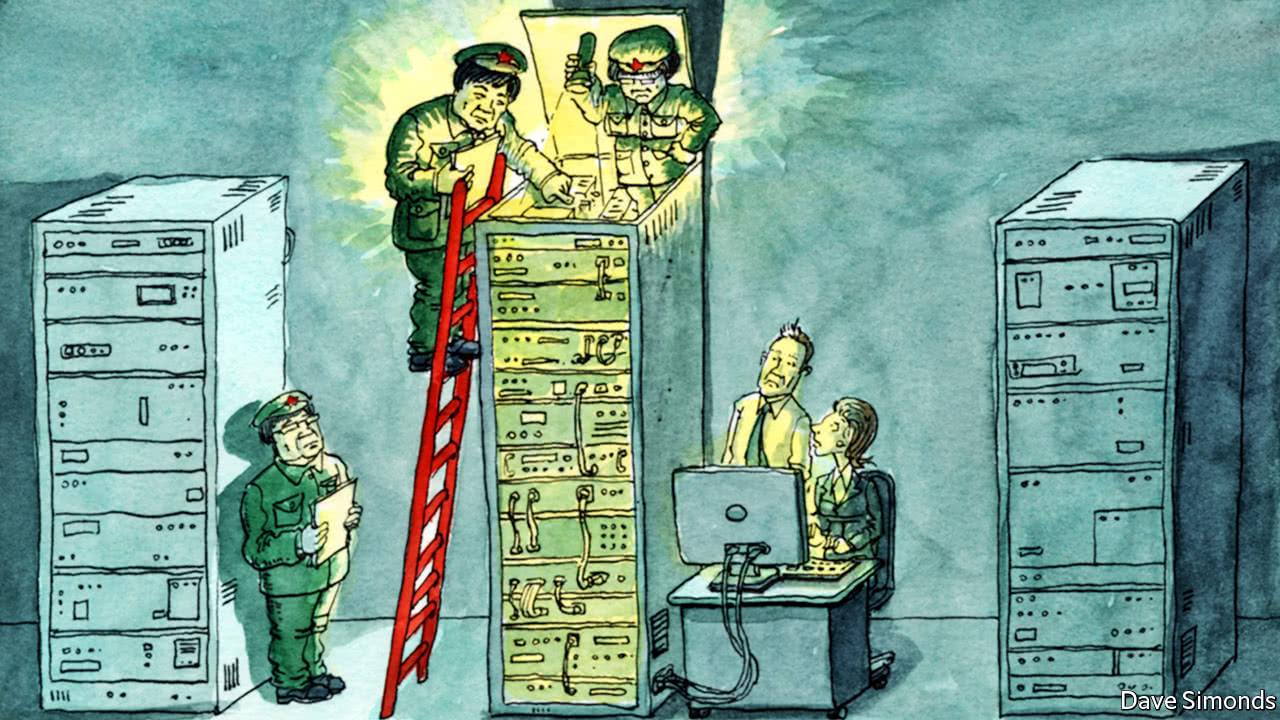
“IF YOU want to stay in China, you have to go all in.” So says James Fitzsimmons of Control Risks, a consultancy, of the impact China’s new cyber-security law will have on multinational companies (MNCs). These firms have moaned for months about the law’s intrusive and vague provisions and asked for a delay in its implementation, but to no avail. It came into force on June 1st, and foreign firms are now scrambling to figure out its implications. Mr Fitzsimmons, for one, is convinced that they must take the costly step of separating their local IT systems from their global networks.
At first blush, the law seems a reasonable effort at tackling two areas of policy in need of reform. The first is cyber-security. Companies in industries deemed to be critical must now ensure that their technology systems are “secure and controllable.” They must store important data locally, and will be subject to audits by official inspectors. Susan Ning of King & Wood Mallesons, a Chinese law…Continue reading