
Tag: Buttonwood’s notebook
Reports of populism’s death are premature

MONDAY was a day when, in the latest jargon, the markets went «risk on». Equities rose, the spread between the yields of French and German bonds narrowed and the euro rebounded. The reason was the first round of the French presidential election. As the results emerged on Sunday night, it was clear that a) the nightmare of a second round between Marine Le Pen and Jean-Luc Mélenchon had been avoided and b) Ms Le Pen’s vote was no better than her poll rating, indicating there was no reservoir of shy, far-right voters. The centrist Emmanuel Marcon (pictured) topped the poll and is predicted to get more than 60% of the vote in the second round, far outside the pollsters’ margin of error.
So France will not follow the US and Britain down the path that led to the election of Donald Trump and the Brexit referendum. But it is way too early to say, as some do, that populism is in retreat. First, France has a much greater tradition of support for the far left…Continue reading
A market-related twist to the Dortmund bombing
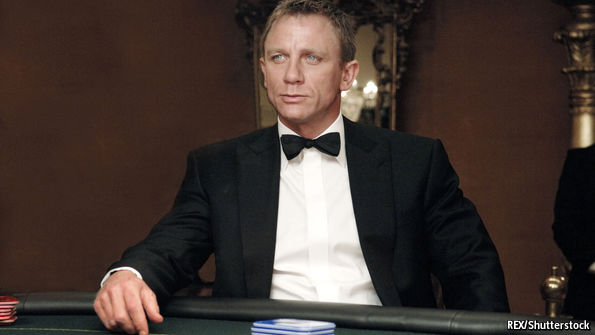
WHEN three explosive devices hit a bus carrying the Borussia Dortmund football team on April 11th, it was immediately assumed that it was another Islamist attack. Notes were found at the scene of the crime alleging that Islam was the motivation, with the author claiming a link to the terrorist group Islamic State. But prosecutors in Germany allege a completely different rationale. They say that the suspect, a 28-year-old man, had borrowed money and taken out put options, which would benefit from a decline in Borussia Dortmund shares (which fell 3% on the day after the attack).
As yet, the suspect has not been convicted. But if true, the story would seem to come straight out of Hollywood. In the film “Casino Royale”, James Bond (as played by Daniel Craig) foils a plot to blow up an airliner owned by the fictional firm Skyfleet, after villain Hugo le Chiffre had sold the company’s shares short (ie, bet on their price to fall). In “The Fear index”, a Robert Harris novel, a hedge fund’s trading programme shorts an airline’s stock just before a fatal crash. It was rumoured, after the September 11…Continue reading
The markets adjust their Brexit calculations

SOMETIMES the markets are genuinely surprised. On the morning of April 18th, news that the British prime minister was to make an announcement at 11.15am caused the pound to dip. What could the news be? Retirement due to ill health? Several pundits went on Twitter to proclaim their belief that it would not be an early election; after all, Theresa May, the prime minister, has said repeatedly that the poll would not occur until 2020. But the news was indeed that an election will happen on June 8th. The pound then stormed higher and is now more than $1.28, around its strongest level this year (but well below the $1.50 touched on the day of the Brexit referendum).
So what explains the switcharound? The hope is that the election will lead to a softer Brexit result and thus be better news for the British economy. Deutsche Bank, previously bearish on sterling, was the most prominent convert to this view.
First, it makes the deadline to deliver a “clean” Brexit, without a lengthy transitional arrangement, by 2019 far less pressing given that no general election will be due the year after. Second, it will dilute the influence of MPs pushing for hard Brexit, strengthening the government’s…Continue reading
The Brexit arguments work for Scotland too

THERE is an old chess short story about the grand master who ends up in a remote village. Short of money, he agrees to pay two locals; his meal will be free if he wins both matches. But there is a catch; in one game, he must play as white, in the other as black. As soon as the matches start, he realises his mistake when the man playing white in the second game simply copies the grand master’s moves as white in the first. No matters what the master does, he cannot win both games; if he wins in the first, he must lose in the second.
The three-way negotiations between Britain, the EU and Scotland could yet work out the same way. Every argument used by Theresa May against the EU can be used her by Nicola Sturgeon.
Taking back control. The Leave campaign clearly resonated with voters when it talked about the need for Britain to take back control of its laws from a remote Brussels bureaucracy. But the argument applies just as well in Scotland where the Conservatives last won most seats in 1955; in the 2010 and 2015 elections, the Tories got one seat but the Scots still ended up with a Conservative prime minister. It will probably happen in 2020 as well. Do the Scots have…Continue reading
Donald Trump, trade and the new world order

TWO months into the Trump administration and we have had more sound and fury than concrete proposals about its economic agenda. The most alarming sign so far is that America forced the G20 to drop a pledge about resisting “all forms of protectionism” from a joint statement but this may be purely symbolic.
Nevertheless, Mr Trump’s determination to shake up the status quo may yet have global consequences. In a research note, Chris Watling of Longview Economics suggests that
Trump’s policies might inadvertently bring about a new international monetary order as the administration struggles to fulfil campaign promises in the light of the original misdiagnosis of the ‘trade deficit’ problem.
The current monetary system emerged from the downfall of Bretton Woods in the 1970s. Under the Bretton Woods system, devised in part by John Maynard Keynes (pictured, left), currencies were fixed to the dollar (with scope for occasional devaluations or revaluations) and the dollar was fixed against gold. But this required America to act as the anchor of the system; other…Continue reading
The hole in Western finances

HAVE western governments, faced with angry voters, lost the ability to raise taxes? The question is raised by a farcical U-turn by the British government over a budget measure announced a week previously. The government retreated in the face of backbench opposition and the right-wing press. It seems eerily reminiscent of America, where Republicans have an absolute abhorrence of tax-raising measures.
The planned British increase (aligning the tax rates of the employed and self-employed) was perfectly sensible. Unless closed, this gap will erode the tax base over the long run. Most economists agree that differential tax treatments tend to distort behaviour for no long-term gains. But the government had promised at the 2015 election not to raise income tax, national insurance or VAT—three taxes that raise around two-thirds of revenues—and this (foolish) promise was used against it.

As the graph shows, British tax revenues have…Continue reading
The hounding of Owen Jones

IN THE big scheme of things, the retreat of a Guardian columnist from social media is not a huge event—it will be drowned out by the latest antics of Donald Trump, the extraordinary diplomatic dispute between the Netherlands and Turkey, the triggering of article 50 by the UK and Scotland’s push for a second independence referendum.
Actually, though, I think that it’s possible to tie all these events together as evidence of a much wider trend; one that is corrosive to both global politics and economics. Let us start with the specifics. Owen Jones (pictured) is a left-wing writer; initially a great enthusiast for Jeremy Corbyn, Britain’s Labour leader, he has become disillusioned. Those who previously agreed with his columns have denounced him on Facebook and Twitter. As he wrote in one final post (complete with language that may offend some)
On a daily basis I have angry strangers yelling at me, on the one hand, that I’m responsible for the destruction of the Labour Party, and on the other, I’m a right-wing sellout careerist who’s allied to Tony Blair and possibly in the pay of the Israeli government (and that I’m a Blairite cunt who needs to go fuck myself,…Continue reading
The ouija-board theory of democracy
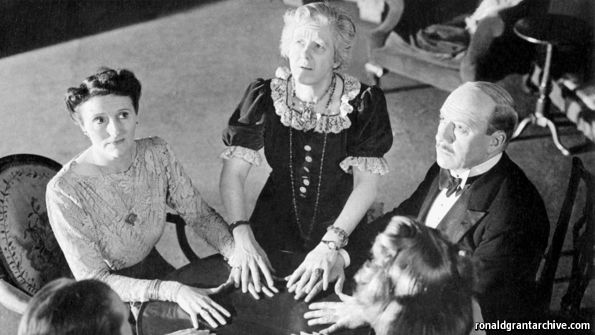
EVER since the June 2016 referendum vote in Britain on membership of the European Union, there has been a battle over the terms of departure. The government, and right-wing press, are averse to there being any kind of scrutiny over the process by either the courts or Parliament. Judges who ruled that Parliament should approve the triggering of Article 50 (the technical start of negotiations over exit terms) were dubbed “enemies of the people” by the Daily Mail, a term that has since been taken up by Donald Trump.
But the referendum posed a very general question—“Should the United Kingdom remain a member of the European Union or leave the European Union?”—without setting out the manner of departure. Britain could have remained a member of the single market and customs union while being outside the EU (as was suggested by some members of the Leave campaign); the Conservative manifesto of 2015 (to which the government owes its legitimacy) talked about
Who will lose when globalisation retreats?

THE new nationalists are on the march in Europe and America. They argue that globalisation has benefited the elites and penalised the ordinary workers and that governments should put America/Britain/France first. That means favouring domestic producers and restricting global flows of people, goods and (this gets mentioned less often) capital. The latest proposal came from the Trump White House last night—a threat to ignore World Trade Organisation rules and impose tariffs on countries with “unfair” trade practices.
A previous column suggested that the world may have entered a third phase of the post-1945 economy, after the Bretton Woods phase (fixed exchange rates and recovery) from 1945-early 1970s and the globalisation phase from 1982-2007. Each phase ended in a crisis (stagflation in the 1970s, a credit crunch after 2008). The next era could see globalisation in retreat for the first time since 1945.
That…Continue reading
How quickly will the Federal Reserve tighten?

EVER since the Presidential election, markets have focused on the potential for fiscal policy—tax cuts and spending increases—to boost the American economy. But over the last few days, there has been a reminder that monetary policy, which has dominated investors’ thoughts for much of the period 2008, still has the potential to have a big impact. The possibility of a rate rise from the Federal Reserve this month overshadowed President Donald Trump’s speech to Congress.
William Dudley of the New York Fed said that the case for tightening had become a “lot more compelling in recent months” and that “the risks for the outlook are now starting to tilt to the upside”. John Williams of the San Francisco Fed said that a March hike was now getting serious consideration. Bloomberg reckons the markets are pricing in a 60% chance of a rate hike on March 15th; Brown Brothers Harriman reckons the probability is 74%. The acid test…Continue reading