
TAURUS
“La Agencia Tributaria no puede ser una máquina de recaudar”
Los inspectores reclaman más independencia, fijar unos objetivos plurianuales y advierten sobre la discriminación en la Dirección General de Tributos
El fin de la infancia del emprendimiento español
El sector de las ‘startup’, aunque más asentado, aún se ve lastrado por las prisas en dar la campanada
¿Por qué se dispara el precio del alquiler en Madrid y Barcelona?
Las dos grandes ciudades se sitúan en máximos históricos. El arrendamiento se encarece con fuerza en todos los distritos de la capital y de la ciudad condal en el tercer trimestre del año, por el fuerte incremento de la demanda y el boom de inversores. Leer
La banca española, dispuesta a extender la moratoria a los desahucios
La medida ha permitido suspender 22.850 lanzamientos. Leer
Los socios de Banco Popolare y Banca Popolare di Milano aprueban la fusión de ambas entidades
Como resultado de esta operación surge el tercer grupo bancario de Italia, después de Unicredit e Intesa Sanpaolo, con activos por 171.000 millones de euros. Leer
Los trabajadores que cobran menos de 300 euros crecen en medio millón desde 2008
Los empleados con ingresos mínimos mensuales alcanzan los 3,7 millones debido al aumento de la precariedad
Por qué nos gusta tanto el ‘marketing de la nostalgia’
Las marcas reviven iconos del pasado para enganchar al consumidor
Why did the Obama administration change its mind on the American Airlines-US Airways merger?
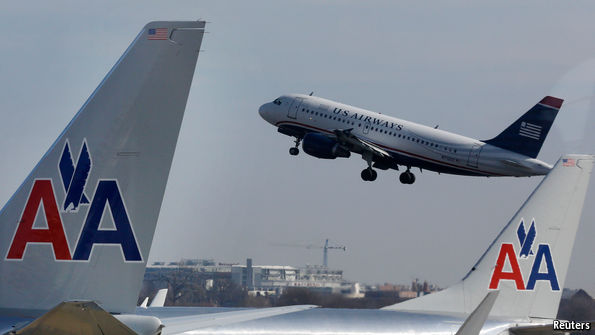
FLYERS in the United States are often frustrated by the dearth of options on certain routes, and the high price of tickets that are the result of limited competition. After several high-profile mergers in recent years, more than 80% of the domestic air market is controlled by four companies. That has led some travellers to ask how the government could possibly have allowed this to happen.
The answer is the same one that explains so many beguiling aspects of American governance: the combination of money, lobbying, influence, and the political revolving door that often makes it so easy for powerful companies to get their way.
A new investigation by ProPublica delves deeply into the complex web of meetings, donations, and hirings that surrounded the tie-up between American Airlines and US Airways. Three years ago, the administration of Barack Obama filed a lawsuit against the merger, alleging that it would raise prices and fees, cut service, and worsen amenities. Three months later, it reversed course, settling with the airlines and allowing the merger to move…Continue reading
“El reto de una firma global es llegar a diversas culturas”
El quinto mayor fabricante de cosméticos del mundo redobla su expansión internacional
Las dos Españas del vino
La baja cosecha de este año amplía la ventaja competitiva de las denominaciones de origen frente a los productores a granel