
Tag: Business and finance
The markets are quiet. Too quiet?

HAN SOLO, a hero from the Star Wars movies, has a habit of saying, at tense moments, “I have a bad feeling about this.” Many commentators are echoing this sentiment after a recent fall in the Volatility Index, or Vix, below ten. Their fears deepened on May 17th, when the Vix lurched above 15 and American stockmarkets had their worst day in eight months. Incessant turmoil in the White House at last seemed to take its toll.
A low Vix reading is usually seen as a sign of investor complacency. The previous two occasions on which the index fell below ten were in 1993 and early 2007 (see chart). One preceded the bond market sell-off of 1994 and the other occurred just before the first stages of the credit crisis.
The value of the Vix relates to the cost of insuring against asset-price movements via the options market. An option gives the purchaser the right, but not the obligation, to buy (a call) or sell (a put) an asset at a given price before a given date. In return, like…Continue reading
The British government sells its last shares in Lloyds bank

IN OCTOBER 2008, amid post-Lehman pandemonium, Britain’s Treasury said it would pump £37bn (then $64.4bn) into three big banks: £20bn into the stricken Royal Bank of Scotland (RBS); the rest into Lloyds TSB and HBOS, a sickly rival that ministers had cajoled Lloyds into buying. After rights issues in 2009, in all the state paid £20.3bn for 43.4% of the merged Lloyds Banking Group. On May 17th Lloyds said the last state shares had been sold.
The government has recouped £21.2bn, including £400m-plus in dividends, since it started to unload its stake in 2013. The return may sound slim, but had big lenders imploded the costs of the financial crisis would surely have been far greater even than they were. (Not surprisingly, anyone holding Lloyds TSB or HBOS shares since before the crisis has made a heavy loss.)
The group is Britain’s biggest retail bank. Its brands—Lloyds Bank, with its “black horse” logo, Halifax and Bank of Scotland—boast around…Continue reading
The markets frustrate OPEC’s efforts to push up oil prices
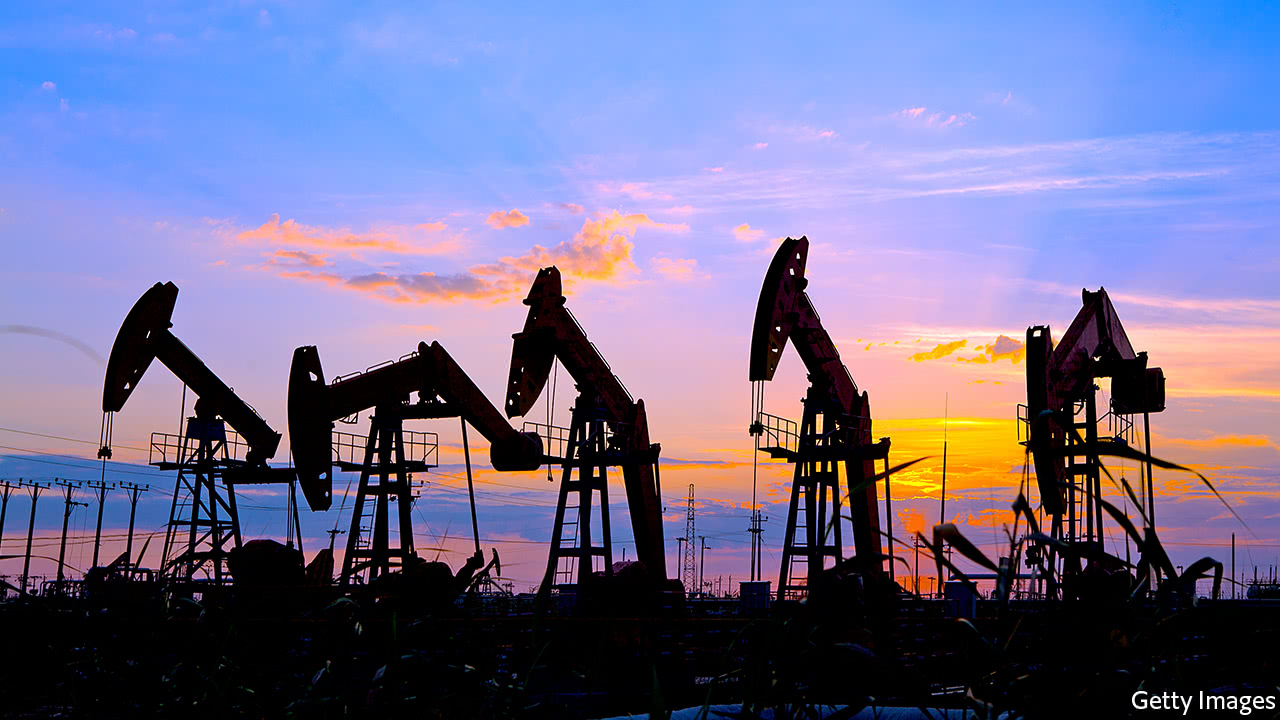
BORROWING three words from Mario Draghi, the central banker who helped save the euro zone, Khalid al-Falih, Saudi Arabia’s energy minister, and his Russian counterpart, Alexander Novak, on May 15th promised to do “whatever it takes” to curb the glut in the global oil markets. Ahead of a May 25th meeting of OPEC, the oil producers’ cartel, they promised to extend cuts agreed last year by nine months, to March 2018, pushing oil prices up sharply, to around $50 a barrel. But to make the rally last, a more apt three-word phrase might be: “know thy enemy”.
In two and a half years of flip-flopping over how to deal with tumbling oil prices, OPEC has been consistent in one respect. It has underestimated the ability of shale-oil producers in America—its nemesis in the sheikhs-versus-shale battle—to use more efficient financial techniques to weather the storm of lower prices. A lifeline for American producers has been their ability to use capital markets to raise money, and to use…Continue reading
A new anthology of essays reconsiders Thomas Piketty’s “Capital”
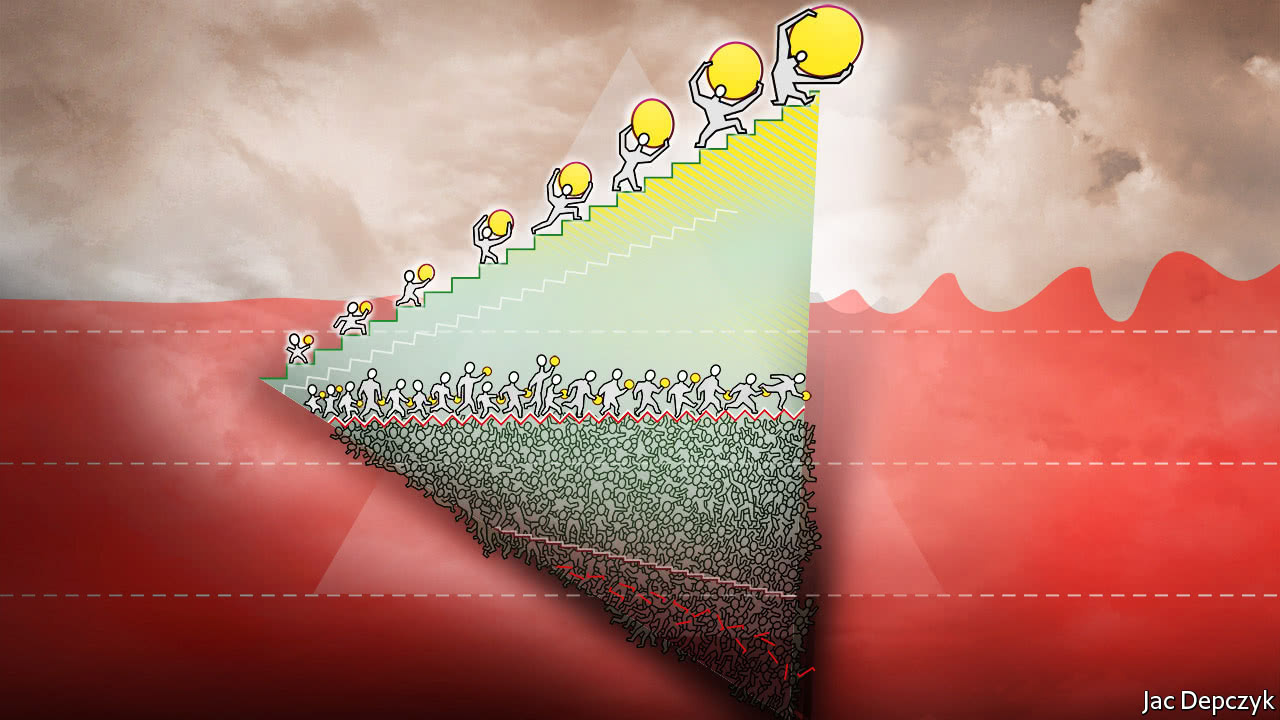
“A MODERN Marx” was how The Economist described Thomas Piketty three years ago, when he was well on his way to selling more than 2m copies of “Capital in the Twenty-First Century”. It was meant as a compliment, mostly: as advice to take the analysis seriously, yet to treat the policy recommendations with caution. The book’s striking warning, of the creeping dominance of the very wealthy, looks as relevant as ever: as Donald Trump’s heirs mind his business empire, he works to repeal inheritance tax. But “Capital” changed the agenda of academic economics far less than it seemed it might. A new volume of essays reflecting on Mr Piketty’s book, published this month, prods economists to do better. It is not clear they can.
“After Piketty: The Agenda for Economics and Inequality”, edited by Heather Boushey, Bradford DeLong and Marshall Steinbaum, is a book by economists, for economists. In that it resembles “Capital” itself. Before he was an…Continue reading
Not Maggie May, but muddled May

THE Conservative election campaign so far has been duller than an afternoon looking at Jeremy Corbyn’s collection of pictures of manhole covers. Blessed by an extremist opposition and a big opinion poll lead, the government is coasting, muttering platitudes like «strong and stable» and emphasising its newish prime minister, Theresa May, rather than its party name.
The odd thing is that the Conservatives are trying to develop a personality cult based on someone who (to put it politely) does not have a particularly fascinating personality. Perhaps that’s the point; people are looking for someone calm and competent. Labour tried something similar with Gordon Brown – “Not flash, just Gordon” was the slogan – with little success. The Conservative strategy seems to be working for now but one…Continue reading
A British firm plans a secondary market for crowd-funded shares

EVERYONE would like a piece of the next Google or Facebook. But the big venture-capital (VC) firms do not usually raise money from small investors. And some entrepreneurs complain that it is hard to get noticed by the hotshots in the VC industry. Hence the enthusiasm for crowd-funding, where small investors can buy a stake in startup companies.
Seedrs, a British crowd-funding firm, was set up in 2012, and has backed 500 firms so far, raising a total of £210m ($271m) from more than 200,000 users. But there are two big problems with crowd-funding. First, it is risky: most startups fail. Second, investments tend to be illiquid—shareholders have to wait for a takeover or a stockmarket flotation to recoup their investment.
Seedrs is trying to solve the illiquidity problem by setting up a secondary market, where buyers and sellers can exchange shares. The new market will start operating this summer, and will allow trading for a week every month, starting on the first…Continue reading
Old McDonnell has a plan. He eyes IOUs
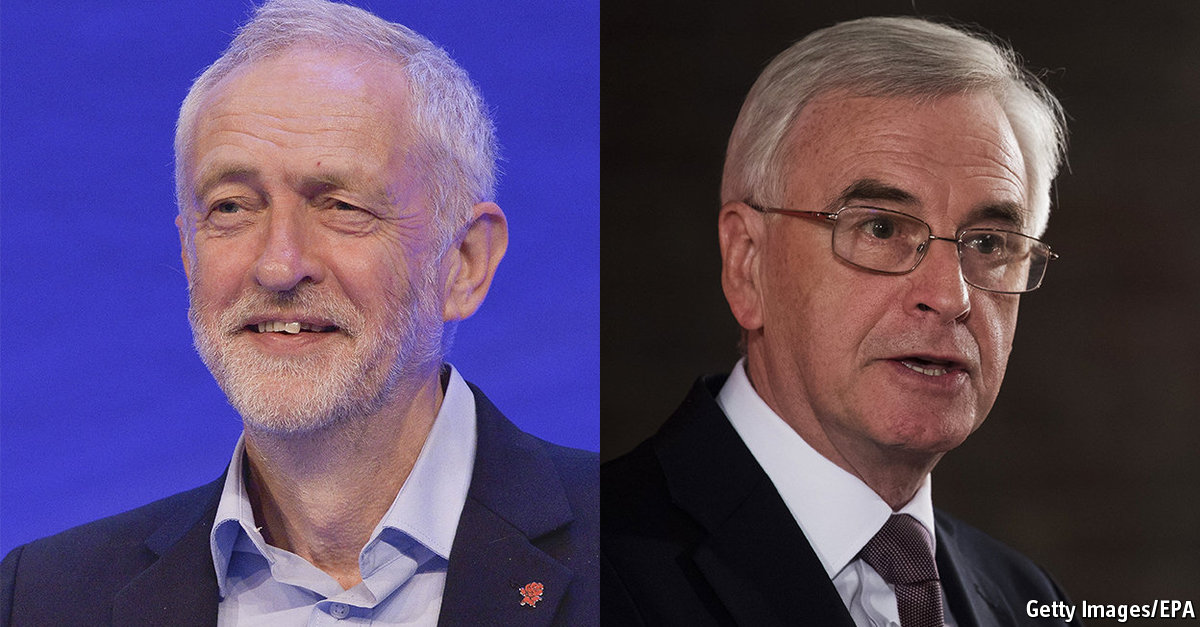
WITH the Labour Party 17 percentage points behind in the opinion polls, it may not be worth analysing the tax and economic aspects of its manifesto. The belief that the party will lose is so widespread that you can get odds as high as 20/1 on a victory for the party; market indifference is such that its plans to nationalise the water industry have caused shares in the biggest provider, United Utilities, to fall just 1.6%. Still, the manifesto is such a mishmash of ideas that it is worth a look at the ideas of Jeremy Corbyn and John McDonnell (pictured), the shadow chancellor of th exchequer.
One eye-catching proposal is for a £250bn “National Transformation Fund”, spread over ten years, to invest in:
infrastructure—transport, energy systems, communications—scientific research and housing fit for the 21st century
There is an argument for borrowing to fund…Continue reading
Who owns the space between reclining airline seats?
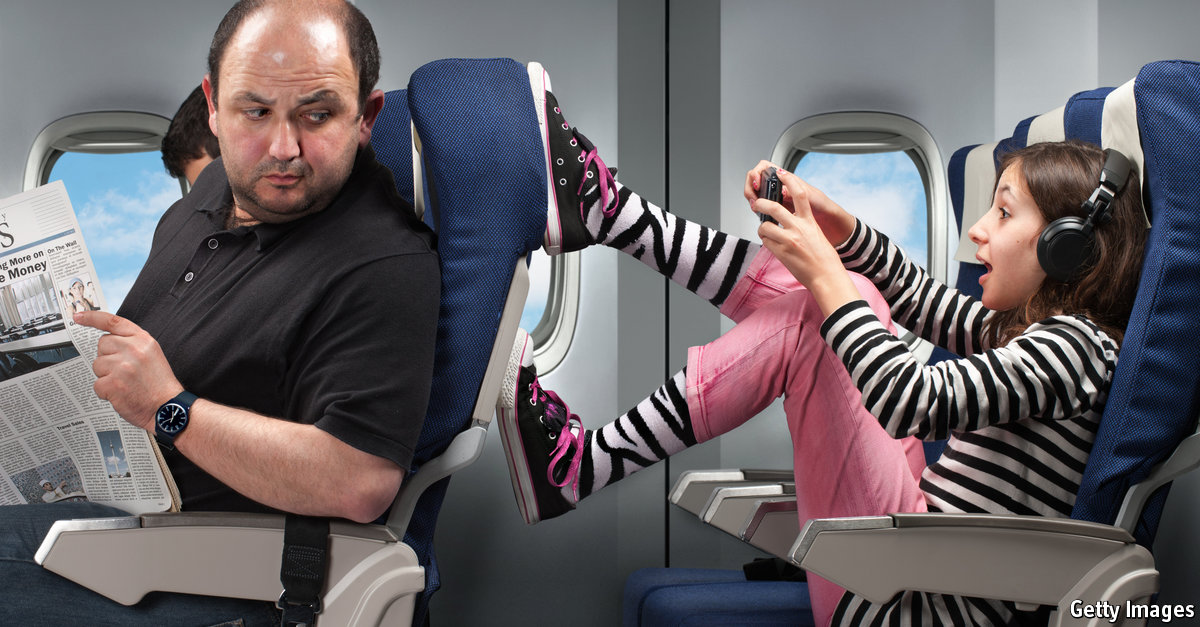
TO WHOM does the legroom on an aeroplane belong? More specifically, who owns the four inches of knee-space into which a passenger can recline his seat?
The accepted notion is that such territory belongs to the person seated in front. That flyer has, after all, paid for a reclining chair and thus believes it is his “right” to occupy the space behind. If he remains upright, magnanimously bequeathing extra inches to the person behind, it is on the understanding that he can move the border whenever he likes.
But, in common with many borders, disputes are inevitable. Sometimes the newly squished passenger will wage a guerilla war, perhaps by wedging his knees into the back of the seat in front, ensuring that the price of territorial expansion is discomfort. Weapons may also be deployed. The Knee Defender, a device that can be attached to the chair in front to render it rigid, is banned by many airlines, but that does not deter desperate flyers from using them. All too often, real warfare ensues….Continue reading
Airport terminals for the super-rich might be best for everyone

ON MAY 7th a fist-fight broke out on a Southwest Airlines flight that had just landed at Bob Hope Airport in Burbank, California. The violence began when a passenger accused another of “messing with his chair”. It was, inevitably, captured on video and quickly spread on social media.
Twenty miles down the road, Los Angeles International Airport unveiled a new $22m terminal. The facility, called the Private Suite at Los Angeles International Airport, will be the first of its kind in America when it opens on May 15th: an exclusive hideaway for Hollywood types who want to avoid the masses (and the paparazzi) en route to their flights. For an annual membership of $7,500, plus $2,700 to $3,000 per flight, a group of up to four travellers can enjoy luxury suites before being screened by a dedicated security team and transported directly to the plane in a BMW. Once there, they can board using a separate staircase,…Continue reading
2017 Marjorie Deane internship
Internship The Economist invites applications for the 2017 Marjorie Deane internship. Paid for by the Marjorie Deane Financial Journalism Foundation, the award is designed to provide work experience for a promising journalist or would-be journalist, who will spend three months at The Economist writing about economics and finance. Applicants are asked to write a covering letter and an original article of no more than 500 words suitable for publication in the Finance and economics section. Applications should be sent to deaneintern@economist.com by June 2nd. For more information, please visit www.marjoriedeane.com.