
Tag: Business and finance
William Baumol, a great economist, died on May 4th
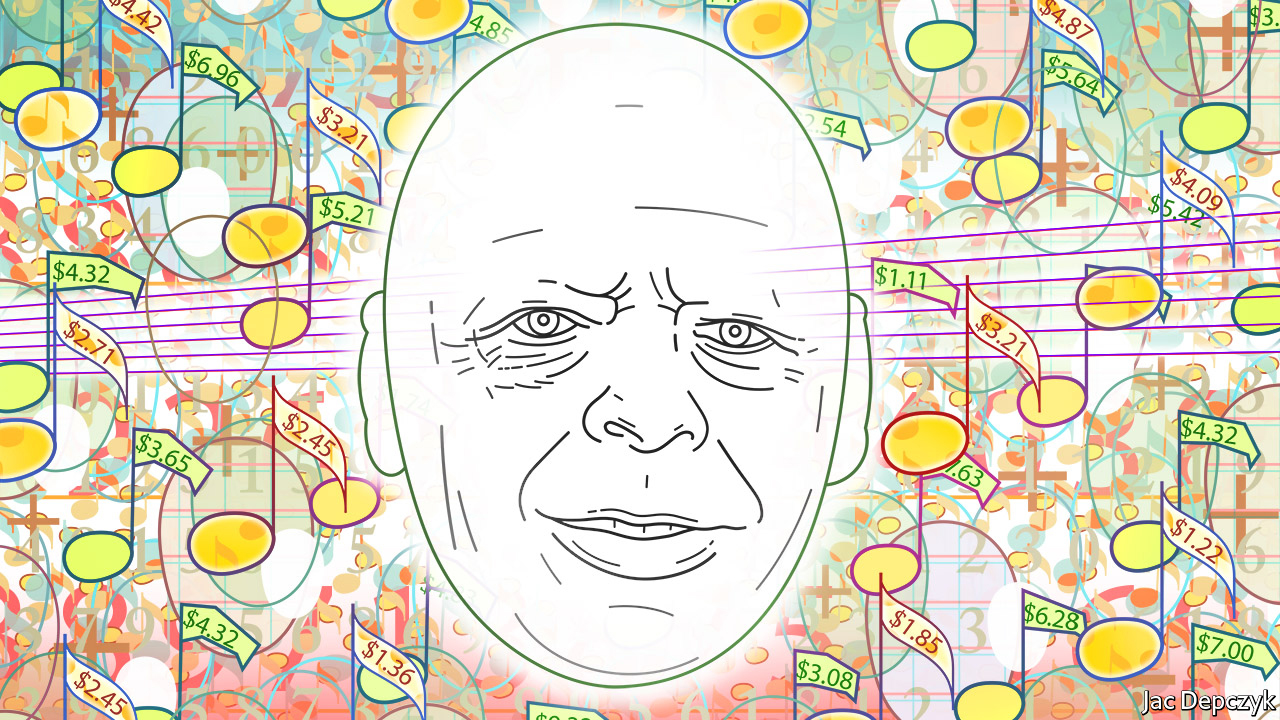
ON MAY 4th William Baumol, one of the great economists of the 20th century, died. Mr Baumol, who kept working into his 90s, published more than 500 papers across a dazzling array of topics; his best-known work, describing “cost disease”, was essentially a side-project. He was a scholar whose stray thought on a sleepless night could change how people see the world.
Mr Baumol was born in the South Bronx, attended New York public schools and took an undergraduate degree at the College of the City of New York. Shaped by his family’s left-wing views, in high school he read Karl Marx, which kindled an interest in economics. He did his PhD at the London School of Economics; he defended his dissertation “over whiskies and sodas at the Reform Club”. He spent most of his long career at Princeton University. He had long been on the shortlist for a Nobel prize; sadly, death means he cannot receive one.
His contributions will endure, however. Mr Baumol’s primary intellectual…Continue reading
The investment- management industry faces a big squeeze
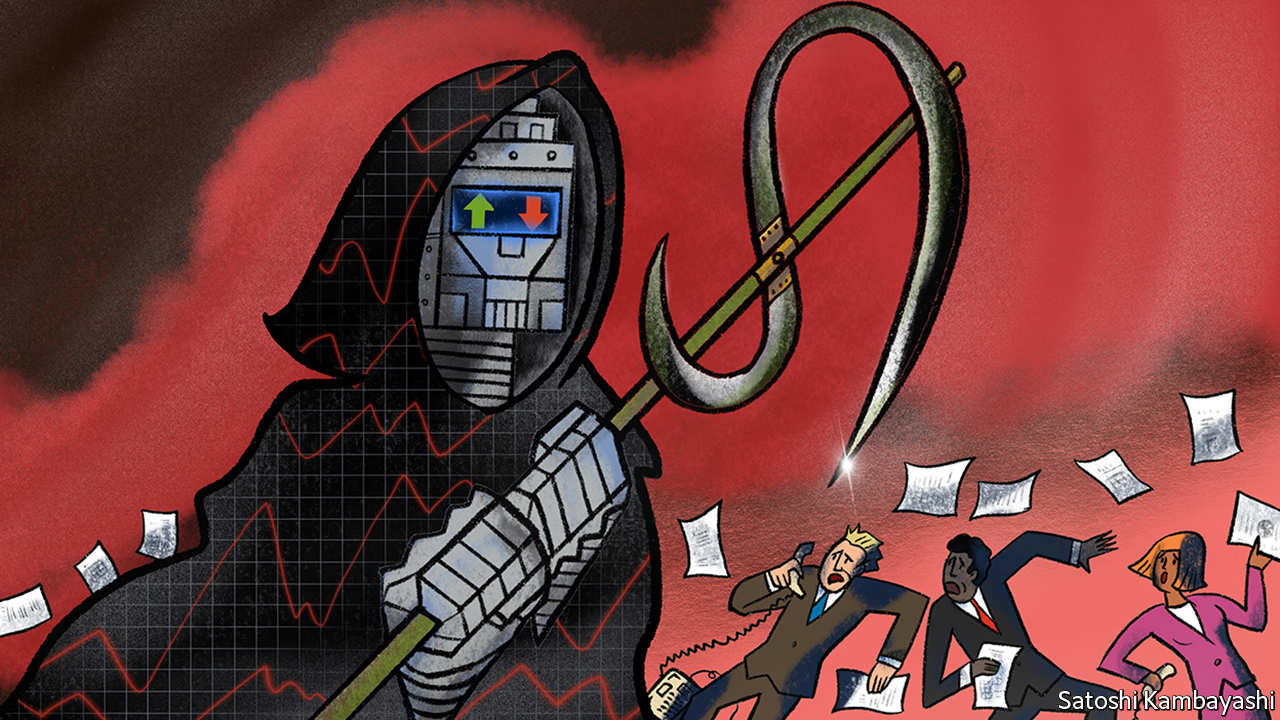
MAKING money yourself from investing other people’s has been a good business for over a century. Asset managers established a key principle early on: they could charge an ad valorem fee on the amount they oversee. So when markets go up, their fees go up.
But as the title of a recent London Business School conference indicated, investment management is “an industry in disruption”. Abhijit Rawal of PwC, a consultancy, described the sector’s problems as the “four Rs”: returns are low; revenues are being squeezed; regulations are being tightened; and the robots are coming to take away business.
Plenty of potential for growth remains, as workers save for retirement. But the industry faces the same sort of cut-throat competition that technology has caused elsewhere. The oldest challenge comes from index trackers, funds that try simply to match the performance of a benchmark like the S&P 500. It took many decades for such “passive” funds to…Continue reading
On China, commodities, credit and complacency
THERE is a familiar scene in westerns where the cavalry is riding through the mountain pass and the captain says «I don’t like it. It’s quiet. Too quiet.» Seconds later, a soldier gets an arrow in his chest and all hell breaks loose. Some people feel that about markets at the moment. Deutsche Bank reckons the S&P 500 has had 10 out of 11 days with a move of less than 0.2%, the quietest period since 1927. The volatility index, or Vix, fell to a 23-year low after the French election result.
This calmness is in striking contrast to the political turmoil that has followed the election of the Trump administration; the tensions over North Korea, the firing of the FBI director and the trade policies that have pushed Citibank to issue a regular «US protectionism round-up». Is it all a sign of complacency?
There certainly have been occasions in the…Continue reading
In China, a TV soap on corruption attracts a mass following

RARELY has a Chinese city boss had more fans than Li Dakang, the earnest, driven Communist Party chief of Jingzhou. “I want development, I want speed and I want GDP,” he recently intoned. “But I want it to be modern GDP, GDP that comes without pollution.” Over the past month tens of millions have tuned in to watch him strive to fulfil these promises. On their smartphones, they share images of the heavy-eyed man with an easy smile, quoting his words and cheering him on. His policies have even been immortalised in a musical tribute, “The GDP Song”.
Li Dakang is not real, nor is Jingzhou. They exist only on “In the Name of the People”, a wildly popular 55-part television series about China’s battle against graft. Since its first broadcast in March, the show has attracted attention for its depiction of official corruption, unusual in the context of Chinese censorship. Less noted is the insight it has offered into a range of China’s economic problems—not just…Continue reading
The Tory and Labour parties fail to face the realities of Brexit

FOG in channel: continent cut off is an (alas apocryphal) newspaper headline that points to the innate British sense of superiority. Victory in two world wars and a long history without invasion has given Britain a sense of detachment from its European neighbours. As a result, it was always a reluctant member of the European Union.
Now that Britain is leaving, it must work out its own path to economic prosperity. The task is not impossible. But the superior attitude needs to be dropped. The Conservatives under Theresa May seem also certain to win the forthcoming election, with an 18-point lead on the latest polling average. Mrs May was a lukewarm member of the Remain campaign, and was only brought to power by the sudden demise of the government’s leading duumvirate, David Cameron and George Osborne. It clearly took time for her to decide on her negotiating strategy; the key Article 50 provision was not triggered until nine months after the vote.
One approach that…Continue reading
A mixed April for United Airlines

UNITED AIRLINES has just had a great month. Of course, there was the odd hiccup. First, the video of a bloodied United passenger being dragged off an overbooked flight for the crime of wanting to stay in the seat he had paid for. Then there was the giant rabbit, en route from London to Chicago to compete for the title of world’s largest bunny, who died in United custody with lawyers alleging the airline put the live beast in a freezer for 16 hours. Then there was the airline’s apology to the Paris-bound passenger who ended up in San Francisco instead. And the flyer whose trip was cancelled after he taped an argument with a United employee.
Yet despite this month of PR…Continue reading
Podcast: Trumponomics
Simon Long delves into what Donald Trump means for taxes, growth and trade. Also: the markets react to Emmanuel Macron’s election victory in France and China develops its first large passenger jet
Europe needs true fiscal integration, not its own IMF
THE euro-area debt crisis exposed a critical need for stronger European financial safety nets and institutions. In March 2010, Thomas Mayer and Daniel Gros, two German economists, made a strong case for the creation of a European Monetary Fund (EMF). In the end, European leaders agreed on a European Financial Stability Facility (EFSF) in May 2010. This was later transformed into the European Stability Mechanism (ESM), which today works alongside the IMF in Europe’s financial-assistance programmes. The creation of the ESM was a major step in the process of integrating and completing the euro area. It offered a powerful mechanism to backstop sovereign debt markets and deal with sudden stops in capital flows at a time of acute crisis. But over the years, as the more fundamental flaws in the architecture of European Monetary Union (EMU) have come to light, this approach has proved its limits. The ESM now needs to evolve.
America may extend its laptop ban to cover flights from Europe

THE Trump administration is considering extending its ban on laptops and tablets to include flights from Europe, according to CBS news. Security officials originally banned electronic devices larger than a phone on routes from ten Middle Eastern airports in March, citing intelligence that suggested terrorists might be planning to smuggle a bomb on board flights in such gadgets. CBS says that a decision on whether to include flights from Europe, including Britain, will be made in the next few weeks. “Sources say Department of Homeland Security officials are weighing the advantages of expanding the ban against disruptions it could cause,” it reports.
This blog has argued that, where possible, security services should be given the benefit of the doubt when it comes to keeping flyers safe. But there is no doubt that the original…Continue reading
Another pay rise?
Callum Williams joins presenter Simon Long to examine the merits of Labour leader Jeremy Corbyn’s proposal for a £10 minimum wage. The Chinese investors who idolise American billionaire Warren Buffet. Why a gender gap among Economics students could cause problems down the road