
Tag: Business and finance
Dara Khosrowshahi is off to a strong start but there are miles to go
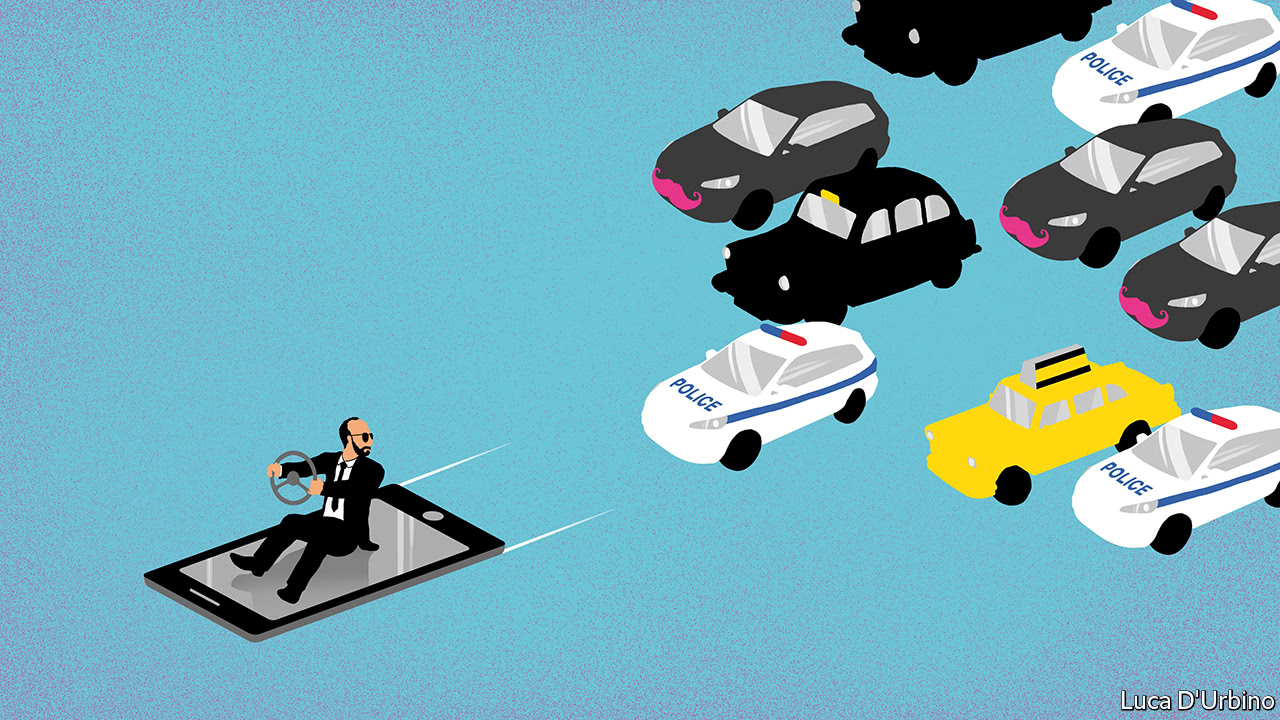
HERE’S the job spec. Unite a deeply divided board. Keep a strong-willed founder under control. Immediately recruit a new chief financial officer. Negotiate with angry local regulators intent on closing down the business in their city. Convince courts that the company does not have to provide its contract workers with the benefits due to full-time employees. Change a cut-throat culture without curbing employees’ drive. On top of all this, deal not only with an intellectual-property (IP) lawsuit that could cost the firm nearly $2bn, but also cope with a criminal investigation by the FBI that could see some managers end up in prison.
No one sane, you would think, would even apply for such misery. But after some hesitation Dara Khosrowshahi (pronounced cause-ro-SHAH-hee), until recently the chief executive of Expedia, an online travel agency, returned the headhunter’s call. Now he is boss of Uber, which, at $68bn, is the world’s most highly valued privately-held company. Can he…Continue reading
American public pensions suffer from a gaping hole

SCHOOLS in Pennsylvania ought to be celebrating. The state gave them a $125m budget increase for 2017-18—enough for plenty of extra books and equipment. But John Callahan of the Pennsylvania School Boards Association says all the increase and more will be eaten up by pension costs, which will rise by $164m this year. The same happened in each of the previous five years; cumulatively the shortfall adds up to $586m. The pupil-teacher ratio is higher than in 2010. Nearly 85% of the state’s school boards said pensions were their biggest source of budget pressure.
A similar squeeze is happening all over America. Sarah Anzia, at the University of California, Berkeley, examined 219 cities between 2005 and 2014 and found that the mean increase in their real pension costs was 69%; higher pension costs in those cities were associated with falls in public-sector employment and capital spending.
The problem is likely to get worse. Moody’s, a rating agency, puts the total shortfall…Continue reading
Dirt-cheap mobile data is a thrill for Indian consumers
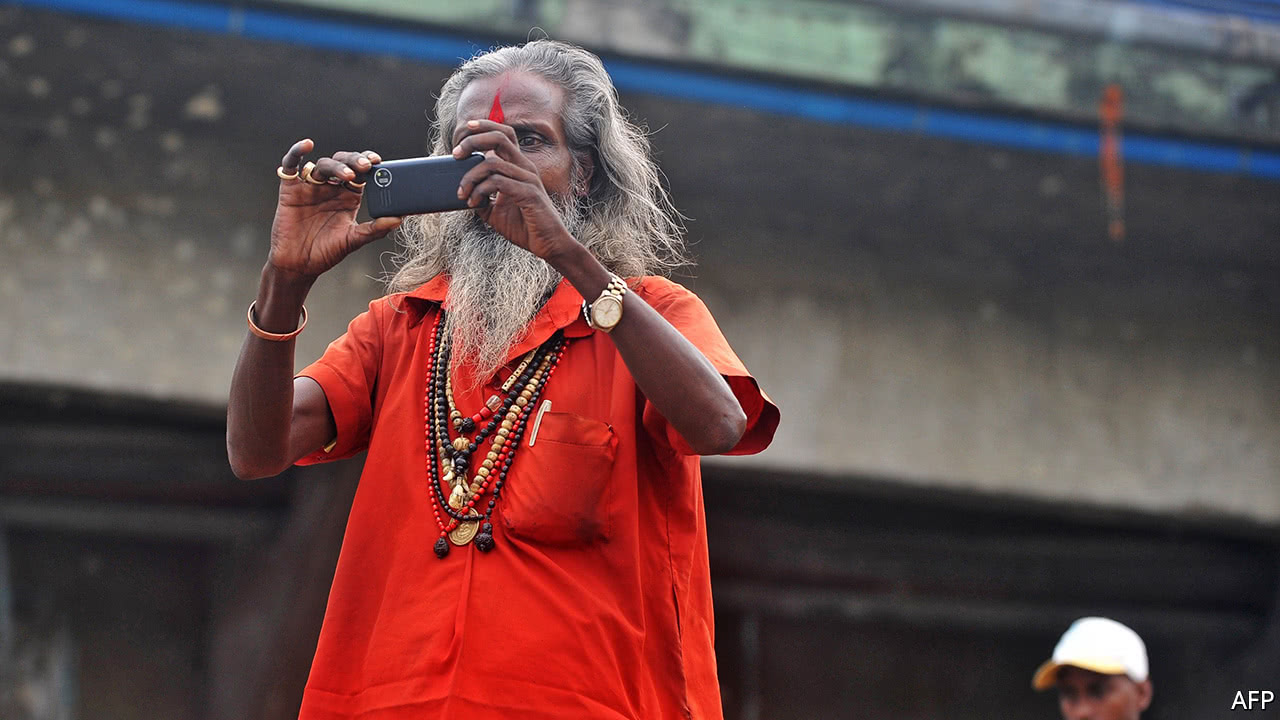
THE security guards at the foot of Antilia, a 27-floor private residence in Mumbai, while away the days just as all bored Indians have been doing in recent months—watching movies on their phone. Using a mobile network to stream endless Bollywood epics would until recently have been an unthinkable luxury, even in the rich world. In India it now costs less than a cup of street-side chai.
Thank the tycoon lording it in the skyscraper’s upper reaches. As boss of Reliance Industries, Mukesh Ambani, India’s richest man, has spent more than $25bn on building Jio, a state-of-the-art mobile-telecoms network. The delight of the guards at Antilia, and of the roughly 130m Indians who have signed up to the service since it launched in September 2016, is matched only by the misery of Mr Ambani’s rivals.
Jio’s rise is nothing short of spectacular. It took less than a year for it to be delivering more data than any other mobile…Continue reading
Mergers and acquisitions often disappoint
WHEN you are the chief executive of a public company, the temptation to opt for a merger or acquisition is great indeed. Many such bosses may get a call every week or so from an investment banker eager to offer the kind of deal that is sure to boost profits.
Plenty of those calls are proving fruitful. In the first three quarters of 2017, just over $2.5trn-worth of transactions were agreed globally, according to Dealogic, a data provider. The total was virtually unchanged from the same period in 2016, but the number in Europe, the Middle East and Africa was up by 21%.
It is easy to understand why an executive opts for a deal. Buying another business looks like decisive action, and is a lot easier than coming up with a new, best-selling product. Furthermore, being the acquirer is far more appealing than being the prey; better to be the butcher than the cattle. A takeover may keep activist hedge funds off the management’s back for a while longer. And being in charge of a much bigger company is a more demanding task that will surely justify (ahem) a larger salary for the executives in charge.
But these temptations, good and bad, should generally be resisted. S&P Global Market Intelligence, a research arm of the ratings agency, has updated a study on the impact of deals on the acquiring company’s share price. The study looked at M&A deals done…Continue reading
Manias, panics and Initial Coin Offerings

EVERY market mania reaches a point when pitches to would-be investors enter the realm of the surreal. So it goes for “initial coin offerings”, or ICOs. A new one by a firm called POW invites Facebook users to claim tokens for nothing; when they later become convertible into other tokens, the first to take advantage of the offer could “become worth $124bn…making them the richest person on Earth”, the blurb says. Not a bad return for no money invested and no risk borne. However bizarre, bubbles are hard to resist: no one wants to be the only one of their friends left out. They can also be financially ruinous. But gambling on a craze, even a highly dubious one, can be about more than blind greed.
The ICO boom is an outgrowth of the emerging, occasionally inscrutable world of cryptocurrencies. These are a form of money (bitcoin and ether are examples) used in transactions which are recorded on a distributed public ledger called a blockchain. An ICO is a scheme to raise funds for an…Continue reading
After a bite of Apple, Margrethe Vestager targets another tech giant

MARGRETHE VESTAGER’S assault on technology firms she deems to have improperly massaged down their tax bills continued this week with a tilt at Amazon. The internet retailer faces a bill of €250m ($293m) for back taxes over what the European Union’s competition commissioner considers to have been an illegal sweetheart deal with Luxembourg.
The order requiring the Grand Duchy to recover the money follows a well-publicised three-year investigation. It is the latest in a series of tax-avoidance cases brought by the European Commission against multinationals, most of them American. Last year, Ireland was ordered to recover €13bn from Apple—smashing all past records for EU corporate-tax cases.
As with Apple, the commission concluded that Amazon received illegal state aid—in the retailer’s case between 2006 and 2014—through a tax-cutting arrangement that was unavailable to its rivals. This came in the form of a ruling from Luxembourg’s tax authority,…Continue reading
Concerns over charges for checked bags in America miss the point

FEES for checked luggage are working exactly as intended. That is the main thrust of a new report from America’s Government Accountability Office (GAO) on the recent rise of charges for checking a bag onto a plane when flying. But not everyone is interpreting the study in such a positive light.
Critics are crying foul because these fees cost some passengers more money. Bill Nelson, a Democratic senator who requested the study and sits on the committee that oversees the airline industry, has described the charges as a “last-minute shakedown”. William McGee of Consumer Reports, a non-profit organisation that reviews products, told USA Today that “consumers should be able to shop for airline seats without being nickel-and-dimed.”
Media outlets are also making the same point. When the Associated Press
Monarch Airlines goes into administration

JUST before dawn on October 2nd, passengers booked to fly on Monarch Airlines began to receive texts informing them that their flights had been cancelled. This was the first news that Britain’s fifth-biggest airline had ceased trading and is now in administration.
It is the country’s biggest airline ever to collapse. Monarch had been in last-ditch talks with the Civil Aviation Authority, a regulator, to renew its licence to sell package holidays, but failed to reach a deal. About 110,000 passengers have been left stranded, although the government has hired over 30 planes, in effect creating another airline, to bring holiday-makers back over the next two weeks. Chris Grayling, the transport secretary, is calling it the “biggest ever peacetime repatriation”. A further 860,000 have lost future bookings, and with it weddings, vacations and more, although many should be able to reclaim some of their costs. Monarch also employs about 2,100 people, all now…Continue reading
Facebook and the meaning of share ownership

ONE group of Facebook friends that Mark Zuckerberg recently decided were not worth hanging out with were its public shareholders, who expected to cross-examine him (via a lawyer) on September 26th in a Delaware court. At issue would have been Mr Zuckerberg’s plans to refashion the social-media firm’s share-ownership structure more in his favour.
There is not a scintilla of doubt over who controls Facebook. Not only does Mr Zuckerberg, its founder, serve as its CEO and chairman; owning 16% of its shares, he controls 60% of the voting authority through a special class of stock with ten times normal voting rights. A year ago, Mr Zuckerberg decided he would like to sell a large slug of his holdings (worth $74bn) without diluting control. The firm made a plan to distribute non-voting shares enabling him to reduce his economic interest to 3% without affecting control.
That prompted litigation. Shareholder votes can be directly meaningful on many issues, including management pay…Continue reading
Rivigo is helping the Indian truck-driving industry out of a jam

THERE are 36 gradations in India’s archaic caste system, from the priestly to the supposedly untouchable. And then, somewhere below that, are the long-haul truck-drivers. Plying the subcontinent’s potholed highways for weeks at a time, few can settle into anything like a home life. Their marriage prospects are grim; venereal diseases and sore backs from sleeping in cramped cabs are but two occupational hazards. Despite an oversupplied national job market, the industry has struggled to attract the roughly 1m new drivers it needs each year to keep everything from Amazon packages to car parts moving. Can technology help?
To fend off shortages, most truck owners have done precisely what economists suggest, which is to increase pay. Drivers can now command nearly 40,000 rupees ($610) a month, a decent white-collar wage—and not far from double the level of trucker pay just three years ago. Rivigo, a startup based in Gurgaon, an…Continue reading