
Tag: Business and finance
Why McKinsey is under attack in South Africa
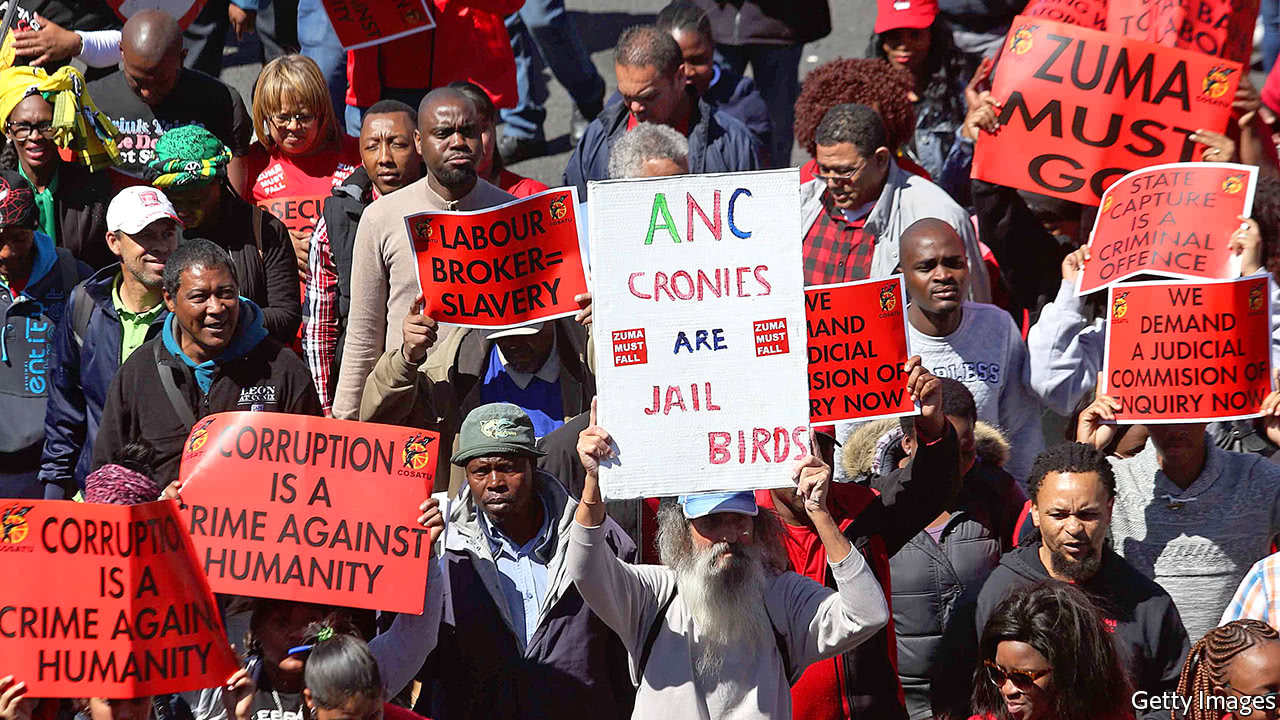
MCKINSEY, a global management consultancy known for its discreet profile and rarefied air, is unused to the sort of tub-thumping popular revolt it is experiencing in South Africa. Such is public outrage over the Guptas, an Indian-born business dynasty accused of growing rich off their relationship with President Jacob Zuma, that a few professional-services firms linked to the family, including McKinsey—as well as SAP, a German software giant—have become targets of Twitter storms and protest banners.
Anti-corruption groups and the opposition Democratic Alliance (DA) have drawn blood in the case of Bell Pottinger, a British public-relations firm accused of orchestrating a racially divisive public-relations campaign on behalf of the Guptas. A complaint by the DA to a British PR industry association set in motion Bell Pottinger’s swift implosion in September. At KPMG, a global audit firm, eight senior executives in South…Continue reading
An assessment of the White House’s progress on deregulation

DEREGULATION, along with tax cuts and trade reform, is one of the three pillars of President Donald Trump’s economic agenda. Republicans promise that, freed of red tape, American firms will invest more and unleash faster economic growth. And while Mr Trump has yet to unite his party around a major piece of legislation, the White House has plenty of sway over regulatory policy. For a start, the government agencies Mr Trump commands can regulate and deregulate on their own (subject only to the instructions that Congress has given them in the past). How much red tape have they managed to tear down since Mr Trump took office?
Regulation is difficult to measure precisely, but the long-term trend towards excessive rulemaking has been obvious. In 1970 there were about 400,000 prescriptive words such as “shall” or “must” in the code of federal regulations, according to the Mercatus Centre, a libertarian-leaning think-tank. Today there are 1.1m (see chart). Wonks of many stripes agree…Continue reading
American efforts to control Chinese firms abroad are dangerous
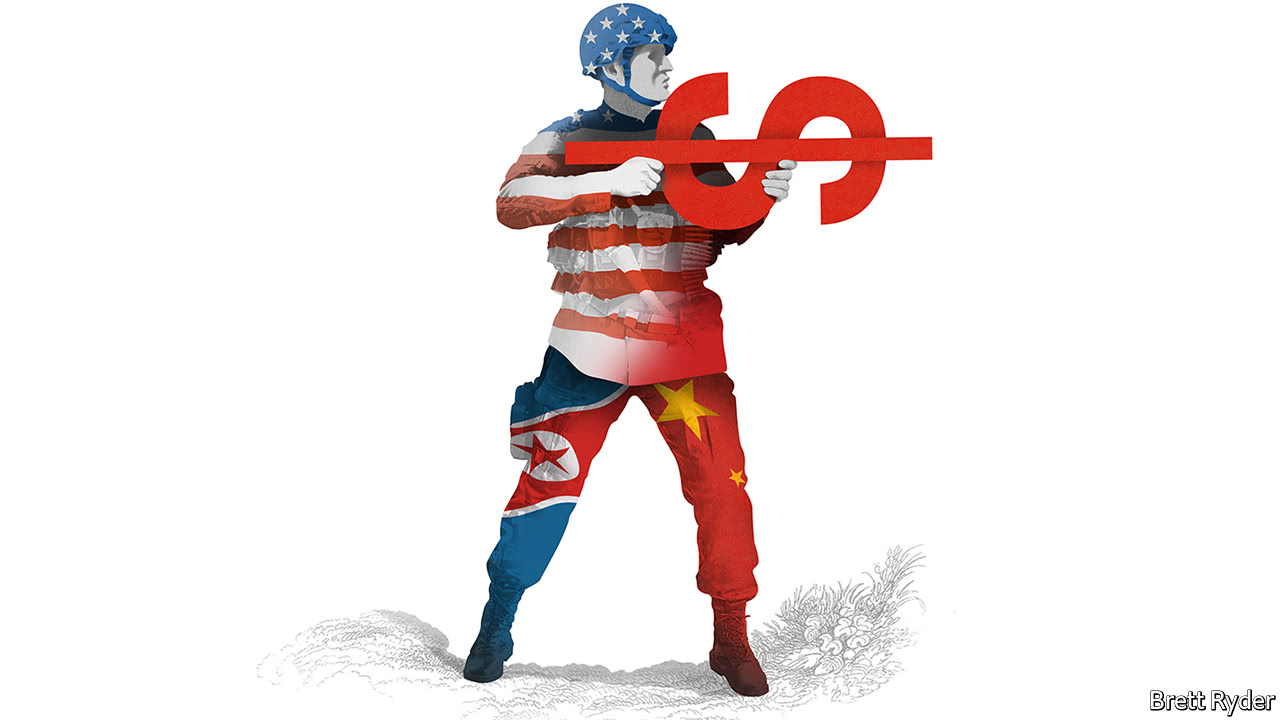
WARS are fought with weapons, but also with money. To understand the global balance of power in the coming decades, it helps to pay attention to the commercial subplot of the North Korean crisis. For the first time, America is attempting to use its full legal and financial might to change the behaviour of Chinese companies and banks, which it believes are propping up North Korea by breaking UN and American sanctions. Some American politicians have concluded that, as China’s firms have integrated with the global economy, they have become more vulnerable to Uncle Sam’s wrath. America has potent weapons, but the trouble is that China can retaliate in devastating fashion.
North Korea is highly dependent on China. Some 60-90% of its trade is with its northern neighbour. China’s state-run energy giant, CNPC, is thought to have sold it oil in recent years—and is the parent of PetroChina, which has depositary receipts listed in New York. North Korean banks and firms operate in China, and…Continue reading
Airlines are trying to cram ever-more seats onto planes
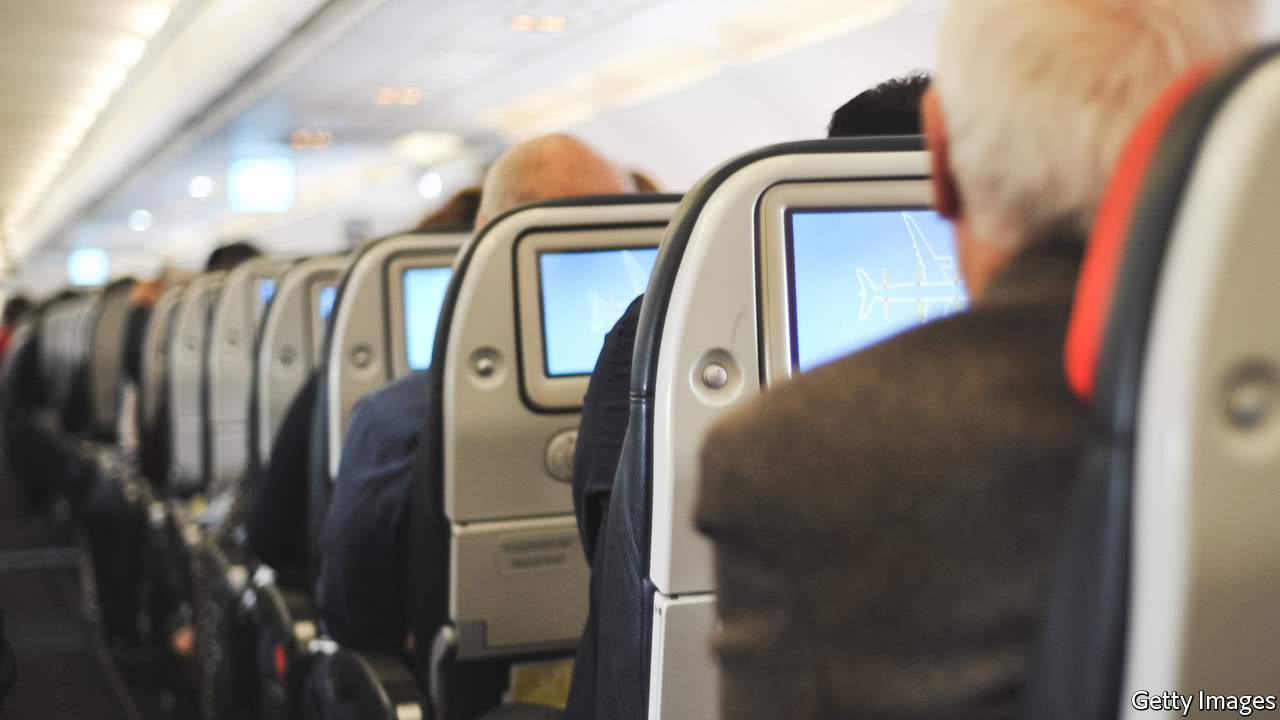
AIRLINES use all sorts of clever tricks to make more money from passengers. They charge extra for bags, for food and for selecting where you sit. Now they are embracing another strategy: packing more seats onto each plane. Last month American Airlines announced that it will insert 12 more seats, or two rows, into its economy class on its Boeing 737-800 fleet and an extra nine seats into its Airbus A321s. Similarly, JetBlue recently said it will cram 12 additional seats into its A320s.
But flyers do not like being packed ever-more tightly into the sardine tins that planes have become. This summer American Airlines announced that it would reduce the distance between rows—known as seat pitch—from 30 to 29 inches on some of its new planes. The public outcry was so heated that the carrier scrapped its plans, as Gulliver has previously reported. This February a member of Congress
Richard Thaler’s work demonstrates why economics is hard
RICHARD THALER has won the Nobel prize in economic sciences this year for his contributions to behavioural economics. It’s a well-deserved prize and a clarifying one, as far as economics is concerned. For a very long time, economists hoped to treat individuals a bit like particles in physics, whose activity can be described by a few well-understood rules, which allow researchers to model and understand complex interactions between particles. The rules, they reckoned, were things like perfect information, forward-looking reasoning and rationality. Of course economists understood that individuals didn’t always behave according to those rules, but the idea was that, in aggregate, the rules would allow for a pretty good approximation of reality.
Then came the behavioural economists, who made it their task to find ways in which human activity systematically diverges from models using those basic assumptions. For many of them, the goal was probably to come…Continue reading
Richard Thaler wins the Nobel prize for economic sciences

THE credit-card bill arrives. You have enough money in a savings account to pay it off—the sensible thing to do, arithmetically speaking, since the interest rate on the credit-card balance far exceeds that earned on the savings. Yet you leave the savings untouched, and pay only as much of the bill as your current-account balance allows. What looks a daft choice to most economists made perfect sense to Richard Thaler, who on October 9th was awarded the Nobel prize for economics for his work in behavioural economics. Mr Thaler helped demonstrate how human reasoning diverges from that of the perfectly rational homo economicus used in most economic modelling. The world, and the field of economics, is better for his contributions.
Economists mostly recognise that normal people—their friends and family—fall short of omniscience and perfect rationality in making day-to-day decisions. Economic modelling requires simplification, however, and economists generally suppose that…Continue reading
When investors get stuck in the past

THE award of the Nobel economics prize to Richard Thaler is a reminder that economics has been struggling, in the past 30 years, to adapt its models to the real-life decision-making processes of actual humans. The problem applies as much in investment as anywhere else.
One of the biggest problems is the tendency to assume that the future will resemble the past. Despite all the warnings inserted by regulators, investors often believe that fund management performance will persist, but the evidence is against it. Another issue is the assumption that overall market returns will persist.
This may be one of the factors explaining the big deficits at state and local pension funds in America. Those funds are allowed to make their own calculations…Continue reading
All-you-can-fly membership models are slowly catching on
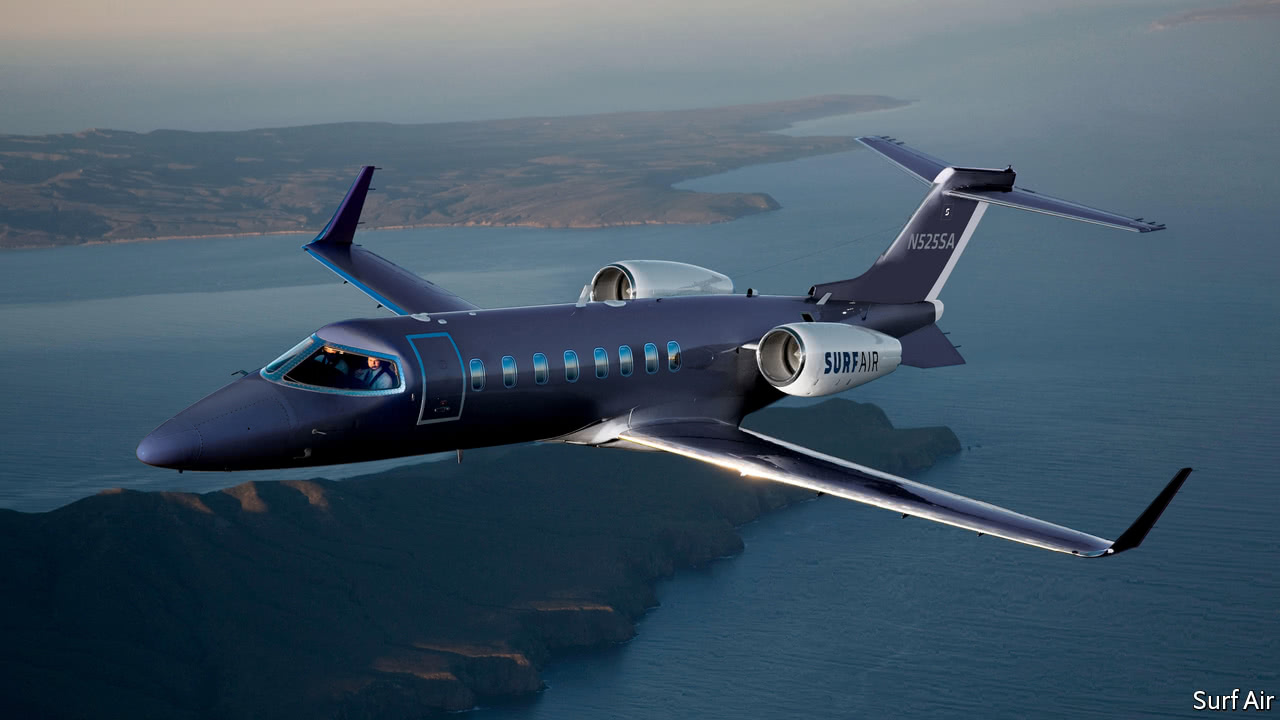
LONDON’s Luton airport is not renowned for its quick boarding. But now it is possible to show up there and in 15 minutes be on a plane bound for Zurich. That is thanks to the recent expansion of Surf Air, a small carrier. Though its name may be unfamiliar, its business model is, in fits and starts, catching on.
Surf Air claims to be the world’s first all-you-can-fly airline. For a monthly fee, members can travel for free on as many flights as they want among the airline’s growing list of destinations. The airline was founded in 2013 in California, where it serves 12 cities. This summer it launched a service in Europe, where it flies from London, Cannes, Ibiza and Zurich. Milan, Munich, and Luxembourg are scheduled to join the roster later this year.
This flexibility comes with a hefty price tag, however. A membership for the airline’s American network starts at $1,950 a month for a limited plan, rising to $2,950 for the highest tier, which allows unlimited flying in the network and includes periodic free hotel…Continue reading
The Nobel in economics rewards a pioneer of “nudges”
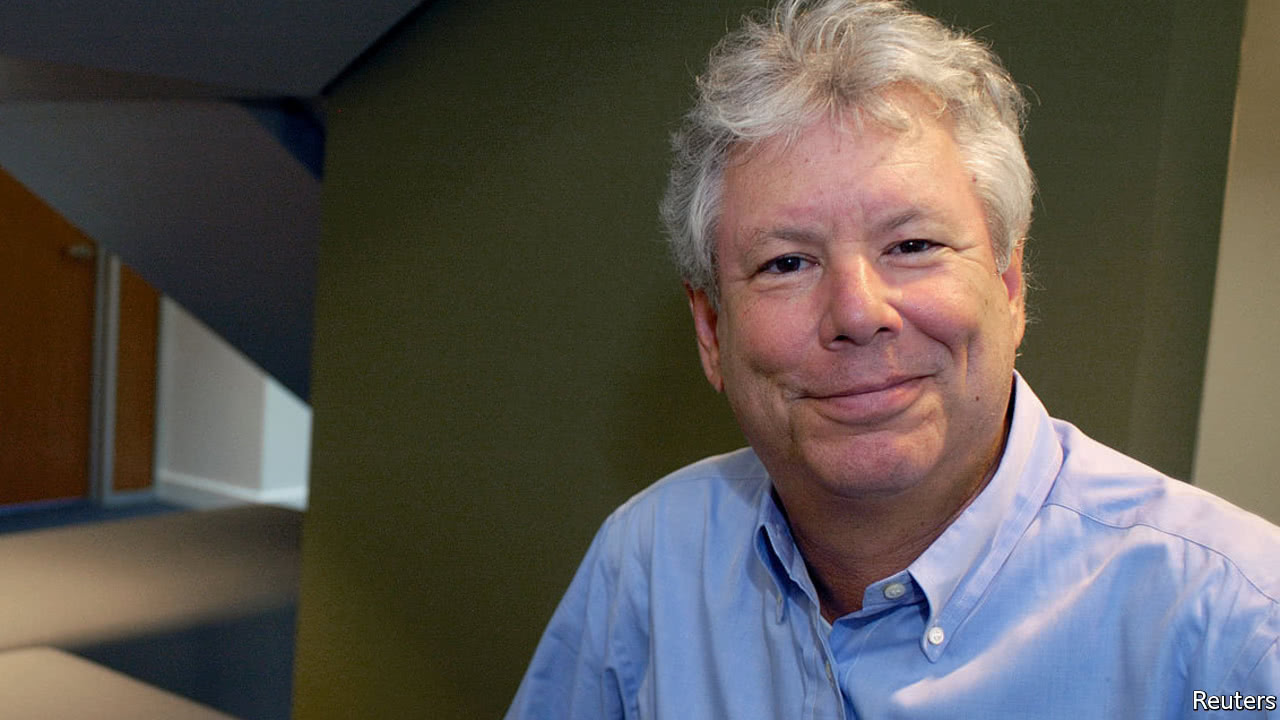
NOT long ago, the starting assumption of any economic theory was that humans are rational actors who maximise their utility. Economists summarily dismissed anyone insisting otherwise. But over the past few decades, behavioural economists like Richard Thaler have progressively chipped away at this notion. They combine economics with insights from psychology to show how heavily economic decisions are influenced by cognitive biases. On September 9th Mr Thaler’s work was recognised at the highest level when the Nobel Committee awarded him this year’s prize in economics. Mr Thaler thus becomes one of very few behavioural economists to win the prize.
Mr Thaler’s has been a prolific career, spanning over four decades, the last two of them at the University of Chicago’s Booth School of Business. His research has touched on subjects as varied as asset prices, personal savings and property crime. For example, Mr Thaler developed a theory of mental accounting, which explains how people making financial decisions look only at the narrow…Continue reading
Flyers rarely complain even when they have cause to

BUSINESS travellers are hardy souls. It goes with the territory. Theirs is a life of jet lag, cramped seating and reheated meals, all washed down with a weak cup of coffee. Small wonder, then, that a recent study by Clarabridge, a technology firm, suggests that few travellers ever actually lodge a complaint about their flights. It surveyed almost 2,500 passengers in Britain and America and found that about two-thirds of respondents have never aired a grievance, even when they had good reason to. This is despite the fact that complaints are on the rise overall, as Gulliver has previously reported.
Why are so many reluctant to complain? One concerning reason is that passengers think airlines will ignore them. This explanation was given by about a third of those who have never complained, according to Clarabridge’s study.
This should worry…Continue reading