
Tag: Business and finance
Naspers comes under fire for free-riding on Tencent

SOUTH AFRICA’S stockmarket has Naspers largely to thank for its recent record highs. Shares in the media and internet group have soared by 45% this year; even before then it was Africa’s most valuable firm. So recent unrest among shareholders in Naspers might seem unwarranted. But in the days before its annual general meeting in Cape Town on August 25th, noisy debate erupted, chiefly about executive pay. Many investors reckon that Bob van Dijk, its boss, is being rewarded for success that he did little to create.
The source of good fortune for Naspers lies about 7,000 miles (11,265km) away. In 2001 Koos Bekker, Mr van Dijk’s predecessor, made a brilliant investment of $32m in a little-known Chinese technology firm called Tencent. Today its 33% stake is worth $130bn, as measured by Tencent’s value on the Hong Kong stock exchange; that dwarfs the $100bn valuation of Naspers itself on the Johannesburg stock exchange. Shares in the latter rise and fall on news from Hong Kong. In its…Continue reading
Foreign jurisdictions try to lure legal business from London
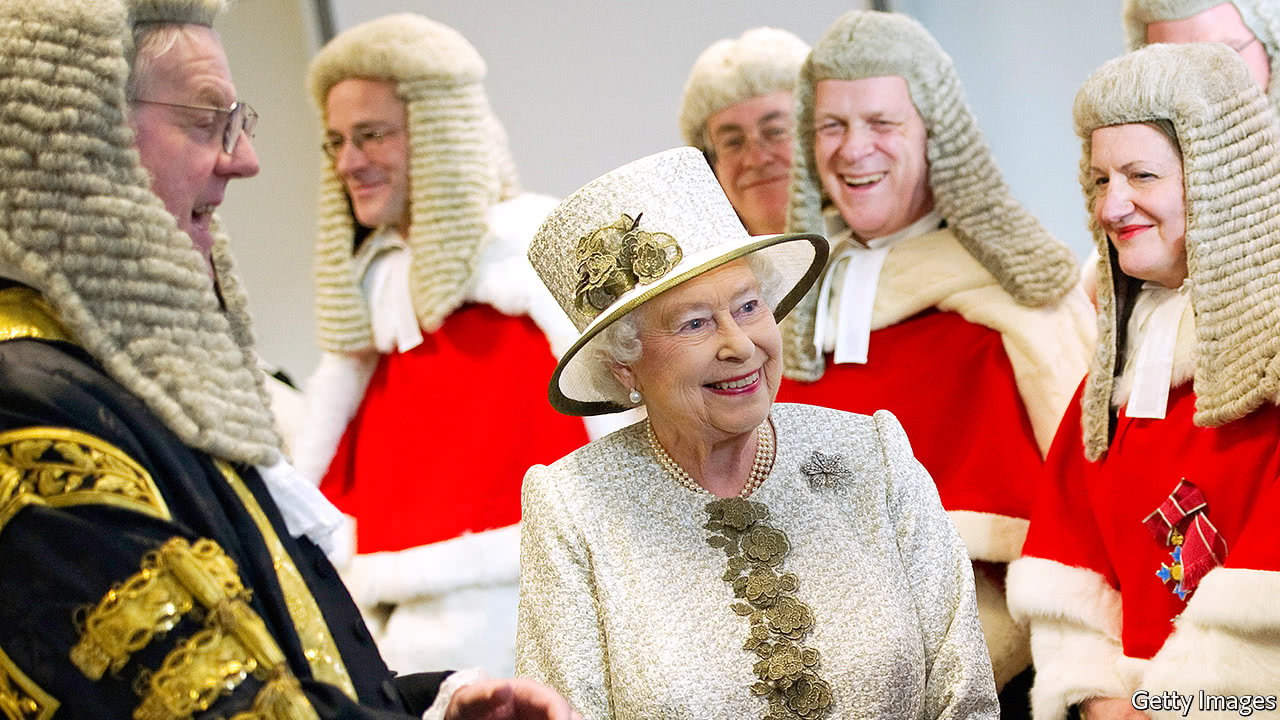
LOFTILY as they may disdain the profit motive, Britain’s judges are, on a national level, money-spinners. English law is often specified as the one under which commercial contracts are to be interpreted and enforced. And disputes often end up being heard in British courts. But, like any business, the law is competitive, and other jurisdictions want to snatch a share of this market. London is mounting its defences.
It has several hard-to-beat advantages: the use of English; a reputation for fairness; the centuries of precedent that lend predictability. Richard Caird, a partner at Dentons, a global law firm, notes that a foreign company can expect an impartial decision in an English court, even if it is pitted against a British firm. Over 70% of cases in the English commercial courts involve a foreign party. In 2015, Britain had a £3.4bn ($5.2bn) positive balance of payments on legal services.
One way for other financial centres,…Continue reading
Pricey housing markets mean co-living buildings are on the rise
MONDAY is “Game of Thrones” night at The Collective’s Old Oak building. Millennials congregate in TV rooms around the 11-storey, 550-person block. Some gather at the cinema, lounging on bean bags decorated with old graphics from Life magazine. Nothing gets residents out of their rooms like the hit TV show. This is not a student dorm, however. It is home.
The Collective is a pioneer of a new property format known as “co-living”. Instead of self-contained flats, residents live in tiny rooms with 12 square metres of floor space. Most contain just a bed and a bathroom. During a two-night stay your correspondent could barely fit his shoulders into the shower cubicle.
It is outside these rooms that the building makes its pitch. It comes with a gym, spa, libraries, a good restaurant and a cinema. Residents get access to all of these amenities, as well as their room, for a rental payment of £800-£1,000 ($1,033-$1,292) a month. That includes all bills and high-speed Wi-Fi; they pay extra for meals in the restaurant. Residents have come up with their own services, too. The Collective houses a “library of things”, or a shared repository of useful objects—hammers, tape measures and even tents.
Rising rents have opened up a gap in the market. The ratio of average rents to incomes in London rose from a quarter…Continue reading
Russia’s largest private bank is rescued by the central bank

VADIM BELYAEV’S start in business in the mid-1980s was to sell foreign watches on the black market in the Soviet Union. He became a financier, and by 2015 had transformed his bank, Otkritie, into post-Soviet Russia’s largest private lender. Named “Businessman of the Year” by a Russian magazine, he used an English term to describe himself: “Risk-taker”. The risks have caught up with Otkritie. A run on its deposits led this week to its takeover by the central bank (CBR). The rescue is likely to be the largest in modern Russian history.
Russian banking has been plagued by lenders with bad loans and inadequate capital, and “pocket” banks that function as money-laundering hubs for influential businessmen. The CBR has embarked on a campaign to clean up the sector, taking on formerly untouchable banks with powerful shareholders and clients. Since 2013 it has shut down more than 300 banks.
Otkritie rose rapidly, out of a small predecessor bank acquired in 2006. It has…Continue reading
On NAFTA, Donald Trump’s most dangerous opponents are at home

EVER game for a fight, President Donald Trump is picking one again with Canada and Mexico, America’s partners in the North American Free-Trade Agreement (NAFTA). On August 27th he tweeted that both were being “very difficult”, adding: “May have to terminate?” His strategy, of getting a better deal by threatening to pull out altogether, is odd. It worsens relations with America’s negotiating partners, at a time when Mr Trump’s plans face just as much opposition at home.
Before April American business was quietly hoping that a Trump presidency would lead to more tax cuts than trade tensions. That changed when news leaked that Mr Trump was poised to withdraw from NAFTA. Suddenly the deal had louder champions in American business, including the energy and technology industries.
Knowing this, Canada and Mexico seem unruffled by Mr Trump’s latest threats as they go into the second round of NAFTA renegotiations on September 1st. Earlier ones prompted panicky phone…Continue reading
The parable of St Paul

PAUL POLMAN runs Europe’s seventh-most valuable company, Unilever, worth $176bn, but he is not a typical big cheese. A Dutchman who once considered becoming a priest, he believes that selling shampoo around the world can be a higher calling and detests the Anglo-Saxon doctrine of shareholder primacy, which holds that a firm’s chief purpose is to enrich its owners. Instead Mr Polman preaches that companies should be run “sustainably”—by investing, paying staff fairly, and by making healthy products with as little damage as possible to the environment. This is actually better for profits in the long run, he argues: society and shareholders need not be in conflict.
Mr Polman’s beliefs were tested in February when Unilever received a bid from Kraft-Heinz, a ketchup-to-hot dog gorilla controlled by Warren Buffett and 3G Capital, a fund known for ripping costs out of multinationals. If, in its own mind, Unilever is a good corporate citizen, then it sees Kraft as an angry American…Continue reading
Analysts struggle to make accurate long-term market forecasts

WHAT is the right way to invest for the long term? Too many people rely on past performance, picking fund managers with a “hot” reputation or backing those asset classes that have recently done well. Just as fund managers cannot be relied on to be consistent, returns from asset classes are highly variable. The higher the initial valuation of the asset, the lower the future returns are likely to be.
That is pretty clear with government bonds. Anyone buying a bond with a yield of 2% and holding it until maturity can expect, at best, that level of return (before inflation) and no more. (There is a small chance the government might default.) With equities, the calculations are not quite so hard-and-fast. Nevertheless, it is a good rule-of-thumb that buying shares with a low dividend yield, or on a high multiple of profits, is likely to lead to lower-than-normal returns.
So a sensible approach to long-term investing would assess the potential returns from asset classes, given their…Continue reading
Market concentration can benefit consumers, but needs scrutiny

WHEN Amazon announced in June that it would buy Whole Foods, an upmarket grocer, for $13.7bn, other firms shuddered. The spread of Amazonian tentacles is worrying to those wary of concentrated corporate power. But shoppers entering their local Whole Foods these days find oddly low prices alongside the new stacks of Echoes, Amazon’s voice-activated digital helpmate. This raises a question. Is Amazon hellbent on building a world-straddling monopoly, or merely injecting innovation and competition into yet another new market? For antitrust regulators, the welfare of the consumer is the priority. Yet working out how to protect it is harder than ever.
Competitiveness in most industries is a matter of degree. In the idealised marketplace of economics textbooks, the price people pay for goods equals the cost of producing an additional unit. Any higher, the theory goes, a competitor could cut the price a smidgen, sell another unit and profit. Yet outside commodity markets, most firms can charge…Continue reading
The gap between India’s richer and poorer states is widening
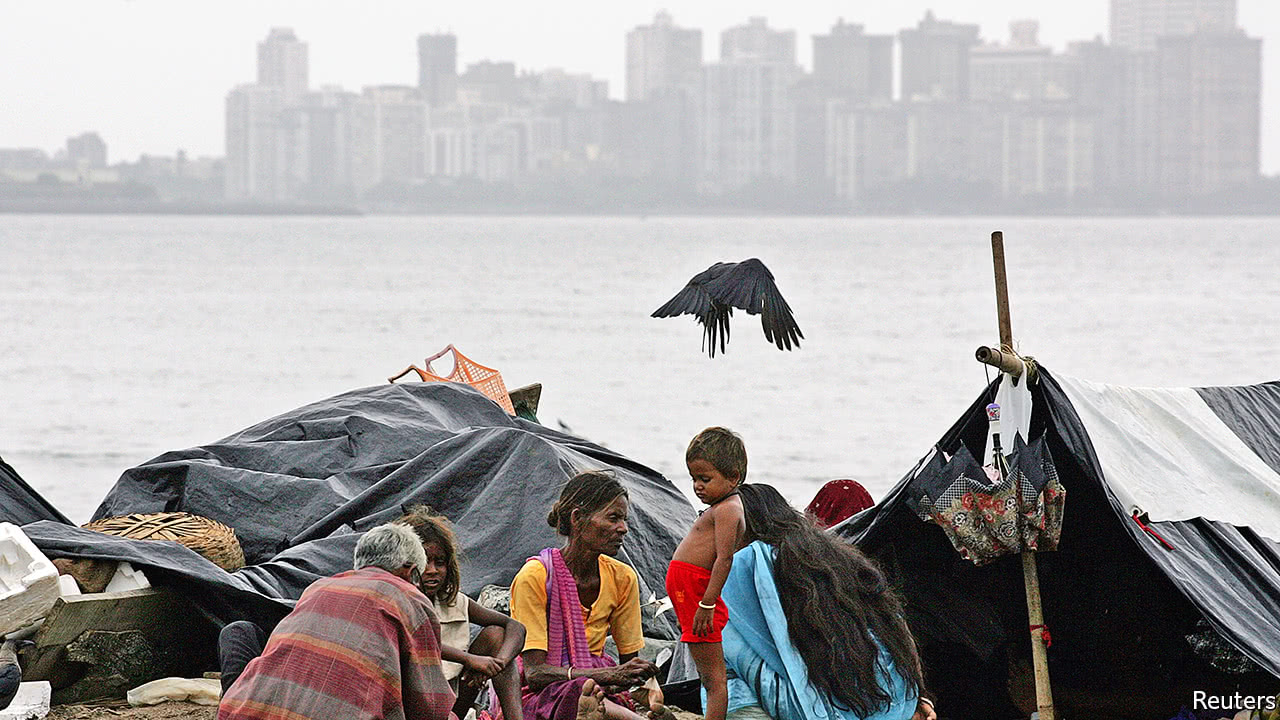
COUNTRIES find it easier to get rich once their neighbours already are. East Asia’s growth pattern has for decades been likened to a skein of geese, from Japan at the vanguard to laggards such as Myanmar at the rear. The same pattern can often be seen within big countries. Over the past decade, for example, China’s poorer provinces have grown faster than their wealthier peers. India is different. Far from converging, its states are getting ever more unequal. A recent shake-up in the tax system might even make matters worse.
Bar a few Mumbai penthouses and Bangalore startup offices, all parts of India are relatively poor by global standards. Taken together, its 1.3bn people make up roughly the third and fourth decile of the world’s population, with an income per person (adjusted for purchasing power) of $6,600 dollars. But that average conceals a vast gap. In Kerala, a southern state, the average resident has an annual income per person of $9,300, higher than Ukraine, and…Continue reading
Hurricane Harvey wreaks havoc on American air travel

Donald Trump went to the Texas coast on August 29th to see for himself the disaster-relief effort in response to Hurricane Harvey. But few other people are able to travel there. The storm has brought record-breaking rains and devastating floods to the Houston area, killing at least 30 people so far (the toll is expected to rise as the waters recede). The human and economic damage is extensive, but Harvey has had repercussions in a wide variety of less critical areas, including business travel.
Across America, more than 9,000 flights have been cancelled since Friday, nearly all due to Harvey. On August 29th, as the storm continued to dump water on Houston and threaten New Orleans 350 miles to the east, more than 1,500 flights to, from, or within the United States were cancelled as of mid-afternoon and twice…Continue reading